
- Top Pick: MINELAB Vanquish 360 Fully-Automatic Lightweight Waterproof Metal Detector with Multi-IQ Technology, Includes V10X 10" Double-D Coil
- Best Value: Minelab Vanquish 540 Pro-Pack Multi-Frequency Metal Detector for Adults with V12 12"x9" & V8 8"x5" Double-D Waterproof Coils (4 Detect Modes, Bluetooth Headphones & Rain Cover Included)
- Premium Choice: Nokta The Legend 2 Simultaneous Multi Frequency Metal Detector, Waterproof Detector for Adults with Wireless Headphones and 2 Search Coils, DETECTOBAG Backpack
If you want one detector that handles coins, relics, jewelry and beaches without constant program changes, a simultaneous multi-frequency model such as the Minelab Equinox 800 is the usual starting point, with the Equinox 600 for a tighter budget, the Manticore for deeper searching, and the XP Deus II for users who want a very light wireless detector with extensive tuning. Single-frequency detectors still win for specific jobs, but multi-frequency designs are the best all-rounders.
As an Amazon Associate we earn from qualifying purchases at no extra cost to you.

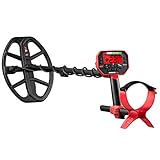


What multi-frequency means in practice
A metal detector transmits a signal and listens for the response from buried metal. Low frequencies tend to favor high-conductivity targets like silver and copper and handle mineralized ground well; high frequencies are more sensitive to small, low-conductivity targets such as thin gold and fine chain. A multi-frequency detector transmits more than one frequency, either in sequence or at the same time, so the machine gains some of each strength.
Minelab’s Multi-IQ technology transmits multiple frequencies simultaneously and the maker describes it as offering good performance across ground conditions including saltwater beaches. Other makers use selectable multiple frequencies, so you pick one or a mix to suit the site. Both approaches count as multi-frequency but handle ground differently, so read how each maker describes it.
At a glance
| Detector | Frequency approach (maker’s description) | Best for | Limits |
|---|---|---|---|
| Minelab Equinox 800 | Multi-IQ, simultaneous multi-frequency, with several user-selectable single frequencies | All-round hunting, beaches, shallow water | Wireless audio setup can feel fiddly to some users; heavier than a pure hobby lightweight |
| Minelab Equinox 600 | Multi-IQ with fewer user options than the 800 | Buyers who want the same core system at a lower tier | Fewer selectable frequencies and settings |
| Minelab Manticore | Multi-IQ+, an enhanced simultaneous multi-frequency system | Experienced users chasing depth and difficult ground | Higher cost tier, bigger learning curve |
| XP Deus II | Multiple selectable frequencies across a wide range, with wireless coil and headphones | Users who like tuning and a very light rig | Menu depth is large; beginners may need time |
| Garrett Apex | Multi-Flex style multi-frequency modes | Mid-range buyers wanting a ready-to-go all-rounder | Fewer fine-tuning options than top-tier machines |
Choosing by hunting style
Parks, schools and yards
Here you meet a mix of clad coins, pull tabs, foil and the occasional silver or gold ring. A mid-range multi-frequency detector with good target ID and a quick discrimination edit is ideal. The Equinox 600 or the Garrett Apex covers this with simple settings.
Beaches and shallow water
Wet salt sand reads as highly conductive and can cause constant false signals in many single-frequency machines. Multi-frequency designs are widely reported to cope better here. The Equinox line is marketed by Minelab for beach and shallow-water use, with waterproof construction listed by the maker; confirm the depth rating on the specific model before submerging.
Relic and field hunting in mineral soil
Red clay and ironstone soils cause ground noise. Detectors with ground balance and multiple frequency options let you reduce that noise. The Deus II and Manticore are popular among experienced users here because of their adjustability, though advanced menus can take time to learn.
Gold prospecting
Dedicated gold detectors typically operate at much higher single frequencies for small nuggets. Multi-frequency all-rounders can find gold jewelry and larger gold, but if you plan serious nugget hunting, look at a purpose-built prospecting model instead.
Features to compare
- Waterproof rating. Makers state coil and control box ratings separately. Read the maximum depth and whether headphones are waterproof.
- Weight and balance. Hours of swinging matter more than any spec sheet number. Reviewers often cite light wireless designs like the Deus II as easier on the shoulder.
- Coil options. Larger coils reach deeper but are less precise in trash; smaller coils separate targets better. Check which coils fit your model.
- Target ID and discrimination. A numerical ID helps you decide what to dig. Notch or tone controls reduce wasted digging.
- Ground balance. Automatic and manual options both help in mineralized soil.
- Updates and accessories. Some makers release firmware updates and extra coils, extending a detector’s useful life.
- Battery life. Makers publish run times; wireless headphones add another battery to manage.
Budget tiers without prices
| Tier | Example | What you get |
|---|---|---|
| Budget-minded multi-frequency | Minelab Equinox 600, Garrett Apex | Core multi-frequency performance with simpler controls |
| Mid-range | Minelab Equinox 800 | More frequency options, extra search profiles, strong all-round record |
| Premium | Minelab Manticore, XP Deus II | Deeper adjustment, advanced displays or wireless rigs, steeper learning |
Pick this if…
| You are… | Pick | Reason |
|---|---|---|
| A first-time buyer wanting an all-rounder | Equinox 600 | Simple setup, multi-frequency core |
| A hobbyist who hunts beaches and parks | Equinox 800 | More profiles and waterproof design |
| An experienced user chasing difficult ground | Manticore | Enhanced multi-frequency processing |
| Someone who wants a light wireless rig and heavy tuning | XP Deus II | Wireless coil and headphones |
| A buyer wanting a mid-range ready-to-go machine | Garrett Apex | Multi-frequency modes with fewer menus |
Common mistakes
- Buying on depth claims alone. Depth depends on target size, soil and coil.
- Ignoring the law. Many parks, historic sites and public lands restrict detecting or require permits. Check local rules first.
- Over-discriminating. Setting the machine to reject too much can hide valuable targets near iron.
- Skipping practice. A test garden with known targets teaches you the tones faster than a site hunt.
- Choosing a coil that is too large for trashy ground.
Alternatives
Nokta’s Legend and Simplex lines are frequently mentioned by reviewers as strong, waterproof contenders from a different maker; confirm each model’s stated frequency approach, since not all use the same multi-frequency method. A dedicated single-frequency detector can outperform an all-rounder on a narrow task, such as a high-frequency gold machine or a low-frequency coin machine for mineral-rich fields. Pulse induction detectors suit saltwater diving and heavy mineralization but offer little discrimination.
Frequently Asked Questions
Is multi-frequency better than single frequency?
It is more versatile because the detector covers several target types and ground conditions with one setup. A single-frequency machine tuned for one job can still beat it in that narrow case.
Which multi-frequency detector is best for beginners?
The Minelab Equinox 600 is widely suggested by reviewers because it offers the simultaneous multi-frequency core with simpler controls. The Garrett Apex is another entry-friendly choice.
Can I use a multi-frequency detector underwater?
Many are waterproof to a stated depth, but ratings vary by model and by accessory. Read the maker’s depth rating for the control box, coil and headphones before submerging.
Do I need a permit to metal detect?
Rules vary by location. National parks, archaeological sites and many local parks restrict detecting, and private land needs the owner’s permission. Look up local regulations before you dig.
How much depth can I expect?
Depth varies with target size, soil mineralization and coil size. Makers publish general guidance, but real depth is usually shallower than marketing diagrams suggest.
Are wireless detectors reliable?
Wireless headphones and coils reduce cable snags and weight, but they add batteries and potential pairing issues. Read the maker’s notes on supported headphone types and battery life.





Write Your Review
No reviews yet. Be the first to share your experience!