
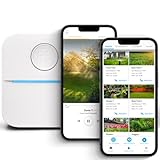
- Top Pick: Rachio 3 Smart Sprinkler In-Ground WiFi Irrigation Controller, 8-Zone | 8 Zones, It Just Works, App Control, Rain Skips, Local Weather Scheduling, DIY Install, Smart Home Ready, 2-Year Warranty
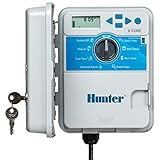
- Best Value: Hunter X-Core 4 Zone Sprinkler Timer, Indoor/Outdoor Sprinkler Controller | 4 station irrigation controller with seasonal adjustment, memory backup, manual controls, and no WiFi needed
- Premium Choice: Orbit B-hyve Smart Sprinkler Controller, 6-Zone – 57946 | App Controlled with Custom Irrigation Schedules, Weatherproof Multi-Zone Sprinkler System for Indoor & Outdoor Use
The best irrigation controller for most homeowners is a Wi-Fi smart model such as the Rachio 3, which suits yards with 4, 8 or 16 zones and uses weather data to skip or adjust watering, while owners of simple, small systems can stay with a basic programmable box from Rain Bird, Hunter or Orbit. A gaming household that likes setting automations and watching dashboards will probably enjoy the app-driven options, but the best controller is the one that matches your zone count, wiring and Wi-Fi coverage.
As an Amazon Associate we earn from qualifying purchases at no extra cost to you.


What an irrigation controller does
A controller is the brain of a sprinkler system. It opens each zone valve in turn at set times and for set durations. Smart controllers add Wi-Fi, a phone app and weather logic, so watering can pause after rain or shift with the season. Rachio describes its Rachio 3 with rain skip, seasonal shift, heat wave boost (a premium feature) and integration with Tempest personal weather stations, plus compatibility with Alexa, Google Assistant, IFTTT, Alarm.com and SmartThings.
At a glance
| Controller | Best for | Key points stated by the maker | Limits |
|---|---|---|---|
| Rachio 3 | Smart yards wanting app control and weather-aware schedules | 4, 8 and 16 zone versions; rain skip, seasonal shift; about 30 minute install; needs the included AC adapter | Some features, such as heat wave boost, sit behind a premium tier; DC transformers not supported |
| Rain Bird smart controllers (ST8 and related) | Owners already using Rain Bird valves and heads | Wi-Fi smart control within Rain Bird’s own app | Zone counts and indoor or outdoor versions differ by model |
| Orbit B-hyve | Budget-minded smart upgrades | Wi-Fi controllers with an app and weather adjustment | Features vary by model and zone count |
| Hunter Hydrawise | Larger yards and those wanting remote diagnostics | Cloud-based Wi-Fi controllers with weather-driven scheduling | Setup is more involved on some models |
| Basic programmable timer | Simple systems without Wi-Fi | Local program buttons and rain sensor input | No remote control or weather logic |
How to choose
Count your zones
Open your existing controller and count the valve wires or look at the labelled terminals. The new controller needs at least that many zones, and choosing one with a spare zone or two leaves room to expand. Rachio’s choice of 4, 8 and 16 zones shows the common steps, and other makers follow similar ratios.
Check the power supply
Many controllers use a low-voltage AC transformer. Rachio states its controller requires the included AC adapter and does not support DC transformers. Whichever model you pick, read the power requirements in the manual before buying, and if mains wiring or a hardwired transformer is involved, call a licensed electrician.
Think about Wi-Fi coverage
Controllers are often mounted in a garage or on an outside wall where signal is weak. Test the signal at the mounting spot with your phone, and consider a mesh node or extender if bars are low. Many smart controllers connect only on the 2.4 GHz band, so read the maker’s network notes.
Weather intelligence
Rain skip is common. Seasonal shift adjusts run times through the year. Local weather station input can improve accuracy where microclimates differ. These features save water but depend on correct set-up of soil type, sun exposure and sprinkler type in the app.
Ecosystem and smart home
If you use Alexa, Google Assistant or SmartThings, confirm the controller lists compatibility. Voice control is handy for a quick test cycle, and an IFTTT link lets you tie watering to other devices.
Valve and sensor support
Some systems use a pump start relay, a master valve, a flow meter or a rain sensor. Look for terminals for them if your system uses these parts. Hunter’s Hydrawise range is often highlighted for its handling of such extras, though models vary.
Budget tiers
| Tier | What you get | Who it suits |
|---|---|---|
| Budget | Basic programmable timer or an entry Wi-Fi model such as an Orbit B-hyve | Small lawns, renters with an existing system |
| Mid-range | Rachio 3 or Rain Bird smart controller with weather skip and app | Most family yards |
| Premium | High zone count Wi-Fi controller with sensor inputs and professional features | Large properties and complex systems |
Pick X if…
| If you… | Pick |
|---|---|
| Want a polished app and smart-home links | Rachio 3 |
| Already use Rain Bird valves and sprinklers | Rain Bird smart controller |
| Want to keep outlay low yet add Wi-Fi | Orbit B-hyve |
| Manage a large or complex landscape | Hunter Hydrawise |
| Have no Wi-Fi at the controller and little need for remote control | Basic programmable timer |
Installation tips
Photograph the wiring before disconnecting anything and label each wire. Turn off power at the source before touching terminals. Rachio quotes about 30 minutes without special tools for its controller, which is typical when the old unit is a straightforward swap. If your system has unusual wiring, a pump or a transformer that is hardwired into the house, consult a licensed electrician or an irrigation technician. After installing, run each zone manually to check coverage and look for leaks or broken heads.
Tuning for water savings
Enter accurate zone details, such as sprinkler head type, soil, slope and plant type. Water deeply and less often rather than a little every day, which encourages deeper roots. Follow local watering restrictions, which may limit days or times. Review the schedule each season, and update it when you add plants.
Common mistakes
- Buying too few zones for the valves you have.
- Ignoring the power adapter requirements and mounting a unit far from an outlet.
- Leaving the default schedule in place without entering soil and sprinkler data.
- Placing the controller where Wi-Fi is weak.
- Forgetting to winterise in climates with frost, following the maker and local guidance.
- Overriding rain skip with long manual runs after storms.
Frequently Asked Questions
Do smart irrigation controllers really save water?
Makers and utilities report savings from weather-based adjustment, mainly by avoiding watering during rain and cutting run times in cool weather. Savings depend on how accurate your zone settings are. Treat figures as typical, not guaranteed.
How many zones do I need?
Count the valves or wires on your current controller, then choose a model with the same number or more. Rachio offers 4, 8 and 16 zone versions of its Rachio 3.
Can I install a controller myself?
Often yes, when you are swapping like for like and following the instructions. Turn off power first and photograph the wires. Use a licensed electrician if there is mains wiring involved.
Does it need Wi-Fi?
Smart models do for app control and weather data. A basic timer works without it. Check the signal at the mounting spot before buying.
Will it work with my existing sprinklers and valves?
Standard low-voltage valves are generally supported, but check the maker’s compatibility notes, especially for pump start relays or unusual valve types.
Are subscriptions required?
Core scheduling usually works without a fee, but some makers place extra features behind a paid tier. Rachio lists heat wave boost as a premium feature, so read what is included before you commit.







Write Your Review
No reviews yet. Be the first to share your experience!