
- Top Pick: YOLEO Adjustable Weight Bench, ASTM-Certified 827LBS, Extended Backrest | Extended Head and Spine Support, 90 Positions Incline Decline Flat, 3s Fast Folding and Space Saving
- Best Value: Bench1000 V2 Adjustable Weight Bench, Full Body Workout Bench for Home Gym | 1200lb 36 Adjustable Positions Exercise Bench with Detachable Leg Support, Heavy Duty Commercial Flat Incline Decline Bench
- Premium Choice: Finer Form Multi-Functional Adjustable FID Weight Bench and Roman Chair | 1,000 Lb Capacity, 23 Settings, Flat Incline Decline for Total Body Workouts, Transport Wheels, Exercise Chart Included
For most home gyms, a full flat/incline/decline bench from a specialist maker such as REP Fitness is the safest all-round choice, the Ironmaster Super Bench Pro V2 suits people who want many lockout angles and a low seat, and a foldable budget bench from Flybird, WeGym or YOLEO suits small spaces and lighter loads. A gaming desk setup and a home gym often share the same spare room, so footprint matters as much as stated capacity.
As an Amazon Associate we earn from qualifying purchases at no extra cost to you.
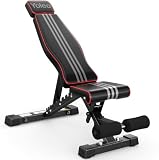


Quick comparison of current adjustable benches
| Bench | Best for | Key stated specs | Limits |
|---|---|---|---|
| REP Fitness AB-3000 2.0 | All-round incline and decline use | Rated to 1,000 lb; decline of 12 degrees to 85 degrees incline; 8 back positions; 5 seat positions (per roundups citing the maker) | Large and heavy; mid-range to premium tier |
| Ironmaster Super Bench Pro V2 | Lifters wanting fine angle control and a low seat | 11 lockout angles; 17.2 inch low profile (BarBend reports) | Premium tier |
| REP Fitness AB-4100 / AB-5200 | Incline-only training with a stable frame | BarBend names the AB-4100 its overall pick; it has no decline. Garage Gym Lab favours the AB-5200 for people who rarely decline | Cannot do decline presses |
| Rogue AB-3 | Premium flat/incline/decline build | Listed by King of the Gym as a premium pick | Premium tier |
| Flybird FB149 | Tight budgets | 700 lb capacity (Home Gym Verdict) | Lighter frame; less stable under heavy loads |
| WeGym Fitness Bench | Foldable storage | Folds; flat, incline, decline settings (Yahoo trainer list) | Folding joints add flex |
| YOLEO adjustable bench | Home users wanting portability | 827 lb capacity listed by one roundup | Budget build quality varies |
What incline and decline actually do
An incline setting shifts emphasis toward the upper chest and shoulders and is also the base for seated dumbbell shoulder presses at a steep angle. A decline setting tilts the head below the hips, which many lifters use for lower-chest pressing and for ab work with the feet hooked under rollers. If you will never press on decline, a flat-and-incline bench saves money and removes one moving part, which is why some reviewers point readers to the AB-4100 or AB-5200 family.
How to choose: the specs that matter
Rated capacity
Makers publish a weight rating that usually includes you and the barbell. A 1,000 lb rating, as listed for the AB-3000 2.0, leaves headroom for heavy barbell work, while the 700 lb rating on the Flybird FB149 is still plenty for dumbbell routines but gives less margin if you press with a loaded bar. Always compare ratings from the maker rather than a retailer summary.
Angle range and increments
Count the back positions. Eight positions on the AB-3000 2.0 or eleven lockouts on the Ironmaster mean you can sit at exactly the angle you like. Cheap benches may offer only three to five. A very steep upper range (the AB-3000 2.0 is listed to 85 degrees) is useful for shoulder pressing, while a small gap between the seat and the back pad matters for comfort and is why gap design is highlighted on benches like the AB-5000 Zero Gap.
Seat adjustment
Independent seat positions help keep you from sliding down during incline presses. The AB-3000 2.0 lists five seat positions, which is a real advantage for taller or shorter lifters.
Frame, footprint and stability
Heavy steel frames with wide feet feel steadier but are harder to move. Foldable benches such as the WeGym trade some rigidity for storage. Measure your room, including the space needed to load plates and step around the bench.
Low-profile seat height
A lower seat, such as the 17.2 inch height BarBend reports for the Ironmaster, lets shorter lifters plant their feet flat on the floor. It also affects how easily a barbell fits in rack uprights, so check the compatibility notes of your rack.
Pick this if you…
| Situation | Pick | Why |
|---|---|---|
| Lift heavy barbells with a rack | REP AB-3000 2.0 or Rogue AB-3 | High stated capacity, wide angle range, stable frame |
| Want many precise angles and a low seat | Ironmaster Super Bench Pro V2 | 11 lockout positions, low profile |
| Never use decline | REP AB-4100 or AB-5200 | Simpler, rated well by BarBend and Garage Gym Lab |
| Live in a flat or share a room with a desk | WeGym or YOLEO foldable | Folds away; fine for dumbbell work |
| Starting out on a budget | Flybird FB149 | Lowest tier among the listed options with a 700 lb rating |
Budget tiers explained
At the budget tier you get a folding or lighter steel frame, fewer positions and a stated capacity that is mostly fine for dumbbells. Mid-range benches add thicker tubing, more positions and a better pad. Premium benches from Ironmaster, Rogue and REP add precision lockouts, wheel kits, tight pad gaps and heavier steel. If you train three or four times a week with a barbell, the premium tier tends to last longer; for occasional dumbbell work, a budget pick is reasonable.
Alternatives to consider
- Flat bench plus a power rack with adjustable safeties: fewer parts to wear, but no incline.
- Adjustable dumbbells with a foldable bench: a compact setup for small rooms that avoids a barbell altogether.
- A bench with leg-hold rollers for decline work only: specialist and less common; most lifters get more from a full adjustable model.
Common mistakes
- Buying on the headline capacity alone without looking at how the frame is built.
- Ignoring the pad gap, which can be uncomfortable between the shoulder blades.
- Skipping a floor check. Rubber flooring or a mat prevents sliding and protects the surface.
- Forgetting delivery size. Many heavy benches arrive in a long, heavy box and need assembly with all bolts tightened before use.
- Using a folding bench for loads near its limit.
Before first use, tighten every bolt, test the pin or lockout on each position with no weight, and follow the maker’s manual. If you have a shoulder, back or other injury, consult a doctor or physiotherapist before changing your pressing angle.
Frequently Asked Questions
Is a decline setting worth paying for?
Only if you plan to use it for decline presses or sit-ups. Many lifters rarely use decline, and reviewers such as Garage Gym Lab suggest an incline-only bench like the AB-5200 for those people. If you want one bench for everything, choose a full flat/incline/decline model.
What capacity do I need?
Add your bodyweight to the heaviest load you expect to press and choose a bench rated comfortably above that. Ratings of 700 lb to 1,000 lb, as stated by the makers listed here, cover most home lifters.
Are foldable benches safe for barbell work?
They can be fine for light and moderate loads, but the hinges add flex. For heavy barbell pressing, a fixed steel frame is the more stable choice.
How many back positions are enough?
Five to eight positions cover most routines. More lockouts, such as the eleven on the Ironmaster, mainly help people who want to fine-tune shoulder angles.
Will a bench fit under a low ceiling?
Seated dumbbell pressing at a steep angle needs the most height. Measure with your arms extended overhead while seated on the bench before buying.
How should I care for the bench?
Wipe the pad after sessions, recheck bolts regularly and keep the pins clean. Replace any worn pad or pin that does not lock firmly.





Write Your Review
No reviews yet. Be the first to share your experience!