
- Top Pick: Seesii Impact Wrench 665 FT-LBS(900N.m) 3300IPM 1/2 Impact Gun High Torque Electric Impact Driver Cordless Impact Wrench with 21V 2×4.0Ah Battery 6 Sockets&Case for Home Car Tire Lug Nut Removal Tool
- Best Value: SEYVUM Impact Wrench 650N.m, 20V 1/2" Impact Gun, 4.0Ah Battery & Sockets | Max Torque 480 Ft-lbs Cordless Impact Driver, 1.8A Fast Charger, with 17mm 19mm 20mm 21mm Socket
- Premium Choice: KELYEE 1/2" Cordless Impact Wrench 1107Ft-lbs(1500N.m) with 21V 2 Battery | Brushless High Torque 1/2 Impact Gun , 3-Mode Speed, Electric Impact Driver with 4 Socket for Home Car Pickup Truck RV Mower
For most people, the best impact gun is a cordless half-inch impact wrench from the battery platform you already own: Milwaukee M18 Fuel for the best overall balance, DeWalt for maximum torque, and Makita for compact, controlled work. If your jobs are driving screws rather than loosening lug nuts, you want an impact driver instead, which is a different tool.
As an Amazon Associate we earn from qualifying purchases at no extra cost to you.
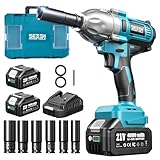


Quick Comparison of Popular Cordless Impact Wrenches
| Model | Best for | What reviewers report | Limits |
|---|---|---|---|
| Milwaukee M18 Fuel 1/2-inch high-torque (2767-20) | Overall balance for trades and home use | Bob Vila names the M18 Fuel half-inch its top pick for power, compact size and control | Higher cost; tool-only, battery sold separately |
| DeWalt DCF961B / DCF900 series | Maximum torque | Called the strongest in class by two roundups; DCF900 listed at 1,030 ft-lbs fastening and 1,400 ft-lbs breakaway by one outlet | Larger and heavier than compact models |
| Makita XWT15Z (18V LXT, 1/2-inch) | Home mechanics wanting control | Praised for smoothness and reliability | Reviewers report lower peak torque than DeWalt and Milwaukee high-torque models |
| Milwaukee M18 Fuel 3/8-inch compact | Tight spaces | Described as offering unmatched access | Less torque than half-inch models |
Impact Wrench or Impact Driver?
People searching for an impact gun usually mean one of two tools. An impact wrench has a square drive, typically three-eighths or half-inch, for lug nuts, suspension bolts and rusted fasteners. An impact driver has a quarter-inch hex chuck for screws and small bolts. The terms are used loosely, so check the drive type before buying. This guide focuses on cordless wrenches; for decks and framing, a driver from the same battery platform is the better fit.
How to Choose
Battery platform first
Review roundups consistently advise choosing the brand whose batteries you already own. A tool-only purchase is far cheaper than a new kit, and batteries are interchangeable across the maker’s range. If you have no platform yet, consider the other tools you might want later.
Drive size
- 3/8-inch suits small engine bays, interior bolts and tight access.
- 1/2-inch is the standard for wheels and general automotive work.
- 3/4-inch and above is for heavy equipment and is rarely needed at home.
Torque numbers
Makers publish fastening torque and breakaway torque, and the figures differ by source. Reviewers list Milwaukee’s high-torque model at varying values across roundups, so read the specification on the maker’s own page. Breakaway torque matters for stuck bolts; fastening torque describes how hard it can tighten. Do not rely on an impact wrench to tighten lug nuts to specification; use a torque wrench for final tightening, as vehicle manuals specify.
Size and weight
Compact models are easier to hold overhead and fit in wheel wells. One roundup lists a Milwaukee compact at about 2.7 pounds. Larger high-torque tools trade handling for power.
Control modes
Many current models offer speed or torque modes, which reduce the chance of snapping bolts or stripping threads. If you work on small fasteners as well as wheels, a tool with multiple modes is more versatile.
Anvil type
Friction ring anvils make socket changes easy; detent pin anvils hold sockets securely for heavy work. Check which your sockets support.
Milwaukee M18 Fuel: The Common Top Pick
Bob Vila and several roundups put Milwaukee first for its blend of power, size and control. The half-inch high-torque model is the one most reviewers mean, while the compact three-eighths model is recommended for tight engine bays. The downside is cost, and that the tool-only listing does not include a battery or charger.
DeWalt: Power and Value
Two roundups call the DCF961B the strongest in its class, and another ranks the DCF900 series best overall. One outlet lists the DCF900 at 1,030 ft-lbs fastening and 1,400 ft-lbs breakaway. DeWalt is often priced below the Milwaukee equivalent, making it attractive for buyers who want raw torque without paying for the top-end brand.
Makita: Smooth and Compact
Makita is recommended where control and size matter more than maximum power. One review picks the XWT15Z as best overall for home mechanics; another reports that the DeWalt and Milwaukee high-torque tools outperform Makita by a significant margin on torque. For regular wheel changes and moderate rust, many users do not need more.
Pick X If You Want Y
| If you want | Choose | Reason |
|---|---|---|
| Best all-round tool | Milwaukee M18 Fuel half-inch | Frequently ranked first |
| Maximum breakaway torque | DeWalt DCF961B or DCF900 | Called strongest in class |
| Light, controlled tool for home use | Makita XWT15Z | Smooth, compact |
| Access in tight spaces | Milwaukee 3/8-inch compact | Small and light |
| Screws rather than bolts | An impact driver on the same platform | Hex chuck, designed for fasteners |
Safety and Common Mistakes
- Using standard sockets. Use impact-rated sockets; chrome sockets can shatter under impact.
- Over-tightening lug nuts. Impact wrenches can exceed the specified torque. Finish with a torque wrench per the vehicle manual.
- Skipping eye and ear protection. Impacts are loud and can throw debris.
- Working under a car on a jack alone. Use jack stands on level ground.
- Buying on torque alone. A heavy tool you cannot position well is slower on the job.
- Ignoring battery size. Higher-capacity packs run longer and sustain performance but add weight.
Budget, Mid-Range and Premium
At the budget end, bare-tool offerings from established brands save money if you already have batteries. In the mid-range, DeWalt and Makita tend to offer strong value. Premium picks, led by Milwaukee, cost more but are favoured by tradespeople working daily. Some reviewers note that many ranking sites are affiliate-driven, so compare against the maker’s specification pages.
Alternatives
- Corded or pneumatic impact wrenches deliver consistent power for shops, though they need a cord or compressor.
- Cordless ratchets are useful for light work in cramped spaces but cannot loosen stuck bolts.
- Breaker bars and torque wrenches remain the low-tech answer for occasional wheel changes.
Frequently Asked Questions
Is an impact gun the same as an impact wrench?
Usually yes in everyday speech, though some people also use the term for impact drivers. A wrench has a square drive for sockets, while a driver has a hex chuck for bits.
How much torque do I need to remove lug nuts?
Many half-inch cordless models are reported to handle typical wheels, but it depends on how tight and corroded the nuts are. Check the vehicle manual and the tool’s stated breakaway torque.
Can I use an impact wrench to tighten lug nuts?
You can seat them, but final tightening should be done with a torque wrench to the specification in the vehicle manual. Over-tightening can damage studs and rotors.
Which brand is best, Milwaukee, DeWalt or Makita?
Reviewers lean Milwaukee for balance, DeWalt for torque and Makita for compact control. The biggest practical factor is the battery platform you already own.
Do I need impact-rated sockets?
Yes. Impact sockets are made from tougher material and designed to absorb repeated hammering. Standard sockets can crack and cause injury.
Is a 3/8-inch or 1/2-inch impact better?
Half-inch suits wheels and general automotive work, while three-eighths is lighter and better for tight spaces and smaller bolts.







Write Your Review
No reviews yet. Be the first to share your experience!