
- Top Pick: 1 Gallon Water Filter Straw, Camping Gravity Fed Water Filtration System | Survival Water Purifier for Hiking, Backpacking & Emergency Preparedness, Multi-Stage Filter with 6L Water Bag
- Best Value: Katadyn Hiker Pro Transparent Hand Pump Water Filter | 1L Per Minute, 11.2 oz Lightweight, Portable Filtration for Camping, Backpacking, Hiking & Survival
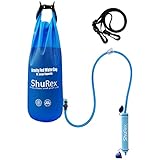
- Premium Choice: ShuRex 6L Gravity Fed Water Filtration System with Adjustable Tree Strap | 1.5 Gal Large Gravity Bag with Filter Straw, Water Purifier Survival for Travel, Backpacking, and Emergency Preparedness (6L)
For most backpackers the Sawyer Squeeze is the practical pick, the Katadyn BeFree suits those who prize low weight and fast flow, and the MSR Guardian suits trips where viruses are a real concern such as international travel. A filter and a purifier are not the same thing, so the first decision is whether you need virus protection.
- Filter or Purifier: The Deciding Question
- Top Backpacking Options at a Glance
- Sawyer Squeeze: Best Overall Value
- Katadyn BeFree: Lightest and Quickest
- MSR Guardian: Virus Protection
- Alternatives and Backups
- Decision Table
- Buying Checklist
- Common Mistakes
- Using Your System in the Field
- Frequently Asked Questions
As an Amazon Associate we earn from qualifying purchases at no extra cost to you.



Filter or Purifier: The Deciding Question
Hollow-fiber filters such as the Sawyer Squeeze and Katadyn BeFree remove bacteria and protozoa like giardia and cryptosporidium. Viruses are much smaller than the pores, so these filters are not rated against them. In most North American backcountry water, viruses are a low concern, which is why filters dominate there. Where water may be contaminated by human sewage, such as in parts of the developing world, a purifier or a chemical or ultraviolet step is the safer path. Always follow the maker’s instructions and rating on the packaging.
Top Backpacking Options at a Glance
| System | Type | Stated figures | Best for | Trade-off |
|---|---|---|---|---|
| Sawyer Squeeze | Squeeze hollow-fiber filter | 0.1 micron; reviewers cite about 3 oz and a very long lifespan | All-round value | Needs backflushing; fiber can be damaged by freezing |
| Katadyn BeFree | Soft-flask filter | Reviewers cite about 2.3 oz; maker lists a shorter filter life than Sawyer | Ultralight, fast flow | Narrow flask mouth; shorter life |
| MSR Guardian | Pump purifier | Reviewers cite virus protection, 10,000 liters, no backflushing needed | Travel and high-risk water | Heavy and premium-priced |
| Chemical tablets or drops (chlorine dioxide) | Chemical | Maker lists wait times, longer for cryptosporidium | Backup or minimalists | Wait time and taste |
| Grayl GeoPress | Press purifier bottle | Maker lists protection against bacteria, protozoa and viruses | Travel and one-handed use | Bulky and single-bottle capacity |
Sawyer Squeeze: Best Overall Value
Reviewers routinely name the Squeeze best overall or best value. It filters to 0.1 micron, screws onto standard bottles and bags, and can be used in line with a hydration reservoir or as a gravity setup. Reviewers also cite a flow of roughly 1.7 liters per minute when new. The main care task is backflushing with the supplied syringe to restore flow. Do not let it freeze, since ice can crack hollow fibers invisibly, so sleep with it in your bag on cold nights.
Katadyn BeFree: Lightest and Quickest
The BeFree pairs a hollow-fiber filter with a collapsible flask, so you scoop water and drink. Reviewers call it among the fastest-flowing options, and it packs down tiny. Its filter life is considerably shorter than the Sawyer’s, and the flask opening can be awkward to fill from shallow sources. It fits hikers who want the lightest carry and drink on the move, and it can be cleaned simply by swishing in clean water.
MSR Guardian: Virus Protection
The Guardian is a pump purifier that the maker rates for bacteria, protozoa and viruses. Reviewers note that it cleans itself with each stroke, so there is no backflushing routine, and they cite a lifespan of around 10,000 liters. It is heavier than squeeze filters, and sits in the premium tier. For domestic hiking it is often more than needed, but for international trips or groups it is a strong choice.
Alternatives and Backups
- Chlorine dioxide tablets: Light and cheap insurance. Makers list a wait of around thirty minutes for bacteria and viruses and several hours for cryptosporidium, so read the label.
- Boiling: A rolling boil is a dependable fallback if you carry a stove. Follow public health guidance for time, which increases at altitude.
- Gravity systems: Platypus GravityWorks and similar bags filter large volumes for groups without pumping.
- Squeeze plus tablets: A sensible combination where viruses are a possible concern at a lower weight than a pump purifier.
Decision Table
| Pick this | If you… |
|---|---|
| Sawyer Squeeze | want durable, inexpensive, trusted filtering for North American trails |
| Katadyn BeFree | count every gram and want quick refills during day hikes or trail runs |
| MSR Guardian | travel abroad or draw from sources near livestock or settlements |
| Grayl GeoPress | want purification in one bottle for travel |
| Tablets as backup | already carry a filter and want a failure-proof second layer |
Buying Checklist
- Confirm what the maker rates the system for, since bacteria and protozoa differ from viruses.
- Check compatibility with your bottles. Many soft bottles use standard threads, but some do not.
- Consider flow rate and group size. Squeeze systems are slower to fill a big pot than pumps or gravity bags.
- Think about freezing risk and carry the filter in your sleeping bag in cold conditions.
- Plan maintenance, including backflushing, and pack the tool.
Common Mistakes
- Using a filter in water where viruses are a concern.
- Letting a hollow-fiber filter freeze and continuing to use it.
- Skipping backflushing until the flow nearly stops.
- Putting dirty water on the clean-side threads, which can contaminate the output.
- Carrying only one treatment method on a long trip with no backup.
Using Your System in the Field
Collect water from moving sources where possible, and fill from the clearest spot rather than stirring up the bottom. Keep a clearly marked dirty bottle or bag separate from the clean one, and never let the output end of a filter touch the dirty container. At camp, filter in the evening for the night and next morning so you start the day with a full clean supply. Carry the filter inside your pack, away from freezing temperatures, and store it according to the maker’s manual between trips, since a damp filter left sealed can grow mold.
For groups, a gravity bag saves effort, and for solo ultralight trips a squeeze filter with a spare set of tablets keeps weight low while still giving a second layer of protection. Plan water carries by checking maps for reliable sources, because the weight of carried water usually matters more than the filter itself.
Frequently Asked Questions
Do I need to treat water in the backcountry?
Yes, health agencies advise treating water from streams and lakes. Clear, cold water can still carry giardia, cryptosporidium and bacteria.
Is a filter enough for backpacking in the United States?
For most backcountry sources a bacteria and protozoa filter is the common approach. If your water source is near sewage, livestock or heavy human use, add chemical treatment or use a purifier.
How do I know when to replace a filter?
Follow the maker’s stated lifespan and replace it if flow drops and backflushing no longer restores it. Replace any filter that has frozen or been dropped hard.
Can I filter silty water?
Yes, but let the silt settle first or pre-filter through a bandana or cloth. Sediment clogs hollow fibers faster.
What if my filter fails on the trail?
Boil water if you have a stove, or use chemical tablets, which weigh almost nothing. Carrying one of these as a backup is considered sensible practice.
Are UV pens a good option?
They treat clear water by inactivating organisms, but they rely on batteries and cloudy water reduces effectiveness. Check the maker’s instructions and carry a backup method.







Write Your Review
No reviews yet. Be the first to share your experience!