
- Top Pick: Thermalright TL-C12C X5 CPU Fan,Black Cooling, Fan in The unlit Version,Establish Ties or Contact PC Fan with 1550RPM Speed, 120mm Computer Case Cooler,PWM Control for Case and Liquid Cooler
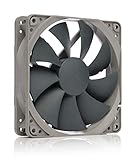
- Best Value: Noctua NF-P12 redux-1700 PWM, Quiet Fan 120mm | High Airflow, Low Noise, 25mm Thick Fan for PC and Electronics Cooling Streamlined Package 1700rpm 4-Pin PWM
- Premium Choice: Thermalright TL-C12C X3 CPU Fan 120mm Case Cooler Fan, 4pin PWM Silent Computer with S-FDB Bearing Included, up to 1550RPM Cooling Fan(3 Quantities)
A 120mm PWM fan is the default building block of a modern PC cooling layout, and that is exactly why the choice is harder than it looks. The PWM part means a four-pin header can vary the fan speed smoothly, so the same fan can idle near silent and ramp up when a graphics card heats the case. The real decision hiding in this keyword is whether you want a single fan to swap into a gap, a multi-pack to refresh a whole chassis, or a lit fan that doubles as part of the build’s look.
This guide is written for builders who run an RTX card in a mid-tower and want steady airflow without a constant whine, plus upgraders replacing worn stock fans. It judges six options strictly from what the titles state, including bearing types, speed figures, pack sizes, and lighting. Anyone shopping for 2026 builds will notice that daisy-chain cabling and splitter cables now matter nearly as much as the blades, because tidy fan wiring decides how easy a multi-fan setup is to manage.
Quick Picks
As an Amazon Associate we earn from qualifying purchases at no extra cost to you.



| Product | Best for | Key spec from the title |
|---|---|---|
| Noctua NF-P12 redux-1700 PWM | Quiet builds that need real airflow | 1700rpm, 25mm thick, 4-pin PWM |
| Thermalright TL-C12C X3 | Budget three-fan refresh | 3 quantities, S-FDB bearing, up to 1550RPM |
| ARCTIC P12 Pro PST | Wide speed range and multi-fan builds | 5 pack, 600-3000 RPM, 0 RPM below 5% PWM, Y-cable splitter |
| be quiet! Pure Wings 3 Triple Pack | Low idle noise | 3 fans, high top-end speed, low minimum RPM |
| CORSAIR RS120 | Clean cable runs | Daisy-chain connection, magnetic dome bearing |
| DARKROCK F120 3in1 | Lit builds | 24 LED lights, ARGB, PWM, hydraulic HDB bearing |
How to Choose
Speed range and what PWM really buys you
A four-pin PWM fan lets the motherboard set speed in small steps, so minimum and maximum RPM both matter. A fan listed at 1500 to 1700 RPM maximum is typically enough for a mid-tower with a mesh front, while a fan that stretches to 3000 RPM gives headroom for a restrictive radiator or a dense dust filter but will be loud at the top. The low end matters just as much for quiet idling: look for a stated minimum around a few hundred RPM, or a zero-RPM mode at low PWM duty, as some titles describe. Anything that cannot spin down gracefully will hum at the desk.
Bearing type and noise over time
Bearings decide how the fan sounds in year two, not week one. Titles in this group mention S-FDB, fluid dynamic, hydraulic HDB, and magnetic dome designs, each aimed at lowering friction and wobble. None of those names guarantees a lifespan, so treat them as signals of what the maker is aiming at and read the warranty on the listing. Avoid unnamed sleeve bearings in a case that sits under a desk and runs all day, because the hum tends to rise as lubricant ages.
Pack size, cable management, and connectors
Three-packs and five-packs can cost less per fan than singles, but only if you will use them all. A case with front intake for three fans and one rear exhaust needs four, and a radiator can take three more. Daisy-chain connections and Y-cable splitters reduce the number of motherboard headers consumed, which matters on compact boards with only a few fan headers. Confirm the cable lengths on the listing before assuming they reach across a large chassis, and remember that some lit fans add a separate ARGB lead.
What to ignore, and where budget fans cut corners
Ignore headline airflow numbers that do not state pressure, because static pressure is what pushes air through filters, mesh, and radiators. Budget fans often skimp on blade finish, vibration dampening pads, and the quality of the bearing, so noise creeps up under load. Lighting is the other trap: a showy fan hub can look good while the blade design is plain. Decide whether you want light first, and then compare the fan itself.
The 6 Best Options
Noctua NF-P12 redux-1700 PWM
Noctua’s redux fan is described as a quiet 120mm unit with high airflow and low noise, 25mm thick, 1700rpm, and a four-pin PWM connector. It is aimed at buyers who value a plain, quiet fan more than lighting or fancy hubs, and who would rather buy a couple of good fans than a large bundle.
- Strength: the 1700rpm figure and PWM control suit case airflow without relying on a splitter.
- Strength: the title stresses low noise, which fits desk builds that idle for long stretches.
- Trade-off: it is a single plain fan with no lighting, which will look dull in a glass case.
Skip it if you want RGB or a multi-pack, since this listing is built around one quiet fan. Builders with a restrictive radiator should also compare the stated speed with a model that has a wider range before buying, and check the listing for any accessories included in the package.
Thermalright TL-C12C X3 (3 Pack)
This Thermalright listing covers three 120mm four-pin PWM fans with an S-FDB bearing and speeds up to 1550RPM, aimed at silent computer builds. The three-fan quantity is the draw, since it can fill a front intake row in a single purchase without hunting for matching fans one at a time.
- Strength: three fans in one listing suit a typical front intake or radiator set.
- Strength: the S-FDB bearing and PWM control are both named in the title.
- Trade-off: the 1550RPM ceiling is lower than some competitors, which limits headroom under heavy load.
Skip it if you need a wide speed range or a zero-RPM mode, because the title lists neither. It also leaves out lighting entirely, so builders with a theme should look at the ARGB variants in this family instead, and should check the cable lengths on the listing for large cases.
ARCTIC P12 Pro PST (5 Pack)
The ARCTIC listing stands out for its range: 600 to 3000 RPM, with 0 RPM below 5 percent PWM, a fluid dynamic bearing, and a Y-cable splitter in the five-pack. It looks designed for users who want a powerful fan that can still go quiet at idle, which is a useful combination for a case that sits near a desk but runs a hot graphics card.
- Strength: the wide speed span gives room for radiators and dense filters.
- Strength: five fans and a Y-cable splitter mean one purchase can cover a whole chassis.
- Trade-off: the top speed will be audible if the motherboard curve sends it there.
Skip it if you only need one fan, since this is a five-pack. Builders with a limited number of motherboard headers still benefit from the splitter, but those who want lighting must look elsewhere because the title makes no mention of any.
be quiet! Pure Wings 3 120mm Black PWM Triple Pack
This triple pack from be quiet! is described with a high top-end speed and a low minimum RPM, aimed at gaming PC airflow with a four-pin connector. It is a simple, no-lighting set for people who want quiet behavior from idle through load. Black blades and hubs blend into most cases, and a matched set helps the intake row look consistent without any extra wiring for lights.
- Strength: a low minimum RPM supports quiet idle behavior.
- Strength: three fans in a black finish suit a clean, unlit build.
- Trade-off: the title does not state exact speeds or a bearing type, so check the listing for those.
Skip it if you prefer RGB or if bearing details matter to your decision. Anyone buying a single fan should look at the single-pack listing instead, and readers who want to compare noise should check the listing for the maker’s own figures.
CORSAIR RS120 120mm PWM Fan (Single Pack)
The Corsair RS120 is a single black fan with a daisy-chain connection, a low-noise description, and a magnetic dome bearing. The daisy-chain feature is meant to reduce cable clutter when several of these fans share one path. Buyers who plan to add more fans later can start with one, then extend the chain, though they should confirm the cable reach and connector type on the listing before ordering extras.
- Strength: daisy-chain wiring helps keep multi-fan setups tidier.
- Strength: the magnetic dome bearing is named alongside a low-noise description.
- Trade-off: it is sold as a single, so filling a whole case costs more steps than a multi-pack.
Skip it if you want a bundle in one order or a fan with visible lighting. Check the listing for the cabling that works with your motherboard and with any other Corsair fans you plan to chain together.
DARKROCK F120 3in1 Infinite Mirror Case Fans
DARKROCK sells a three-fan set with an infinite mirror design, 24 LED lights, PWM control, ARGB effects, and a hydraulic HDB bearing. It is the most show-oriented fan in the group, written for builders who want lighting to be part of the point. The mirror-style front and the ring of LEDs aim for depth rather than a flat glow, so it suits a build with a glass side panel and a visible intake row.
- Strength: three lit fans with PWM control cover both lighting and airflow.
- Strength: the hydraulic HDB bearing is named for low-noise operation.
- Trade-off: lighting adds extra cabling and needs a compatible ARGB header on the board.
Skip it if you want an unlit build or the cleanest possible wiring. The title does not state RPM, so check the listing for speeds before assuming it suits a radiator.
Which One Fits Your Situation
You want the quietest idle for a desk build
Choose the Noctua NF-P12 redux-1700 PWM or the be quiet! Pure Wings 3 triple pack. Both are described around low noise and PWM control, and neither adds lighting cables.
You are refreshing a whole case on a budget
The Thermalright TL-C12C X3 gives three fans in one order with PWM and an S-FDB bearing, which fits a front intake row.
You run a radiator or a dense dust filter
The ARCTIC P12 Pro PST pack offers the widest stated speed range and a splitter, which is useful when airflow needs to push through resistance.
You want lighting and tidy cabling
Pair CORSAIR RS120 fans for daisy-chain wiring in an unlit build, or pick the DARKROCK F120 set if ARGB is part of the theme.
Common Mistakes
- Buying a three-pack without counting how many mounting positions the case has.
- Treating maximum RPM as the only measure of performance and ignoring minimum speed.
- Plugging every fan directly into a motherboard header when a splitter would have kept things tidy.
- Choosing lit fans for a case with no ARGB header available.
- Mounting fans with the airflow direction reversed, which disrupts the intake and exhaust plan.
Related guides
- Low Profile Nvidia Graphics Cards For Small Form Factor Pcs
- Why Is My Gpu Benchmark Score Lower Than Others
- Travel Backpack With Laptop Compartment
Frequently Asked Questions
Is a four-pin PWM fan worth it over a three-pin fan?
Usually yes. PWM allows finer speed control and lower idle speed, which helps keep the case quiet when the system is not under load.
How many fans does a typical mid-tower need?
Many cases use two or three intake fans in front and one exhaust at the back. Check the mounting positions in your case manual before ordering.
Do lit fans cost performance?
Not by themselves. Compare bearing type, speed range, and blade design rather than assuming lighting changes airflow.
Can a Y-cable splitter power several fans?
Often it can, but follow the motherboard header limit on the manual and the maker’s instructions for the total number of fans per header.





Write Your Review
No reviews yet. Be the first to share your experience!