
- Top Pick: VIPERA NVIDIA GeForce RTX 4090 Founders Edition Graphic Card
- Best Value: ASUS ROG Strix GeForce RTX 4090 OC Edition Gaming Graphics Card (PCIe 4.0, 24GB GDDR6X, HDMI 2.1a, DisplayPort 1.4a), 3 Year Warranty
- Premium Choice: ASUS ROG Strix NVIDIA GeForce RTX 4070 Ti OC Edition Gaming Graphics Card (PCIe 4.0, 12GB GDDR6X, HDMI 2.1a, DisplayPort 1.4a), 3 Year Warranty
The RTX 4090 is the far stronger card, roughly 40-50% faster than the RTX 4070 Ti at 1440p and around 60-70% faster at 4K, with double the VRAM. Buy it for no-compromise 4K, path tracing, or local AI work if your budget, PSU and case can handle it. The RTX 4070 Ti is the sensible choice for 1440p high-refresh gaming. It costs about half as much and runs on a 650-750 W power supply. The 4070 Ti arrived a few months later, but it is a lower-tier card from the same Ada Lovelace generation, not an upgrade over the 4090.
As an Amazon Associate we earn from qualifying purchases at no extra cost to you.


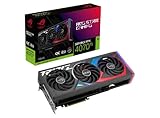
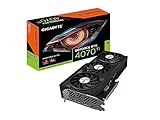
Same Architecture, Very Different Tiers
Both cards are Ada Lovelace designs with DLSS 3 frame generation, so the comparison comes down to scale. The RTX 4090 launched in September 2022 at $1,599 with 16,384 CUDA cores, 24 GB of GDDR6X on a 384-bit bus (1.01 TB/s) and a 72 MB L2 cache. The RTX 4070 Ti launched in January 2023 at $799 with 7,680 CUDA cores, 12 GB on a 192-bit bus (504.2 GB/s) and a 48 MB L2 cache. The 4090 has more than twice the shaders and exactly twice the memory and bandwidth.
RTX 4090 vs RTX 4070 Ti Specs
| Spec | RTX 4090 | RTX 4070 Ti |
|---|---|---|
| Architecture | Ada Lovelace | Ada Lovelace |
| Release date | 20 September 2022 | 3 January 2023 |
| Launch MSRP | $1,599 | $799 |
| CUDA cores | 16,384 | 7,680 |
| Boost clock | 2520 MHz | 2610 MHz |
| Process | 5 nm | 4 nm |
| TDP | 450 W | 285 W |
| VRAM | 24 GB GDDR6X | 12 GB GDDR6X |
| Memory bus | 384-bit | 192-bit |
| Bandwidth | 1.01 TB/s | 504.2 GB/s |
| L2 cache | 72 MB | 48 MB |
| Interface | PCIe 4.0 x16 | PCIe 4.0 x16 |
| Power connector | 1x 16-pin | 1x 16-pin |
| Length | 304 mm | 285 mm |
| Width | 3-slot | 2-slot |
| Display outputs | 1x HDMI 2.1, 3x DP 1.4a | 1x HDMI 2.1, 3x DP 1.4a |
Many partner RTX 4090 cards are much larger than the listed 304 mm and 3-slot figures. Some exceed 350 mm and take up nearly four slots.
How the Gap Changes With Resolution
The difference between these two cards depends heavily on resolution, because the 4090 is often CPU-limited below 4K and the 4070 Ti is bandwidth-limited above 1440p.
1440p
Tom’s Hardware measured the 4070 Ti averaging nearly 120 fps across its 1440p suite. TechSpot noted that even the fastest gaming CPUs can bottleneck the RTX 4090 at this resolution. Game-by-game data from GamersNexus shows the 4090 leading the slightly faster 4070 Ti Super by roughly 40-58% depending on the title. Combining these sources, expect the 4090 to be roughly 40-50% faster than the 4070 Ti at 1440p, with smaller gains in CPU-bound games.
4K
This is where the 4070 Ti falls back. TechPowerUp’s 4070 Ti reviews note that its AD104 chip becomes limited by cache size and the memory interface at higher resolutions, and that the RT performance hit is larger at 4K. Tom’s Hardware’s 4070 Ti averaged about 69 fps at 4K. Review data generally places the 4090 around 60-70% ahead at 4K. In demanding games at max settings, the 4070 Ti often sits in the 45-65 fps range where the 4090 runs at 80-110 fps. These figures vary with settings, CPU and patches.
Ray Tracing and Path Tracing
Both cards have third-generation RT cores, but the 4090 has more than twice as many. Its lead in heavy RT and path-traced games is usually at least as large as its 4K raster lead. With DLSS upscaling and frame generation, the 4090 can run full path tracing at 4K at playable frame rates. The 4070 Ti handles path tracing best at 1440p with DLSS.
DLSS Features: Identical Toolkit
As Ada Lovelace cards, both support the same set:
- DLSS Super Resolution, including the DLSS 4 transformer model
- DLSS Frame Generation (DLSS 3)
- Ray Reconstruction and Reflex
Neither supports DLSS Multi Frame Generation, which is exclusive to RTX 50 GPUs. Frame generation needs extra VRAM. On the 4070 Ti at 4K with max textures, that can push some games past 12 GB, while the 4090 has ample room.
VRAM and Creative/AI Workloads
Twelve gigabytes is fine for 1440p, but it is the 4070 Ti’s main long-term weakness at 4K. TechSpot raised the question at launch of how long 12 GB would last at this performance tier. For non-gaming work, Tom’s Hardware’s content-creation tests had the 4070 Ti trailing the 4090 by about 34%. Local AI is the bigger dividing line: 24 GB lets the 4090 run models that simply do not fit on a 12 GB card. That AI demand is a big reason the 4090 still commands a high used price.
Power Supply, Connector and Cooling
Both use a single 16-pin (12VHPWR-style) connector. With the 4090 drawing up to 450 W through it, seating matters. Reports of melted connectors were overwhelmingly linked to plugs that were not fully inserted or cables bent sharply near the socket. Use a native 16-pin cable from a quality PSU, push it in until it clicks, and avoid tight bends close to the card.
PSU Sizing Calculation
- RTX 4090: 450 W + 150 W high-end CPU + 150 W headroom = 750 W. In practice an 850-1000 W quality unit is recommended, and ATX 3.0/3.1 PSUs with a native 16-pin lead are the cleanest option.
- RTX 4070 Ti: 285 W + 150 W + 150 W = 585 W, so a quality 650-750 W PSU is plenty.
Case fit is a real concern for the 4090. Check GPU length clearance, side-panel clearance for the power cable, and whether a vertical-mount or support bracket is needed for heavy partner cards. Most 4070 Ti cards fit standard mid-towers without trouble.
Price, Value and the Used Market
Launch Cost per Performance Point
With the 4070 Ti as 100 and the 4090 at about 145 (1440p) or 165 (4K):
- RTX 4070 Ti: $799 / 100 = about $8.00 per point
- RTX 4090 at 1440p: $1,599 / 145 = about $11.00 per point
- RTX 4090 at 4K: $1,599 / 165 = about $9.70 per point
The 4070 Ti gives more frames per dollar, especially at 1440p. The 4090 narrows that gap at 4K and is the only one of the two that delivers top-tier 4K performance.
Buying Used in 2026
Both are previous-generation now. Used RTX 4070 Ti cards usually trade around $500-$650. Used RTX 4090 cards have held their value unusually well, often around $1,500-$2,000, because of AI demand. Compare both against current RTX 50 options: an RTX 5070 Ti (16 GB) is a stronger 1440p/4K buy than a used 4070 Ti, and an RTX 5080 is the newer alternative to a used 4090, though the 4090 keeps the VRAM advantage.
Which Card for Which Buyer
| Buyer profile | Pick |
|---|---|
| 1440p at 144-240 Hz, mainstream budget | RTX 4070 Ti |
| 4K at 120 Hz with maximum settings | RTX 4090 |
| Path tracing at 4K | RTX 4090 |
| Local LLMs, Stable Diffusion, heavy 3D rendering | RTX 4090 |
| Existing 650-750 W PSU, mid-tower case | RTX 4070 Ti |
| Mid-range CPU (e.g. 6-core) at 1440p | RTX 4070 Ti; the 4090 will be CPU-limited |
Frequently Asked Questions
How much faster is the RTX 4090 than the RTX 4070 Ti?
It depends on resolution. Review data puts the RTX 4090 roughly 40-50% ahead at 1440p, where CPU limits often hold it back, and around 60-70% ahead at 4K. In heavy ray-tracing and path-tracing workloads the lead is usually at the high end of that range or larger.
Is the RTX 4070 Ti enough for 4K gaming?
It can play many games at 4K, especially with DLSS, but TechPowerUp noted that demanding titles need lower details to hold 60 fps. Its 192-bit bus and 12 GB of VRAM become limiting factors at 4K. It is best treated as a high-end 1440p card.
What PSU do I need for an RTX 4090?
A quality 850-1000 W power supply is recommended, ideally ATX 3.0/3.1 with a native 16-pin cable. The math is 450 W for the GPU plus a high-end CPU and about 150 W of headroom, which already reaches 750 W before accounting for transient spikes. Make sure the 16-pin connector is fully seated.
Do both cards support DLSS 3 frame generation?
Yes. Both are RTX 40-series cards with DLSS Frame Generation, DLSS Super Resolution and Ray Reconstruction. Neither supports DLSS 4 Multi Frame Generation, which requires an RTX 50-series GPU.
Is a used RTX 4090 worth it over a new RTX 5080?
For gaming alone, an RTX 5080 offers a warranty, lower power draw and Multi Frame Generation, which makes it the simpler pick at a similar price. A used 4090 makes more sense if 24 GB of VRAM matters for AI or creative work, or if it is clearly cheaper. Check the card’s condition and connector carefully before buying.
Ready to decide? Our #1 pick for 2026 is the Architecture.
Live price & availability on Amazon.










Write Your Review
No reviews yet. Be the first to share your experience!