
Quick answer: For most people in 2026, the best tamron camera lenses for every budget is the Tamron 70-180mm F/2.8 Di III VC VXD G2 (Sony E, full frame) — our #1 rated choice. See the full ranked comparison, alternatives and buying advice below.
- Top 3 Picks
- Quick Comparison
- How We Chose
- 1. Tamron 70-180mm F/2.8 Di III VC VXD G2 – Best for All-Round Fast Telephoto
- 2. Tamron 18-300mm F/3.5-6.3 Di III-A VC VXD – Best Budget All-in-One Superzoom
- 3. Tamron 150-500mm f/5-6.7 Di III VC VXD – Best for Hand-Holdable Long Reach
- 4. Tamron 17-70mm F/2.8 Di III-A VC RXD – Best Budget Fast Standard Zoom for Canon RF-S
- 5. Tamron SP 70-200mm F/2.8 Di VC USD (Canon EF, Model A009E) – Best Premium DSLR Telephoto
- How to Choose
- Frequently Asked Questions
- Final Recommendation by Situation
Top 3 Picks
If you want the single best all-round answer to “best Tamron camera lenses,” it is the Tamron 70-180mm F/2.8 Di III VC VXD G2 for Sony E-Mount. It pairs a constant f/2.8 aperture with VXD linear-motor autofocus and VC image stabilization, making it the most flexible fast telephoto zoom for full-frame Sony shooters who want pro-grade glass without the size and cost of a 70-200mm f/2.8. Choose it if you shoot portraits, weddings, indoor sports, or events on a Sony E-mount full-frame body.
For the tightest budget, the Tamron 18-300mm F/3.5-6.3 Di III-A VC VXD for Sony E APS-C is the best value: a true all-in-one superzoom that replaces two or three kit lenses. It suits travel, hiking, and family photographers on APS-C Sony bodies who want one lens for everything from wide landscapes to distant wildlife.
For premium reach in a compact package, the Tamron 150-500mm f/5-6.7 Di III VC VXD is the standout. It delivers 500mm of full-frame reach in a body you can hand-hold, which is rare at this focal length. It suits wildlife and motorsport shooters on Sony full-frame who need reach without a tripod-first, five-figure telephoto prime.
Quick Comparison
| Product | Best For | Key Specs | Price Tier |
|---|---|---|---|
| Tamron 70-180mm F/2.8 Di III VC VXD G2 (Sony E, full frame) | All-round fast telephoto: portraits, events, indoor sports | 70-180mm, constant f/2.8, VC stabilization, VXD linear AF motor, full-frame Sony E | Mid-range |
| Tamron 18-300mm F/3.5-6.3 Di III-A VC VXD (Sony E, APS-C) | One-lens travel and everyday superzoom | 18-300mm (27-450mm equiv.), f/3.5-6.3, VC, VXD AF, APS-C Sony E | Budget |
| Tamron 150-500mm f/5-6.7 Di III VC VXD (Sony E, full frame) | Hand-holdable long reach for wildlife and motorsport | 150-500mm, f/5-6.7, VC, VXD AF, full-frame Sony E, tripod collar | Mid-range |
| Tamron 17-70mm F/2.8 Di III-A VC RXD (Canon RF, APS-C) | Fast standard zoom for Canon RF-S shooters | 17-70mm (27-112mm equiv.), constant f/2.8, VC, RXD stepping AF, APS-C Canon RF | Budget |
| Tamron SP 70-200mm F/2.8 Di VC USD (Canon EF, Model A009E) | Legacy DSLR fast telephoto on Canon EF | 70-200mm, constant f/2.8, VC, USD ring-type AF, full-frame Canon EF | Premium |
How We Chose
This roundup maps Tamron lenses to the decision a buyer actually faces: which mount you own, which focal-length range you shoot in, whether you need a constant fast aperture or can live with a variable one, and how much weight you are willing to carry. We grouped candidates by mount compatibility first, because a lens that does not fit your camera is irrelevant no matter how good it is. From there we filtered by focal-length coverage, aperture behavior, stabilization, autofocus motor type, and physical size.
We prioritized lenses that solve a clear problem: a fast telephoto zoom for low light, a superzoom for travel, a long telephoto for reach, a fast standard zoom for Canon RF-S, and a proven DSLR workhorse for Canon EF owners. Category fit mattered more than raw specifications. A constant f/2.8 aperture is worth far more to a wedding photographer than a slightly sharper variable-aperture lens, while a traveler will trade aperture speed for one lens that covers everything.
We also weighed upgrade path and long-term value. Mounts are moving targets, and a lens that fits the camera you own today and the system you are likely to stay in tomorrow is a better buy. These are research-based judgments drawn from published manufacturer specifications, professional reviews, and owner feedback — not from our own testing. Prices are given only as general market ranges because listings change frequently.
1. Tamron 70-180mm F/2.8 Di III VC VXD G2 – Best for All-Round Fast Telephoto
As an Amazon Associate we earn from qualifying purchases at no extra cost to you.

The Tamron 70-180mm F/2.8 Di III VC VXD G2 is the lens that answers the most common Tamron question: what is the best fast telephoto zoom I can buy for a full-frame Sony body without spending 70-200mm f/2.8 money? The G2 generation added VC (Vibration Compensation) image stabilization, which the first version lacked — a meaningful upgrade for handheld event and portrait work in low light. The second-generation also brought a refined VXD linear-motor autofocus system and improved optical coatings and handling.
Who it suits: full-frame Sony E-mount photographers who shoot portraits, weddings, events, concerts, indoor sports, or stage work, and who want a constant f/2.8 aperture across a useful telephoto range. It also suits hybrid shooters who switch between stills and video, because the VXD linear motor is designed for smooth, quiet focus transitions that avoid the audible stepping some older motors produce on the soundtrack.
- Focal length: 70-180mm (full frame)
- Aperture: constant f/2.8 across the zoom range
- Mount: Sony E, full-frame coverage
- Stabilization: VC (Vibration Compensation)
- Autofocus: VXD linear motor, internal focusing
- Class: Fast telephoto zoom, approximately 1.5-2 lb class
- Weather sealing: moisture-resistant construction, fluorine coating on front element
Strengths
The defining strength is the constant f/2.8 aperture at a size and weight that a 70-200mm f/2.8 cannot match. That constant aperture matters in two situations: at the long end, where a variable zoom would drop to f/5.6 or f/6.3 and force a higher ISO, and across the whole range, where you can frame consistently without recalculating exposure. The 180mm long end is a deliberate compromise — Tamron traded the last 20mm for a much smaller barrel, and in practice the difference between 180mm and 200mm is about the width of a step forward, not a framing revolution.
The G2’s VC unit is the biggest functional gain. Handholding a 150mm to 180mm shot at 1/60s becomes realistic in a way it is not on an unstabilized body-and-lens combo. Combined with IBIS on a Sony body, the two systems work together to buy you roughly two to four stops of usable shutter-speed headroom in typical conditions, though the exact benefit varies by shooter and body.
Pros
- Constant f/2.8 aperture across the range
- VXD linear autofocus: fast, quiet, video-friendly
- VC stabilization added in this generation
- Noticeably smaller and lighter than 70-200mm f/2.8 competitors
- Internal zoom and focus, so the barrel does not extend
- Strong value in the mid-range fast-telephoto class
Cons
- Stops at 180mm, not 200mm
- f/2.8 depth of field is excellent, but it is not an f/1.8 or f/1.4 prime
- No tripod collar in the box on some versions, which matters on a gimbal
- Focus breathing and close-focus behavior are fine but not macro-grade
How It Compares
Against the nearest alternative in this list — the Tamron SP 70-200mm F/2.8 Di VC USD (Canon EF) — the G2 wins on size, weight, and mount modernity. The SP 70-200mm is a DSLR-era design for Canon EF; it is built for DSLR bodies and relies on the older USD ring-type motor. If you shoot Sony mirrorless, the G2 is the obvious choice. If you still shoot Canon EF DSLRs, the SP 70-200mm remains the natural path. Against the 150-500mm, the G2 is a different tool entirely: one is about aperture and portrait compression, the other about reach. Many serious shooters eventually own both.
2. Tamron 18-300mm F/3.5-6.3 Di III-A VC VXD – Best Budget All-in-One Superzoom
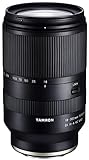
The Tamron 18-300mm F/3.5-6.3 Di III-A VC VXD for Sony E APS-C is, in the most literal sense, a whole camera bag in one barrel. It covers an 18mm wide end out to a 300mm telephoto end on APS-C, which translates to roughly a 27-450mm full-frame equivalent field of view. That range means you can shoot a landscape, then turn around and photograph a bird, without swapping glass. The Di III-A designation indicates it is designed for APS-C mirrorless bodies, and the VC and VXD in the name tell you it carries image stabilization and a linear autofocus motor.
Who it suits: travelers, hikers, backpackers, and parents who want one lens on the camera and no decisions to make. It also suits new APS-C Sony owners upgrading from a slow kit zoom, because it immediately expands what they can shoot without requiring a second purchase. Portrait shooters who want a versatile backup lens will also find it useful.
- Focal length: 18-300mm (approximately 27-450mm full-frame equivalent)
- Aperture: f/3.5 at the wide end, f/6.3 at the long end
- Mount: Sony E, APS-C coverage
- Stabilization: VC (Vibration Compensation)
- Autofocus: VXD linear motor
- Class: All-in-one superzoom, compact and light for its range
- Close focus: modest close-focus capability at the wide end for near-macro work
Strengths
The single greatest strength is the “always mounted” factor. Photographers who carry one body and one lens take more pictures than photographers who carry three lenses and a bag, because the friction of changing lenses kills shots. A superzoom removes that friction entirely. The VXD linear motor keeps focusing quiet and fast for a lens of this type, which matters more than most buyers expect — superzooms historically had slow, hunting autofocus, and a linear motor largely eliminates the worst of that.
VC stabilization is the second major strength. At 300mm on APS-C, hand-holding is demanding, and the effective 450mm-equivalent reach magnifies every shake. Stabilization turns a lens that would otherwise demand a monopod into one you can use handheld in good light. That said, it does not make up for the slow f/6.3 long-end aperture, so low-light telephoto shooting remains a genuine limitation.
Pros
- Enormous 18-300mm range covers wide to telephoto
- Compact and light relative to the reach offered
- VC stabilization for handheld telephoto work
- VXD linear autofocus: quiet and reasonably fast
- Outstanding value in the budget tier
- One-lens solution for travel and everyday photography
Cons
- Variable aperture is slow at the long end (f/6.3)
- Not designed for serious low-light or shallow-depth-of-field work
- Optical compromises inherent to any long-range superzoom
- APS-C only; will not cover a full-frame sensor without crop mode
How It Compares
Against the nearest alternative in this list — the Tamron 17-70mm F/2.8 Di III-A VC RXD for Canon RF APS-C — the two lenses make opposite trade-offs. The 18-300mm gives you reach and versatility; the 17-70mm gives you a constant f/2.8 aperture and better low-light performance but stops at 70mm. A travel photographer rarely needs f/2.8 and almost always wants 300mm; an event or portrait photographer on APS-C usually needs the aperture more than the reach. If you shoot a mix, the 18-300mm is the better single-lens bet, and you add a fast prime later for low light.
3. Tamron 150-500mm f/5-6.7 Di III VC VXD – Best for Hand-Holdable Long Reach

The Tamron 150-500mm f/5-6.7 Di III VC VXD is a full-frame Sony E-mount super-telephoto zoom built around a specific insight: most people who need 500mm do not want to carry a 600mm f/4. This lens reaches 500mm while remaining genuinely hand-holdable, thanks to a relatively compact barrel, VC stabilization, and a VXD linear motor that keeps the focusing group light. It is the reach lens for people who hike to their subjects rather than park next to them.
Who it suits: wildlife photographers, birders, motorsport and airshow shooters, and sports photographers who work outdoors in daylight. It also suits enthusiasts on full-frame Sony who have outgrown a 70-300mm and want a meaningful step up in reach without committing to a heavy, specialized super-telephoto prime. The variable f/5-6.7 aperture is a daylight aperture, so shooters who work at dawn, dusk, or under stadium lights should understand that limitation up front.
- Focal length: 150-500mm (full frame)
- Aperture: f/5 wide, f/6.7 at the long end
- Mount: Sony E, full-frame coverage
- Stabilization: VC (Vibration Compensation)
- Autofocus: VXD linear motor
- Class: Super-telephoto zoom with tripod collar
- Handling: designed for handheld use at the long end, with a rotating tripod mount for balance
Strengths
Reach plus portability is the whole point. A 500mm full-frame field of view is a serious birding and wildlife focal length, and getting there in a lens you can carry on a shoulder strap changes how you shoot. The included tripod collar is not an afterthought — at 500mm, balance matters enormously, and being able to rotate the collar lets you switch quickly between landscape and portrait orientation on a monopod or gimbal without re-leveling the whole rig.
The VXD linear motor is important for a lens this long. Older super-telephoto zooms with gear-driven or micromotor autofocus hunt badly and sound worse. A linear motor moves the focus group directly and quickly, which improves both hit rate on moving subjects and usability for video. Combined with VC, it makes the 150-500mm feel far more modern than its price tier suggests.
A note on aperture physics: at 500mm and f/6.7, depth of field is thin in absolute terms but the light gathering is modest. That is simply the math of a compact long zoom. Understanding it helps you plan: shoot in good light, raise ISO when needed, and use the stabilization to buy slower shutter speeds rather than assuming you can shoot at f/2.8 with a 500mm lens.
Pros
- 500mm full-frame reach in a hand-holdable body
- VC stabilization essential at this focal length
- VXD linear autofocus: fast and quiet
- Tripod collar included for balance and orientation changes
- Strong value for the reach in the mid-range tier
- Good partner to a 70-180mm or standard zoom for a two-lens kit
Cons
- Slow variable aperture (f/5-6.7) limits low-light use
- Not as sharp wide open at 500mm as a dedicated super-telephoto prime
- Still a substantial lens to carry on long hikes
- No full compatibility with every teleconverter, depending on mount version
How It Compares
Against the nearest alternative here — the Tamron 70-180mm F/2.8 Di III VC VXD G2 — the decision is reach versus aperture. The 150-500mm gives you 500mm; the 70-180mm gives you f/2.8. A wildlife shooter in daylight wants the 150-500mm. An event or portrait shooter wants the 70-180mm. Against the 18-300mm APS-C superzoom, the 150-500mm is the full-frame, longer-reach, better-built option for shooters who have committed to full frame and need to reach past 300mm equivalent. If you shoot both formats, the 150-500mm is the natural long end of a full-frame kit.
4. Tamron 17-70mm F/2.8 Di III-A VC RXD – Best Budget Fast Standard Zoom for Canon RF-S
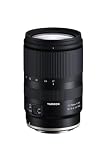
The Tamron 17-70mm F/2.8 Di III-A VC RXD for Canon RF APS-C is the fast standard zoom for Canon’s crop-sensor mirrorless system. On APS-C, 17-70mm covers roughly a 27-112mm equivalent field of view — the classic walk-around range — but with a constant f/2.8 aperture instead of the f/3.5-6.3 of a typical kit lens. That constant aperture is the entire reason to buy this lens. The RXD (Rapid eXtra-silent stepping Drive) motor is designed for quiet, smooth autofocus, and the Di III-A name confirms the APS-C design. VC stabilization rounds out the feature set.
Who it suits: Canon RF-S shooters who want one lens that handles portraits, events, street photography, and low-light interiors without dropping to a slow variable aperture. It is a particularly good upgrade for someone who bought an APS-C Canon mirrorless with a kit zoom and is deciding what to add next. It also suits hybrid shooters because the RXD stepping motor is smooth for video.
- Focal length: 17-70mm (approximately 27-112mm full-frame equivalent)
- Aperture: constant f/2.8 across the zoom range
- Mount: Canon RF, APS-C coverage
- Stabilization: VC (Vibration Compensation)
- Autofocus: RXD stepping motor
- Class: Fast standard zoom, compact zoom for APS-C
- Close focus: useful minimum focus distance for near-macro detail at the wide end
Strengths
The constant f/2.8 aperture is the headline. Compared with a kit zoom that drops to f/6.3 at 70mm, this lens gathers roughly two-and-a-half to three stops more light at the long end — a difference that shows up directly as lower ISO, faster shutter speeds, and more background blur. In practice, that is the difference between a usable indoor portrait and a noisy one.
VC stabilization adds a second layer of low-light capability, and the combination of stabilization plus f/2.8 makes this an unusually capable indoor lens for a crop-sensor system. The zoning is also practical: 17mm is genuinely wide for landscapes and interiors, while 70mm gives enough compression for head-and-shoulders portraits.
A structural advantage of the RF-S mount situation is that Tamron third-party RF glass expands the options for Canon APS-C shooters considerably. Historically, that system’s fast-zoom choices were limited, so a lens like this fills a real gap rather than duplicating something already available.
Pros
- Constant f/2.8 aperture across the zoom range
- Very useful 17-70mm APS-C range
- VC stabilization
- RXD stepping motor: quiet and video-friendly
- Budget-tier price for a fast zoom
- Fills a genuine gap in the Canon RF-S lens lineup
Cons
- APS-C only; not for full-frame Canon RF bodies
- 70mm maximum reach is limiting for sports and wildlife
- Stepping motor is excellent for video but not the fastest in absolute tracking speed for erratic action
- No aperture ring on the version described
How It Compares
Against the nearest alternative in this list — the Tamron 18-300mm F/3.5-6.3 Di III-A VC VXD for Sony E APS-C — the trade-off is aperture versus reach, and also mount. The 17-70mm is the faster lens with the better low-light performance; the 18-300mm is the more versatile lens with far more reach. They are also on different mounts, so the choice may be made for you by the body you own. If you shoot Canon RF-S, the 17-70mm is the fast standard zoom to get. If you shoot Sony APS-C and want one lens for everything, the 18-300mm is the better fit. Many shooters on either system eventually end up with both a fast zoom and a long zoom.
5. Tamron SP 70-200mm F/2.8 Di VC USD (Canon EF, Model A009E) – Best Premium DSLR Telephoto
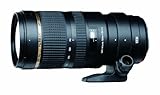
The Tamron SP 70-200mm F/2.8 Di VC USD for Canon EF (Model A009E) is the DSLR-era classic in this list. The SP designation marks it as part of Tamron’s high-end Super Performance line, and the combination of a constant f/2.8 aperture, VC stabilization, and a USD (Ultrasonic Silent Drive) ring-type autofocus motor made it a genuinely competitive alternative to first-party 70-200mm f/2.8 lenses when it launched. It is built for Canon EF-mount DSLR bodies and covers a full-frame sensor.
Who it suits: photographers still shooting Canon EF DSLRs — especially 5D-series and 6D-series owners — who want a fast telephoto zoom for portraits, weddings, events, and stage work. It also suits shooters who have added EF-to-mirrorless adapters and want to reuse EF glass on a newer body, though autofocus behavior through an adapter varies by camera and adapter.
- Focal length: 70-200mm (full frame)
- Aperture: constant f/2.8 across the zoom range
- Mount: Canon EF, full-frame coverage
- Stabilization: VC (Vibration Compensation)
- Autofocus: USD ring-type ultrasonic motor
- Class: Professional fast telephoto zoom, internal zoom and focus
- Build: moisture-resistant construction, includes tripod collar
Strengths
The full 70-200mm range is the key difference from the 70-180mm G2 elsewhere in this list. That extra 20mm at the long end is not enormous, but on a DSLR where every millimeter of reach can save a crop, some shooters value it. The USD ring-type motor is also a proven design with fast, quiet focusing that holds up well for tracking moving subjects.
For DSLR shooters, this lens represents remarkable value. First-party 70-200mm f/2.8 lenses command premium prices, and the SP version delivers the same core formula — constant f/2.8, stabilization, fast ring-type AF, weather resistance — at a lower cost. That value proposition was the entire reason the SP line existed and remains its strongest argument in the used and new-old-stock market.
The tripod collar and internal zoom design also matter for professional use. Internal zoom means the barrel does not extend, which keeps balance consistent on a gimbal and reduces the chance of dust ingress. For event and wedding work on a monopod, that stability is a real workflow benefit.
Pros
- Full 70-200mm range with constant f/2.8
- VC stabilization
- USD ring-type ultrasonic autofocus
- Internal zoom and focus with tripod collar
- Moisture-resistant professional build
- Strong value versus first-party equivalents
Cons
- Canon EF mount is a legacy DSLR system, not the future of the platform
- Heavier and larger than modern mirrorless 70-180mm designs
- Adapted autofocus performance on mirrorless bodies varies
- Ring-type motors are quiet but the design predates modern linear motors
How It Compares
Against the nearest alternative here — the Tamron 70-180mm F/2.8 Di III VC VXD G2 for Sony E — the differences are mount, size, and autofocus technology. The G2 is smaller and lighter, uses a linear motor, and is built for mirrorless. The SP 70-200mm offers the full 200mm range and is designed for DSLR ergonomics. If you shoot Canon EF DSLRs, the SP is the natural choice. If you shoot Sony mirrorless, the G2 is clearly the better lens. If you are adapting EF glass to mirrorless, weigh the adapter cost and the autofocus behavior carefully against simply buying native glass.
How to Choose
Choosing a Tamron lens comes down to five decisions in a fixed order. Make them in this sequence and the answer usually falls out on its own.
1. Match the mount first
Mount compatibility is non-negotiable and comes before every other consideration. The lenses in this roundup divide into four groups: full-frame Sony E (70-180mm G2 and 150-500mm), APS-C Sony E (18-300mm), APS-C Canon RF (17-70mm), and full-frame Canon EF (SP 70-200mm). A lens for the wrong mount cannot be used, adapted around the problem, or “made to work” — with one exception. Canon EF lenses can be adapted to Canon RF mirrorless bodies and, with third-party adapters, to some other mirrorless systems. Sony E lenses cannot be adapted to Canon or Nikon bodies in any generally reliable way. If you shoot Canon RF-S and want the 17-70mm, it fits natively. If you shoot Canon RF-S and want the 18-300mm, note that the version listed here is the Sony E mount — check your system before buying.
One more mount subtlety: a lens designed for APS-C will mount on a full-frame body of the same system but will either force an automatic crop or produce heavy vignetting, depending on the camera. APS-C lenses on full-frame bodies waste most of the sensor you paid for. Unless you specifically want crop-mode reach — a legitimate trick for extending telephoto reach at reduced resolution — buy full-frame lenses for full-frame bodies.
2. Decide your focal-length range from your subject
Focal length follows subject, not preference. Here is the practical mapping:
| Subject / Use | Focal Range Needed (Full-Frame Equivalent) | Tamron Option in This List |
|---|---|---|
| Landscapes, interiors, architecture | 16-35mm | Wide end of 17-70mm (APS-C) or 18-300mm |
| Street, travel, everyday, portraits | 24-70mm | 17-70mm (APS-C, ~27-112mm equiv.) |
| Portraits, events, weddings, concerts | 70-200mm at f/2.8 | 70-180mm G2 or SP 70-200mm |
| Indoor sports, stage, low-light action | 70-200mm at f/2.8 | 70-180mm G2 |
| Wildlife, birds, motorsport, airshows | 300-600mm | 150-500mm |
| Everything, one lens, travel light | 18-300mm (APS-C) | 18-300mm |
Notice that two categories need f/2.8 and three do not. That is the aperture decision in disguise.
3. Decide whether you need a constant aperture
Constant aperture is a quality-of-life feature with a measurable cost. A constant f/2.8 zoom like the 70-180mm G2, the 17-70mm, or the SP 70-200mm stays fast across its whole range. A variable zoom like the 18-300mm starts at f/3.5 and ends at f/6.3. The difference at the long end is 2.5 to 3 stops of light. Concretely: if a correct exposure at f/6.3 requires ISO 6400, then at f/2.8 the same shot needs roughly ISO 800-1000. That is the difference between a clean image and a noisy one on most sensors, and it is the single strongest argument for paying more for f/2.8.
Constant aperture also keeps exposure consistent as you zoom, which matters for video and for event shooting where you are constantly changing framing. With a variable zoom, zooming changes exposure, and if you are in manual mode you must compensate every time. That is a real workflow tax.
4. Weigh stabilization against your body’s IBIS
All five lenses here have VC stabilization, so this is less about choosing a lens with stabilization and more about understanding how it interacts with in-body stabilization. Modern mirrorless bodies have IBIS, and when a stabilized lens and a stabilized body work together, the systems combine. The practical benefit is roughly two to four stops of extra shutter-speed headroom, though the exact figure varies by shooter, body, and focal length. Stabilization matters most at long focal lengths: at 300mm or 500mm, handheld shooting without stabilization is close to hopeless. At 17mm or 24mm, it is a convenience rather than a necessity.
If you shoot video, stabilization is nearly mandatory, and lens-based VC often produces smoother footage than IBIS alone at longer focal lengths. Remember that stabilization does not stop subject motion — it only addresses camera shake. For a running child or a flying bird, you still need a fast shutter speed.
5. Balance weight, size, and how you actually shoot
The last filter is ergonomics, and it is the one buyers underestimate most. A lens that stays at home is worth nothing. Consider how each option changes what you carry:
- 18-300mm (budget, APS-C): the lightest and most versatile; one lens replaces a kit bag; the obvious choice for hiking and travel.
- 17-70mm (budget, Canon RF-S): compact and fast; a good single-lens walk-around for Canon crop bodies.
- 70-180mm G2 (mid-range, Sony full frame): remarkably light for a constant f/2.8 telephoto; genuinely carryable all day on a shoulder strap.
- 150-500mm (mid-range, Sony full frame): the heaviest of the zooms here, though still hand-holdable by the standards of a 500mm lens; pair it with a monopod for long sessions.
- SP 70-200mm (premium, Canon EF): a substantial DSLR-era lens; consider the weight before committing if you adapt it to a smaller mirrorless body, where the balance can feel front-heavy.
A useful rule: if a lens weighs more than roughly the same as your camera body, you will notice it after an hour. For long-lens work, plan on a monopod or a sling strap. For a superzoom on a hike, a simple shoulder strap is fine.
Putting the decision matrix together
| Your Situation | Best Tamron Choice | Why |
|---|---|---|
| Full-frame Sony, shoot portraits/events, want fast AF | 70-180mm F/2.8 G2 | Constant f/2.8, VC, lightweight, linear AF |
| Sony APS-C, want one lens for travel and everything | 18-300mm | Widest range, VC, VXD, budget price |
| Full-frame Sony, shoot wildlife and birds in daylight | 150-500mm | 500mm reach, VC, tripod collar |
| Canon RF-S, want a fast everyday zoom | 17-70mm F/2.8 | Constant f/2.8 at budget tier, native RF |
| Canon EF DSLR, want a professional fast telephoto | SP 70-200mm F/2.8 | Full 70-200mm range, VC, USD motor, premium build |
| Want both aperture and reach over time | Add 70-180mm G2 + 150-500mm | Covers fast portraits and long reach with one mount |
A note on third-party value and system strategy
Tamron’s position in the market is straightforward: it sells lenses that fill gaps the first-party makers leave open, usually at a lower price. That makes Tamron glass a strong strategic choice for two kinds of buyers. The first is someone who needs a focal length or aperture their camera maker either does not offer in that mount or offers only at a much higher tier. The second is someone building a lens collection on a budget who would rather have two good Tamron lenses than one premium first-party lens.
There are trade-offs. First-party lenses sometimes have marginal advantages in autofocus compatibility, resale value, and integration with body-specific features like teleconverter support or manufacturer-specific stabilization modes. Those advantages are real but usually modest, and for most shooters the price difference is decisive. The calculus changes only if you rely on a feature that third-party glass does not support on your specific body, so check compatibility before buying — especially around teleconverters and any camera-specific focus modes you depend on.
The other strategic consideration is mount longevity. Canon EF is a DSLR-era mount. If you are investing in Canon EF glass — including the SP 70-200mm — do so knowing the system is mature rather than growing. That is not a reason to avoid it, particularly if you already own EF bodies and lenses, but it is a reason to look hard at adapting versus buying native glass if your next camera is likely to be mirrorless.
Frequently Asked Questions
What is the best Tamron lens overall?
For most people, the Tamron 70-180mm F/2.8 Di III VC VXD G2 is the best overall choice because it combines a versatile telephoto range, a constant f/2.8 aperture, stabilization, and a fast linear autofocus motor in a body that is easy to carry. It covers the portrait, event, and indoor-action use cases that most photographers actually shoot in low light. If your priority is reach rather than aperture, the 150-500mm is the better answer for your specific needs.
Are Tamron lenses compatible with Canon RF cameras?
Some Tamron lenses are made natively for Canon RF, including the 17-70mm F/2.8 Di III-A VC RXD for Canon RF APS-C mirrorless cameras covered here. Canon EF-mount Tamron lenses, such as the SP 70-200mm, can be used on Canon RF bodies through an EF-to-RF adapter, but autofocus behavior depends on the adapter and camera. Always confirm the exact mount version before buying, because the same model name is often sold in several mounts.
Is a constant f/2.8 lens worth it over a superzoom?
Yes, if you shoot in low light or want shallow depth of field. A constant f/2.8 zoom like the 70-180mm G2 or 17-70mm gathers roughly 2.5 to 3 stops more light at the long end than a variable f/6.3 superzoom, which translates into dramatically lower ISO and cleaner images indoors. If you mostly shoot outdoors in daylight and value one-lens convenience, a superzoom like the 18-300mm is the smarter buy and costs less.
Do I need image stabilization on a Tamron lens?
It depends on focal length. At 300mm or 500mm, stabilization (Tamron’s VC) is close to essential for handheld work, because camera shake is magnified by the long focal length. At wide focal lengths like 17mm or 24mm, stabilization is a convenience rather than a requirement, and many modern bodies provide in-body stabilization anyway. All the lenses in this roundup include VC, so if you are choosing between them, stabilization is not the deciding factor.
Can I use an APS-C Tamron lens on a full-frame camera?
Technically yes, on the same mount system, but with a major caveat: an APS-C lens like the 18-300mm will either force the full-frame camera into crop mode or produce heavy vignetting across most of the frame. That means you are using only the central portion of your sensor and throwing away resolution. Unless you specifically want crop-mode reach extension, buy full-frame lenses for full-frame bodies.
What focal length do I need for wildlife?
For most wildlife and bird photography, 300mm is the practical minimum on full frame and 400-600mm is the comfortable range. On APS-C, the crop factor gives you extra effective reach, so a 300mm lens behaves like roughly a 450mm lens. The Tamron 150-500mm is the strongest option in this list for that use, because it reaches 500mm natively without a teleconverter.
Is the Tamron 70-180mm as good as a 70-200mm?
The 70-180mm covers almost the same range and delivers the same constant f/2.8 aperture, and it is noticeably smaller and lighter than most 70-200mm f/2.8 lenses. The trade-off is the missing 20mm at the long end, which is a modest difference in framing. For most portrait, event, and indoor sports work, the 70-180mm gives you nearly identical results in a more portable package.
Should I buy Tamron or first-party lenses?
Tamron lenses typically cost less than equivalent first-party lenses while offering the same core specifications: constant apertures, stabilization, and fast autofocus. First-party lenses sometimes have marginal advantages in autofocus compatibility, teleconverter support, and resale value. If those specific features matter to you, pay the premium; if you want the same capability for less money, Tamron is usually the stronger value.
Final Recommendation by Situation
If you shoot full-frame Sony and want one fast telephoto that handles portraits, events, and low-light action, buy the Tamron 70-180mm F/2.8 Di III VC VXD G2. It is the most useful single lens in this roundup for the widest range of real shooting situations.
If you shoot Sony APS-C and want one lens that does everything from landscape to distant telephoto, buy the Tamron 18-300mm F/3.5-6.3 Di III-A VC VXD. It is the best budget-tier value here and the ideal travel companion.
If you shoot full-frame Sony and your subject is wildlife, birds, or motorsport in daylight, buy the Tamron 150-500mm f/5-6.7 Di III VC VXD. The 500mm reach and hand-holdable design make it the clear pick for long-range work.
If you shoot Canon RF-S and want a fast everyday zoom, buy the Tamron 17-70mm F/2.8 Di III-A VC RXD. The constant f/2.8 aperture at a budget price is the reason to choose it over any kit zoom.
If you shoot a Canon EF DSLR and want a professional fast telephoto, buy the Tamron SP 70-200mm F/2.8 Di VC USD (Model A009E). It delivers the full 70-200mm range with premium build quality and remains a strong value in the EF system.
Ready to decide? Our #1 pick for 2026 is the Tamron 70-180mm F/2.8 Di III VC VXD G2 (Sony E, full frame).
Live price & availability on Amazon.






Write Your Review
No reviews yet. Be the first to share your experience!