
- Top Pick: Cedar Raised Garden Bed with Legs, Outdoor Planter Box 48x24x30, 200lb
- Best Value: Yaheetech Raised Garden Bed Wooden Planter Box for Vegetables/Flowers, Wood
- Premium Choice: Best Choice Products 72x24x30in Raised Garden Bed, Elevated Wood Planter Box Stand for Backyard, Patio, Balcony w/Divider Panel, 6 Legs, 300lb Capacity – Natural
The best cedar raised garden beds for most home gardens are 2-inch-thick western red cedar beds measuring about 2 feet wide by 6–8 feet long, assembled with corrosion-resistant hardware and left unlined except where soil contact, pathways, or contamination make a liner useful.
As an Amazon Associate we earn from qualifying purchases at no extra cost to you.


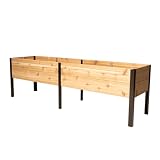
Best Cedar Raised Garden Beds by Growing Situation
No single bed is best for every yard. The right choice depends on how much space you have, how deep your crops need to root, how often you want to rebuild the bed, and whether the soil underneath is safe and well drained.
| Growing situation | Recommended cedar | Useful dimensions | Board thickness | Why it fits |
|---|---|---|---|---|
| Small patio or balcony | Northern white cedar | 2 x 4 ft; 10–12 in high | 1–1.25 in | Light enough to move and economical for limited planting |
| Typical backyard vegetable bed | Western red cedar | 2 x 6–8 ft; 12–18 in high | 1.5–2 in | Good access, strong sides, and long service life |
| Deep-rooted crops or poor native soil | Western red cedar | 3 x 6–8 ft; 24 in high | 2 in | Provides substantial root depth without requiring digging |
| Wet climate or very long service life | Thick western red cedar | 2 x 6 ft; 12–18 in high | 2 in or thicker | Better resistance to bowing and repeated wet-dry cycles |
| Decorative entryway or dry climate | Eastern red cedar | 2 x 4–6 ft; 12 in high | 1.5–2 in | Distinctive color and aroma, with good outdoor durability |
Cedar Species: Which One Should You Choose?
Western red cedar
Western red cedar is usually the strongest all-around choice for raised beds. It contains natural oils that slow decay, is relatively light for its strength, and is widely available in long, straight boards. Its reddish-brown appearance gradually weathers to gray outdoors. Choose clear, sound boards when appearance matters, but knotty grades can work well when the knots are tight and the price is lower.
Western red cedar is softer than many construction woods, so it can dent and split if screws are driven too close to an end. Pre-drilling and using washers or structural corner brackets helps prevent this. For a permanent bed, 2-inch boards are worth the extra cost because they resist bowing when filled with wet soil.
Northern white cedar
Northern white cedar is naturally rot resistant and often costs less than western red cedar, depending on regional supply. It is light, easy to cut, and suitable for low beds or smaller planters. However, thinner boards can warp more readily, especially when one side stays wet and the other dries in the sun.
Use 1-inch boards for a compact 10–12-inch bed with closely spaced corner supports. For beds longer than 6 feet or taller than 12 inches, choose thicker stock or add intermediate braces.
Eastern red cedar
Eastern red cedar is actually a juniper rather than a true cedar, but it is commonly sold under this name. It has good decay resistance and a strong reddish color. It can be a practical choice where locally milled boards are available, although dimensions may be less standardized and the wood may contain more knots or irregular edges.
Do not select a board solely because it says “cedar.” Confirm the species, actual thickness, and whether the material is intended for exterior use. Cedar fence pickets are inexpensive, but many are too thin for tall beds and may require frequent replacement.
Board Thickness and Bed Height
Board thickness affects structural stability more than most product descriptions suggest. Soil is heavy: a cubic foot of moist growing mix can weigh roughly 40–60 pounds. A long, tall bed therefore pushes outward continuously, not just when it is first filled.
- 1-inch boards: Suitable for low beds up to about 12 inches high, especially when the sides are short or reinforced.
- 1.5-inch boards: A good middle ground for ordinary backyard beds up to 18 inches high.
- 2-inch boards: Best for 18–24-inch beds, long sides, wet climates, and gardeners who want fewer repairs.
- 2.5 inches or more: Useful for large permanent installations, but often unnecessary unless the bed is unusually tall or wide.
For a 24-inch-high bed, use two stacked 12-inch boards with staggered joints, or four 6-inch courses. Secure each corner independently rather than relying on one long screw through the entire wall. Add a center tie or cross brace on any side longer than 6 feet, particularly when using boards thinner than 2 inches.
Dimensions That Make Gardening Easier
Keep the bed narrow enough that you never need to step into it. A 2-foot width allows most people to reach the center from either side. A 3-foot width works when the bed is accessible from both sides and the gardener has a comfortable reach. Avoid widths above 4 feet unless there is access from all directions.
Length is mainly a layout decision. Six-foot beds are easy to handle and fit many yards; 8-foot beds use standard lumber efficiently but are heavier to move. A 12-inch height is enough for lettuce, herbs, beans, and many annual flowers. Tomatoes, carrots, potatoes, and other crops benefit from 18 inches or more, especially over compacted or contaminated ground.
Calculate soil volume before buying materials. A bed measuring 2 x 8 x 1.5 feet requires:
2 × 8 × 1.5 = 24 cubic feet
Because soil settles, order about 10% extra, or approximately 26.5 cubic feet. That is roughly 1 cubic yard, since 1 cubic yard equals 27 cubic feet. This calculation prevents the common mistake of buying enough soil for the bed’s outside dimensions but ending up several inches short after watering and settling.
Liners: When They Help and When They Hurt
A liner is not automatically required. Soil touching cedar does not usually cause immediate failure, and an unlined bed drains more naturally. A liner can nevertheless be valuable in specific situations.
- Use landscape fabric on the bottom when you need to separate clean soil from grass, aggressive weeds, or shallow roots. Secure it to the inside wall and allow water to pass through.
- Use a geotextile or pond-liner material on the inner walls when the bed is built against concrete, masonry, or another surface that keeps the cedar constantly wet. Leave the bottom open for drainage.
- Use a food-safe liner rated for garden use when growing above questionable soil and you need a complete barrier. Add drainage holes or leave the underside open so water cannot collect.
- Avoid ordinary plastic sheeting pressed tightly against the wood. It can trap condensation, slow drying, and accelerate decay at the inner face of the boards.
If a liner is used, do not puncture it only at the corners. Provide multiple drainage openings across the entire base, and make sure the ground below is not compacted clay that will hold water.
Assembly Details That Determine Durability
Use exterior-rated stainless steel or hot-dipped galvanized screws. Indoor drywall screws corrode quickly and can stain cedar black. Screws with a coarse thread and a washer-style head hold better than small, brittle fasteners.
Pre-drill near board ends, keeping holes at least about 1 inch from an end and ¾ inch from an edge when possible. Use two fasteners at each corner for boards up to 12 inches wide. For stacked courses, offset the joints between layers and connect the courses with vertical corner posts or interior cleats.
Assemble the bed on level ground, but do not bury the lower boards deeply. Direct soil contact and poor airflow shorten the life of even rot-resistant cedar. If the bed is tall, anchor it with exterior stakes or corner posts driven outside the growing area.
Drainage and Rot Resistance
Good drainage matters more than applying a coating. Place the bed on level soil that has been loosened below the footprint. If the site is compacted, use a garden fork to break up the top layer before filling. Avoid placing the bed in a low point where roof runoff or irrigation water collects.
Do not seal cedar with a film-forming indoor finish. It can peel and trap moisture. If you want to preserve the original color, use an exterior penetrating finish specifically labeled for outdoor wood and follow its curing instructions before adding soil. Leaving the cedar unfinished is also a sound choice; it will gray naturally while retaining its decay resistance.
Bottom Line
Choose 2-inch western red cedar for the best balance of stability, access, and longevity in a standard backyard. Choose northern white cedar for lighter, smaller beds, and eastern red cedar when locally available boards offer good value. Prioritize actual board thickness, drainage, corrosion-resistant assembly hardware, and reachable dimensions over decorative caps or a complete plastic liner. Those structural choices determine whether a raised bed remains square and productive after years of watering, freezing, and soil pressure.
Ready to decide? Our #1 pick for 2026 is the Small patio or balcony.
Live price & availability on Amazon.









Write Your Review
No reviews yet. Be the first to share your experience!