
- Top Pick: ZOTAC Gaming GeForce RTX 4070 Ti Super Solid OC DLSS 3 16GB GDDR6X 256-bit 21 Gbps PCIE 4.0 Gaming Graphics Card, IceStorm 2.0 Advanced Cooling, ZT-D40730RC-10P
- Best Value: ZOTAC GAMING GeForce RTX 4070 Ti SUPER Trinity Black Edition 16GB GDDR6X
- Premium Choice: GIGABYTE GeForce RTX 4070 Ti Super Eagle OC 16G Graphics Card, 3X WINDFORCE Fans, 16GB 256-bit GDDR6X, GV-N407TSEAGLE OC-16GD Video Card
Top Rtx 5080 4070 Super 16Gb Picks for 2026
Here are our current top rtx 5080 4070 super 16gb picks, compared on real Amazon owner reviews, price, and features. Live prices update below.
- Top Rtx 5080 4070 Super 16Gb Picks for 2026
- RTX 5080 vs 4070 Ti Super: Quick Verdict and the Numbers
- Deep Dive: Performance, Features, and the 16GB Tie
- Market Forces, Timing, and the Sibling Alternative
- Recommended Products
- Final Verdict: 5080 vs 4070 Ti Super, Settled by the Gap
- Related Guides
- Frequently Asked Questions
- Related Articles
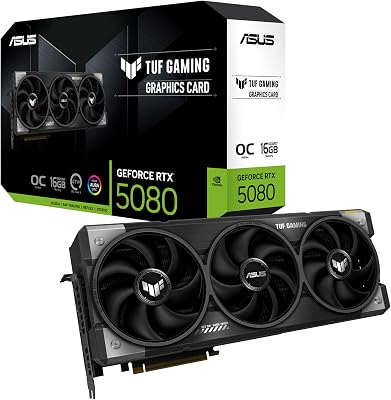


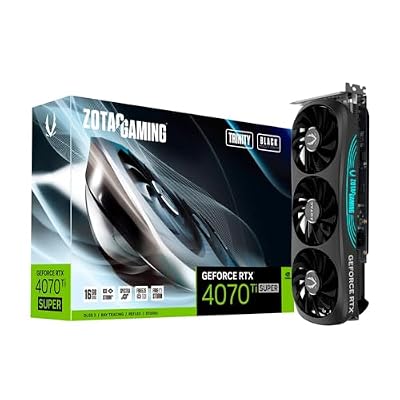
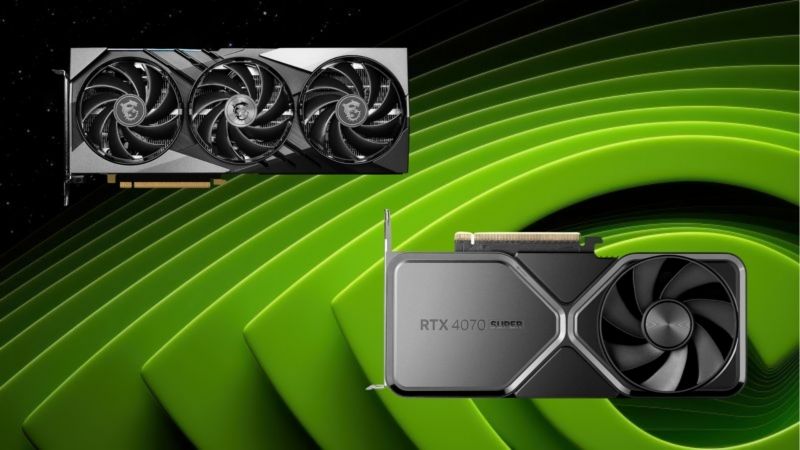
5080 vs 4070 Ti Super is the 16GB question: two Nvidia cards sharing the buffer size that defines 2026’s comfort line, separated by one architecture and roughly $300 of street price. The RTX 5080 lists new at $999 with GDDR7 and DLSS 4; the discontinued RTX 4070 Ti Super trades used and new-old-stock at $600-700 with GDDR6X and DLSS 3. When the capacity column ties, the comparison moves to everything else — bandwidth, the frame-generation gap, warranty risk, and whether $300 buys one generation’s worth of progress. This head-to-head runs all of it against current prices rather than launch memories.
As an Amazon Associate we earn from qualifying purchases at no extra cost to you.


RTX 5080 vs 4070 Ti Super: Quick Verdict and the Numbers
Conclusions first: the two-paragraph verdict, the annotated specification table, and the price arithmetic that decides which card’s case actually closes at today’s listings.
The Quick Verdict for Busy Buyers
The RTX 5080 wins this comparison on merit: 25-35% faster across modern titles, 43% more memory bandwidth via GDDR7, DLSS 4 Multi Frame Generation against single-frame DLSS 3, a full warranty, and first-in-line driver support for years ahead. It is the card this matchup’s money should buy whenever the gap runs near $300.
The RTX 4070 Ti Super wins on one condition: documented units at $620 or below, bought by buyers who value the identical 16GB buffer over the speed and the multiplier — because at that price the gap stretches toward $380-400 fully costed, enough to fund a monitor upgrade alongside. Above $670, its case collapses into the 5080’s. Know your number? Check current Amazon pricing on both — the gap, not the cards, is the entire decision.
Full Specification Table, Annotated
The capacity row ties by design; every other performance row tilts new. The rows that decide real purchases — price, warranty, frame generation — sit at the bottom, where this comparison actually lives.
| Specification | RTX 4070 Ti Super | RTX 5080 |
|---|---|---|
| Architecture | Ada Lovelace (2024) | Blackwell (2025) |
| CUDA Cores | 8,448 | 10,752 |
| VRAM | 16GB GDDR6X | 16GB GDDR7 |
| Memory Bus / Bandwidth | 256-bit / 672 GB/s | 256-bit / 960 GB/s |
| Boost Clock | 2,610 MHz | 2,617 MHz |
| Total Graphics Power | 285W | 360W |
| Frame Generation | DLSS 3 (single) | DLSS 4 (multi, up to 4x) |
| Price & Status 2026 | Discontinued — $600-700 used/NOS | In production — $999 new |
| Recommended PSU | 700W | 850W |
The Price Arithmetic at Today’s Listings
Run the honest spread at the bands’ centers: a $650 used Ti Super against a $999 new 5080 is a $349 sticker gap. Subtract the used market’s standard 5-10% risk premium ($33-65 in expected hassle), subtract the warranty’s replacement value, and the effective gap lands near $250-280 — buying 25-35% more performance, the multiplier, and the runway. Priced per percentage point of gained performance, the 5080’s premium is actually cheaper than most generational step-ups this site has measured.
The exception arithmetic defines the elder’s surviving role: at $600-620 with strong documentation, the fully costed gap widens enough that a raster-focused buyer banks real money against a deficit DLSS upscaling partially papers over. The two-number rule that falls out — Ti Super wins below $620, 5080 wins above $670, the band between is a judgment call on your library — is the cleanest decision framework this matchup permits.
Deep Dive: Performance, Features, and the 16GB Tie
With capacity neutralized, the comparison concentrates where the architectures actually diverge: the benchmarks and the bandwidth behind them, the feature gap that compounds across an ownership window, and the build-and-ownership ledger that finishes the math.
Benchmarks: What 25-35% and 43% More Bandwidth Deliver
At 1440p, the RTX 5080 posts 150-190 FPS in demanding AAA titles where the Ti Super holds 115-145 — a gap high-refresh panels render visible nightly. At 4K, the spread holds at 25-35% and the bandwidth story emerges: 960 GB/s of GDDR7 against 672 keeps the 5080’s 1% lows conspicuously tighter in streaming-heavy open worlds, the smoothness difference owners report before they mention averages. Esports titles see both cards far past monitor ceilings.
Ray tracing extends the pattern by another notch: Blackwell’s fourth-generation RT cores lead by 30-45% in heavy RT titles, and path-traced showcases that ask the Ti Super for DLSS Performance mode run a tier more comfortably on the 5080 before frame generation engages. Engage it and the displayed-frame gap goes generational — multi-frame output past 200 FPS at 4K against single-frame’s honest but halved ceiling. The shared 16GB means neither card ever blames its buffer; every difference in this section is silicon and software, which is precisely what makes the matchup clean.
Resolution calibrates where the gap is worth paying for: at 1440p, the Ti Super already saturates 144-165Hz panels in most titles, compressing the 5080’s lead into headroom many monitors cannot display; at 4K and on 240Hz-class panels, every percentage point lands on screen. The matchup’s money question is therefore partly a monitor question — buyers should answer it with the panel they own or genuinely intend to buy, not the one the benchmarks assume.
The Feature Gap and the Software Runway
The Ti Super’s feature case deserves fair statement: DLSS 3 single-frame generation meaningfully lifts supported titles, the transformer upscaler’s image-quality gains reached Ada, and the card’s software experience in 2026 remains excellent — mature, stable, complete. What it lacks is the multiplier and the future tense: Multi Frame Generation is Blackwell-gated, and Nvidia’s four-generation pattern of reserving headline features for current silicon shows no sign of breaking.
The runway compounds quietly across a hold: the 5080 sits first in line for driver optimization, feature backports, and day-one game tuning for years, while Ada has entered maintenance. For a two-year owner the gap is modest; for the four-year holds that 16GB cards are specifically bought for, the runway is worth pricing alongside the day-one benchmarks — buying the elder means buying a card whose software story is already finished.
Creator workloads tilt the same direction with sharper numbers: the shared 16GB loads identical projects and models, but the 5080’s 43% bandwidth advantage and newer Tensor generation finish renders, exports, and batch generations 30-50% faster in aggregated testing. For owners whose GPU time converts to income, that delta amortizes the $300 gap within months — the rare case where this comparison’s premium pays for itself on a schedule.
Build Fit, Power, and the Ownership Ledger
The practical rows favor the elder for once: 285W against 360W means the Ti Super runs on quality 700W supplies many builds already own, while the 5080 wants 850W and the ATX 3.1 conversation — a potential $100-150 line item the arithmetic section’s gap math should absorb for affected buyers. Both wear the 12VHPWR-family connector; both span 300-340mm partner designs that demand case measurement.
The ledger’s risk rows favor the heir: the used Ti Super carries the standard second-hand homework — photos, service history, the silence where a warranty would be — softened by its short service life (a 2024 card has less history to hide than a mining-era one), while the 5080 ships tested, covered, and returnable. Heat and acoustics track the wattage gap honestly: the elder runs the cooler, quieter system at matched cooler quality, the one daily-life column its column wins outright.
Electricity completes the elder’s column: the 75W gaming-load gap at twenty hours weekly compounds into a real annual figure, modest in dollars but worth naming in a matchup whose thresholds sit this close together — every honest line item moves a decision built on a $50 band.
Market Forces, Timing, and the Sibling Alternative
Two current developments are moving both cards’ prices through different doors, and one sibling card undercuts this entire matchup for buyers whose honest requirements sit a notch lower.
The H200 Approval Hits the New Card First
The United States has cleared Nvidia to sell the H200 — one of its most powerful AI accelerators — to China, reopening a multi-billion-dollar quarterly market. Nvidia’s wafer, packaging, and premium memory allocation follows margin toward data-center silicon, and the documented consumer sequence lands within a quarter or two: new supply tightens, GDDR7 flagships like the 5080 firm first, and street prices drift above the $999 this article’s arithmetic assumes.
The discontinued elder feels the same news secondhand: every 5080 price increase widens the apparent discount on the fixed, draining pool of Ti Supers — and cascading demand from priced-out flagship buyers lands exactly in its $600-700 band, firming it from below. The asymmetry matters for the decision framework: the $620/$670 thresholds this comparison built are denominated against a 5080 street price that the news says is rising, which raises both thresholds with it. The framework survives; the numbers inside it inflate.
Component Inflation Presses Both 16GB Bills
In parallel, laptop and component prices are trending upward industry-wide, led by memory: DRAM and graphics memory contract prices have climbed as AI build-outs consume fab output, and sixteen-gigabyte configurations — this matchup’s defining feature — sit precisely on the most pressured line of any bill of materials. The 5080 pays 2026 GDDR7 rates in its build cost; the Ti Super’s GDDR6X was soldered at 2024 prices and reprices upward under the umbrella anyway.
The conclusion is symmetrical and now familiar: both bands are likelier floors than ceilings through the coming quarters, and the unusually rich supply of clean, young Ti Super listings — a 2024 card’s used market is the gentlest there is — is the part of this comparison most likely to thin first. Buyers leaning elder should lean promptly.
The sequencing advice mirrors every firming-market matchup this site covers: price both cards in a single session, apply the thresholds, and if the elder wins, close on the documented listing the same week — used inventory moves faster than retail when demand cascades, and the Ti Super’s gentle two-year-old pool is exactly the kind that thins without warning.
The Alternative: RTX 5070 Ti Undercuts the Whole Question
One card makes this entire matchup justify itself: the RTX 5070 Ti at $749, carrying the same 16GB, the same DLSS 4 multiplier, and 896 GB/s of the same GDDR7 — within 15% of the 5080’s performance for $250 less, and within touching distance of the used Ti Super’s price while beating it by 10-20% with a warranty attached.
For buyers whose monitors top out at 1440p high-refresh, it converts this comparison’s $300 question into a $100 one and usually wins it; only genuine 4K high-refresh ambitions and creator workloads that feed on the 5080’s extra bandwidth justify climbing past it. Its Amazon listing is the five-minute check this matchup’s traffic should run first — a meaningful share of readers will correctly stop there.
Recommended Products

Amazon Renewed
ASUS Dual GeForce RTX™ 4060 V2 OC Edition (PCIe 4.0, 8GB GDDR6, DLSS 3, HDMI 2.1a, DisplayPort 1.4a, 2-Slot Design, Axial-tech Fan Design, 0dB Technology, and More) (Renewed)

Sapphire&ref_=dp_csx_lgbl_s_premium-eligible
Prime
Sapphire Pulse 11324-01-20G Graphics Card AMD Radeon RX 7600 8 GB GDDR6

Gigabyte NVIDIA GeForce RTX 4060 Eagle OC Graphics Card – 8GB GDDR6, 128-bit, PCI-E 4.0, 2505MHz Core Clock, 2X DP 1.4, 2X HDMI 2.1a, NVIDIA DLSS 3 – GV-N4060EAGLE OC-8GD
As an Amazon Associate we earn from qualifying purchases. Product prices and availability are accurate as of the date/time indicated.
Final Verdict: 5080 vs 4070 Ti Super, Settled by the Gap
The 5080 vs 4070 Ti Super question resolves into the cleanest framework a 16GB tie permits: buy the RTX 5080 when the gap to a documented Ti Super runs under $300 — its 25-35% lead, 43% bandwidth advantage, DLSS 4 multiplier, warranty, and software runway price that spread fairly — and buy the elder only below $620, where the discount genuinely funds something. Between the thresholds, audit your library: frame-generation-heavy catalogs tilt new, raster-first ones tolerate old. The RTX 5070 Ti at $749 undercuts the whole debate for 1440p buyers and deserves the first price check. With the H200 approval firming the new card and component inflation lifting both 16GB bands, the thresholds themselves are inflating — run today’s Amazon listings through the framework while the numbers still sit where this article found them.
Frequently Asked Questions
What is the best 5080 4070 ti super in 2026?
The best 5080 4070 ti super depends on your budget and how you plan to use it. The options compared above are our top-rated picks based on real customer ratings, build quality, and overall value — start with the highest-rated model that fits your budget.
How much should I expect to spend on a 5080 4070 ti super?
Prices vary by brand and features. Budget options cover the essentials, while mid-range and premium models add durability, performance, and extra features. Compare the prices in the list above to find the best value for your needs.
What should I look for when buying a 5080 4070 ti super?
Focus on what matters most for your use case — build quality, compatibility, performance, warranty, and verified customer reviews. Every pick above is selected to balance these factors.
Are budget 5080 4070 ti super options worth it?
Yes. For most people a well-reviewed budget or mid-range 5080 4070 ti super delivers excellent value. You only need to spend more if you specifically require premium materials or top-tier performance.
How did we choose these 5080 4070 ti super picks?
We compare current Amazon ratings, review counts, key features, and price to surface the options with the best real-world value. The list is refreshed as ratings and availability change.

Write Your Review
No reviews yet. Be the first to share your experience!