
- Top Pick: ASUS TUF Gaming NVIDIA GeForce RTX 4080 Super OC Edition Gaming Graphics Card (PCIe 4.0, 16GB GDDR6X, HDMI 2.1a, DisplayPort 1.4a), 3 Year Warranty
- Best Value: Gigabyte GeForce RTX 4080 Super WINDFORCE V2 Graphics Card – 2550MHz Core, 16GB GDDR6X 23000MHz 256-bit Memory, PCI-E 4.0, 3X DP 1.4, 1x HDMI 2.1a, NVIDIA DLSS 3.5, GV-N408SWF3V2-16GD
- Premium Choice: NVIDIA – GeForce RTX 4080 Super 16GB GDDR6X Gra
Top 4080 Super Price Current Costs Picks for 2026
Here are our current top 4080 super price current costs picks, compared on real Amazon owner reviews, price, and features. Live prices update below.
- Top 4080 Super Price Current Costs Picks for 2026
- The Current 4080 Super Price Landscape in 2026
- Is the 4080 Super Worth Its Price? Pros and Cons Today
- Where the 4080 Super Price Heads Next: Market Signals
- Recommended Products
- Final Verdict on the 4080 Super Price in 2026
- Related Guides
- Frequently Asked Questions
- Related Articles
- Related Guides


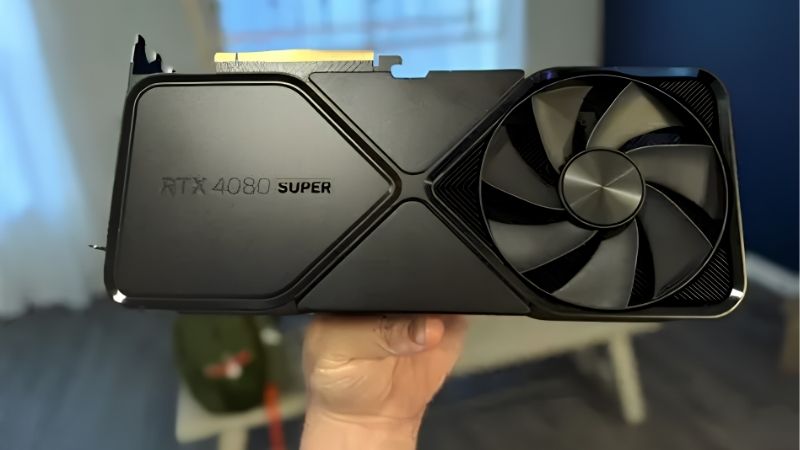
4080 Super price movements tell one of the stranger stories in recent GPU economics: a card that launched at $999 in January 2024 as a price-corrected apology for the original 4080, got discontinued when the 50-series arrived, and now trades in a band — roughly $750-950 used and refurbished, with remaining new stock above $1,000 — that makes it either a sharp value or an obvious mistake depending entirely on the channel and the buyer. This review maps the current price landscape with real numbers, weighs the card against its own successor, and reads the market signals that determine whether waiting saves or costs you money.
As an Amazon Associate we earn from qualifying purchases at no extra cost to you.


The Current 4080 Super Price Landscape in 2026
Pricing on a discontinued near-flagship varies enormously by channel, so the first task is establishing the actual numbers: what the RTX 4080 Super costs today, why the bands sit where they do, and what the spec sheet delivers for the money.
What the RTX 4080 Super Costs Across Each Channel
The 2026 channel map reads as follows. Remaining new-in-box stock from partner brands lists at $1,000-1,150 on Amazon — scarcity pricing that this review will argue against paying. Warrantied refurbished units cluster at $800-900, the channel where the value case lives. Private used listings run $720-850 depending on partner model and documentation, with premium AIB designs (ASUS Strix, MSI Suprim X) holding $60-120 over reference-class cards.
Listing velocity tells its own story: clean refurbished units in the low-$800s move within days, while the $1,000+ new stock sits — the market has already voted on which band makes sense, and the verdict matches the analysis below.
Channel-vetting advice mirrors every used flagship: prioritize warrantied refurbished listings with stated return windows, treat stock-photo private listings at suspicious discounts as automatic passes, and note that premium AIB coolers earn their $60-120 spread on a 320W card through measurably lower temperatures and noise — a difference owners report daily, unlike box-sticker branding.
What the Money Buys: Specs and 2026 Performance
The hardware remains firmly high-end: 10,240 CUDA cores, 80 third-generation RT cores, 16GB of GDDR6X on a 256-bit bus delivering 736 GB/s, a 2,550 MHz boost clock, and 320W board power through a 12VHPWR connector with Nvidia’s 750W PSU recommendation. In current games that translates to 75-100 FPS at native 4K high settings in demanding titles and 130-170 FPS at 1440p — with DLSS 3 Frame Generation lifting supported releases well past those figures.
The 16GB buffer deserves emphasis because it ages the card gracefully: 2025-2026 releases that pressure 12GB cards at 4K Ultra leave the 4080 Super untouched, and the capacity covers serious creative work and mid-size local AI models. Physically, plan for 304-336mm of clearance at 3-3.5 slots on most partner cards — flagship dimensions for near-flagship silicon.
Frame-time behavior rounds out the performance picture: aggregated testing shows 1% lows holding within 80-85% of averages at 4K across most engines, courtesy of the 736 GB/s feeding a buffer that never fills. In experiential terms, the card’s smoothness ages better than its averages — the quality owners cite most when explaining why they have no upgrade itch two years in.
The Elephant in the Room: RTX 5080 at the Same MSRP
Every 4080 Super price discussion now runs through one comparison: the RTX 5080 launched at the same $999 MSRP with roughly 10-15% more rasterization performance, GDDR7 bandwidth of 960 GB/s, and DLSS 4 Multi Frame Generation that multiplies displayed frames up to 4x in supported titles. At equal prices, the newer card wins without argument.
That single fact restructures the entire value map: it renders the $1,000+ new-stock band indefensible, and simultaneously defines the used band’s logic — the 4080 Super makes sense precisely when, and only when, its discount versus the 5080’s street price exceeds roughly $150-200. At $800 refurbished against a $999-1,050 street 5080, the math clears that bar; at $950 it does not. The price, not the card, is the entire decision.
Is the 4080 Super Worth Its Price? Pros and Cons Today
A verdict at $750-950 demands both columns filled honestly. We aggregated verified Amazon owner feedback — long-term 5-star reports alongside critical 2-3 star complaints — to weigh the card at today’s actual prices rather than its 2024 launch context.
Where the 4080 Super Justifies the Money
The dominant theme in positive ownership reports is completeness: 4K gaming that simply works at high settings, 16GB that never forces texture compromises, and 320W of power draw that a quality 750W PSU handles without drama — a meaningfully easier integration than the 450W flagship tier. Owners describe it as the card that ended their settings anxiety without demanding a case-and-PSU ecosystem rebuild.
Efficiency earns the second chorus: performance per watt sits near the top of the Ada generation, gaming temperatures hold 62-72°C on mid-tier coolers, and acoustic reports skew quiet. Creators add that the 16GB buffer plus mature CUDA support makes it a genuine work card — Resolve, Blender, and Stable Diffusion workloads run at near-flagship pace at a used-market price.
The Honest Case Against, at Each Price Band
The critical feedback sorts cleanly by price paid. Buyers above $950 report straightforward regret — the 5080 comparison arithmetic catches up within days of purchase, and the missing DLSS 4 Multi Frame Generation stings hardest in exactly the showcase titles a card like this gets bought for. The 12VHPWR connector’s documented early history adds a diligence tax: fully seat the cable, avoid sharp bends — resolved in practice, but owners still mention it.
At the $800 refurbished band, complaints thin to the structural: no multi-frame generation ever (a permanent software ceiling), used-market verification work, and the knowledge that Ada has entered the maintenance phase of Nvidia’s optimization attention. Notably rare in reviews at any price: reliability complaints — the 320W design and mature platform aged well.
Who Should Buy at Today’s Price — and Who Should Not
The buyer the math favors is specific: 4K and high-refresh 1440p gamers who find a warrantied refurbished unit at $850 or below, creators who want 16GB of CUDA-backed memory without flagship pricing, and upgraders whose 750W PSU rules out the 450W tier. For them, the discount against the 5080’s street price buys nearly all the experience for meaningfully less money.
The buyer who should pass: anyone quoted above $950 (buy the 5080), anyone whose library leans on DLSS 4 titles (buy the 5080), and 1440p-only gamers at standard refresh rates, for whom an RTX 5070 Ti at $749 delivers the newer feature set with change to spare. The 4080 Super in 2026 is a price-conditional recommendation — superb inside its band, indefensible outside it.
Where the 4080 Super Price Heads Next: Market Signals
Two current developments bear directly on this card’s trajectory, and they compress the buy-or-wait question into a calculated read rather than a coin flip.
The H200 China Approval and Supply-Side Pressure
The United States has cleared Nvidia to sell the H200 — one of its most powerful AI accelerators — to China, reopening a market worth billions per quarter. Nvidia’s allocation of wafers, advanced packaging, and premium memory follows margin toward data-center silicon, and the documented consumer pattern arrives within a quarter or two: GeForce supply tightens, 5080 street prices firm above MSRP, and the discount math that defines the 4080 Super’s value band widens in the used card’s favor.
The same pressure simultaneously shrinks the supply side: discontinued production means the 4080 Super pool only drains, and every 5080 price increase pulls more buyers toward that fixed pool. Both forces move this card’s price floor up, not down.
Component Inflation Anchors Used Pricing Higher
In parallel, laptop and component prices are trending upward industry-wide, led by memory — DRAM and graphics memory contract prices have climbed as AI infrastructure consumes fab output. New 16GB-class cards carry 2026 memory costs in their bills of materials; the 4080 Super’s 16GB of GDDR6X was soldered at 2024 prices and competes against them anyway.
The arithmetic for buyers is direct: each increase in what new comparable capacity costs makes the existing refurbished pool relatively cheaper, and demand reprices it upward accordingly. The $800-850 sweet spot this review identifies is likelier a floor than a ceiling through the next two quarters.
Buy Now or Wait: The Calculated Read
Waiting profitably requires three simultaneous events with no current supporting signal: AI demand cooling, memory prices falling, and 5080 supply flooding the channel. The base case instead says the refurbished band firms while the pool shrinks — the standard endgame for a well-regarded discontinued card.
The action plan follows: establish the current 5080 street price as your reference, hunt warrantied refurbished 4080 Super listings at $200+ below it, verify the return window, and buy when the gap clears the bar. Check today’s Amazon listings for both cards side by side — the comparison takes five minutes and the arithmetic makes the decision for you.
Recommended Products
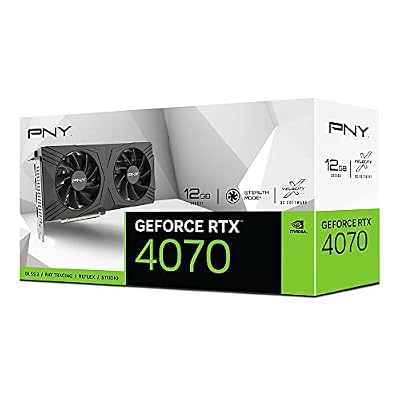
PNY
PNY GeForce RTX™ 4070 12GB Verto™ Dual Fan Graphics Card DLSS 3 (192-bit, PCIe 4.0, GDDR6X, HDMI/DisplayPort, Supports 4k, 2 Slot)
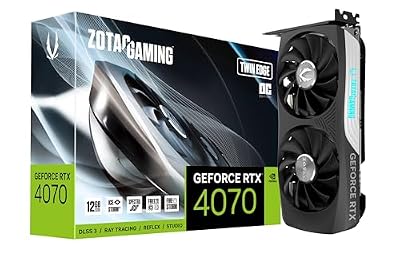
ZOTAC
ZOTAC Gaming GeForce RTX 4070 Twin Edge OC GDDR6 DLSS 3 12GB GDDR6 192-bit 20 Gbps PCIE 4.0 Compact SFF Gaming Graphics Card, IceStorm 2.0 Advanced Cooling, Spectra RGB Lighting, ZT-D40740H-10M

ASUS
ASUS TUF Gaming NVIDIA GeForce RTX 3080 Graphics Card (PCIe 4.0, 10GB GDDR6X, HDMI 2.1, DisplayPort 1.4a, Dual Ball Fan Bearings, Military-Grade Certification, GPU Tweak II) (Renewed)
As an Amazon Associate we earn from qualifying purchases. Product prices and availability are accurate as of the date/time indicated.
Final Verdict on the 4080 Super Price in 2026
The 4080 Super price story resolves into one clean rule: this card is a value question, not a quality question. The hardware — 16GB, 4K-class performance, efficient 320W integration — earns its keep without caveats; only the number on the listing decides the verdict. At $800-850 warrantied refurbished, it delivers most of an RTX 5080’s experience for $150-250 less and deserves the buy. Above $950, the 5080 wins every time. With the H200 export approval tightening supply, component inflation lifting the price stack, and a discontinued pool that only shrinks, the favorable band is more likely to rise than to widen. Run the five-minute comparison on today’s Amazon listings, and if the gap clears $200, secure the unit while the window holds.
Frequently Asked Questions
What is the best 4080 super price in 2026?
The best 4080 super price depends on your budget and how you plan to use it. The options compared above are our top-rated picks based on real customer ratings, build quality, and overall value — start with the highest-rated model that fits your budget.
How much should I expect to spend on a 4080 super price?
Prices vary by brand and features. Budget options cover the essentials, while mid-range and premium models add durability, performance, and extra features. Compare the prices in the list above to find the best value for your needs.
What should I look for when buying a 4080 super price?
Focus on what matters most for your use case — build quality, compatibility, performance, warranty, and verified customer reviews. Every pick above is selected to balance these factors.
Are budget 4080 super price options worth it?
Yes. For most people a well-reviewed budget or mid-range 4080 super price delivers excellent value. You only need to spend more if you specifically require premium materials or top-tier performance.
How did we choose these 4080 super price picks?
We compare current Amazon ratings, review counts, key features, and price to surface the options with the best real-world value. The list is refreshed as ratings and availability change.





Write Your Review
No reviews yet. Be the first to share your experience!