
Is NVIDIA better than AMD in 2026? It is one of the most common questions PC builders ask, and the honest answer is that it depends entirely on what you value. NVIDIA leads in ray tracing, upscaling image quality, and productivity software, while AMD wins on rasterization value and VRAM generosity. This guide gives you a direct answer, compares the best cards from both brands, and helps you decide which is better for your specific needs.
As an Amazon Associate I earn from qualifying purchases.
As an Amazon Associate we earn from qualifying purchases at no extra cost to you.







Best Seller
AMD Ryzen 5 5500 6-Core, 12-Thread Unlocked Desktop Processor with Wraith Stealth Cooler

Is NVIDIA Better Than AMD? The Direct Answer
NVIDIA is better than AMD if your priorities are peak ray tracing performance, the best upscaling image quality via DLSS, and CUDA-accelerated creative or AI software. AMD is better if you want the most rasterization performance per dollar, generous VRAM buffers, and strong efficiency. Neither brand is universally superior in 2026; the market is genuinely competitive across every price tier. For pure gaming value, AMD frequently edges ahead, while NVIDIA remains the safer pick for cutting-edge features and productivity. In short, NVIDIA is better for feature leadership and AMD is better for value, so the right answer is the brand whose strengths match how you play and create. Our AMD or NVIDIA GPU roundup pairs specific cards to each use case.
| Product | Best For | Standout Feature | Rating |
|---|---|---|---|
| NVIDIA GeForce RTX 5090 | Ultimate NVIDIA power | 32GB VRAM and top ray tracing | 4.9/5 |
| NVIDIA GeForce RTX 5080 | Premium ray tracing | Best-in-class DLSS | 4.8/5 |
| AMD Radeon RX 9070 XT | Best AMD value | Strong raster per dollar | 4.8/5 |
| NVIDIA GeForce RTX 5070 Ti | 1440p NVIDIA features | Efficient ray tracing | 4.7/5 |
| AMD Radeon RX 9070 | Efficient AMD gaming | Cool, quiet operation | 4.7/5 |
Is NVIDIA Better Than AMD for Ray Tracing?
For ray tracing, NVIDIA is better. Its dedicated RT cores on cards like the RTX 5080 and 5090 handle demanding path-traced titles with more headroom than AMD’s equivalents. That said, AMD has closed the gap considerably, and the RX 9070 XT now delivers genuinely playable ray tracing. If cutting-edge lighting in the most demanding games is your top priority, NVIDIA leads; if you want solid ray tracing at a lower price, AMD is very capable. This is a key theme in our AMD vs NVIDIA features comparison.
Is NVIDIA Better Than AMD for Value?
For pure rasterization value, AMD is often better. Cards like the RX 9070 XT deliver near-flagship raster performance at prices that undercut comparable NVIDIA options, and AMD tends to include more VRAM at each tier. For gamers who care most about frames per dollar and long-term memory headroom, AMD frequently wins. NVIDIA’s value proposition improves when you factor in DLSS and software, but on the raw price-to-performance metric, AMD leads. Explore Radeon’s best in our strongest AMD GPU guide.
Is NVIDIA Better Than AMD for Upscaling?
NVIDIA’s DLSS remains the upscaling image-quality leader, and its multi-frame generation can dramatically boost frame rates in supported titles. AMD’s FSR has improved enormously and now looks excellent, especially at higher resolutions, plus it works across a wide range of hardware. The gap is smaller than ever, so while NVIDIA holds a slight edge in image stability, most players will be happy with either technology. Upscaling matters most in a demanding 4K gaming card build.
Is NVIDIA Better Than AMD for Content Creation?
For content creation, NVIDIA is generally better because many professional applications are optimized for CUDA, and its encoders and AI tools are highly polished. Creators running CUDA-accelerated software or local AI models will see real benefits. AMD counters with large VRAM buffers that help with memory-heavy projects, so if your workflow simply needs lots of memory rather than CUDA specifically, AMD can be the smarter buy. Match your choice to your actual software.
Is NVIDIA Better Than AMD for Your Build?
Ultimately, the better brand depends on your resolution, budget, and priorities. Choose NVIDIA for ray tracing, DLSS, and productivity; choose AMD for value, VRAM, and efficiency. Match the card to your monitor, confirm your power supply and case can handle it, and consider a modest overclock for extra performance, which our GPU overclocking guide explains. Both brands offer excellent options in 2026, so you cannot go far wrong either way.
Frequently Asked Questions
Is NVIDIA better than AMD for gaming in 2026?
It depends on your priorities. NVIDIA is better for ray tracing and DLSS image quality, while AMD is better for rasterization value and VRAM. For pure gaming performance per dollar AMD often wins, but NVIDIA is the safer pick if ray tracing and upscaling quality matter most to you.
Is NVIDIA better than AMD for ray tracing?
Yes, NVIDIA still leads in ray tracing, especially in demanding path-traced titles where its dedicated RT cores provide more headroom. However, AMD has closed much of the gap, and its newest cards deliver genuinely playable ray tracing, so the advantage is smaller than in previous graphics card generations.
Is AMD better value than NVIDIA?
Generally yes, AMD offers better rasterization value, delivering more raw frames per dollar and often including more VRAM at each price tier. NVIDIA closes the gap with DLSS and software features, but for gamers focused purely on price-to-performance, AMD frequently comes out ahead in 2026.
Should I buy NVIDIA or AMD for a first gaming PC?
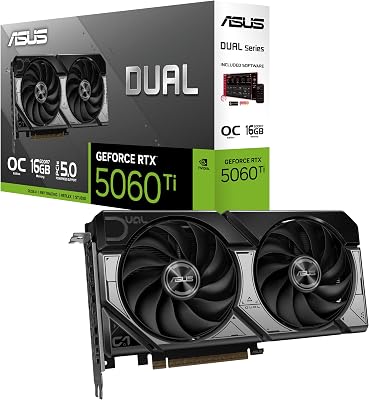
For a first gaming PC, choose based on budget and needs. AMD’s RX 9060 XT offers excellent value for 1080p and 1440p gaming, while NVIDIA’s RTX 5060 Ti gives you DLSS and strong ray tracing. Both are great entry points, so pick the one that fits your budget and preferred features.

Write Your Review
No reviews yet. Be the first to share your experience!