
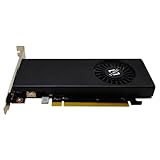
- Top Pick: maxsun GeForce RTX 3050 6GB Graphics Cards GDDR6 Video Graphics Card GPU for Gaming PC Mini Small Form Factor SSF Slim Low Profile Design PCI Express 4.0, HDMI 2.1, DisplayPort 1.4a
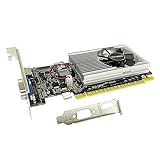
- Best Value: maxsun GEFORCE GTX 1050 Ti 4GB GDDR5 128 Bit Video Gaming Graphics Card for Gaming PC Mini Small Form Factor SSF Slim Low Profile Design GPU, DisplayPort, HDMI (Low Profile)
- Premium Choice: 51RISC GeForce RTX 3050 LP Graphics Card, Low Profile 6GB GDDR6 Small Form Factor Video Card for Gaming 8K Display Desktop/Mini PC SFF Video Card (RTX 3050 6GB- Low Profile)
Building a small-form-factor PC in 2026 is more rewarding than ever, but it comes with one stubborn constraint that desktop builders rarely think about: physical space. Slim HTPC chassis, Dell and HP office desktops, and mini-ITX cases with half-height expansion slots simply cannot swallow the triple-fan behemoths that dominate GPU reviews. If your case has a low-profile bracket and only two slots of clearance, the vast majority of modern graphics cards are off the table before you even check the benchmarks.
- Why Low-Profile Cards Are a Different Category
- 2026 Comparison: Best Low-Profile GPUs at a Glance
- NVIDIA RTX 4060 Low-Profile: The Performance Pick
- Intel Arc A380: The Value Surprise
- No-Connector Champions: RTX 3050 6GB, Arc A310 and GTX 1650
- What About AMD Low-Profile Options?
- The Verdict: Which Low-Profile Card Should You Buy?
- Related Guides
- Frequently Asked Questions
- Related Articles
- Related Guides
The good news is that low-profile and half-height graphics cards have quietly gotten a lot better. A modern low-profile RTX 4060 can drive smooth 1080p gaming and even light 1440p, while budget options like the RTX 3050 6GB and Intel Arc A310 sip power straight from the PCIe slot with no external connector at all. That last detail matters enormously for pre-built office PCs, where the power supply is often a tiny 180W-240W unit with no spare 8-pin cable.
As an Amazon Associate we earn from qualifying purchases at no extra cost to you.






In this guide we break down the best low-profile graphics cards for small PCs in 2026, covering slot height, power draw, cooling, real-world 1080p performance, and, crucially, whether a given card will actually fit and run in your specific little box.
As an Amazon Associate we earn from qualifying purchases. Prices and availability are accurate as of publication but can change at any time. We only recommend hardware we believe represents genuine value for small-form-factor builders.
Why Low-Profile Cards Are a Different Category
A standard “full-height” graphics card bracket is about 120mm tall. A low-profile (also called half-height) bracket is roughly 80mm, and cards designed for these slots ship with a second, shorter bracket in the box. If your case only accepts half-height cards, the bracket height is a hard yes-or-no requirement, not a nice-to-have.
Beyond height, three factors separate a great SFF pick from a frustrating one:
- Slot width. Many low-profile coolers are dual-slot, meaning they physically block the adjacent slot. Some ultra-slim cases only allow single-slot cards, so always check both dimensions. See our SFF case clearance guide for measuring your chassis correctly.
- Power connector. Cards that draw all their power from the PCIe slot (75W max) need no cable and drop straight into OEM desktops. Cards with a 6-pin or 8-pin connector are faster but require a PSU that actually has that cable.
- Cooling and noise. Small dual-fan shrouds spin faster and can whine under load. A well-designed heatsink makes a real difference in a cramped, poorly ventilated HTPC.
If you are still deciding between a compact desktop and a mini-ITX build, our mini-ITX vs SFF buying guide walks through the trade-offs in detail.
2026 Comparison: Best Low-Profile GPUs at a Glance
| GPU | VRAM | Slot / Power | Best For | Approx Price |
|---|---|---|---|---|
| NVIDIA RTX 4060 (Low-Profile) | 8GB GDDR6 | Dual-slot / 1x 8-pin (115W) | Best overall 1080p SFF gaming | $309 |
| Intel Arc A380 (Low-Profile) | 6GB GDDR6 | Dual-slot / 1x 6-pin (75W) | Value + AV1 media encoding | $119 |
| NVIDIA RTX 3050 6GB (Low-Profile) | 6GB GDDR6 | Dual-slot / no connector (70W) | OEM desktop upgrade, no PSU swap | $179 |
| Intel Arc A310 (Low-Profile) | 4GB GDDR6 | Single/dual-slot / no connector (75W) | HTPC, esports, 4K media playback | $99 |
| NVIDIA GTX 1650 (Low-Profile) | 4GB GDDR6 | Single/dual-slot / no connector (75W) | Proven no-cable budget gaming | $149 |
NVIDIA RTX 4060 Low-Profile: The Performance Pick
The low-profile RTX 4060 is the fastest half-height card you can reasonably buy in 2026, and it is a genuine leap over everything else on this list. Board partners like Gigabyte and Yeston produce compact dual-fan versions that fit half-height brackets while still delivering the full Ada Lovelace feature set: DLSS 3 with Frame Generation, fourth-gen ray tracing cores, and the excellent NVENC AV1 encoder.
In practice you get comfortable 60fps-plus 1080p gaming at high settings in nearly every modern title, and DLSS lets it stretch into 1440p in less demanding games. The catch is power: it needs a single 8-pin connector and draws around 115W, so it is not a drop-in for a tiny OEM box with a 180W PSU. Pair it with at least a 400W supply that has the right cable. If you can meet that requirement, nothing else here competes on raw frames. For a wider look at this GPU tier, see our full RTX 4060 review.
Intel Arc A380: The Value Surprise
Intel’s Arc A380 has matured into one of the best value propositions in the entire budget GPU market, and low-profile versions from ASRock and Sparkle make it a superb SFF choice. Driver updates over the past two years have transformed its DirectX 11 and older-game performance, and it was always strong in modern DirectX 12 titles. At around $119 it undercuts almost everything with comparable output.
Where the A380 really shines is media: it offers full AV1 hardware encode and decode, making it a fantastic pick for a home-theater PC, a Plex or Jellyfin transcoding box, or a compact streaming rig. It typically uses a single 6-pin connector, so confirm your PSU has one. For pure 1080p esports and mixed media duty, it is hard to beat at the price.
No-Connector Champions: RTX 3050 6GB, Arc A310 and GTX 1650
The single most important feature for upgrading a pre-built office desktop is a card that needs no power cable. All three of these pull under 75W straight from the PCIe slot, so they slot into a Dell OptiPlex or HP ProDesk without touching the power supply.
The RTX 3050 6GB is the fastest of the trio and the smartest OEM upgrade in 2026: modern architecture, NVENC encoding, and roughly 60fps at 1080p medium in most games, all with zero cabling. The Intel Arc A310 is the cheapest way to add a capable modern display output and AV1 media engine to a small box, ideal for an HTPC or a light esports machine. The evergreen GTX 1650 remains a safe, endlessly compatible choice with rock-solid drivers, though its older Turing architecture lacks the newest features and its price no longer looks as sharp against the RTX 3050. Whichever you choose, verify slot width, since some HTPC cases only accept single-slot cards.
What About AMD Low-Profile Options?
AMD’s low-profile presence is thinner than NVIDIA’s or Intel’s in 2026. The Radeon RX 6400 and RX 6500 XT still appear in half-height form from a few partners, and the RX 6400 is a true no-connector 53W card that competes with the GTX 1650 and Arc A310. However, both Radeon budget cards were hampered at launch by a narrow PCIe x4 interface and limited encoding, which hurts them on older PCIe 3.0 systems, exactly the OEM machines many buyers want to upgrade. If you find an RX 6400 at a steep discount it is a reasonable no-cable option, but for most shoppers the RTX 3050 6GB or Arc A310 are the stronger buys. Our budget GPU comparison hub tracks current pricing across all three brands.
The Verdict: Which Low-Profile Card Should You Buy?
For the best balance of performance and compatibility, the low-profile RTX 4060 is our top pick for anyone whose small case and power supply can accommodate a single 8-pin connector. It is the only card here that feels genuinely future-proof for 1080p and light 1440p gaming.
If you are upgrading a pre-built OEM desktop and cannot or will not swap the power supply, the RTX 3050 6GB is the clear winner, delivering modern-generation performance with no power cable required. Choose the Intel Arc A380 when value and AV1 media encoding matter most, and the Arc A310 or GTX 1650 when you need the cheapest possible no-connector upgrade for an HTPC or esports box. Whatever you pick, measure your case’s bracket height and slot width first, because in the world of small PCs, fit always comes before frames.
Frequently Asked Questions
Do low-profile graphics cards need a special power connector?
It depends on the model. Cards like the RTX 3050 6GB, Arc A310, and GTX 1650 draw all their power from the PCIe slot (under 75W) and need no external cable, making them perfect for OEM desktops. Faster cards like the low-profile RTX 4060 require a single 6-pin or 8-pin connector, so your power supply must have that cable available.
Can a low-profile RTX 4060 really run modern games at 1080p?
Yes. The low-profile RTX 4060 comfortably delivers 60fps or more at 1080p high settings in the vast majority of 2026 titles, and DLSS 3 Frame Generation extends that performance further. It can even handle 1440p in lighter or well-optimized games, making it the strongest gaming option in the half-height category.
How do I know if a card will fit my small PC?
Check two measurements: bracket height and slot width. Low-profile cards use an 80mm half-height bracket (a shorter bracket is usually included in the box). Then confirm whether your case allows single-slot or dual-slot cards, since many slim HTPC chassis only clear a single slot. Always compare the card’s listed length and width against your case’s stated GPU clearance.
Is Intel Arc a good choice for a low-profile build in 2026?
Absolutely. After years of driver maturation, Intel Arc cards like the A380 and A310 are excellent value and offer best-in-class AV1 media encoding, which is ideal for HTPCs and streaming boxes. For pure gaming the RTX options may edge ahead, but for a media-focused small PC, Arc is one of the smartest picks available.


Write Your Review
No reviews yet. Be the first to share your experience!