
Nvidia CEO Jensen Huang has become one of the most recognizable leaders in technology, guiding the company from a niche graphics-chip maker into the driving force behind the artificial intelligence era. Understanding who he is and how he thinks explains a great deal about Nvidia’s remarkable rise and where it may head next. This guide covers Jensen Huang’s background, how he built Nvidia over three decades, the leadership behind its dominance, and what his continued influence means for anyone who follows or buys from the company.
Who Is the Nvidia CEO?
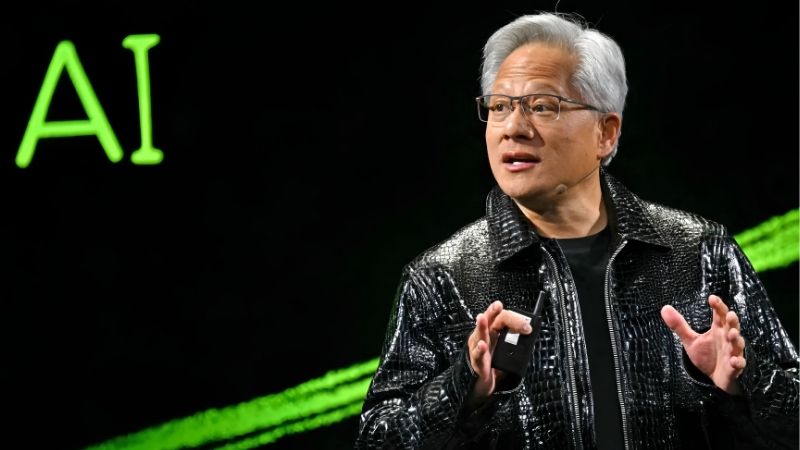
Before exploring how he built the company, it helps to know who Jensen Huang actually is, because his personal story is tightly woven into Nvidia’s identity. Unlike many hired executives brought in to run a mature corporation, Huang is a founder who has led his company since day one, and that continuity shapes both Nvidia’s culture and its long-term strategy in ways worth understanding.
Jensen Huang at a Glance
Jensen Huang is the co-founder, president, and chief executive of Nvidia, and he has held the top job since founding the company in 1993. That makes him one of the longest-serving CEOs in the technology industry.
Born in Taiwan and raised in the United States, he trained as an electrical engineer before starting Nvidia. His engineering background remains visible in how deeply he engages with the company’s technology.
Widely regarded as a visionary, he has been recognized among the world’s most influential people and is consistently ranked among the wealthiest, largely because of his substantial personal stake in the company he built.
What sets him apart from many billionaires, though, is that his wealth is almost entirely tied up in the company he still runs, rather than diversified away. That concentration reflects a founder who has bet his own fortune on Nvidia’s continued success, and it colors how he is viewed by investors and employees alike.
It is a striking contrast with executives who cash out and diversify as their companies grow. Huang’s decision to keep his wealth bound to Nvidia sends a clear message about his confidence and commitment, one that shareholders and staff alike tend to read as a sign of genuine long-term belief in the company.
From Founder to Tech Icon
Huang co-founded Nvidia in 1993 on a bet that specialized graphics chips would reshape computing, a wager that took years to fully pay off. He built the company from a startup into a global leader over three decades.
For much of that time, Nvidia was known primarily to gamers and PC enthusiasts, a respected but specialized name. Huang’s persistence through difficult early years laid the foundation for everything that followed.
His transformation from a little-known startup founder into a globally recognized tech icon mirrors Nvidia’s own journey, and the two stories are impossible to separate. He is, in a real sense, the face of the company.
This close identification between leader and company is unusual at Nvidia’s scale. Most corporations this size are run by professional managers with no founding stake, whereas Nvidia is still steered by the person who imagined it decades ago, which lends an unusual consistency to its long-term direction.
It also means that studying Huang is one of the best ways to understand Nvidia itself. His instincts, priorities, and appetite for bold bets have become the company’s, so his public statements often serve as a reliable preview of where Nvidia intends to go next.
His Role and Leadership Style
As founder and CEO, Huang combines deep technical knowledge with a long-term strategic vision, a rare pairing at the head of a company this large. He is known for a hands-on, demanding, and highly engaged leadership approach.
He communicates a clear, ambitious vision of where computing is heading, frequently framing Nvidia’s work in sweeping terms about the future of AI and accelerated computing. That storytelling has become a hallmark of his public appearances.
This blend of engineering depth and bold vision is a big part of why Nvidia has repeatedly bet early on technologies, like AI acceleration, that later became enormous, and why the company follows his lead so closely.
Colleagues often describe a leader who is deeply involved in technical detail while simultaneously thinking years ahead, an unusual range for an executive at this level. That dual focus lets him connect Nvidia’s day-to-day engineering to a much larger picture of where computing is going, which is part of why his strategic calls have landed so often.
How Jensen Huang Built Nvidia
Nvidia’s dominance did not happen by accident, and tracing the key decisions Huang made reveals how a graphics company became the center of the AI world. Three moves stand out: the original graphics bet, the pivot toward general-purpose and AI computing, and the leadership through the explosive demand that followed, each of which reflects his long-term thinking.
The Early Graphics Bet
Huang’s first major bet was that dedicated graphics processors would become essential, a conviction that drove Nvidia’s early focus on gaming and visual computing. This established the company as a leader in GPUs.
Those graphics chips, designed to perform many calculations at once, gave Nvidia deep expertise in a very particular kind of computing. That expertise would later prove far more valuable than anyone expected.
For years this gaming focus defined Nvidia, building the technical foundation and brand that the company would eventually leverage into entirely new markets under Huang’s direction.
The Pivot to AI and CUDA
Huang’s most consequential decision was investing early in CUDA, software that let Nvidia’s graphics chips handle general-purpose computing, not just games. This opened the door to scientific and AI workloads.
It was a long-term bet that took years to pay off, requiring sustained investment before the payoff was obvious. Huang stuck with it, positioning Nvidia perfectly for the AI wave that eventually arrived.
When artificial intelligence exploded, Nvidia’s chips and CUDA ecosystem were exactly what the world needed, a readiness that was the direct result of Huang’s foresight rather than luck.
What makes the CUDA bet so striking in hindsight is how patient it required Nvidia to be. For years the investment looked like a costly detour from gaming, and a less committed leader might have abandoned it, yet Huang kept funding the software layer that would eventually become the company’s deepest advantage.
That willingness to invest through uncertainty toward a distant payoff is a defining trait of his leadership. It is the same instinct that has repeatedly positioned Nvidia ahead of shifts that competitors recognized only once they had already happened.
Leading Through the AI Boom
Under Huang’s leadership, Nvidia has ridden the AI boom to extraordinary heights, with demand for its data-center chips driving record financial results. The company’s annual revenue surpassed 215 billion in its 2026 fiscal year, up sharply from the year before.
Recent quarters have seen revenue climb past 80 billion, with the vast majority coming from data-center AI products. Huang has described this build-out of AI infrastructure as one of the largest in history.
Guiding a company through growth this rapid is its own challenge, and Huang’s steady, ambitious leadership has kept Nvidia at the center of the AI economy rather than being overwhelmed by its own success.
Scaling a company at this speed brings real operational strain, from supply chains to talent to customer relationships, and managing it without losing focus is a genuine test of leadership. That Nvidia has largely kept pace with demand rather than buckling under it is a meaningful part of Huang’s record during the boom.
Jensen Huang in 2026 and Beyond
Huang’s influence over Nvidia extends well beyond day-to-day management, shaped by his large ownership stake and his role navigating a complex global landscape. Understanding his position in 2026 helps explain both the company’s strengths and the challenges it faces, and what his continued leadership is likely to mean going forward.
His Stake and Influence
Huang is by far Nvidia’s largest individual shareholder, holding a stake of roughly three-and-a-half percent, which amounts to hundreds of millions of shares. This makes his personal fortune closely tied to the company’s success.
That significant ownership aligns his interests directly with those of other shareholders, since his wealth rises and falls with Nvidia’s fortunes. It is a powerful signal of his commitment.
While institutions collectively own most of the company, Huang’s stake and founder status give him outsized influence over its direction, culture, and long-term strategy.
Navigating Global Challenges
As CEO, Huang increasingly operates on a geopolitical stage, since Nvidia’s advanced chips sit at the center of international technology competition. Export policy has become a major part of his job.
In a notable recent development, the United States has allowed Nvidia to sell its H200 AI chips to China, a market that matters greatly to the company. Huang has been closely involved in navigating these sensitive trade and policy questions.
Balancing global demand, regulation, and competition is one of the defining challenges of his leadership in 2026, and how he handles it will shape Nvidia’s access to some of its largest potential markets.
Huang has become an unusually visible corporate figure on the world stage as a result, engaging directly with governments and industry leaders across regions. His public role now extends well beyond product launches into diplomacy and policy, reflecting how strategically important Nvidia’s chips have become.
This global dimension adds a layer to his job that few technology CEOs face so acutely. Managing demand, regulation, and geopolitics simultaneously, while keeping the company innovating, is a balancing act that will define much of his leadership in the years ahead.
See More:
What His Leadership Means for You
The upside of founder-led leadership: long-term vision, deep technical commitment, and a willingness to make bold bets that have repeatedly put Nvidia ahead of competitors. This has driven genuinely advanced products.
The considerations: a company so closely tied to one leader carries key-person risk, and its focus on high-value AI chips shapes priorities across its business, including consumer products.
For most people, Huang’s vision is felt through the GeForce graphics cards that bring Nvidia’s technology into homes. If his story has you curious about that technology, you can compare current Nvidia cards through the links on this page.
The Nvidia CEO, Jensen Huang, is inseparable from the company he founded in 1993 and has led ever since, turning an early bet on graphics and AI into one of the most important businesses in the world.
Understanding the Nvidia CEO helps explain the company’s past decisions and future direction, and for anyone curious about the technology behind his vision, a GeForce card remains the most direct way to experience it firsthand.
Frequently Asked Questions
Who is Jensen Huang?
Jensen Huang is Nvidia’s co-founder, president and chief executive, and has led the company continuously since founding it in 1993. Born in Taiwan and raised partly in the United States, he trained as an electrical engineer at Oregon State University and later earned a master’s degree at Stanford before moving into semiconductor work.
What did he do before Nvidia?
He worked at AMD as a microprocessor designer and then at LSI Logic, where he moved into management and worked closely with graphics and workstation customers. That combination of chip design experience and customer-facing commercial exposure directly shaped the founding thesis for Nvidia and its early relationships with system builders.
Which decisions made the biggest difference?
Investing heavily in CUDA from 2006 onward, long before general-purpose GPU computing had an obvious market, is the defining one. Committing to programmable shaders, later betting on deep learning hardware acceleration, and acquiring Mellanox to own the networking layer of AI clusters also proved decisive in building the current data centre business.
How long is he expected to remain CEO?
He has given no public retirement timeline and remains actively involved in product strategy and keynote presentations. Founder-led continuity is often cited by investors as a strength, though succession planning at a company of this scale is a governance question the board addresses without necessarily disclosing detail publicly.
Why does the CEO matter to someone buying a graphics card?
Because strategy sets priorities. The push toward AI acceleration determines how much manufacturing capacity goes to GeForce, how aggressively DLSS and neural rendering features are developed, and where research money lands. The features on your next card and how easy it is to buy both trace back to those decisions.
As an Amazon Associate we earn from qualifying purchases at no extra cost to you.







Write Your Review
No reviews yet. Be the first to share your experience!