
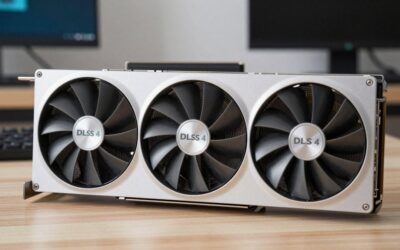
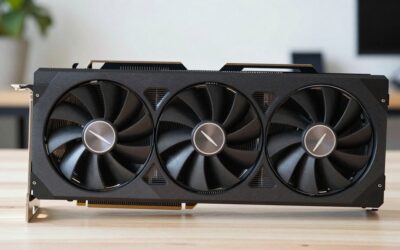
- Top Pick: GPVHOSO RTX 2060 8GB Super Graphics Card 256Bit GDDR6,
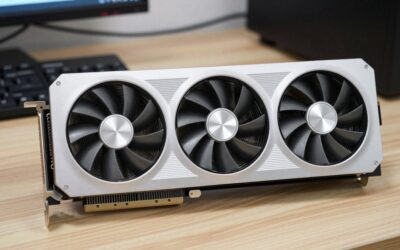
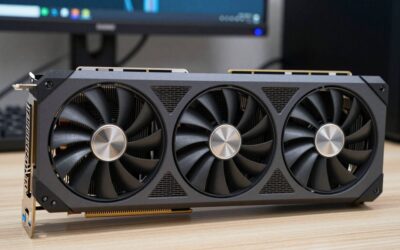
- Best Value: RTX 2060 Super 8GB GDDR6 Graphics Card Performance 97% of RTX 3060 130% of RTX 3050 Core 1470 MHz Memory1750 MHz CUDA 2176 256 bit PCI Express 3.0 HDMI DP DVI
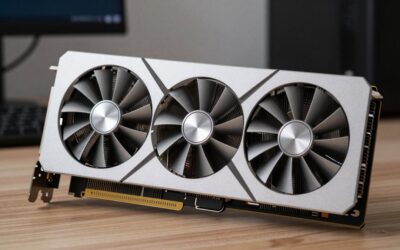
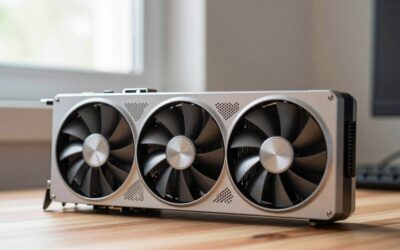
- Premium Choice: Nvidia Geforce RTX 2060 Super Founders Edition Graphics Card (Renewed)


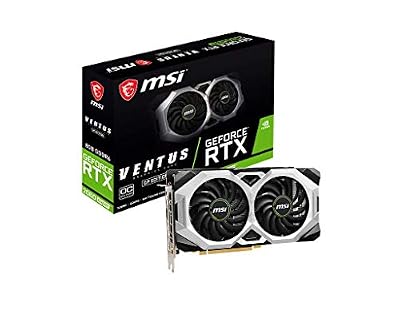
Evaluating the Rtx 2060 Super Vs Rtx 3060 is still one of the most vital questions for budget-conscious gamers upgrading their rigs in 2026. As modern game engines become increasingly demanding, choosing the right GPU requires looking closely at both raw technical specifications and the real-world economic factors of the hardware industry. This comprehensive guide will dissect the architecture, performance, and current value of both graphics cards to help you make an informed purchasing decision.
Architectural Deep Dive and Core Specifications
To understand how these two graphics processors handle modern software workloads, we must first analyze the fundamental engineering philosophies behind their respective generations. The shift from Turing to Ampere represents a major technological leap for NVIDIA, bringing distinct changes to core layouts, memory architectures, and manufacturing process nodes.
As an Amazon Associate we earn from qualifying purchases at no extra cost to you.



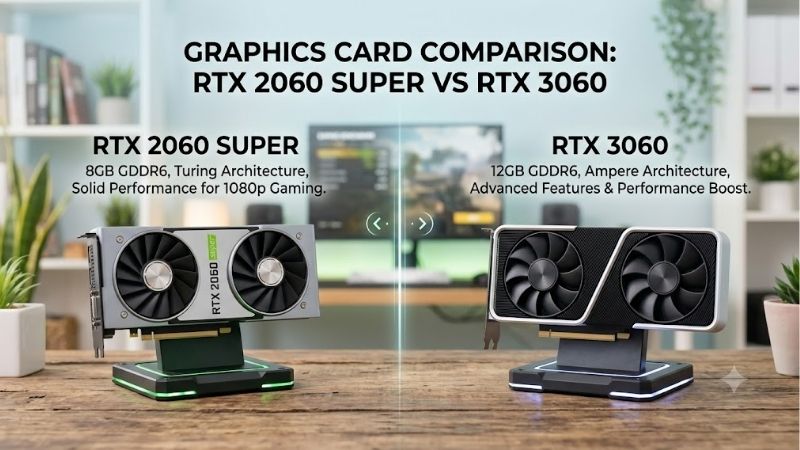
Comparing the raw specs reveals a classic design trade-off between memory bus width and total frame buffer capacity. While one card relies on a wider highway for faster data transfers, the other utilizes a much larger pool of modern video memory to handle massive high-resolution texture packs.
GPU Architecture and Silicon Configuration
The RTX 2060 Super features the 12nm Turing architecture, built on TSMC’s reliable FinFET process. This generation was historical because it first introduced specialized hardware for ray tracing and AI acceleration to mainstream desktop PCs. Under the hood, the Turing-based card boasts $2,176$ CUDA cores, working alongside 272 Tensor cores and 34 RT cores to process complex lighting algorithms.
In contrast, the RTX 3060 leverages the newer 8nm Ampere architecture, manufactured using Samsung’s specialized custom process node. This architectural shift allowed NVIDIA to pack a staggering $3,584$ CUDA cores onto the die, which represents a massive increase in raw processing density. Additionally, Ampere introduces 2nd-generation RT cores and 3rd-generation Tensor cores, which deliver superior mathematical efficiency per clock cycle compared to their Turing predecessors.
While the RTX 3060 boasts a higher absolute core count, architectural differences mean that CUDA cores are not scaled linearly between generations. The Ampere architecture structures its Streaming Multiprocessors (SMs) to handle dual FP32 datapath calculations, meaning raw performance increases depend heavily on how well a game or application is optimized to run on this modern parallel pipeline.
The Memory Subsystem and VRAM Allocations
The most critical point of divergence between these two GPUs lies within their respective memory subsystems. The RTX 2060 Super is equipped with an 8GB GDDR6 frame buffer running across a wide 256-bit memory bus interface. This wide bus allows the Turing card to achieve a total memory bandwidth of $448$ GB/s, ensuring that assets can be loaded into the graphics cache with exceptionally low latency.
Conversely, NVIDIA made a unique decision with the RTX 3060 by equipping it with a massive 12GB GDDR6 frame buffer. To accommodate this larger capacity while keeping manufacturing costs reasonable, they paired the memory with a narrower 192-bit bus interface. This layout limits the total memory bandwidth of the RTX 3060 to $360$ GB/s, meaning its memory speed is mathematically slower than that of the older Super card.
However, in the gaming landscape of 2026, raw capacity has proven to be far more critical than bus width for modern high-fidelity titles. Modern game releases regularly exceed 8GB of VRAM utilization even at 1080p resolution under maximum settings. Having access to a 12GB buffer prevents the severe performance drops, stuttering, and texture-pop-in that occur when a graphics card is forced to swap assets out to system RAM.
Pros and Cons of Rtx 2060 Super Vs Rtx 3060
Analyzing the practical strengths and weaknesses of both GPUs helps clarify which model fits your specific build goals. These pros and cons reflect long-term community feedback, system compatibility issues, and overall hardware reliability.
Check the latest price on Amazon:
- Nvidia Rtx 3050 Drivers
- Rtx 2060 Vs Rtx 3050
- Nvidia Overlay Not Showing Fps
- Rtx 2060 Vs Gtx 1660 Super
RTX 2060 Super Pros:
- Faster raw memory bandwidth of $448$ GB/s due to its robust 256-bit bus layout.
- Highly stable performance scaling in legacy DirectX 11 and DirectX 12 games.
- Often available at highly competitive prices on the secondary used market.
RTX 2060 Super Cons:
- The 8GB frame buffer acts as a severe bottleneck in modern 2026 gaming titles.
- Older Turing architecture lacks the modern efficiency gains of newer node sizes.
- Harder to find brand new with a manufacturer warranty.
RTX 3060 Pros:
- Generous 12GB VRAM buffer completely eliminates memory capacity anxiety.
- Superior 2nd-gen RT cores and 3rd-gen Tensor cores for upgraded DLSS performance.
- Highly efficient architecture runs cooler and requires less overall system cooling.
RTX 3060 Cons:
- Narrower 192-bit bus limits total memory bandwidth to $360$ GB/s.
- Rasterization performance in older games can occasionally match or trail the 2060 Super.
- Street prices remain stubbornly high due to sustained demand for budget systems.
Real-World Benchmarks and Geopolitical Supply Influences
Transitioning from theoretical specifications to real-world deployment requires looking at how these graphic chips perform in gaming suites. Furthermore, we must look at the broader global environment in 2026, which heavily impacts component supply pipelines, pricing trends, and consumer buying habits.
Understanding the economic landscape is just as crucial as knowing frame rates when planning your upgrade. Silicon manufacturing is highly sensitive to geopolitical factors, which directly dictate what hardware is available on retail shelves.
Gaming Framerates and Creative Application Benchmarks
In traditional rasterized gaming benchmarks at 1080p resolution, the RTX 2060 Super and RTX 3060 trade blows constantly. In older competitive titles like Counter-Strike 2 or Valorant, the 2060 Super can actually edge ahead by $2%$ to $5%$ thanks to its superior memory bandwidth. However, when testing modern, resource-heavy releases like Cyberpunk 2077 or Alan Wake 2, the RTX 3060 takes a commanding lead due to its larger VRAM capacity and modern architecture.
To express this performance relationship mathematically, we can write the relative rendering efficiency ratio as:
$$R = frac{P_{3060}}{P_{2060S}}$$
In modern workloads utilizing heavy ray tracing and AI reconstruction, this ratio sits at $R ge 1.15$, indicating a solid $15%$ performance advantage for the Ampere-based card. When enabling Deep Learning Super Sampling (DLSS), the RTX 3060’s upgraded Tensor cores maintain much higher image quality and better frame generation stability.
For creative professionals, the RTX 3060 is the vastly superior tool. In software suites like Blender, DaVinci Resolve, and local AI generation applications, the extra 4GB of video memory is highly advantageous. It allows digital artists to render highly complex scenes and run larger AI models locally without encountering frustrating out-of-memory errors.
How H200 AI Chip Shipments to China Squeeze Consumer Silicon
The consumer GPU market in 2026 is experiencing a unique supply bottleneck driven by major geopolitical policy shifts. Specifically, the US government’s updated trade guidelines allowing NVIDIA to export its highly advanced H200 AI chips to Chinese enterprises has heavily impacted consumer graphics card production. Because these enterprise-grade AI processors command massive profit margins, major semiconductor foundries have prioritized AI silicon production over consumer-level gaming chips.
This massive manufacturing pivot means that wafer allocation for desktop GPUs like the RTX 3060 has been significantly reduced. With fewer consumer dies being printed, the retail availability of affordable mid-range graphics options remains highly constrained. Consequently, older, highly reliable cards like the RTX 3060 have maintained their value incredibly well, making them highly sought-after assets in both retail and secondary markets.
This artificial supply constraint means that budget-conscious PC builders cannot simply wait around for massive clearance sales on previous-generation hardware. Securing a reliable mid-range card has become a highly strategic task that requires buying at the right window before local inventory levels dry up completely.
Rising Component Inflation and Strategic Upgrading in 2026
Compounding the supply-chain issues is a broader wave of component inflation that has driven up the cost of PC building materials. Everything from copper heat pipes and aluminum heatsinks to multi-layered PCBs has seen steady price increases throughout 2026. This trend has also directly impacted the pricing of modern laptops and pre-built systems, forcing many buyers back toward the DIY desktop upgrade market.
Because manufacturing costs show no signs of returning to pre-inflation levels, purchasing a graphics card today acts as an effective hedge against future price hikes. If you wait too long to upgrade your GPU, you may find yourself paying premium prices for basic power supplies, memory, and motherboards down the line.
By opting for a high-value mid-range option like the RTX 3060 right now, you secure excellent 1080p and 1440p gaming capabilities while protecting your hard-earned budget. It remains one of the smartest ways to keep your gaming system relevant without overspending on the latest high-end product lines.
Check the latest price on Amazon to secure your GPU upgrade before inventory shifts again.
Practical Ownership Costs and Market Alternatives
To round out your purchasing strategy, we must look at the physical realities of owning these cards over multiple years. This includes power efficiency, thermal performance, and looking at external alternatives to make sure you are getting the absolute best performance for your budget.
Operating costs can accumulate over time, meaning a cheaper card upfront could end up costing you more in utility bills or power supply upgrades. Let’s look at how these two GPUs stack up in day-to-day operations.
Power Consumption, Thermal Overhead, and PSU Requirements
From an energy perspective, the architectural improvements of Ampere provide a clear advantage in efficiency. The RTX 2060 Super has a rated Thermal Design Power (TDP) of 175W, while the RTX 3060 is rated at 170W. While this $5$W difference seems negligible on paper, real-world power scaling shows that the Ampere card manages its power draw far more dynamically.
We can represent the dynamic power draw ratio under sustained gaming workloads as:
$$W_{3060} < W_{2060S}$$
This superior efficiency means that the RTX 3060 generates less waste heat during long gaming sessions. As a result, partner models of the RTX 3060 typically feature quieter fan curves and lower overall system operating temperatures. Both of these graphics cards run comfortably on a standard 500W or 550W power supply, making them highly compatible with older pre-built office PCs or budget gaming rigs without requiring a costly PSU replacement.
Modern Alternatives: RTX 4060 and Radeon RX 6700 XT
If you find that the pricing of these two legacy cards is too close to modern options, exploring alternative hardware is highly recommended. The modern NVIDIA RTX 4060 and AMD’s Radeon RX 6700 XT represent excellent alternatives that offer unique advantages depending on your performance priorities.
The RTX 4060, powered by the ultra-efficient Ada Lovelace architecture, introduces advanced DLSS 3 Frame Generation technology. This feature allows you to dramatically increase your frame rates in supported titles by using AI to generate entirely new frames, all while drawing under 115W of power.
On the AMD side, the Radeon RX 6700 XT offers a highly competitive 12GB frame buffer paired with a wider 192-bit bus. It excels in pure rasterization performance, easily outpacing both the RTX 2060 Super and RTX 3060 in traditional raw rendering metrics at 1440p resolution.
Check the latest price on Amazon to compare modern mid-range GPU prices today.
Final Verdict and Buyer Recommendations
Choosing between these two legendary mid-range contenders ultimately comes down to your primary usage patterns and budget limits. If you are shopping on a razor-thin budget and primarily play lighter esports titles like League of Legends or Valorant, a cheap refurbished RTX 2060 Super is still a fantastic option. It provides excellent 1080p performance that easily drives high-refresh-rate monitors in competitive games.
However, if you want a system that will remain highly capable for the next several years, the RTX 3060 is the undisputed champion. Its massive 12GB VRAM buffer, superior ray tracing hardware, and advanced AI rendering capabilities ensure it can handle modern, demanding software with ease. It is the far more future-proof investment for modern PC gaming and creative workflows.
Conclusion
In conclusion, navigating the Rtx 2060 Super Vs Rtx 3060 market in 2026 reveals a clear path forward for smart PC builders. While the 2060 Super remains a highly respectable performer for older DX11 titles, the RTX 3060’s modern architecture and spacious 12GB VRAM make it the vastly superior choice for modern workloads. Against the backdrop of global chip supply shifts, enterprise AI chip prioritization, and rising manufacturing costs, upgrading to a reliable mid-range GPU today is the most strategic way to secure your gaming future.
Frequently Asked Questions
How large is the performance gap between these two cards?
They are remarkably close at 1080p, with the RTX 3060 typically ahead by roughly 5 to 12 percent depending on the title. The 3060 pulls further ahead at 1440p and in ray-traced games, where its newer Ampere RT cores and larger memory pool matter more than the 2060 Super wider 256-bit bus.
Does the 3060 12GB of VRAM make a real difference?
Yes, and it is the main reason to choose it. The 2060 Super has 8GB, which is now borderline at 1440p high textures, while 12GB gives the 3060 comfortable headroom in modern titles, texture mod packs and ray tracing. It also makes the 3060 far more useful for local AI workloads and video editing.
What are the power and PSU differences?
The RTX 2060 Super is rated at 175 watts, the RTX 3060 at 170 watts, so they are effectively equivalent. Both use a single 8-pin PCIe connector on most designs and both are comfortable on a quality 550 watt supply. Neither is a demanding upgrade for an existing system with adequate airflow.
Which supports the newer NVIDIA features?
Both run DLSS upscaling including the transformer model, both do hardware ray tracing, and neither supports DLSS frame generation, which requires Ada or Blackwell optical flow hardware. The 3060 has the newer NVENC encoder generation with better AV1 decode support, which matters for streaming and video playback workflows.
If I already own a 2060 Super, is the 3060 worth buying?
Not as a straight upgrade. A single-digit to low-double-digit framerate gain does not justify the cost, and you would be better saving toward an RTX 4060 Ti 16GB, RTX 5060 Ti or RX 7700 XT class card. The only compelling case is if you are repeatedly running out of VRAM at 1440p.

Write Your Review
No reviews yet. Be the first to share your experience!