
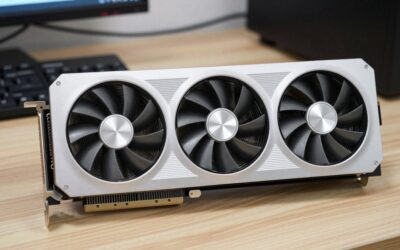
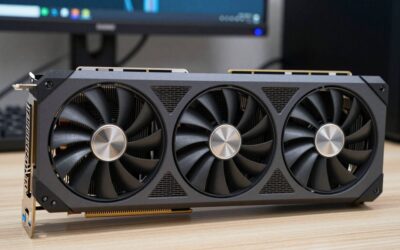
- Top Pick: 51RISC GeForce GTX 1660 Ti Graphics Card, 6GB GDDR6 192bit Video Card for Gaming GPU PCIe 3.0 x16 DP HDMI DVI 1080P 2K Game PC Card 1660ti 4K 8K Display (GTX 1660 Ti – Red)
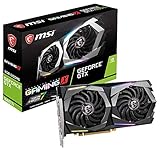
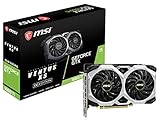
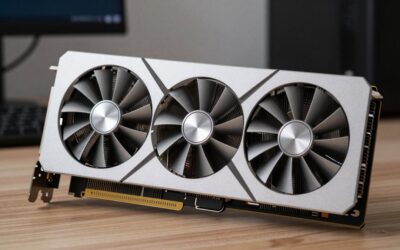
- Best Value: MSI Gaming GeForce GTX 1660 Ti 6GB GDRR6 – 192-bit HDMI/DP, Dual Fan, VR Ready, OC Graphics Card for Gaming PC, NVIDIA Video Card GPU (GTX 1660 TI Ventus XS 6G OC) Computer Graphics Cards (Renewed)
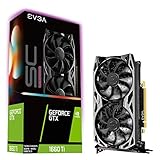
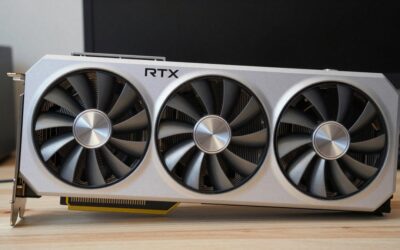
- Premium Choice: EVGA 06G-P4-1667-KR GeForce GTX 1660 Ti SC Ultra Gaming, 6GB GDDR6, Dual Fan (Renewed)
3050 vs 1660 Ti is usually presented as a frame rate question, and for a large share of the people asking it, frame rates are irrelevant. If your PC is a Dell, an HP, or a Lenovo office tower, the deciding factor is whether the card physically fits and whether your power supply has a cable for it. One of these cards comes in a version that needs no cable at all. That single fact settles this comparison for more readers than any benchmark chart will.
The Quick Verdict: 3050 vs 1660 Ti in 2026
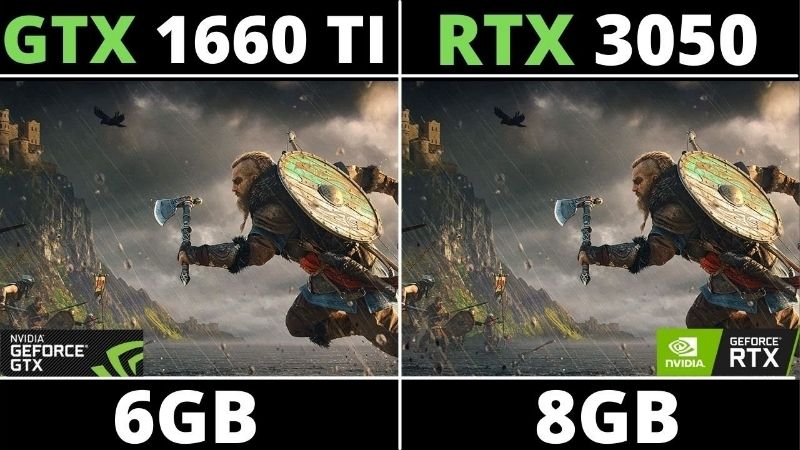
The performance answer: the RTX 3050 8GB is roughly 15 to 25 percent faster than the GTX 1660 Ti and adds DLSS, which the 1660 Ti can never run. It is the better card.
As an Amazon Associate we earn from qualifying purchases at no extra cost to you.





The practical answer is more interesting. The RTX 3050 exists in two very different versions — an 8 GB model needing an 8-pin connector, and a 6 GB model that runs on slot power alone. If you are upgrading a prebuilt, only one of those is a real option, and it is not the faster one.
Who Should Buy the RTX 3050
Buy the 6 GB version if your PC has no spare PCIe power cable. At 70 W it draws entirely from the slot, and low-profile designs exist. For an OEM office tower this is close to the only modern card that works, and that makes the comparison academic.
Buy the 8 GB version if you have a proper power supply and want the extra frame buffer. It is the faster of the two by a clear margin and 8 GB outlasts 6 GB in 2026 titles.
Buy either if you want DLSS. This is the capability gap that does not close with time, and the next section explains why it is architectural rather than incidental.
Who Should Buy (or Keep) the GTX 1660 Ti
Keep it if you already own one and play esports. CS2, Valorant, and Rocket League run past most monitors’ refresh rates on this card. Spending money to exceed what your display can show is not an upgrade.
Keep it if the price gap on the used market is wide. The 1660 Ti is a competent 1080p card, and a 20 percent uplift is rarely worth a large premium.
Do not buy one new. It is a 2019 card with no DLSS support and no path to gaining any.
The Full Specification Comparison Table
| Specification | GTX 1660 Ti | RTX 3050 6GB | RTX 3050 8GB |
|---|---|---|---|
| Architecture | Turing (TU116) | Ampere (GA106) | Ampere (GA106) |
| Launch | February 2019 | February 2024 | January 2022 |
| Launch price | 279 | 179 | 249 |
| CUDA cores | 1,536 | 2,304 | 2,560 |
| RT cores | None | 18 | 20 |
| Tensor cores | None | 72 | 80 |
| VRAM | 6 GB GDDR6 | 6 GB GDDR6 | 8 GB GDDR6 |
| Memory bus | 192-bit | 96-bit | 128-bit |
| Bandwidth | 288 GB/s | 168 GB/s | 224 GB/s |
| TDP | 120 W | 70 W | 130 W |
| Power connector | 8-pin | None | 8-pin |
| Low-profile version | Rare | Available | No |
| DLSS support | No | Yes | Yes |
Look at the bandwidth row before you assume the newer card wins everything. The 2019 GTX 1660 Ti moves 288 GB/s across a 192-bit bus. The RTX 3050 8GB manages only 224 GB/s on a narrower 128-bit bus, and the 6 GB version drops to 168 GB/s on 96 bits. On memory throughput alone, the oldest card here is the fastest.
Deep Dive Face-Off: Power, Size and Frame Rates
Comparing these cards by criteria rather than one at a time exposes a split that a benchmark average hides completely. The RTX 3050 wins on shader throughput and on software features. The GTX 1660 Ti wins on memory bandwidth. And on physical fit — the thing that actually determines whether you can buy the card at all — the answer depends entirely on which RTX 3050 you mean.
The 70W Question: Will It Even Fit Your PC?
A PCIe slot supplies 75 W. Any card that stays under that ceiling needs no cable from the power supply.
This matters because OEM prebuilts — the Dell OptiPlex and HP EliteDesk class of machine that millions of people are trying to turn into budget gaming PCs — ship with power supplies that have no PCIe connector to offer. Not a weak one. None. The GTX 1660 Ti’s 8-pin requirement ends the conversation in those machines, and so does the RTX 3050 8GB’s.
The RTX 3050 6GB is the exception, and it is why the 2024 variant exists at all. 70 W, slot-powered, available in low-profile designs that fit a slim chassis. It is meaningfully slower than the 8 GB model — 2,304 cores against 2,560, and 168 GB/s of bandwidth against 224 — but slower and installed beats faster and incompatible.
The instruction is concrete: open your case and look for a spare 6-pin or 8-pin PCIe cable before you shop. If there is not one, your list has exactly one card on it.
Frame Rates and the Bandwidth Surprise
The RTX 3050 8GB delivers roughly 15 to 25 percent more frames than the GTX 1660 Ti at 1080p. That is a real gap but a modest one for a three-year architectural jump, and the bandwidth table explains why the gap is not larger.
Ampere’s shaders are substantially more capable per clock than Turing’s, and the 3050 has 66 percent more of them. Yet NVIDIA paired that silicon with a 128-bit bus, cutting memory throughput below the older card’s. The result is a GPU that is compute-rich and bandwidth-starved, and in memory-heavy scenes the 1660 Ti closes more ground than its age suggests.
The 6 GB RTX 3050 sits in a stranger place still. Against the 1660 Ti it trades roughly even in raster — more shaders, far less bandwidth — and wins on features and power draw rather than on raw speed.
DLSS: What the 1660 Ti Can Never Do
This is where the comparison stops being close. The GTX 16 series is Turing with the Turing features removed: no RT cores, no Tensor Cores. It reports the same compute capability as the RTX 20 series and cannot run a single thing that made the RTX 20 series interesting.
DLSS requires Tensor Cores. The 1660 Ti has none. No driver grants access, no update changes this, and no amount of waiting helps.
Both RTX 3050 variants run DLSS, and the forward-looking case is stronger than it looks. DLSS Super Resolution now covers over 400 games and apps, and NVIDIA has continued extending newer models to older RTX hardware — DLSS 4.5, announced at CES 2026, reached every RTX GPU from day one. An Ampere card keeps gaining image quality after purchase. A 1660 Ti is frozen at whatever it could do in 2019.
Pros and Cons: The Used-Market Reality
Both of these cards are now secondhand propositions for most buyers, and that reframes the comparison. You are not choosing between two retail products with warranties — you are choosing between listings of unknown provenance, at prices set by a market under unusual pressure. Both sides deserve stating plainly.
Where the RTX 3050 Earns Its Money
The 6 GB variant’s 70 W envelope is the strongest and most specific case. Nothing else modern fits a slot-powered, low-profile constraint at this performance level. For that buyer there is no competition to weigh.
DLSS access is the second, and over a multi-year ownership window it is probably worth more than the 20 percent raster gap.
The 8 GB frame buffer on the larger variant is the third. 6 GB is where 2026 titles start hitching at 1080p high, and the extra 2 GB pushes that wall back meaningfully.
The Complaints Buyers Report
The narrow memory bus draws consistent criticism, and the specification table shows why. Paying for a newer card that moves less data than a 2019 model feels wrong because it is genuinely odd engineering.
The 6 GB variant’s positioning frustrates people. It shares a name with the 8 GB card while being noticeably slower — fewer shaders, a 96-bit bus, 25 percent less bandwidth. Buyers who did not read carefully feel misled, and the naming does them no favours.
The third is value at current used pricing. A 15 to 25 percent uplift is easy to justify at a small premium and impossible to justify at a large one, and used pricing has not been cooperating.
The Alternative: What to Buy If Neither Fits
If your machine takes an 8-pin and your budget stretches, the Intel Arc B580 with 12 GB of GDDR6 has been listed near 309.99 and outperforms both cards here by a wide margin. Double the memory of either.
If you need slot power but want more than the 3050 6GB, the honest answer is that nothing else exists in this envelope. That is the constraint, not a preference you can shop around.
If you are buying secondhand anyway, a used RTX 3060 12GB around 200 to 250 is a far better card than either — provided you verify it is genuinely the 12 GB version and not the 8 GB board relabelled.
Used GPU Prices in 2026: Buy Now or Wait?
The prices you are seeing on these two cards are not being set by their age or their performance. They are being set by what new cards cost, and new cards have been caught in a supply situation that has run longer than anyone predicted. Understanding the mechanism tells you whether holding out for a better price is patience or self-harm.
Why the New-Card Shortage Props Up Used Prices
Used GPU pricing anchors to the cheapest new alternative. When entry cards are plentiful and cheap, used prices collapse. When they are not, used prices float upward regardless of the card’s age.
That anchor has been drifting. Rather than easing back toward 2024 levels, component pricing has continued its upward march — memory most of all. The evidence is unusually concrete this month: NVIDIA restarted production of the five-year-old RTX 3060 12GB and put it back on shelves at around 329 to 339, because building a 2021 design on an idle Samsung node is now cheaper than building a new one.
Read what that implies for your decision. When a manufacturer’s most economical option is to rebuild a 2021 card, the used market beneath it is not about to soften.
Prices Have Plateaued, But Not Fallen
There is real good news, and it should be said without exaggeration. The steep run-up that defined late 2025 has flattened. Framework and others have recorded a stretch of comparative steadiness, while stating outright that they do not consider the swings finished.
Read that precisely, because the distinction decides your move. A plateau means the cost of deliberating has dropped. It does not mean waiting earns a discount. Those are different claims.
For a buyer choosing between two used cards under 250, a plateau is sufficient reason to proceed. The downside risk on a purchase this size is small, and the cost of a stuttering PC is paid every evening.
Relief Waits Until Late 2027
More supply is coming, and the dates are public. Micron has broken ground on two Idaho fabs. Separately, OEMs that were squeezed into a narrow set of DDR5 vendors can now buy from CXMT in China as well. Both additions are real.
Neither arrives this year. Those Idaho plants are not scheduled to come online until 2027 to 2028, and industry forecasts do not expect meaningful consumer price relief before late 2027 at the earliest.
Eighteen months is a long time to wait for a discount on a card that costs less than a phone.
Check what an RTX 3050 6GB costs new against used GTX 1660 Ti listings before deciding — a retail warranty and a return window frequently outweigh a small price gap on hardware with unknown history.
See More:
- NVIDIA
- NVIDIA DeepStream
- NVIDIA GPU driver update
- NVIDIA GeForce NOW download
- NVIDIA RTX A2000 12GB driver
Final Verdict and Recommendation
3050 vs 1660 Ti is decided by your case and your power supply far more often than by frame rates. The RTX 3050 8GB is 15 to 25 percent faster and adds DLSS. The GTX 1660 Ti moves more data per second than either 3050. And the RTX 3050 6GB is slower than both — yet remains the only card on this list that fits an OEM prebuilt with no PCIe cable.
Buy the RTX 3050 6GB if your machine has no spare power connector or needs a low-profile card. It is not the fastest. It is the one that works.
Buy the RTX 3050 8GB if you have a real power supply and want the extra frame buffer plus DLSS.
Keep the GTX 1660 Ti if you own one and play esports — but do not buy one now, because no DLSS is a permanent condition rather than a temporary gap.
With used pricing anchored to a new-card market where a 2021 GPU is the economical option, and no real relief forecast before late 2027, this is not a market that rewards waiting. Check your PSU, pick the card that fits, and buy it.
Frequently Asked Questions
Which card is faster in games?
They trade blows in pure rasterization, with the RTX 3050 8GB typically a few percent ahead at 1080p and the gap widening in newer titles that use its larger frame buffer. The 6GB RTX 3050 variant is meaningfully slower than both due to a cut down bus and core count.
Does the 3050’s 8GB of memory make a real difference?
Yes, increasingly so. Modern games at 1080p high textures now exceed 6GB, causing texture pop-in and frame time spikes on the 1660 Ti while the 3050 holds steady. Capacity is where the 1660 Ti shows its age most clearly, more than raw shader throughput.
What about DLSS and ray tracing?
Only the 3050 supports them. It has tensor cores for DLSS super resolution, which effectively adds 30 to 40 percent performance at Quality preset, plus second generation RT cores for light ray tracing. The 1660 Ti has neither and must use FSR or XeSS compatibility paths on standard shaders.
How do power draw and connectors compare?
The 1660 Ti is a 120W card on a 450W system with one 8-pin. The RTX 3050 8GB is 130W with one 8-pin on a 550W recommendation, while the 6GB model runs at just 70W with no external connector, making it the only realistic option for slim OEM desktops.
Which is the better value on the used market?
The RTX 3050 8GB, provided the price premium is modest, because DLSS support and the larger buffer extend its useful life. Buy the 1660 Ti only if it is substantially cheaper and you play older or esports titles where 6GB is still comfortable at your settings.
Ready to decide? Our #1 pick for 2026 is the Architecture.
Live price & availability on Amazon.

Write Your Review
No reviews yet. Be the first to share your experience!