
- Top Pick: ASUS Prime GeForce RTX 5060 Ti 16GB GDDR7 Gaming Graphics Card
- Best Value: ASUS Dual GeForce RTX 5060 Ti 16GB GDDR7 OC Edition Gaming Graphics Card
- Premium Choice: GIGABYTE GeForce RTX 5060 Ti WINDFORCE OC 8G Graphics Card, 8GB 128-bit GDDR7, PCIe 5.0, WINDFORCE Cooling System, GV-N506TWF2OC-8GD Video Card


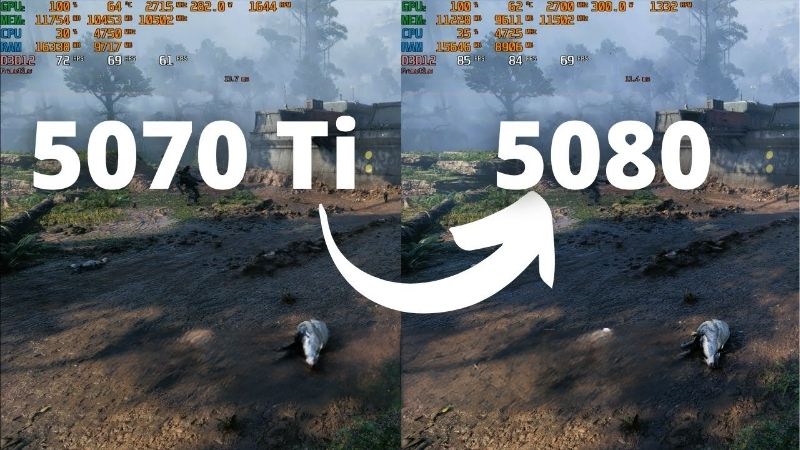
RTX 5080 vs 5060 Ti is less a head-to-head between rivals and more a value question: is NVIDIA’s 4K flagship-tier card worth roughly two to three times the price of its popular mid-range sibling, or is the RTX 5060 Ti the smarter buy for most gamers? These two cards target very different players, and picking wrong means either overspending on 4K power you cannot use or underspending and missing the resolution you actually wanted. This comparison gives you the fast verdict, a full specification table, a criteria-by-criteria face-off, a cheaper alternative, and a clear recommendation for each type of buyer.
RTX 5080 vs 5060 Ti: The Quick Verdict and Specs
The two cards sit at opposite ends of NVIDIA’s Blackwell gaming stack, so the decision is driven almost entirely by your monitor and your budget rather than by any single benchmark. The RTX 5080 is built for high-refresh 4K, while the RTX 5060 Ti is a mainstream card aimed at 1080p and 1440p. Before the detailed breakdown, here is the short answer and the raw numbers that shape everything below.
As an Amazon Associate we earn from qualifying purchases at no extra cost to you.



The 30-Second Verdict for Busy Buyers
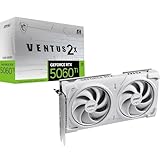
If you game at 4K, chase maximum ray tracing, or work in demanding creative applications, the RTX 5080 is the card that removes compromises. If you play at 1080p or 1440p and want the best performance per dollar, the RTX 5060 Ti, especially its 16GB version, is the far more sensible spend and leaves budget for the rest of the build.
Put simply, the RTX 5080 wins on outright power and 4K capability, while the RTX 5060 Ti wins decisively on value for the resolutions most people actually game at. The right answer depends on which of those two priorities matters more to you, and on how much you are willing to pay for headroom you may not use.
One nuance sets this matchup apart from the usual flagship-versus-midrange story: both cards carry the same 16GB of memory and the same DLSS 4 feature set. That means the RTX 5060 Ti is not a cut-down card in terms of features or capacity, only in raw power and bus width. For many buyers that removes the biggest fear about going with the cheaper option, since it will not run out of memory sooner than the flagship in typical use.
Full Specification Comparison Table
The core numbers below explain most of the performance and value gap discussed later in this comparison. Note how the price difference dwarfs almost everything else.
| Specification | RTX 5080 | RTX 5060 Ti (16GB) |
|---|---|---|
| Target resolution | 4K high-refresh | 1080p and 1440p |
| Memory | 16GB GDDR7 | 16GB GDDR7 |
| Memory bus | 256-bit | 128-bit |
| Board power | ~360W | ~180W |
| Upscaling | DLSS 4 + Frame Gen | DLSS 4 + Frame Gen |
| Approx price | $999 | $429 |
Both share the same 16GB buffer and DLSS 4 feature set, but the RTX 5080’s wider bus and far higher power ceiling translate into a large raw-performance gap, and its price reflects that. The RTX 5060 Ti gives you the modern feature stack for less than half the money.
Price, Positioning, and What You Actually Pay
The price gulf is the single most important fact in this matchup. The RTX 5080 sits in high-end territory around $999, while the RTX 5060 Ti 16GB lands near $429, meaning you could buy the mid-range card and a solid monitor or power supply for what the flagship costs alone. That framing matters more than any frame-rate chart for a value-focused buyer.
Positioning follows price. The RTX 5080 is a specialist 4K and creator card, while the RTX 5060 Ti is a mainstream all-rounder built to give the largest number of gamers a strong 1080p and 1440p experience. They rarely appear on the same shortlist unless a buyer is deciding how far to stretch, which is exactly the question this comparison answers.
It helps to think in terms of the whole build rather than the card in isolation. Spend the flagship’s price on the RTX 5060 Ti instead, and the difference can fund a high-refresh monitor, a better power supply, faster storage, or simply savings kept in reserve for a future upgrade. Framed that way, the RTX 5080 has to justify not just its own cost but everything else that money could buy, which is a high bar unless 4K is genuinely your target.
RTX 5080 vs 5060 Ti: Deep-Dive Performance Face-Off
Rather than reviewing each card in isolation, the most useful approach is to pit them directly against each other across the criteria that decide a purchase: resolution and raw performance, ray tracing and features, and power, efficiency, and value. Each section names a winner so the trade-offs stay concrete and easy to act on.
Resolution and Raw Gaming Performance
At 4K, there is no contest: the RTX 5080’s wider bus and far higher power ceiling deliver smooth high-refresh gaming where the RTX 5060 Ti simply cannot keep up, dropping to lower settings or resolutions to stay playable. If a high-resolution monitor is your reality, the flagship is the only one of the two that truly satisfies. Winner at 4K: the RTX 5080, decisively.
At 1080p and 1440p, the picture changes completely. The RTX 5060 Ti handles both resolutions comfortably in the vast majority of titles, and the RTX 5080’s extra power goes largely unused because the monitor cannot display the additional frames meaningfully. For these mainstream resolutions, paying flagship money buys headroom you will rarely feel. Winner on value at 1080p and 1440p: the RTX 5060 Ti.
The practical takeaway is that resolution decides this fight. Match the card to your monitor, and the “worse” card on paper can be the smarter buy for your specific setup, since frames you cannot see are frames you paid for and wasted.
Ray Tracing, DLSS 4, and Future Features
Both cards support DLSS 4 with Frame Generation, so the modern feature stack is shared rather than exclusive to the flagship. That is a genuine strength of the RTX 5060 Ti: it is not a stripped-down card feature-wise, just a less powerful one, and it benefits from the same upscaling and frame-generation technology that keeps demanding games fluid.
Where the RTX 5080 pulls ahead is in raw ray-tracing horsepower. Heavy path-traced and fully ray-traced scenes lean on the flagship’s additional hardware, letting it stay smooth at 4K where the RTX 5060 Ti would need aggressive upscaling or reduced settings to cope. Winner on ray tracing at high resolutions: the RTX 5080; on shared modern features at sensible resolutions: effectively a tie.
Looking ahead, both cards should benefit as DLSS 4 matures and more games adopt advanced Frame Generation, which gradually lifts the experience without new hardware. That ongoing software improvement is one of the strongest arguments for staying within the NVIDIA ecosystem at either tier, and it slightly favors keeping money in your pocket with the RTX 5060 Ti, since the same features arrive on both cards over time.
Power, Efficiency, and Everyday Compatibility
Efficiency strongly favors the RTX 5060 Ti. At around 180W it runs cool, quiet, and fits easily into most existing systems with a modest power supply, making it a low-friction upgrade that rarely demands new parts. It is the friendlier card for compact builds and prebuilt upgrades where airflow and power headroom are limited.
The RTX 5080, at roughly 360W, is a genuine high-end component that demands planning: an 850W-class power supply, real case airflow, and physical clearance for a large cooler. That is not a flaw, but it is a real cost and effort difference that belongs in the decision, especially for buyers upgrading an existing machine rather than building fresh. Winner on efficiency and easy compatibility: the RTX 5060 Ti.
For anyone slotting a card into a prebuilt or a small case, that gap is decisive. The RTX 5060 Ti asks almost nothing extra of the system, while the RTX 5080 can turn a simple upgrade into a wider set of purchases, which is a real cost beyond the sticker price.
Choosing Between the RTX 5080 and 5060 Ti
With the face-off settled by criteria, the final decision comes down to your priorities, how the current market affects the value equation, and whether a different card would serve you better. This section closes those three loops so you can commit with confidence.
Pros and Cons of Each Card at a Glance
The summary below captures the strengths and weaknesses that matter most for this matchup so your expectations match reality.
| RTX 5080 | RTX 5060 Ti 16GB | |
|---|---|---|
| Strengths | 4K power, ray tracing, creator performance | Excellent value, efficient, same DLSS 4 features |
| Weaknesses | Expensive, high power draw, large size | Not built for smooth 4K, narrower bus |
| Best for | 4K gamers and creators | 1080p and 1440p value builders |
Neither list is a knockout; the right column simply depends on whether you value uncompromising 4K power or the best performance per dollar at mainstream resolutions.
How Rising Prices Change the Value Equation
This matchup does not happen in a vacuum. Component and laptop prices have been trending upward, and graphics-card memory in particular has been squeezed, which pushes street prices above launch figures for both cards. At the flagship end that inflation is felt in real dollars, which only widens the value argument for the RTX 5060 Ti, so confirming live prices before buying is essential rather than trusting an old MSRP.
There is a modestly positive signal to weigh. The steep climbs of late 2025 have eased into a stretch of relative stability, though suppliers still warn that volatility has not vanished and prices could move again. New supply from additional memory vendors and Micron’s two upcoming Idaho plants is coming, but not until roughly 2027 to 2028, so meaningful relief is years out rather than months. The practical conclusion is that waiting for a large price crash is a gamble against that timeline, so a fairly priced card that matches your resolution today is a defensible buy.
The Alternative: A Middle Path
If the RTX 5080 feels too expensive but the RTX 5060 Ti feels a step short for your 1440p ambitions, the natural middle ground is the RTX 5070. It sits between them on both price and performance, delivering strong 1440p gaming with more headroom than the 5060 Ti and far less cost than the 5080.
For buyers torn between value and power, that middle option often resolves the tension cleanly. Compare the live price of the RTX 5070 against both headline cards before deciding, since in this shifting market the gap between the three can easily make the middle card the smartest overall buy on a given day.
See More:
- NVIDIA
- NVIDIA DeepStream
- NVIDIA GPU driver update
- NVIDIA GeForce NOW download
- NVIDIA RTX A2000 12GB driver
Final Verdict: RTX 5080 vs 5060 Ti
The RTX 5080 vs 5060 Ti decision comes down to one honest question: what resolution do you game at, and how much are you willing to pay for headroom? Buy the RTX 5080 if you run a 4K monitor, want maximum ray tracing, or work in demanding creative applications where its power and memory pay off. Buy the RTX 5060 Ti 16GB if you play at 1080p or 1440p and want the same modern DLSS 4 features for less than half the price. Both are capable Blackwell cards, so once you have matched the choice to your monitor and budget, check current pricing and stock and lock in whichever fits — with prices elevated and meaningful relief years away, a fair deal that matches your resolution today is worth acting on rather than waiting for a discount the supply timeline does not support. The smartest buyers here are the ones who buy for the monitor they own, not the one they imagine.
Frequently Asked Questions
Is the RTX 5080 worth more than double the price of the 5060 Ti?
The 5080 delivers roughly two to two and a half times the raster performance of the 16GB 5060 Ti, so price-to-performance scaling is nearly linear at 4K. If you game at 1080p or 1440p on a 75Hz panel, the 5060 Ti captures most of the practical value and the 5080 sits underused.
What power supply does each card need?
The RTX 5080 has a 360W board power and NVIDIA recommends an 850W unit, ideally ATX 3.1 with a native 12V-2×6 cable so you avoid four-way adapter clutter. The 5060 Ti pulls only 180W and runs comfortably on a quality 550W supply through a single 8-pin PCIe connector.
Is 16GB of VRAM enough on the 5080 for 4K gaming?
Yes for current titles. Sixteen gigabytes of GDDR7 on a 256-bit bus handles 4K ultra with ray tracing in essentially every shipping game, and DLSS 4 lowers the internal render resolution so the framebuffer footprint shrinks. Only heavy path tracing with frame generation starts pressing that limit.
Should I buy the 8GB or 16GB RTX 5060 Ti?
Buy the 16GB version. Both cards use the same GPU die and clocks, but the 8GB model already shows texture pop-in and frame-time stutter at 1440p and even 1080p once ray tracing is on. The price gap is around fifty dollars and the larger buffer ages far better.
Will the RTX 5080 physically fit in my case?
Most partner 5080 designs are triple-slot and 320 to 330mm long, so you want a mid-tower rated for at least 340mm of card clearance plus space to bend the power cable safely. The 5060 Ti is usually dual-slot and under 250mm, dropping into small form factor and prebuilt chassis unmodified.
Ready to decide? Our #1 pick for 2026 is the Target resolution.
Live price & availability on Amazon.

Write Your Review
No reviews yet. Be the first to share your experience!