
- Top Pick: Deep Learning Crash Course
- Best Value: Deep Learning with C++: Design and deploy neural networks using CUDA for high-performance AI in C++
- Premium Choice: Learning Deep Learning: Theory and Practice of Neural Networks, Computer Vision, Natural Language Processing, and Transformers Using TensorFlow
NVIDIA DLI, the Deep Learning Institute, is NVIDIA’s official training arm for AI, accelerated computing and data science, and it has become a common stepping stone for people trying to break into machine learning. But the catalog is large, the formats differ, and the value depends heavily on what you want out of it. This review breaks down what NVIDIA DLI actually offers, how learners rate the courses and certificates, where it falls short, and the hardware you will eventually want if you plan to keep building after the labs end. The goal is a clear picture of whether DLI fits your goals before you spend the time or money.
What Is NVIDIA DLI and Who Is It For?
NVIDIA DLI packages the company’s deep technical knowledge into structured courses aimed at developers, students, data scientists and researchers. Understanding the formats, the certificates and the pricing is the fastest way to judge whether it matches your situation, so this section covers each in turn.
What DLI Courses Offer
DLI content comes in two main formats. Self-paced online courses let you work through material and hands-on labs on your own schedule, while instructor-led workshops run live over a set number of hours with a trainer guiding the group.
The subject range is broad, spanning fundamentals of deep learning, accelerated computing with CUDA, data science on GPUs, and a growing set of generative AI and large language model topics. Most courses lean practical, pairing short lessons with labs you complete in a browser-based GPU environment.
The catalog is organized around learning paths as well as one-off courses, so you can follow a sequence from fundamentals toward a specialization such as generative AI or accelerated data science. That structure helps if you want a guided route rather than picking courses at random.
That cloud lab setup is worth noting: for the course itself you do not need your own powerful GPU, because the compute runs on NVIDIA’s servers. Your own hardware matters later, when you start building independent projects.
Certificates and What They Are Worth
Many DLI courses award a certificate on completion, and some assessment-based courses grant a certificate of competency that signals you passed a graded task, not just watched videos. These carry the weight of NVIDIA’s name in the AI space.
Be realistic about what a certificate does, though. It is a credible signal of effort and foundational skill, useful on a résumé or LinkedIn, but it is not a degree and rarely lands a job on its own. Its real value is as evidence that supports a portfolio of actual projects.
To get the most out of one, treat the certificate as a headline and your projects as the proof underneath it. On a resume, a line noting an NVIDIA DLI course in a named specialization reads best when it sits next to a repository or a demo that shows you applied the skill. The two together are far stronger than either alone.
Pricing and Formats
Pricing varies by format. A number of self-paced courses are modestly priced, some short ones are free, and full instructor-led workshops cost considerably more per seat. NVIDIA also runs free DLI sessions around events like GTC, which can be a low-cost way in.
Because pricing and promotions change, it is worth checking the current catalog before committing. For most individuals, starting with a low-cost self-paced course is the sensible way to test whether the teaching style works for you.
Organizations have a different calculus. For teams, the instructor-led workshops and enterprise packages can justify the higher cost because they upskill many people at once with consistent material. If your employer sponsors training, it is worth asking whether DLI seats are already available to you before paying out of pocket.
NVIDIA DLI Review: Strengths and Weaknesses
DLI has a strong reputation, but it is not the right fit for everyone. This section distills what learners consistently praise, where the criticism lands, and a balanced pros and cons summary so you can weigh it against alternatives like university courses or broader online platforms.
What Learners Praise
The most common praise is the hands-on, lab-driven approach. Learners appreciate that DLI has them writing and running real code in a working GPU environment rather than only watching lectures, which builds practical confidence quickly.
The authority of the source also comes up often. Because NVIDIA builds the hardware and much of the software stack behind modern AI, learners value getting the material straight from the vendor, especially for CUDA and accelerated computing topics where NVIDIA’s expertise is unmatched.
The lab environment itself earns praise too. Because the compute is provisioned for you, beginners avoid the notorious headache of getting GPUs, drivers and frameworks talking to each other, and can focus on the concepts instead of the plumbing.
Common Criticisms
The most frequent criticism is depth versus breadth. Some learners find individual courses feel short or introductory, leaving them wanting more advanced follow-up material than a single course provides.
Cost is another sticking point, particularly for instructor-led workshops, which some feel are priced for corporate training budgets rather than individuals. A few learners also note that because the field moves so fast, certain course examples can feel a step behind the very latest tools.
There is also a self-direction requirement worth naming. Self-paced courses demand discipline, and some learners drift away without the accountability of a live class. That is less a flaw in the material than a reminder to match the format to how you actually learn.
Pros and Cons of NVIDIA DLI
The pros are clear: genuinely hands-on labs, credible NVIDIA-backed certificates, strong coverage of GPU and CUDA topics, and flexible self-paced options. For building practical, GPU-focused skills, it is a well-regarded choice.
The cons are equally clear: individual courses can feel shallow on their own, workshops can be expensive, and a certificate alone will not replace a portfolio or a degree. DLI works best as one structured piece of a wider learning plan, not the whole plan.
Getting the Most from NVIDIA DLI
DLI pays off when you match the right track to your goal and then keep building afterward. This section covers who should take which path, the hardware you will want once you outgrow the cloud labs, and simple habits that turn a certificate into real skill.
Who Should Take Which Track
If you are new to the field, start with a self-paced fundamentals course in deep learning or accelerated computing to confirm the subject and teaching style suit you before spending more.
If you already code and want targeted skills, jump to a specific topic such as CUDA programming, data science on GPUs, or a generative AI course that maps directly to the work you want to do. Reserve the pricier instructor-led workshops for when your employer is paying or when live guidance genuinely accelerates you.
Whichever track you pick, be honest about your starting point. Jumping into an advanced generative AI course without the fundamentals usually leads to frustration, while a strong coder sitting through an intro course wastes time. A quick look at each course’s stated prerequisites saves both problems.
The Hardware You Need to Keep Practicing
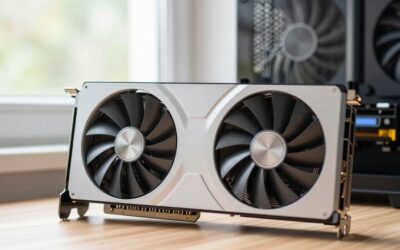
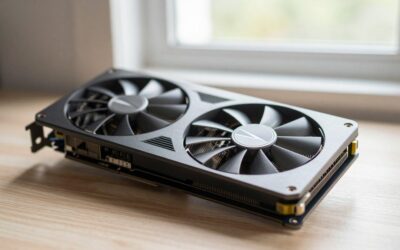
The DLI labs run in the cloud, but real growth comes from building your own projects afterward, and that is where a capable local GPU pays off. For running and fine-tuning smaller models at home, VRAM is the spec that matters most, since it decides which models even fit in memory.
A current GeForce RTX card with 16GB of VRAM, such as an RTX 5070 Ti or 5080, is a strong sweet spot for local AI practice, giving you room to experiment without immediately hitting memory limits. If you plan to work with larger models, stepping up to a 24GB or 32GB card removes the ceiling entirely.
Whichever tier fits your budget, checking the current price and VRAM before you buy is the smart move, and you can compare suitable RTX cards for AI practice through the links in this guide.
Tips to Actually Finish and Apply It
Treat each course as a project, not a video playlist. Block out fixed time, complete every lab by hand rather than copying, and take notes you can return to when you build something of your own.
Then apply it immediately. The single biggest predictor of whether DLI training sticks is whether you build a small independent project right after, using the same tools on your own hardware while the material is fresh.
A good rhythm is course, then project, then repeat. Each cycle turns passive knowledge into something you can demonstrate, and it compounds faster than stacking certificates you never apply.
See More:
Final Verdict: Is NVIDIA DLI Worth It?
For the right learner, NVIDIA DLI is worth it. Its hands-on labs, credible certificates and authoritative coverage of GPU and CUDA topics make it a solid, practical way to build AI skills, especially when you start with a low-cost self-paced course rather than an expensive workshop. The honest caveat is that a single course can feel introductory and a certificate will not replace a portfolio, so treat DLI as one structured piece of a broader plan.
If you are serious about carrying your NVIDIA DLI training into real projects, the natural next step is a capable RTX GPU with enough VRAM to run and fine-tune models at home. Decide your track, work through the labs properly, and when you are ready to keep building, check the latest prices on a suitable RTX card through the links in this guide so your practice never stalls for lack of hardware.
Frequently Asked Questions
What is the NVIDIA Deep Learning Institute?
DLI is NVIDIA’s training programme offering self-paced online courses and instructor-led workshops covering deep learning, accelerated computing, CUDA programming, data science, and graphics. Courses run in cloud-hosted GPU environments, so you do not need local hardware to complete the labs.
Do I need my own GPU to take the courses?
No. The lab environments run on cloud GPU instances provisioned as part of the course, accessed through a browser-based notebook interface. A local NVIDIA card is useful afterwards for applying what you learn but is not a prerequisite for enrolment.
What does a DLI certificate actually prove?
Certificates confirm you completed a specific course and passed its assessment. They carry recognition value with employers familiar with the NVIDIA ecosystem, particularly for CUDA and accelerated computing roles, but they are supplementary credentials rather than a substitute for a portfolio.
How much do the courses cost?
Self-paced courses typically sit in the ninety dollar range each, with some introductory material offered free. Instructor-led workshops cost considerably more and are often purchased by employers. Discounts and free access are periodically available through university programmes and NVIDIA events.
Is DLI worth it compared with free alternatives?
The main advantages are the provisioned GPU environment, structured labs, and CUDA-specific depth that generic machine learning courses skip. If you are targeting NVIDIA-stack work such as CUDA kernels, TensorRT, or Triton, it is a reasonable investment. For general machine learning theory, free university courses cover more ground.
As an Amazon Associate we earn from qualifying purchases at no extra cost to you.





Write Your Review
No reviews yet. Be the first to share your experience!