
- Top Pick: AI Engineering: Building Applications with Foundation Models
- Best Value: Mastering AI with Python: A Beginner’s Guide to Machine Learning, Deep Learning, Generative AI, LLMs, and AI Agents
- Premium Choice: AI Systems Performance Engineering: Optimizing Model Training and Inference Workloads with GPUs, CUDA, and PyTorch
Nvidia LLM models have turned the company from a pure chip supplier into a serious builder of artificial intelligence itself, a shift many people have not yet registered. Through its Nemotron family, NVIDIA now releases powerful, genuinely open language models complete with weights, training data, and recipes. This guide explains what NVIDIA’s LLM models are, the different types in the Nemotron lineup, why the company gives them away, and how developers can access and run them for their own projects.
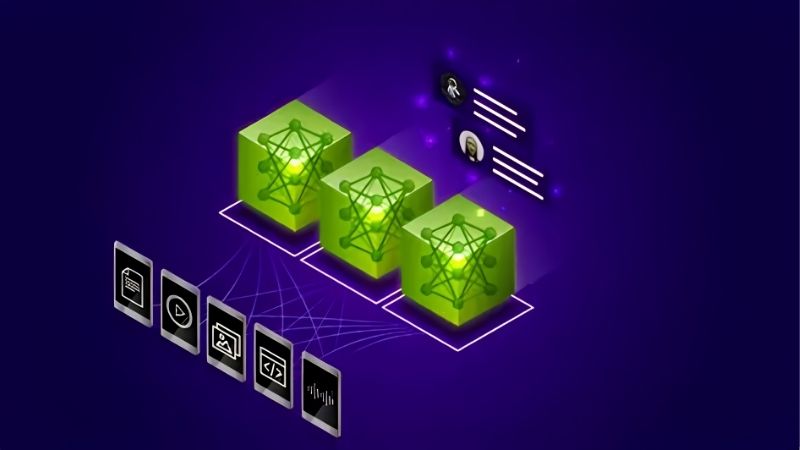
What Are Nvidia’s LLM Models?
It surprises many people to learn that NVIDIA, known mainly for GPUs, also builds its own large language models. Understanding this side of the company reveals a deliberate strategy, and it starts with the Nemotron family, NVIDIA’s flagship effort to become a model maker rather than only the hardware underneath everyone else’s models.
Nvidia as a Model Maker
NVIDIA’s main line of LLM models goes under the name Nemotron, a family of open models designed for efficient, accurate AI agents and reasoning. This marks NVIDIA’s evolution into a genuine model developer.
Rather than only supplying the chips that run other companies’ models, NVIDIA now designs, trains, and releases competitive models of its own. This is a notable strategic expansion for the company.
The Nemotron effort is substantial, with NVIDIA reportedly committing billions of dollars over several years to open-model development, signaling that this is a long-term priority rather than a side project.
This commitment reflects a broader industry shift, in which NVIDIA no longer wants to be only the picks-and-shovels supplier of the AI gold rush but also a maker of the models themselves. By doing so, it deepens its influence over the entire AI stack, from silicon all the way up to the software that runs on it.
The Nemotron Family
The current Nemotron 3 lineup consists of three main sizes: Nano, Super, and Ultra, each aimed at different needs. This tiered approach lets developers pick the right balance of capability and cost.
Nano is the smallest and most cost-efficient, strong for its size; Super is a larger model optimized for high-volume agentic workloads; and Ultra is the largest, offering top-tier accuracy and reasoning. Ultra reaches into hundreds of billions of parameters.
This range means a developer can use a lightweight model for simple, high-volume tasks and a much larger one where deep reasoning is essential, all within the same family and ecosystem.
Having a consistent family also simplifies development, since the models share tooling, licensing, and deployment paths. A team can prototype with a small model and scale up to a larger one without switching ecosystems, which reduces friction and makes it easier to build products that evolve over time.
Truly Open Models
What sets Nemotron apart is how open it is. NVIDIA publishes not just the model weights but also the training datasets and the recipes used to build the models, a level of transparency rare among frontier-class models.
They are released under an open model license that permits commercial use and derivative works, letting companies deploy them freely. Users keep ownership of the outputs their applications generate.
This openness is a deliberate contrast to the closed, API-only approach of many rivals, and it is central to why Nemotron has attracted attention from developers and enterprises seeking control over their AI stack.
For enterprises in particular, this openness is a major draw. Running an open model on their own infrastructure means sensitive data never has to leave their control, and they are not dependent on a single vendor’s API pricing or availability, which is an important consideration for regulated industries and long-term planning.
Types of Nvidia LLM Models
The Nemotron name covers more than a single line of chatbots, and knowing the different branches and specialized models helps you find the right tool for a given job. From general reasoning models to purpose-built variants for speech and safety, the family spans a wide range of AI tasks under one umbrella.
Reasoning and Agentic Models
The core Nemotron models are built for reasoning and agentic AI, meaning they can plan, reason through problems, and work through multi-step tasks rather than just answering single questions. This makes them suited to modern AI agents.
They use an efficient hybrid architecture and support very long context lengths, in some cases up to a million tokens, letting them handle large documents and complex tasks. They also offer control over how much reasoning effort they apply.
This focus on agentic capability reflects where the AI industry is heading, toward systems that take actions and complete workflows, and NVIDIA has positioned Nemotron squarely for that use.
Agentic AI, where models act autonomously across multi-step tasks, is widely seen as the next major phase of the technology. By optimizing Nemotron for reasoning and long-context work, NVIDIA is aiming its models directly at this emerging frontier rather than just at simple chatbot interactions.
Llama Nemotron vs Nemotron 3
There are two main lineages worth knowing. Llama Nemotron models start from Meta’s Llama architecture and are then post-trained by NVIDIA for reasoning, tool use, and other agentic tasks. They build on a familiar base.
Nemotron 3, the newer native family, uses NVIDIA’s own hybrid design rather than being derived from another model, and represents the company’s most advanced independent effort. It is built from the ground up by NVIDIA.
For most users the distinction matters mainly for compatibility and licensing, but it illustrates how NVIDIA has moved from adapting others’ models to creating fully original ones of its own.
This progression, from adapting Meta’s Llama to building an entirely native architecture, shows how seriously NVIDIA has invested in model development. The newer native family lets NVIDIA innovate on architecture itself, pursuing efficiency gains that would not be possible when starting from someone else’s design.
Specialized Models
Beyond the core language models, NVIDIA offers specialized Nemotron variants for specific tasks. These include models for speech, handling fast, accurate transcription and text-to-speech, and safety models for content moderation.
Other variants target retrieval and document understanding, powering search and RAG workflows, and document parsing for extracting structured data. Each is tuned for its particular job.
This breadth means the Nemotron family is less a single model than a toolkit, letting developers assemble complete AI systems using components all optimized for NVIDIA hardware.
Taken together, these specialized models let developers build complete, production-grade AI systems without stitching together tools from many different vendors. A single ecosystem can supply the reasoning model, the speech interface, the safety layer, and the retrieval components, all designed to work smoothly together on NVIDIA GPUs.
Why They Matter and How to Use Them
NVIDIA’s move into open models is not charity; it reflects a clear strategy that benefits both the company and developers. Understanding that logic, along with the trade-offs and practical access options, helps you decide whether these models belong in your own projects and how to start using them.
Why Nvidia Makes Open Models
NVIDIA’s incentive is elegantly simple: the more people run open AI models, the more NVIDIA GPUs they buy. Since Nemotron is optimized for NVIDIA hardware, its adoption drives demand for the company’s core business.
This gives NVIDIA a cleaner motivation to open-source frontier models than rivals whose revenue depends on charging for API access. Giving models away actually supports its hardware sales.
The strategy also broadens the AI ecosystem and keeps competitive pressure high, both of which ultimately encourage more computing demand, which is exactly where NVIDIA profits.
This alignment is unusual and powerful. Because NVIDIA earns its money selling the hardware that runs AI, it has every reason to make excellent models freely available, since wider AI adoption of any kind ultimately drives more demand for the GPUs that only it can supply at scale.
Pros and Cons
Pros: genuinely open weights, data, and recipes, permissive commercial licensing, a range of sizes and specialized variants, strong efficiency on NVIDIA hardware, and full control over your own deployment.
Cons: running open models yourself means taking on operational responsibility like tuning, safety evaluation, and maintenance, and the models are optimized specifically for NVIDIA GPUs.
On balance, for teams that want control, transparency, and cost efficiency at scale, NVIDIA’s open models are compelling, provided they are ready to manage the infrastructure themselves.
For teams without the appetite to self-host, NVIDIA’s managed microservices offer a middle ground, providing the openness of the models with much of the operational burden handled for you. This lets organizations choose how much control and responsibility they want to take on, depending on their resources and expertise.
See More:
How to Access and Run Them
NVIDIA makes the models accessible in several ways. You can download the weights from open repositories, run them through popular open-source inference frameworks, or use NVIDIA’s packaged microservices for easy enterprise deployment.
For quick testing, some models are available to try directly through NVIDIA’s developer platform without any local setup. This lets you evaluate them before committing to self-hosting.
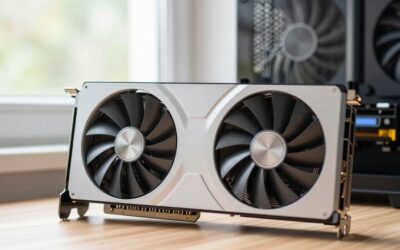
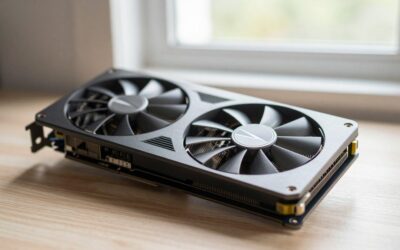
To run these models efficiently on your own machine, you will need a capable NVIDIA GPU with enough memory, and for local work a modern RTX card is a practical choice. You can compare current NVIDIA GPUs through the links on this page.
Nvidia LLM models, led by the open Nemotron family, mark the company’s transformation into a serious AI model maker, offering open weights, data, and recipes across a range of sizes and specialized tasks.
Whether you want reasoning agents, speech, or safety tools, Nvidia LLM models give developers a transparent, efficient option, and with a capable NVIDIA GPU you can run them on your own terms rather than behind someone else’s API.
Frequently Asked Questions
What models does Nvidia actually publish?
Nvidia develops the Nemotron family of open models, including variants built on top of open bases and tuned for reasoning, instruction following and agentic use. It also packages third-party open models as NIM microservices, which are containerised inference endpoints with optimised runtimes and a consistent OpenAI-compatible API surface.
What is the difference between a Nemotron model and a NIM?
Nemotron is the model itself, published with weights you can download and run. NIM is a deployment format: a container that bundles a model with a tuned inference engine, health endpoints and a standard API so you can run it locally or in a cluster without hand-building a serving stack.
How much VRAM do I need to run these locally?
It depends entirely on parameter count and quantisation. A small model at 4-bit can fit in 8 to 12GB, mid-sized models want 24GB, and larger ones need 32GB or a multi-GPU setup. Remember the KV cache grows with context length, so long-context use can consume several extra gigabytes beyond the weights themselves.
Are Nvidia’s open models actually free to use commercially?
Many are released under permissive open model licences, but terms vary by model and some inherit conditions from the base model they were derived from. Always read the specific licence and acceptable use policy on the model card before shipping anything commercial, rather than assuming the whole family carries identical terms.
Do I need TensorRT-LLM to run them?
No. Nemotron models generally load through standard Hugging Face transformers, llama.cpp derivatives or vLLM depending on format. TensorRT-LLM is the option you reach for when you want maximum throughput on Nvidia hardware in production, at the cost of an engine build step and less flexibility in swapping models.
As an Amazon Associate we earn from qualifying purchases at no extra cost to you.







Write Your Review
No reviews yet. Be the first to share your experience!