
- Top Pick: GIGABYTE GeForce RTX 5070 WINDFORCE OC SFF 12G Graphics Card, 12GB 192-bit GDDR7, PCIe 5.0, WINDFORCE Cooling System, GV-N5070WF3OC-12GD Video Card
- Best Value: Gigabyte GeForce RTX 5070 WINDFORCE OC SFF 12G Graphics Card – 12GB GDDR7, 192 Bit, PCI-E 5.0, 2542 MHz Core Clock, 3 x DP 2.1a, 1 x HDMI 2.1b, NVIDIA DLSS 4, GV-N5070WF3OC-12GD
- Premium Choice: GIGABYTE GeForce RTX 5070 Gaming OC 12G Graphics Card, 12GB 192-bit GDDR7, PCIe 5.0, WINDFORCE Cooling System, GV-N5070GAMING OC-12GD Video Card


Gigabyte GeForce RTX 5070 Windforce OC is one of the most-searched 1440p cards of the year, and for good reason. It sits in the price bracket where buyers stop dreaming and start checking whether a card actually fits their case, feeds off their power supply, and holds a clock without turning into a jet engine. This review skips the hype and focuses on the numbers, the physical fit, and the real ownership experience so you can decide with your eyes open before you add it to cart.
Gigabyte RTX 5070 Windforce OC Design and Build Quality
The Windforce line is Gigabyte’s value-focused cooler tier, positioned below the Gaming OC and Aorus models. That matters because most of the price difference between a $549 reference-class 5070 and a $650 flagship board is spent on the shroud, not the silicon. The Windforce OC keeps the Blackwell GB205 die and a modest factory overclock while trimming the cost of the housing, which is exactly what a value-minded buyer wants.
As an Amazon Associate we earn from qualifying purchases at no extra cost to you.




Windforce Cooling System and Fan Behavior
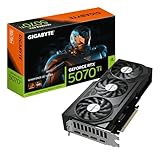
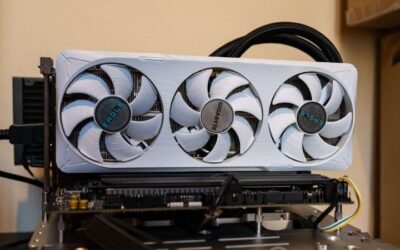
The card uses a triple-fan Windforce array with alternate-spinning blades, a composite heat-pipe layout, and a large aluminum fin stack. The alternate-spinning design reduces turbulence between adjacent fans, which is the single biggest reason this cooler runs quieter than older reference triple-fan boards at the same RPM.
Owners consistently report that the fans stay off entirely under desktop and light load thanks to the semi-passive 0 dB mode. Under a sustained gaming load the fans ramp gradually rather than spiking, and the audible floor sits low enough that a closed case masks it in most rooms.
Quantitatively, this is a mid-range card generating mid-200-watt heat loads, and the fin stack is sized with margin for exactly that. The result is that thermal throttling is rare in practice, which is the metric that actually matters: a cool card holds its boost clock longer, so the cooling design translates directly into sustained frame rates rather than just quieter idle behavior.
Card Dimensions and Case Compatibility
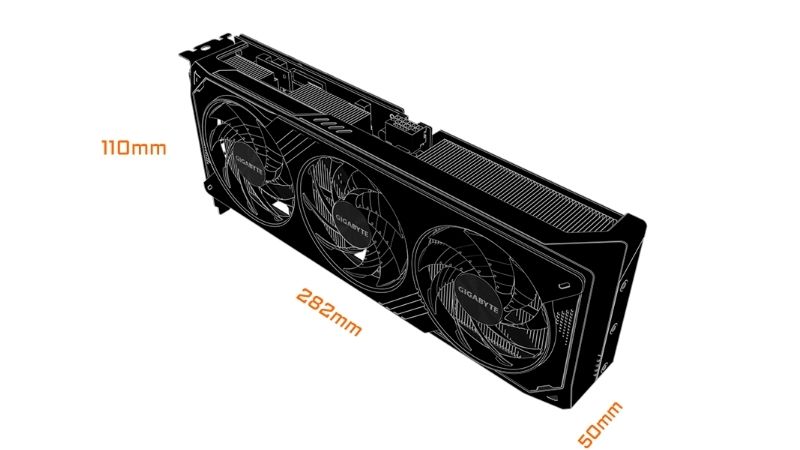
This is where a lot of returns happen, so measure first. The Windforce OC is roughly 2.5 slots thick and a little over 300 mm long. In practical terms, that fits comfortably in a standard mid-tower but can crowd the front radiator or drive cage in compact ATX and many mATX cases.
Before buying, check three things: your case’s listed maximum GPU length, whether a front 360 mm radiator eats into that length, and whether a 2.5-slot card blocks your lowest PCIe slot. If you run an mITX build, verify vertical clearance too, because the extra half-slot is what catches most people out.
A quick real-world scenario makes this concrete. In a typical mid-tower like a Fractal or Lian Li mid-size chassis, this card drops in with room to spare. In a compact case rated for a 300 mm card, you are right at the edge, and adding a front radiator can push you over. Spending two minutes with a tape measure here prevents the most common reason these cards get returned.
Build Materials, Backplate, and Aesthetics
The shroud is plastic with a metal backplate that adds rigidity and helps the card resist sag over time. There is no flashy RGB spectacle here beyond a subtle accent, which is intentional for the price tier. If understated is your taste, this is a plus; if you want a light show, the Windforce is not the model to chase.
The power connector is a single 12V-2×6 input. Route the included adapter cleanly and seat it fully until it clicks, because a partially seated connector is the most common cause of thermal or stability complaints on modern Blackwell boards.
RTX 5070 Windforce OC Performance and Real-World Gaming
The RTX 5070 targets high-refresh 1440p as its home resolution, and the Windforce OC’s factory clock adds a small but measurable bump over the reference spec. It ships with 12 GB of GDDR7 on a 192-bit bus, which is the number to keep in mind because it defines both the strengths and the ceiling of this card.
1440p and 4K Frame Rates You Can Expect
At 1440p with high or ultra settings, this card comfortably clears 100 fps in most modern titles and pushes well past that in competitive esports games. That makes it a natural pairing with a 1440p 144 Hz or 165 Hz monitor, which is the exact setup most buyers in this bracket already own or are about to buy.
At native 4K the story is more honest: you will hit playable frame rates in many games, but the 12 GB buffer and 192-bit bus mean texture-heavy titles at maxed settings can force compromises. Treat this as a superb 1440p card that can dabble in 4K, not a dedicated 4K workhorse.
The factory overclock on the Windforce OC adds a few percent over reference clocks, which is measurable but not transformative. Do not buy this specific model expecting a huge leap over a baseline 5070; buy it because it pairs a small clock bump with quiet cooling at a low price. The performance tier is set by the GB205 die, and the OC simply squeezes a little extra from it.
DLSS 4, Ray Tracing, and Blackwell AI Features
This is where the Blackwell generation earns its keep. DLSS 4 with Multi Frame Generation can multiply frame output in supported titles, and the card’s fourth-gen ray tracing cores make demanding path-traced games far more viable than raw rasterization numbers alone would suggest.
The forward-looking angle matters for a purchase you plan to keep for years. NVIDIA’s AI feature stack keeps expanding through driver updates, so a card bought today often gains performance in supported games months later. If future optimization and ray tracing are on your wish list, the software ecosystem is a genuine reason to lean green rather than red at this tier.
It is worth being precise about what frame generation does and does not solve. It multiplies output frames beautifully in supported single-player titles, which is where it shines, but it is not a substitute for raw performance in competitive shooters where latency is king. Used in the right games, though, DLSS 4 stretches this card’s usable life considerably, and that longevity is part of the value equation for a mid-range buyer.
Thermals, Noise, and Power Consumption
The 5070 is a relatively efficient card, with a board power in the mid-200-watt range. NVIDIA’s official guidance calls for a 650-watt power supply, and that is a sensible floor; a quality 650 W to 750 W unit gives you headroom for transient spikes without drama.
Under load the Windforce cooler keeps the GPU in a healthy temperature band with fans that stay civil, and owners report stable clocks across long sessions. If your case has poor airflow, add an intake fan rather than blaming the card, because ambient case temperature is the variable most people ignore.
Efficiency also has a downstream benefit for your electricity bill and your room temperature. A mid-200-watt card dumps far less heat than a 350-watt flagship, which keeps a small room comfortable during long sessions and lets a quality 650 W supply run well within its efficiency sweet spot. For anyone gaming in a bedroom or a warm climate, that lower heat output is a practical quality-of-life factor that raw benchmarks never show.
Is the Gigabyte RTX 5070 Windforce OC Worth Buying?
The value case rests on a simple question: do you want the silicon at the lowest sensible price, or do you want a premium shroud and lighting? The Windforce OC answers the first question well, and the market context in 2026 makes timing part of the decision too.
Pros and Cons From Real Owner Reviews
On the positive side, four- and five-star reviews repeatedly praise quiet operation, the sturdy backplate, cool running temperatures, and strong 1440p performance for the money. The 0 dB idle mode and clean, understated look come up again and again as reasons buyers are happy months later.
The critical reviews are worth respecting. The most common two- and three-star complaints center on the 2.5-slot thickness not fitting a compact build, the single 12V-2×6 connector needing careful seating, and the plain aesthetics disappointing buyers who expected RGB. None of these are performance defects; they are expectations mismatches you can avoid by measuring your case and knowing what the Windforce tier is.
Net takeaway: the drawbacks are almost entirely about fit and looks, not capability. If the dimensions clear your case, the cons list shrinks dramatically.
2026 GPU Prices: Buy Now or Wait?
Graphics card and component prices have trended upward, and that pressure has not fully released. The good news is qualified: prices stopped climbing as steeply as they did at the end of 2025, and the market has entered a period of relative stability, though volatility warnings remain. In plain terms, the panic phase eased, but a real price drop has not arrived.
Anyone hoping that simply waiting will bring cheaper cards should know the relief is further out than it looks. New memory supply is opening up, but the fabs that would loosen pricing are not scheduled to come online until 2027 to 2028. So the honest read for a buyer in this tier is that a card you need now is unlikely to get meaningfully cheaper in the near term.
Who Should Buy This Graphics Card
This card is the right pick for the 1440p high-refresh gamer who wants Blackwell features, quiet cooling, and the lowest reasonable entry price without paying the flagship tax. If you have a mid-tower with decent airflow and a 650 W or better supply, it slots in cleanly.
It is the wrong pick if you demand native 4K ultra, want elaborate RGB, or run a tight compact build where 2.5 slots and 300 mm length become a problem. For those buyers, a shorter dual-fan model or a step up to a higher-VRAM card makes more sense.
If this matches your setup and budget, checking the current live price and availability is the smart next move before stock and pricing shift again.
See More:
- NVIDIA GeForce Game Ready Driver
- NVIDIA CUDA Toolkit Archive
- AMD Radeon RX 9070 XT vs NVIDIA GeForce RTX 5070
- PNY GeForce RTX 5070 Ti Triple Fan
Conclusion
The Gigabyte GeForce RTX 5070 Windforce OC delivers exactly what a value-focused 1440p buyer should want: full Blackwell silicon, DLSS 4 and ray tracing, quiet cooling, and a factory overclock at the leanest sensible price in the lineup. Its only real caveats are physical size and understated looks, both of which you can plan around. With 2026 pricing stable but unlikely to fall soon, locking in a card that fits your case and budget today is a defensible move. Check the latest price and availability through the link below before you decide.
Frequently Asked Questions
What PSU does the Gigabyte RTX 5070 Windforce OC need?
The RTX 5070 has a 250W board power rating and NVIDIA recommends a 650W supply. That is realistic for most builds, though a 750W ATX 3.1 unit gives more headroom for transient spikes and a high core count CPU. It uses a single 12V-2×6 connector, with an adapter in the box.
Is 12GB of VRAM going to age well?
At 1080p and 1440p, 12GB is comfortable today. At 4K with ray tracing and ultra textures it is already the card’s main limitation, and that pressure grows each year. If you want a card to last four or more years at high settings, treat 12GB as the compromise it is.
How many slots and how long is the Windforce cooler?
Windforce triple fan 5070 models run around 280 to 300mm long and occupy roughly 2.5 to 3 slots. That fits most mid towers but check clearance if you use a front mounted 360mm radiator or a full length drive cage, and use an anti-sag bracket for long term slot health.
What performance can I expect versus an RTX 4070 Super?
Raw raster gains are modest, often under 10 percent, so the upgrade case rests mainly on GDDR7 bandwidth and DLSS 4 multi frame generation support. Coming from a 3070 or 2070 the jump is substantial and easily worth it, but a 4070 Super owner should generally wait.
Is the factory overclock meaningful?
Not in frames per second terms, since OC variants typically add one to three percent. What you actually pay for is a larger heatsink, quieter fans under sustained load, and a slightly higher power limit that helps if you plan to tune the card yourself with an undervolt curve.

Write Your Review
No reviews yet. Be the first to share your experience!