
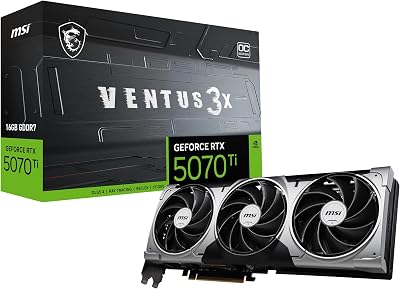
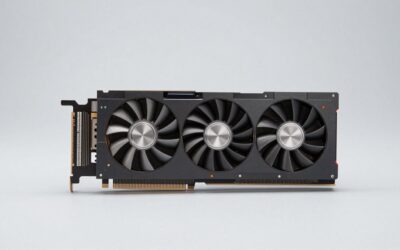
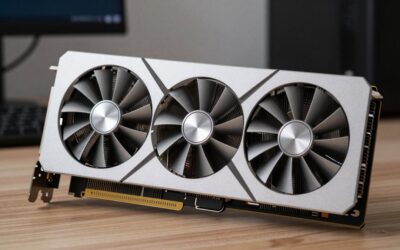
- Top Pick: GIGABYTE GeForce RTX 5070 Ti Gaming OC 16G Graphics Card, 16GB 256-bit GDDR7, PCIe 5.0, WINDFORCE Cooling System, GV-N507TGAMING OC-16GD Video Card
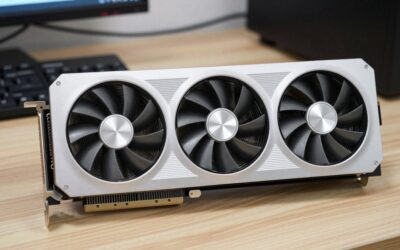
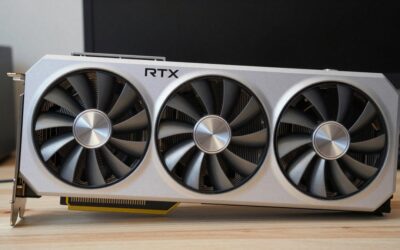
- Best Value: ASUS Prime GeForce RTX 5070 Ti 16GB GDDR7 Gaming Graphics Card
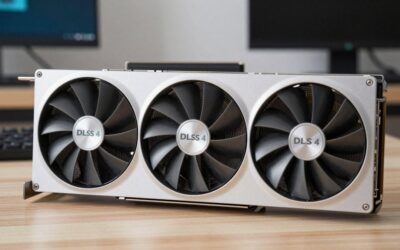
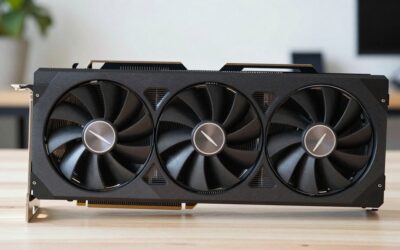
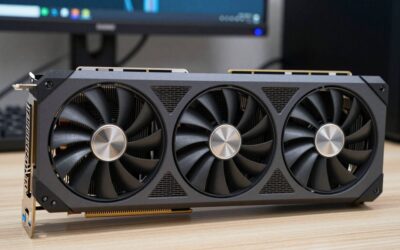
- Premium Choice: ZOTAC Gaming GeForce RTX 5070 Ti Solid SFF OC DLSS 4 16GB GDDR7 256-bit 28 Gbps PCIE 5.0 Gaming Graphics Card, IceStorm 2.0 Advanced Cooling, ZT-B50710J3-10A



Evaluating the 3090 Vs 5070 Ti in 2026 requires a deep understanding of the seismic shifts in both desktop graphics architecture and the global hardware economy. Over the past several years, the graphics processing market has evolved from relying on raw, brute-force silicon to utilizing sophisticated, AI-driven rendering technologies. For enthusiast gamers and creative professionals alike, choosing between a legendary, former workstation-class flagship and a highly optimized, modern mid-tier contender involves analyzing real-world performance, physical power constraints, and long-term value. This comprehensive guide will dissect every technical and economic angle to help you make an informed purchasing decision.
Core Architectural Battle and The Quick Verdict
To establish a proper foundation for this comparison, we must first analyze how these two generations of NVIDIA silicon approach graphics processing at a fundamental level. One card represents the absolute peak of the older Ampere architecture, utilizing a massive physical die footprint and a colossal memory subsystem to push raw pixels. The other represents the cutting-edge efficiency of the Blackwell architecture, leveraging advanced processing nodes and specialized AI hardware to deliver incredible frame rates with a fraction of the physical resource overhead.
As an Amazon Associate we earn from qualifying purchases at no extra cost to you.


The Quick Verdict: Which GPU Wins for Your System?
For buyers looking for an immediate purchasing decision, the winner of this matchup depends heavily on the primary workloads your system will handle daily. The newer Blackwell-based graphics card is the undisputed champion for pure gaming setups, delivering superior rasterization performance, advanced ray tracing capabilities, and exclusive access to DLSS 4 Frame Generation. It achieves higher, more consistent frame rates in modern titles while operating with far superior thermal and electrical efficiency.
Conversely, the older flagship remains a specialized powerhouse for creative professionals, machine learning engineers, and 3D rendering artists who require a massive frame buffer. If your professional applications or localized AI models regularly exceed $16$ GB of video memory, the older titan is still the superior and more stable choice. To see how these cards fit into your system budget, make sure to check the latest price on Amazon.
Core Architecture Comparison Table and Technical Insights
Under the hood, these two cards utilize vastly different silicon designs and manufacturing technologies. The older card relies on a massive GA102 die built on a custom Samsung $8$ nm process, featuring a wider memory bus that provides high raw memory bandwidth. In contrast, the newer mid-high tier card utilizes a highly refined TSMC $3$ nm Blackwell die, which maximizes clock speeds and architectural throughput per watt.
The following table highlights the core hardware specifications of both graphics cards:
| Technical Specification | RTX 3090 (Ampere Flagship) | RTX 5070 Ti (Blackwell Contender) |
|---|---|---|
| CUDA Cores | $10496$ |
$8960$ |
| Tensor Cores | $328$ (3rd Gen) |
$280$ (5th Gen) |
| VRAM Capacity | $24$ GB GDDR6X |
$16$ GB GDDR7 |
| Memory Bus Width | $384$-bit |
$256$-bit |
| Base / Boost Clock | $1.40$ GHz / $1.70$ GHz |
$2.10$ GHz / $2.50$ GHz |
| TDP (Thermal Design Power) | $350$ W |
$250$ W |
| DLSS Support Level | DLSS 2 Super Resolution | DLSS 2, 3, and 4 |
This detailed specification table reveals a clear architectural shift. While the older titan possesses more raw CUDA cores and an ultra-wide memory bus, the newer card easily compensates with significantly higher clock speeds and next-generation GDDR7 memory technology.
Real-World Market Impact of AI Demands and Component Shortages
The hardware landscape in 2026 is heavily influenced by the global semiconductor climate and enterprise computing demands. Recently, geopolitical shifts have allowed NVIDIA to resume shipping modified high-performance H200 AI processors to Chinese markets under adapted export regulations. Because enterprise-grade AI accelerators yield incredibly high profit margins compared to consumer GeForce hardware, foundries like TSMC have heavily prioritized packaging wafers for enterprise chips over consumer-grade graphics cards.
This production bias has limited the retail stock of mid-to-high-end consumer graphics cards, including the Blackwell series. Concurrently, inflationary pressures on shipping logistics, copper, and specialized cooling elements have steadily driven up general PC component and laptop pricing. In this environment, waiting for a massive price drop on the newer generation is risky, making both retail deals and verified pre-owned flagships highly competitive options.
Direct Performance Benchmarks, VRAM, and Thermals
To truly understand how these architectural differences translate into actual gaming and rendering performance, we must test both cards across modern software environments. Looking past theoretical teraflops shows us how each card manages resolutions, frame times, and thermal constraints under sustained workloads.
1440p and 4K Gaming Performance Comparison
In standard $1440$p gaming, the Blackwell-based card demonstrates an impressive lead of roughly $25$% over the older Ampere flagship. The newer architecture processes complex shaders and geometry with far greater efficiency, allowing competitive multiplayer titles to reach maximum refresh rates easily. Even without upscaling turned on, modern AAA titles run smoothly at over $120$ frames per second on high settings.
When pushing resolutions to $4$K, the gap narrows slightly due to the massive raw bandwidth of the older titan. However, the newer card still holds a comfortable $15$% lead in most titles, thanks to its faster clock speeds and L2 cache structure. In unoptimized modern releases, the raw processing improvements of the newer generation outweigh the brute-force architecture of the past.
Check the latest price on Amazon:
The VRAM Equation: 24GB GDDR6X vs 16GB GDDR7
The most critical point of comparison is the video memory configuration. The older titan features a massive $24$ GB of GDDR6X VRAM, which was highly forward-thinking for its time. This gargantuan pool ensures you will never hit a memory limit when loading ultra-high-resolution texture packs, working with complex 3D scenes, or training localized large language models.
On the other hand, the newer card is equipped with $16$ GB of next-generation GDDR7 memory. While $16$ GB is highly adequate for almost all modern gaming at $4$K, extreme modding or heavy multitasking can occasionally push close to this ceiling. The benefit of GDDR7 lies in its incredible speed and efficiency, though it cannot physically compensate if a professional application demands more than $16$ GB of actual storage space.
Power Consumption, Thermals, and Chassis Compatibility
Power draw is another area where the generational gap is highly visible. The older card is notoriously thirsty, pulling a minimum of $350$ W under standard loads, with transient spikes that can easily overwhelm lower-tier power supplies. It requires a robust power supply of at least $850$ W and generates a tremendous amount of heat, requiring exceptional case ventilation.
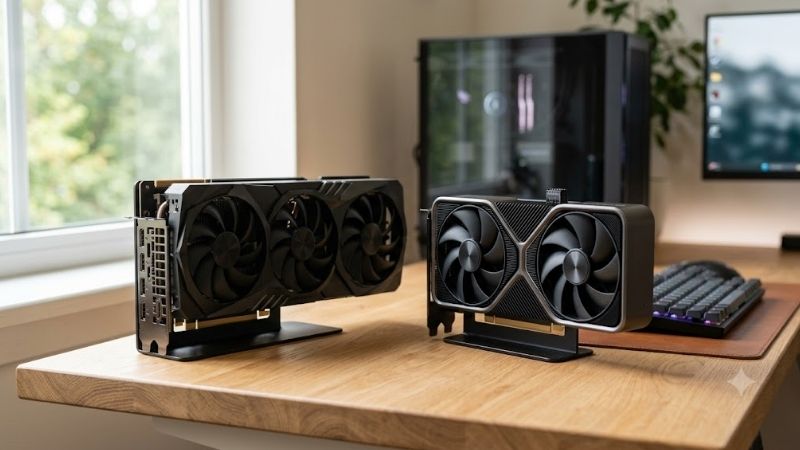
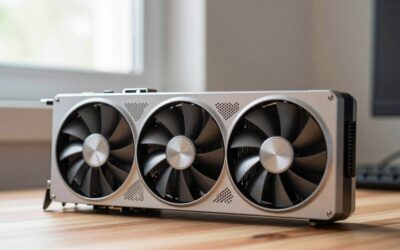
The newer card operates far more efficiently with a rated TDP of just $250$ W. Because it draws less power from the wall, it runs substantially cooler and quieter, easing the thermal load on your entire system. Furthermore, many aftermarket designs of the newer card are more compact, making them compatible with smaller mid-tower or Micro-ATX cases that cannot accommodate the physical bulk of the older flagship. Check the latest price on Amazon to find a cooling design that fits your chassis.
Market Alternatives, Pros & Cons, and Final Recommendations
Deciding on a graphics card requires a practical look at budget limits, future upgrade paths, and alternative hardware choices. Every PC builder must weigh their personal priorities against current market realities to make a smart purchase.
Pros and Cons of Choosing 3090 Vs 5070 Ti
Analyzing the strengths and weaknesses of the 3090 Vs 5070 Ti matchup provides an objective view of what you sacrifice and what you gain with each choice.
Pros of the RTX 5070 Ti:
- Exceptional power efficiency with a low
$250$W TDP. - Full hardware support for DLSS 4 Frame Generation and Ray Reconstruction.
- Superior
$1440$p and$4$K gaming performance in modern titles. - Next-generation GDDR7 memory speeds.
Cons of the RTX 5070 Ti:
- Smaller
$16$GB memory buffer limits extreme workstation tasks. - Retail availability can be constrained due to enterprise AI wafer priority.
Pros of the RTX 3090:
- Massive
$24$GB VRAM pool is ideal for AI models and heavy workloads. - Ultra-wide
$384$-bit memory bus provides high raw bandwidth. - Widely available at deep discounts on secondary markets.
Cons of the RTX 3090:
- High
$350$W power consumption with significant heat output. - Lacks access to the newest DLSS 3 and DLSS 4 Frame Generation technologies.
- Requires a massive PC case and heavy duty power supply.
Alternative Graphics Card Choices in the 2026 Marketplace
If neither card perfectly suits your build plans, several alternative GPUs fit comfortably between them. The most notable alternative is the RTX 4070 Ti Super, which serves as an excellent middle ground. It features $16$ GB of GDDR6X VRAM and native support for DLSS 3 Frame Generation, offering a compelling blend of modern features and stable pricing without the early-adopter tax.
For those willing to consider the red team, AMD’s Radeon RX 7900 XTX is a formidable competitor. It boasts a generous $24$ GB VRAM buffer and superb raw rasterization performance at $4$K, often retailing for less than NVIDIA’s equivalent options. However, opting for AMD means sacrificing industry-leading ray tracing performance and DLSS features, which remains a critical factor for many enthusiasts.
Final Recommendation: Who Should Buy What?
For gamers who want maximum performance, longevity, and modern visual features, the newer card is the clear and obvious recommendation. Its superior architecture, cooler thermal performance, and exclusive AI upscaling features make it a highly future-proof choice for high-refresh-rate gaming setups. Check the latest price on Amazon to secure this next-gen hardware.
Conversely, if you are a content creator, developer, or enthusiast whose work relies on massive dataset processing, localized LLMs, or complex 3D scenes, the older flagship remains a highly viable tool. Its $24$ GB VRAM buffer provides a level of versatility that a $16$ GB card simply cannot match, regardless of how fast its core architecture runs.
Conclusion
Comparing the 3090 Vs 5070 Ti in 2026 reveals a fascinating divide between workstation legacy and modern efficiency. While the older titan holds onto its crown for massive VRAM workloads and heavy productivity tasks, the newer contender easily sweeps the gaming benchmarks with its advanced architecture and high-speed GDDR7 memory. By aligning your purchase with your daily workload and budget, you can easily select the GPU that will best power your system for years to come.
Frequently Asked Questions
Which is faster in games, the RTX 3090 or the RTX 5070 Ti?
The 5070 Ti is clearly faster in modern titles, typically leading by twenty to thirty percent in rasterization and considerably more in ray tracing. It also supports DLSS 4 multi frame generation, which the Ampere based 3090 cannot run, widening the practical gap further.
Does the 3090’s 24GB of VRAM make it better for AI work?
For local AI it often does. Twenty four gigabytes lets you load larger models than 16GB allows, and for inference where memory capacity is the binding constraint the older card can run workloads the newer one simply cannot. For gaming, that extra memory delivers no benefit.
How do power draw and heat compare?
The difference is large. The 3090 is a 350W card that runs hot, especially on its rear mounted GDDR6X modules, and needs strong case airflow. The 5070 Ti sits at 300W with far better performance per watt, producing a quieter and cooler system overall.
Is a used 3090 a good value purchase?
Only if you specifically need 24GB for AI or heavy content creation. For gaming, you inherit high power draw, aging thermal pads that often need replacing, unknown mining history, and no warranty, all for lower performance than a new card in the same price range.
What PSU does each require?
The 3090 wants 750 to 850W minimum and is notorious for transient spikes that trip protection on marginal units, so 850W is the practical recommendation. The 5070 Ti is comfortable on 750W with a native 12V-2×6 cable, making it the easier card to power reliably.
Ready to decide? Our #1 pick for 2026 is the Technical Specification.
Live price & availability on Amazon.

Write Your Review
No reviews yet. Be the first to share your experience!