
- Top Pick: ASUS Prime GeForce RTX 5070 12GB GDDR7 OC Edition Gaming Graphics Card
- Best Value: ASUS SFF-Ready Prime NVIDIA GeForce RTX 5070 Graphics Card (PCIe 5.0, 12GB GDDR7, HDMI/DP 2.1, 2.5-Slot, Axial-tech Fans, Dual BIOS), 3 Year Warranty
- Premium Choice: ASUS Prime GeForce RTX 5070 12GB GDDR7 White OC Edition Gaming Graphics Card
Top Rtx 4080 Rtx 5070 Which Picks for 2026
Here are our current top rtx 4080 rtx 5070 which picks, compared on real Amazon owner reviews, price, and features. Live prices update below.


Prime
Editor's Pick
ASUS SFF-Ready Prime NVIDIA GeForce RTX 5070 Graphics Card (PCIe 5.0, 12GB GDDR7, HDMI/DP 2.1, 2.5-Slot, Axial-tech Fans, Dual BIOS), 3 Year Warranty
Dropped $2.52


Dropped $19.61
RTX 4080 vs RTX 5070 is one of the most interesting cross-generation matchups in Nvidia’s current lineup, pitting a former Ada Lovelace heavyweight against a fresh Blackwell mid-range card that costs far less. The 4080 brings 16GB of VRAM and a wide memory bus, while the 5070 counters with newer architecture, lower power draw, and DLSS 4 with Multi Frame Generation. The result is a contest of raw muscle versus modern efficiency, and the right answer depends heavily on your resolution, budget, and how much you value the latest features.
As an Amazon Associate we earn from qualifying purchases at no extra cost to you. Product prices and availability are accurate as of the date shown and are subject to change.


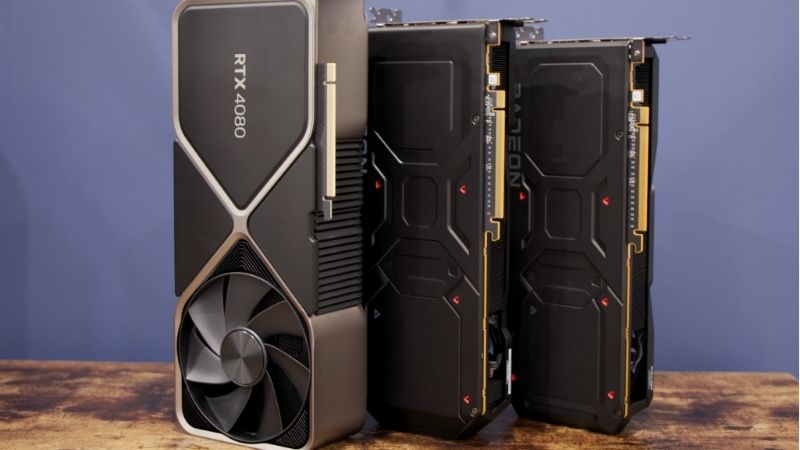
Quick Verdict and Specifications
Before the deep dive, here is the high-level picture so you can orient quickly, followed by the hard numbers that drive every conclusion in this comparison.
The Bottom Line Up Front
The RTX 4080 generally holds an edge in raw rasterized performance and carries more VRAM, making it the safer pick for 4K and memory-heavy titles. The RTX 5070 answers with far lower pricing, better efficiency, and exclusive DLSS 4 Multi Frame Generation.
For most 1440p gamers chasing value, the 5070 is the sensible choice. For 4K players who want maximum raster headroom and a larger memory buffer, the 4080 still justifies its higher used price. Neither is wrong; they target different priorities.
It is also worth setting expectations on sourcing: the 4080 is now effectively a used-market or clearance product, while the 5070 is a current card you can buy new with a warranty. That difference shapes the buying experience as much as the raw specs do.
Specifications Side by Side
The spec sheet frames the entire debate, since the two cards come from different generations with very different design goals.
| Spec | RTX 4080 | RTX 5070 |
|---|---|---|
| Architecture | Ada Lovelace | Blackwell |
| CUDA cores | 9728 | 6144 |
| VRAM | 16GB GDDR6X | 12GB GDDR7 |
| Memory bus | 256-bit | 192-bit |
| Total graphics power | 320W | 250W |
| Launch MSRP | $1199 | $549 |
| DLSS support | DLSS 3 | DLSS 4 (Multi Frame Gen) |
Two numbers stand out: the 4080’s larger core count and 16GB buffer, and the 5070’s dramatically lower MSRP. Those two facts shape the whole comparison.
Keep in mind that launch prices rarely match street prices today. The 4080 typically sells used below its original figure, while the 5070’s real cost can sit above MSRP depending on supply, so treat these numbers as a starting reference rather than what you will actually pay.
Reading the Spec Gap
The 4080’s 9728 CUDA cores and 256-bit bus give it more raw throughput and bandwidth than the 5070’s 6144 cores on a 192-bit bus. In pure rasterization, that hardware advantage is real and measurable.
However, the 5070’s Blackwell design and GDDR7 memory close part of that gap through efficiency and architectural gains. The spec sheet alone overstates the 4080’s lead, because newer architecture extracts more from fewer cores.
Bandwidth is the subtler factor. The 4080’s 256-bit bus moves more data per cycle than the 5070’s 192-bit interface, which helps at 4K where memory pressure peaks, while GDDR7 on the 5070 partly offsets the narrower bus through higher per-pin speed.
Performance Face-Off
Specs set expectations, but the way these cards behave across resolutions and features is where the decision is actually made.
1440p and 4K Raster Performance
At 1440p both cards are excellent, comfortably driving high refresh rates in modern titles. The 4080 typically posts higher raw frame rates, but the 5070 stays close enough that many players would not feel the difference in everyday play at this resolution.
At 4K the gap widens. The 4080’s extra cores, wider bus, and 16GB buffer let it sustain higher frame rates and handle memory-heavy scenes more gracefully. For a dedicated 4K gamer focused on rasterized performance, that advantage is the 4080’s strongest argument.
The practical reading is that resolution decides the winner. At 1440p the two trade blows closely enough that price and features tip the balance, whereas at 4K the 4080’s hardware advantage becomes consistent and meaningful rather than occasional.
Ray Tracing and DLSS 4
In ray tracing, the 4080’s raw power gives it a baseline lead, but the 5070 holds a decisive feature advantage: DLSS 4 with Multi Frame Generation, which the 4080 cannot access.
In supported titles, Multi Frame Generation can multiply the 5070’s frame output substantially, often pushing its smoothness past the 4080 in raw on-screen frames. The catch is that this is generated performance available only where DLSS 4 is implemented, so the benefit depends on your game library.
This makes the choice partly philosophical. If you prioritize native raster and the largest possible VRAM, the 4080 appeals; if you embrace AI-driven frame generation as the future, the 5070’s exclusive features are compelling.
Power Draw, Heat, and Efficiency
The 5070’s 250W rating undercuts the 4080’s 320W, translating to lower heat, quieter operation, and easier power-supply requirements in a typical build.
Practically, the 5070 slots more easily into compact cases and modest power supplies, while the 4080 demands more cooling and a beefier PSU. For builders prioritizing a clean, efficient system, that difference matters more than a few frames.
Over a long ownership period, the 70W difference also shows up modestly on running costs and on how hard your case fans have to work. For a quiet, cool build, the 5070 is simply the more relaxed card to live with day to day.
Value, Alternatives, and Market Forces
Performance only tells half the story; price and the broader market decide whether either card is a smart purchase right now.
Price and Value per Frame
With a $549 launch MSRP against the 4080’s original $1199, the 5070 starts from a far stronger value position. Even accounting for the 4080’s higher raw performance, the 5070 usually wins on cost per frame at 1440p.
If neither fully fits your budget or needs, a strong alternative is a current-generation card one tier up or down, such as a higher Blackwell SKU for more 4K headroom, letting you match spend precisely to your target resolution.
It is also worth weighing resale and longevity. The 5070’s newer architecture and DLSS 4 support may hold value better over time, while the 4080’s larger buffer keeps it relevant for memory-heavy titles, so each card protects your investment in a different way.
Rising Prices and Why Timing Matters
Laptop and PC-component prices are trending upward and are widely expected to keep climbing. That pressure makes locking in a card sooner rather than later more appealing, since waiting may simply mean paying more.
For this matchup, rising prices strengthen the case for the better-value 5070 if budget is tight, while also meaning a well-priced used 4080 can disappear quickly. Either way, the trend rewards decisive buyers over those waiting for prices to fall.
For buyers on the fence, the safest framing is to decide your resolution and budget first, then buy the card that fits as soon as a fair price appears. Trying to time the market in a rising-price environment usually costs more than it saves.
Nvidia’s AI Focus and GPU Supply
The U.S. recently cleared Nvidia to sell its H200 AI chips to China. The H200 is a data-center accelerator, not a GeForce card, so it has no direct effect on how either gaming card performs.
The indirect impact is on supply and pricing: sustained heavy demand for Nvidia’s AI silicon can keep the company’s focus and capacity tilted toward accelerators, which historically firms up consumer GPU prices and slows discounts. That context reinforces buying when you find a fair price.
This also helps explain why genuine discounts on either card can be short-lived. When you spot a price that matches your value target, treating it as a buy signal rather than waiting for a deeper cut is usually the wiser move in the current climate.
Final Verdict: Which Should You Buy?
With the numbers, features, and market context in view, the decision comes down to your resolution, budget, and feature priorities.
Buy the RTX 4080 if…
Choose the 4080 if you game primarily at 4K, want the largest VRAM buffer for memory-heavy titles, and value native rasterized performance over generated frames. It remains a genuine 4K powerhouse.
It also suits creators and multitaskers who benefit from the 16GB buffer, provided you can supply the power and cooling it needs and find it at a reasonable price.
Just be realistic about sourcing one safely. Since it is largely a used purchase now, favor sellers who can demonstrate the card works under load, and factor any lack of warranty into the price you are willing to pay.
Buy the RTX 5070 if…
Choose the 5070 if you game at 1440p, want the best value, prefer lower power draw, and want access to DLSS 4 Multi Frame Generation for future titles.
For the majority of mainstream gamers, this is the more sensible modern purchase, delivering near-flagship smoothness in supported games at a fraction of the 4080’s original cost.
It is also the easier recommendation for a first serious gaming build, since its lower power draw, current warranty, and modern feature set reduce both the cost and the complexity of the rest of the system around it.
Pros and Cons Recap
Here is the concise trade-off summary for both cards in this matchup.
RTX 4080 pros: stronger raw raster, 16GB VRAM, excellent 4K. Cons: high power draw, higher price, no DLSS 4. RTX 5070 pros: great value, efficient, DLSS 4 Multi Frame Generation, easy to power. Cons: 12GB buffer, narrower bus, lower raw raster than the 4080.
Frequently Asked Questions
Quick answers to the questions buyers most often ask when weighing the RTX 4080 against the RTX 5070.
Is the RTX 5070 better than the RTX 4080?
Not in raw rasterized performance. The 4080 has more cores, a wider bus, and 16GB of VRAM, so it generally posts higher native frame rates, especially at 4K.
The 5070 wins on value, efficiency, and exclusive DLSS 4 Multi Frame Generation, which can make it feel faster in supported titles, so the better card depends on your resolution and priorities.
Is 12GB of VRAM enough on the RTX 5070?
For 1440p gaming, 12GB is generally sufficient today, comfortably handling high settings in most modern titles without trouble.
At 4K or in the most texture-heavy games, the 4080’s 16GB buffer offers more headroom, so heavy 4K users may prefer that larger pool.
Which card is more future-proof?
The 5070 has the newer architecture and DLSS 4 support, which may age well as more games adopt those features over time.
The 4080 counters with more raw power and VRAM, protecting it in demanding native workloads, so each card is future-proof in a different way.
Conclusion
In the RTX 4080 vs RTX 5070 debate, there is no single winner, only the right card for your priorities. The 4080 is the choice for 4K raster muscle and VRAM headroom, while the 5070 is the smarter pick for value-focused 1440p gamers who want modern efficiency and DLSS 4. With component prices trending upward, both arguments lean toward buying decisively once you find a fair price, but for most buyers in 2026 the 5070 delivers the better balance of cost, features, and everyday performance.










Write Your Review
No reviews yet. Be the first to share your experience!