- Top Pick: ASUS TUF Gaming NVIDIA GeForce RTX 4080 Super OC Edition Gaming Graphics Card (PCIe 4.0, 16GB GDDR6X, HDMI 2.1a, DisplayPort 1.4a), 3 Year Warranty
- Best Value: Gigabyte GeForce RTX 4080 Super WINDFORCE V2 Graphics Card – 2550MHz Core, 16GB GDDR6X 23000MHz 256-bit Memory, PCI-E 4.0, 3X DP 1.4, 1x HDMI 2.1a, NVIDIA DLSS 3.5, GV-N408SWF3V2-16GD
- Premium Choice: ASUS Dual GeForce RTX 4070 Super EVO OC Edition 12GB GDDR6X (PCIe 4.0, 12GB GDDR6X, DLSS 3, HDMI 2.1a, DisplayPort 1.4a, 2.5-Slot Design, Axial-tech Fan Design, 0dB Technology), 3 Year Warranty
Top Rtx 4080 Super 4070 Super Picks for 2026
Here are our current top rtx 4080 super 4070 super picks, compared on real Amazon owner reviews, price, and features. Live prices update below.


Dropped $25.01

RTX 4080 Super vs 4070 Super pits two very different tiers against each other in 2026, and the gap is wider than the similar names suggest. One is a flagship-class 16GB 4K card; the other is a mainstream 12GB 1440p value champion that costs hundreds less. Choosing correctly is less about which is “better” and more about which resolution, budget, and power envelope you are building for. Here is the data and a clear recommendation.
As an Amazon Associate we earn from qualifying purchases at no extra cost to you. Product prices and availability are accurate as of the date shown and are subject to change.


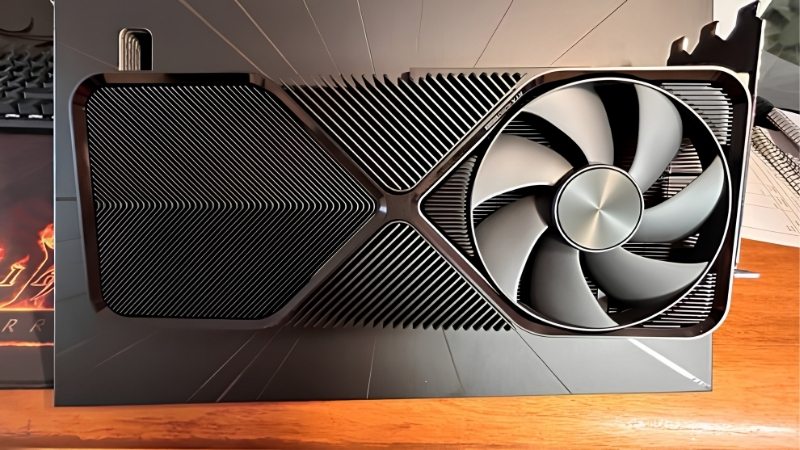
The Quick Verdict: 4080 Super vs 4070 Super at a Glance
The short answer: the RTX 4080 Super is the substantially faster card and the right pick for 4K gaming and creator workloads, while the RTX 4070 Super is the better value for high-refresh 1440p on a tighter budget. Unlike closely matched siblings, these two sit in genuinely different leagues, so your resolution and wallet should make the call quickly.
Who Wins on Raw Performance
The RTX 4080 Super wins decisively. It carries 10,240 CUDA cores on the larger AD103 die versus the 4070 Super’s 7,168 cores on AD104 — roughly 43% more shaders. In practice that yields a 4K lead of around 40–50% and a 1440p lead of about 30–35%.
That is not a within-margin difference; it is a full tier. If maximum frame rates are your priority and budget is secondary, the 4080 Super is the obvious winner — check its current price before stock tightens.
The gap also scales with how hard you push the cards. Crank settings to ultra, switch on ray tracing, and move to 4K, and the 4080 Super’s advantage widens because it has both the shader count and the memory bandwidth to feed those pixels. Drop to medium settings at 1080p and the lead compresses, since both cards bump into CPU and engine limits long before they run out of GPU. In other words, the more demanding your scenario, the more the 4080 Super justifies its price — and the lighter your workload, the less reason there is to pay for it.
Who Wins on Value
At launch the math was stark: $599 for the 4070 Super against $999 for the 4080 Super. The cheaper card delivered roughly two-thirds of the performance for 60% of the price, which is exactly why the 4070 Super became the default 1440p recommendation.
For players who do not need 4K, that value argument still rules. The 4080 Super only justifies its premium when you actually use the extra muscle — at 4K, in ray-traced flagships, or in rendering and AI workloads.
Comparison Table: Core Specs Side by Side
The table below shows where the 4080 Super’s premium goes and how far apart these two cards really are on the spec sheet.
| Spec | RTX 4070 Super | RTX 4080 Super |
|---|---|---|
| GPU die | AD104 | AD103 |
| CUDA cores | 7,168 | 10,240 |
| Boost clock | ~2,475 MHz | ~2,550 MHz |
| VRAM | 12GB GDDR6X | 16GB GDDR6X |
| Memory bus | 192-bit | 256-bit |
| Bandwidth | ~504 GB/s | ~736 GB/s |
| Board power (TGP) | 220W | 320W |
| Recommended PSU | 650W | 750W |
| Launch MSRP | $599 | $999 |
Deep Dive Face-Off: 4080 Super vs 4070 Super
The spec gap above translates into real, felt differences once you map each card onto a build. This section compares them by feature so you can see which trade-offs actually matter for your monitor, your case, and your power supply.
Design, Cooling, and Power Draw
Power is the clearest separator. The 4080 Super pulls 320W against the 4070 Super’s 220W — a 100W gap. That pushes the 4080 Super onto a 750W PSU recommendation, while the efficient 4070 Super is happy on a quality 650W unit and runs cooler and quieter on equivalent coolers.
The efficiency edge makes the 4070 Super an easy fit for compact and small-form-factor builds and for owners reusing an older mid-range PSU. The 4080 Super demands more from your case airflow and your power budget.
Both come in large triple-fan partner designs, but the 4070 Super has more genuinely compact dual-fan options, which matters for tight cases.
1440p and 4K Gaming Performance
At 1440p, the 4070 Super is already an excellent max-settings card, holding well above 60 FPS in demanding titles and far higher in optimised ones. The 4080 Super extends that lead, but at 1440p you are often choosing between two already-smooth experiences.
At 4K the divide becomes meaningful. The 4080 Super’s 16GB buffer and wider 256-bit bus let it sustain native 4K where the 4070 Super’s 12GB and 192-bit bus start to strain, especially in texture-heavy or ray-traced titles.
The verdict is resolution-driven: a 1440p high-refresh panel is the 4070 Super’s natural home, while a 4K display is the reason to pay for the 4080 Super.
The VRAM and bus difference also shapes how each card ages. The 4070 Super’s 12GB on a 192-bit bus is fine today at 1440p, but it leaves less margin as texture budgets grow and as upscalers and frame-generation buffers consume more memory. The 4080 Super’s 16GB on a 256-bit bus is the more future-resistant configuration, which is part of what you are paying for beyond raw frame rates. For buyers who keep a GPU for four or five years, that headroom is a quieter but genuine advantage.
Ray Tracing, DLSS, and AI Features
Feature-wise the two cards are equals — same 4th-gen Tensor cores, same 3rd-gen RT cores, and full DLSS 3 with Frame Generation on both. There is no exclusive AI capability locked to the 4080 Super; it simply has more cores doing the work.
That shared software stack is a strong forward-looking argument for both. DLSS and Frame Generation keep improving through driver updates, so each card’s effective performance tends to grow after purchase. The 4080 Super’s larger 16GB buffer gives it more headroom for future upscaling and frame-generation pipelines that lean on bigger frame buffers — a small but real bet on longevity.
For creators and local-AI tinkerers, the 4080 Super’s extra compute and 4GB of additional VRAM scale rendering and model workloads noticeably, which can tip a creator-leaning build its way regardless of gaming resolution.
It is worth being precise about what the shared feature set does and does not equalise. Both cards render the same ray-traced effects and run the same DLSS modes, so image quality features are identical. What differs is throughput: the 4080 Super simply produces more frames of that identical quality. For a 1440p gamer that throughput gap is often invisible; for a 4K gamer running path-traced titles it is the line between a smooth experience and one that depends heavily on aggressive upscaling. Knowing which of those describes you removes most of the guesswork from this decision.
Pros, Cons, Pricing, and the Better Buy
With performance and features mapped out, the decision narrows to trade-offs and timing. Here are the honest strengths and weaknesses of each card in the 4080 Super vs 4070 Super match-up, the 2026 market forces moving their prices, and a final recommendation.
Pros and Cons of Each Card
The RTX 4070 Super’s pros: outstanding 1440p value, very low 220W power draw, easy PSU and small-case compatibility, and strong efficiency. Its cons: only 12GB of VRAM on a 192-bit bus, which limits native-4K and ultra-texture headroom and makes it lean on upscaling sooner.
The RTX 4080 Super’s pros: a major performance step up, comfortable native 4K, 16GB of VRAM, and clear advantages for creators and AI workloads. Its cons: a much higher price, a heavy 320W draw, and a 1440p lead that often outruns what most players actually need.
The pros and cons of the 4080 Super vs 4070 Super choice point to a clean rule: pay up for the 4080 Super only if you game at 4K or create; otherwise the 4070 Super captures most of the value.
There is no wrong answer here, only a mismatched one. The classic mistake is buying the 4080 Super for a 1440p-only setup, where much of its power goes unused, or stretching for the 4070 Super with a 4K display it was never built to drive comfortably at native resolution. Match the card to the panel and the workload, and either choice delivers a confident, long-lived upgrade rather than buyer’s remorse.
How 2026 Price Hikes and the H200 News Change the Math
This comparison plays out against a rising market. Through early 2026, GPU prices have climbed because GDDR7, GDDR6 and high-bandwidth memory are in severe shortage — VRAM now accounts for over 80% of the bill of materials on some high-end cards, and trackers have logged current-gen increases of roughly 15–23%. Both the 4070 Super and 4080 Super are end-of-life, so their stock is thinning and street prices have firmed above launch MSRP rather than dropping.
Nvidia’s data-center priorities compound the squeeze. In January 2026 the U.S. cleared exports of Nvidia’s H200 AI chip to China, with Chinese firms reportedly ordering more than two million units at around $27,000 each. Every wafer and memory module steered toward those high-margin AI orders is capacity not spent on consumer GeForce cards — keeping exactly these 12GB and 16GB tiers tight and pricey.
The practical lesson: waiting is unlikely to reward you in the short term, and discontinued cards only get scarcer. If you spot either card at a fair price, that is the moment to commit rather than gamble on a market trending upward.
The Alternative + Final Verdict: Who Should Buy Which
If both 40-series cards are overpriced where you shop, a current-generation alternative such as the RTX 5070 (newer GDDR7, latest DLSS) is worth comparing before overpaying for end-of-life stock — check its live price too. AMD’s RX 9070 XT is another strong cross-shop for raster-focused 1440p buyers.
It is also worth matching the card to a realistic upgrade horizon. If you plan to move to a 4K display within a year or two, buying the 4080 Super now avoids a second upgrade and the second round of inflated 2026 pricing. If you are firmly staying at 1440p, the 4070 Super’s savings are better spent elsewhere in the build — a faster CPU, more system RAM, or a higher-refresh monitor that the card can actually drive.
Final verdict: buy the RTX 4080 Super if you game at 4K, run a 4K 120Hz+ display, or do rendering and AI work — its extra muscle and 16GB buffer are the headroom you will use for years. Buy the RTX 4070 Super if you live at 1440p, want low power and compact-build friendliness, and prefer keeping hundreds of dollars in your pocket for very capable performance.
Either way, check current stock and pricing through the links on this page before deciding — in a tightening market, the best deal is usually the one available right now.
Conclusion
The RTX 4080 Super vs 4070 Super decision is unusually clear once you anchor it to resolution and budget rather than the similar names. The 4080 Super is the 4K and creator card with 16GB of VRAM and a commanding performance lead; the 4070 Super is the efficient 1440p value champion that captures most of the experience for far less money. Both share the same DLSS feature stack, so neither feels dated. With 2026 memory shortages and Nvidia’s H200-driven supply priorities keeping consumer GPUs scarce, prices are far more likely to rise than fall — so once you have settled the RTX 4080 Super vs 4070 Super question for your build, locking in a fair deal sooner beats waiting. Use the links on this page to check today’s price and buy with confidence.
Frequently Asked Questions
What is the best rtx 4080 super 4070 super in 2026?
The best rtx 4080 super 4070 super depends on your budget and how you plan to use it. The options compared above are our top-rated picks based on real customer ratings, build quality, and overall value — start with the highest-rated model that fits your budget.
How much should I expect to spend on a rtx 4080 super 4070 super?
Prices vary by brand and features. Budget options cover the essentials, while mid-range and premium models add durability, performance, and extra features. Compare the prices in the list above to find the best value for your needs.
What should I look for when buying a rtx 4080 super 4070 super?
Focus on what matters most for your use case — build quality, compatibility, performance, warranty, and verified customer reviews. Every pick above is selected to balance these factors.
Are budget rtx 4080 super 4070 super options worth it?
Yes. For most people a well-reviewed budget or mid-range rtx 4080 super 4070 super delivers excellent value. You only need to spend more if you specifically require premium materials or top-tier performance.
How did we choose these rtx 4080 super 4070 super picks?
We compare current Amazon ratings, review counts, key features, and price to surface the options with the best real-world value. The list is refreshed as ratings and availability change.