
- Top Pick: AC Infinity MULTIFAN S2, Ultra-Quiet 120mm USB Blower Fan w/ Speed Control
- Best Value: Cooling Fan for Cooling Video Cards Mini System PCI Slot Blower CPU Case DC Cooling Fan New Cooling Fans PCI for Computer
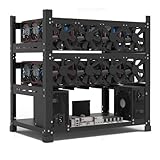
- Premium Choice: 8GPU Mining Rig Frame, Steel Open Air Miner Mining Computer Frame Rig Case for Crypto Coin Currency Bitcoin ETH ETC ZEC Mining Accessories Tools – Frame Only, Fans & GPU is not Included
Choosing between a blower GPU and an open-air GPU is less about which design is universally “better” and more about how your computer will live in your home. A blower card pushes hot air out through the rear of the case, while an open-air card releases heat inside the case and relies on the case fans to exhaust it. That difference affects room noise, temperatures, dust, case compatibility, and even how comfortable the computer is near a desk or living area.
The right choice depends on your case size, graphics-card power, room layout, and tolerance for fan noise. A compact workstation in a small apartment may benefit from exhaust-focused cooling, while a spacious gaming tower usually gets quieter operation from an open-air cooler. Here is how the two designs compare in practical home use.
As an Amazon Associate we earn from qualifying purchases at no extra cost to you. Product prices and availability are accurate as of the date shown and are subject to change.


Quick Verdict
Choose a blower GPU when you have a compact or poorly ventilated case, several expansion cards installed close together, or a computer that must move heat directly out of the chassis. It is also useful in certain small-form-factor workstations and tightly packed multi-GPU systems. The tradeoff is usually higher fan noise and warmer GPU temperatures under sustained loads.
Choose an open-air GPU for most conventional gaming and home-office desktops. Its larger heatsink and two or three axial fans typically provide better cooling efficiency with less noticeable noise, provided the case has good intake and exhaust airflow. It needs more breathing room around the card and can raise the temperature of other components if the case airflow is weak.
Side by Side
| Factor | Blower GPU | Open-Air GPU |
|---|---|---|
| Comfort | Often louder and higher-pitched under load | Usually quieter in a well-ventilated case |
| Cooling approach | Exhausts most GPU heat through the rear bracket | Releases heat into the case for system fans to remove |
| Durability | Fewer exposed fan blades; compact enclosed shroud | Large exposed fans need protection from dust and objects |
| Price range | About $250–$1,800, depending on GPU class and market | About $250–$2,000, with premium designs costing more |
| Maintenance | Rear exhaust path and small intake can collect dust | Fans and heatsink are easier to inspect and clean |
| Space needed | Often two slots and a shorter depth, though not always | Commonly two to four slots and greater width or length |
| Look | Simple, enclosed, and workmanlike | More visual variety, including lighting and decorative shrouds |
| Resale | Appeals to compact-PC and workstation buyers | Usually broader appeal among gaming-PC buyers |
| Best for | Small cases, dense builds, and direct heat exhaust | Gaming towers, quiet rooms, and high-airflow cases |
Where Blower GPU Wins
A blower cooler uses a centrifugal, or radial, fan. Instead of circulating air across the card and into the case, it draws air through an intake and forces it through a narrow channel before exhausting it out the rear. This is valuable when internal airflow is limited.
Small cases are the clearest use case. In a compact case with limited intake space, an open-air GPU can dump hundreds of watts of heat into an already warm enclosure. A blower card does not eliminate that heat, but it gives it a direct route out. Check the case specifications carefully: a blower may be physically shorter than a triple-fan card, but its rear exhaust still needs an unobstructed slot opening.
Dense builds also favor blowers. If two GPUs sit immediately next to each other, an open-air card may have little room to draw cool air. Its fans can end up pulling air heated by the neighboring card. Blower cards are not automatically ideal for every multi-GPU setup, but their exhaust pattern can be more predictable in a tightly packed workstation or compute chassis.
Heat management in shared rooms can be simpler. A blower does not reduce the total heat entering the room; the same electrical power eventually becomes room heat. However, it concentrates the exhaust at the back of the computer, which can help keep the desk area around the side panels from becoming a hot pocket.
The main compromise is noise. A small radial fan must move air through a restrictive path, so it commonly spins faster and produces a sharper sound than the larger fans on an open-air card. An additional accessory fan, such as the $17.99 AC Infinity MULTIFAN S2 120mm USB blower fan with speed control, can help improve airflow around a desk or equipment area, but it does not change the GPU’s built-in cooling design. A $14.21 PCI-slot cooling fan is another type of exhaust accessory; confirm its connector, slot clearance, and noise level before buying.
Where Open Air GPU Wins
Open-air cards use two or three axial fans to move air through a broad heatsink. Because the heatsink has more surface area and the fans can be larger, this design is generally better suited to sustained gaming, video editing, and other demanding work in a standard mid-tower or full-tower case.
Noise is the biggest advantage. Larger fans can move the required air at lower rotational speeds. That usually makes an open-air GPU more comfortable for a living-room PC, bedroom office, or shared workspace. It is not silent: coil whine, fan profiles, and case acoustics vary by card. Still, a good case with two front intake fans and one rear exhaust fan gives an open-air GPU a favorable environment.
Cooling headroom is another benefit. Open-air models often use larger heatsinks, more heat pipes, or thicker fin stacks. This can help the card maintain boost clocks without constantly increasing fan speed. The exact result depends on the GPU chip, power limit, cooler size, ambient temperature, and software settings, so the cooler type alone does not guarantee a particular temperature.
There are practical requirements. A modern open-air card may be 11–14 inches long, 4–6 inches tall, and two-and-a-half to four slots thick, with weights commonly around 2–5 pounds. Measure the case’s GPU clearance, front-radiator space, support bracket location, and power-cable bend room. Children, pets, or loose objects near an uncovered test bench are another reason to use a normal case rather than an exposed frame.
Open-air mining frames illustrate the airflow concept but are not ordinary furniture-friendly computer cases. An 8GPU steel open-air mining frame is listed at $42.99, while a 12GPU frame supporting two power supplies is listed at $66.99; both are frames only, with fans and GPUs excluded. They require deliberate dust control, cable management, and safe placement, and they are generally better for dedicated utility spaces than a family room.
Cost Over 5 Years
The purchase price difference between blower and open-air versions of the same GPU is inconsistent. A blower model may cost roughly $20–$150 more when it is specialized or in limited supply, while an open-air model may cost more when it has a premium heatsink, factory overclock, lighting, or extra fans. Across a $250–$2,000 graphics-card market, cooler design is only one part of the price.
For a realistic five-year household budget, start with the GPU, then add airflow and maintenance. A typical case fan costs about $10–$35, while a higher-quality 120mm or 140mm fan can cost $15–$30 each. Replacing two or three fans over five years might add $30–$120. Compressed air or an electric duster can add another $10–$80, depending on what you already own.
Power use matters more than the fan’s purchase price. A 300-watt GPU used for 10 hours each week consumes about 156 kilowatt-hours per year before considering the rest of the computer. At $0.15–$0.30 per kilowatt-hour, that is approximately $23–$47 annually, or $115–$235 over five years. Blower versus open-air design does not inherently determine GPU wattage, so choose based on the card’s power rating and your usage rather than expecting one cooler to deliver a major electricity saving.
Which One for Your Home
Small apartment
Pick an open-air GPU if you have a normal mid-tower with clear front-to-back airflow and you prioritize a quieter desk. Pick a blower if the computer is a genuinely compact workstation, sits in a tight cabinet, or has restricted ventilation. Do not place either design inside a closed media console without a safe plan for intake and exhaust.
Family with kids or pets
Use a fully enclosed PC case with dust filters and a secure side panel. An open-air GPU is fine inside that case, but keep the tower off the floor when possible and clean the filters regularly. An exposed mining frame offers little protection from fur, toys, fingers, and spilled liquids, regardless of its attractive $42.99–$66.99 frame price.
Rental home
An open-air GPU is usually the easiest choice because it offers strong performance without requiring unusual case modifications. Focus on quiet fans and dust filters to avoid disturbing roommates or neighbors. A blower makes more sense if you cannot replace the case and the existing enclosure has poor airflow.
Long-term home
Choose an open-air card for a spacious, upgrade-friendly gaming or creative workstation. Leave room for future card thickness, add at least one front intake and one rear exhaust fan, and support a heavy GPU with a bracket. Choose a blower for a compact system you expect to keep in its current form or for a dense professional build where exhaust direction matters more than acoustic comfort.
FAQ
Is a blower GPU better than an open-air GPU?
Neither is universally better. A blower is better at directing heat out of a cramped or densely populated case. An open-air card is generally better for quiet cooling in a roomy case with effective intake and exhaust fans.
Are blower GPUs louder?
They often are, especially under sustained high loads, because their smaller radial fans push air through a restrictive channel. Fan curves, case panels, and the specific GPU still matter, so compare independent noise measurements for the exact model when available.
Can I use an open-air GPU in a small case?
Yes, if the case supports the card’s length, height, thickness, power connectors, and airflow requirements. Leave clearance around the fans and verify that front radiators, drive cages, or side panels will not block the cooler.
Does a blower GPU keep the room cooler?
No. Nearly all electrical power consumed by the GPU eventually becomes heat in the room. A blower mainly changes where that heat exits the computer, which can improve internal component airflow but does not remove heat from the home.






Write Your Review
No reviews yet. Be the first to share your experience!