
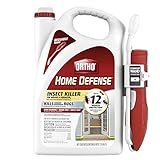
- Top Pick: Ortho Home Defense Insect Killer for Indoor & Perimeter2, Wand, 1.33 gal. | Ready-To-Use Bug Killer with Comfort Wand, Kills Ants, Roaches and Spiders, Use in Kitchens, Bathrooms and Home Perimeter
- Best Value: Combat Max Roach Killing Bait, Large Roaches, Kills the Nest, 8 Count | Targets large roaches at the source, eliminates nests, child-resistant design, unscented, kills for 3 months
- Premium Choice: Hot Shot Ultra Liquid Roach Bait 6 Count, Kills In Hours, 1 Pack | Kills Large & Small Roaches, Place Bait Stations Where Roaches Have Been Seen, Clear Non-Staining Formula
The most reliable pesticide approach for roaches is a bait with a slow-acting active ingredient, backed by a growth regulator, with residual spray kept for entry points only. If the problem is a few roaches from outside, a perimeter spray is enough; if it is a kitchen infestation, bait is the right tool. A licensed pest professional is the better answer once roaches show up in daylight.
- Match the pesticide to the problem
- Understand what kind of roach you have
- Baits and why they dominate
- Residual sprays: useful, limited
- Growth regulators and dusts
- Pick X if…
- Rotate baits if results stall
- Sanitation and exclusion
- Safety
- Alternatives
- How to read a pesticide label
- Tracking whether treatment works
- Frequently Asked Questions
As an Amazon Associate we earn from qualifying purchases at no extra cost to you.


Match the pesticide to the problem
| Problem | Pesticide format | Active ingredient class (per labels) | Where it goes | Watch out for |
|---|---|---|---|---|
| German roaches indoors | Gel bait (Advion, Combat Max) | Indoxacarb, fipronil | Hinges, cabinet corners, behind appliances | Never spray over bait |
| Large outdoor roaches wandering in | Residual perimeter spray (for example Demand CS style products) | Pyrethroid, such as lambda-cyhalothrin | Foundation, thresholds, vents | Follow outdoor-use label; rain breaks it down |
| Wall voids and attics | Boric acid dust | Boric acid | Thin dusting in dry voids | Keep away from children and pets |
| Breeding population | Growth regulator (Gentrol) | Hydroprene | Near harborages | Slow acting |
| Quick knockdown of a visible roach | Aerosol (Raid, Black Flag) | Pyrethroid-type | Direct spot use | Scatters others |
Active ingredient classes are those the makers list on their product pages and labels. Formulas change, so read the label before buying.
Understand what kind of roach you have
Product choice depends on species. German cockroaches are small, light brown with two dark stripes behind the head, and live indoors near food and water. American and Oriental roaches are larger and come from drains, mulch and crawl spaces. Baits excel against German roaches. For larger outdoor species, perimeter sprays, sealing gaps and cleaning drains do more. University extension services describe this split in their cockroach guides, and it is worth identifying the species before you spend anything.
Baits and why they dominate
A bait mixes a slow toxicant with food. Roaches eat it, return to the harborage, and others eat their droppings or dead bodies, which spreads the effect. The Syngenta maker page for Advion describes indoxacarb as the active ingredient. Combat lists fipronil for its Source Kill and Max gel lines. Both formats are small-dose, which is why they are used in cracks and not on open counters.
Reviewers at pest-control outlets repeatedly flag the same issue: placement beats product brand. A neat line of small dots in ten places works better than one big smear in one place.
Residual sprays: useful, limited
Residual sprays leave a film that kills roaches walking across it. They are valuable on thresholds, pipe entries and the outside of the building. Many pyrethroid formulas are repellent, so a roach may avoid the treated crack and move to the next one. Use them on the perimeter, not inside kitchen bait zones.
Labels also limit use indoors. Some concentrate products are labelled for outdoor use only or for professional application. Do not apply a product in a way the label does not allow.
Growth regulators and dusts
Gentrol Point Source disks contain hydroprene and are designed to keep young roaches from becoming breeding adults. They are a long-game product, to be used after bait begins reducing numbers. Boric acid and diatomaceous earth are mechanical or stomach poisons used in dry spaces. They cost little but need a thin film, since heavy piles are avoided by roaches.
Pick X if…
| You are… | Choose | Reason |
|---|---|---|
| Renting, limited control over the building | Bait stations plus sealing gaps | Low odour, easy to remove |
| Dealing with a heavy kitchen infestation | Gel bait rotation, then growth regulator | Targets the colony |
| Seeing big roaches in basement or garage | Perimeter spray and drain cleaning | Different species, different route |
| Living with pets or toddlers | Sealed bait stations in hidden spots | Least exposure risk |
| Facing repeat failure | Licensed pest professional | Access to commercial baits and inspection |
Rotate baits if results stall
Some roach populations develop reluctance to certain baits, a pattern described in pest management literature as bait aversion or resistance. If a gel stops getting eaten after a few weeks, switch to a bait with a different active ingredient and a different food matrix. Rotating is a normal professional practice.
Sanitation and exclusion
No pesticide wins if food and water remain available. Store dry food in sealed containers, empty bins daily, fix drips, and run the dishwasher before bed. Seal gaps around pipes with caulk or steel wool, and add door sweeps. These steps cost little and cut the population that survives treatment.
Safety
Read and follow the label; it is a legal document. Keep products off food surfaces, store them locked, and wear gloves when handling dust. Avoid foggers in homes with asthma sufferers. If a pet or child swallows a pesticide, call poison control or a vet immediately and bring the packaging. Do not mix products.
Alternatives
- Monitoring glue traps to map activity and measure whether treatment is working.
- Heat or vacuum steps used by professionals for severe infestations.
- Landlord-arranged building-wide treatment, which is the realistic fix in apartment blocks.
How to read a pesticide label
Look for three things: the registered use sites, the active ingredient and the signal word. Use sites tell you whether indoor kitchen use is allowed. The active ingredient tells you the class, which matters when you rotate products. The signal word, such as caution or warning, reflects acute toxicity. Many bait gels are labelled for crack and crevice use only, which means small placements and not broad application. If a label says professional use only, a consumer should leave it on the shelf and hire a licensed service instead.
Tracking whether treatment works
Place a few sticky monitor traps along walls and under the sink before treatment, count the catches weekly, and compare. A falling count means the program is working. A flat count after three weeks is the cue to change bait, check for new moisture sources, or ask a professional to inspect hidden areas such as the dishwasher motor housing and the fridge base.
Frequently Asked Questions
What is the strongest pesticide for roaches I can buy?
Strength depends on use. Professional-grade gels such as Advion are among the most discussed for German roaches, but placement and sanitation decide how well any product works.
Can I combine spray and bait?
Not in the same spot. Repellent spray residues can make roaches avoid bait, so use bait indoors and keep sprays for the perimeter.
How long until the roaches are gone?
Light problems may fade in a couple of weeks, while heavy ones can take a month or more with repeated bait. Egg cases hatch over time, so keep monitoring.
Are bug bombs worth using?
Extension guidance generally advises against them for roaches, since fog does not reach hidden harborages and can drive roaches deeper into walls.
Is boric acid safe?
It is lower in acute toxicity than many insecticides, but it is not harmless. Keep it away from pets and children and apply only as a thin dust in places they cannot reach.
Why do roaches keep coming back?
Typical causes are moisture, food residue, shared walls, and bait that was placed in too few spots. Fix those and treat the colony, not just the visible roaches.





Write Your Review
No reviews yet. Be the first to share your experience!