
- Top Pick: Fender CD-60 Dreadnought Acoustic Guitar – Mahogany | Bundle with Hard Case, Strap, Tuner, Strings, Picks, Online Lessons, and Austin Bazaar Instructional DVD
- Best Value: Fender CD-60S Solid Top Dreadnought Acoustic Guitar – All Mahogany Bundle with Hard Case, Tuner, Strap, Strings, Picks, and Austin Bazaar Instructional DVD
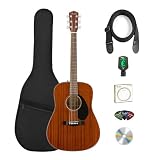
- Premium Choice: Fender CD-60S Solid Top Dreadnought Acoustic Guitar – All Mahogany Bundle with Gig Bag, Tuner, Strap, Strings, Picks, and Austin Bazaar Instructional DVD
If you want the warm, woody, midrange-forward voice that mahogany is known for, the Martin 000-15M and D-15M, Gibson and Epiphone J-45 style guitars, the Fender CD-60S all-mahogany and the Eastman mahogany models are the names to start with, and the right one depends on body size, solid versus laminate wood and how much you plan to spend. This guide explains those differences before it goes through the models.
As an Amazon Associate we earn from qualifying purchases at no extra cost to you.



At a glance
| Guitar | Wood layout (maker lists) | Best for | Limit |
|---|---|---|---|
| Martin 000-15M | Solid mahogany top, back and sides in a 000 body | Fingerstyle, blues, recording | Premium tier for a budget-minded buyer |
| Martin D-15M | Solid mahogany top, back and sides in a dreadnought | Strumming, bluegrass rhythm, folk | Larger body is less comfortable for small players |
| Gibson J-45 family | Spruce top, mahogany back and sides | Songwriters, singer-accompanists | Higher tier |
| Epiphone J-45 and Inspired by Gibson models | Mahogany-based construction in a J-45 style body | Buyers who want the look and voice at a lower tier | Build and electronics vary by version |
| Fender CD-60S All-Mahogany | Mahogany top, back and sides | Beginners and intermediates | Less complex tone than solid-wood premium guitars |
| Eastman mahogany models | Solid mahogany in several body sizes | Players wanting hand-built style at mid tier | Smaller dealer network |
| Taylor mahogany models such as the 300 series | Mahogany-based combinations with Taylor’s bracing and neck design | Players who like a slim neck and easy action | Voice is brighter than a vintage-style mahogany guitar |
Makers rename and revise models often, so use this as a map and then read the specifications on the maker’s site for the guitar you are considering.
Why mahogany sounds the way it does
Mahogany is a dense, warm wood. Reviewers and luthiers commonly describe a guitar built with mahogany as having a strong fundamental, a compact, punchy midrange and softer high frequencies than a spruce-and-rosewood guitar. It tends to sound immediate and woody, which suits blues, folk and recorded fingerstyle where a guitar sits comfortably next to a voice.
Three common builds
- All-mahogany: top, back and sides in mahogany. Dry, woody, focused. Typical of the Martin 15 Series and some Fender and Eastman models.
- Spruce top with mahogany back and sides: the classic Gibson J-45 pattern. Adds clarity and a slight bit more sparkle to the mahogany core.
- Mahogany-like woods such as sapele or nato: used by many makers as a cost-effective alternative. They are similar in feel but not identical, so read the spec sheet carefully.
Solid or laminate
A solid top vibrates more freely and matures with playing. Laminated back and sides, used on many budget guitars, are tougher against humidity swings but sound less complex. If you can afford a solid top, buy a solid top. If budget requires a laminate guitar, a mahogany laminate will still give the characteristic warmth.
Body sizes
| Body | Character | Suits |
|---|---|---|
| Parlor and small body | Intimate, quick response | Fingerstyle, couch playing, smaller frames |
| 000 or OM | Balanced, comfortable | Fingerstyle and light strumming |
| Dreadnought | Louder, bigger low end | Strumming and accompanying vocals |
| Jumbo and J-45 style | Round, loud and warm | Songwriters and flatpicking |
Details on each pick
Martin 000-15M
The maker’s 15 Series uses solid mahogany throughout and a satin finish. The 000 size is comfortable to hold and has a reputation among reviewers as an excellent fingerstyle and blues instrument. It is a direct example of what an all-mahogany guitar sounds like.
Martin D-15M
The dreadnought version has the same wood layout in a bigger body. It provides more volume and bass, which makes it a good strummer. Smaller players may find the body wide.
Gibson J-45
One of the most recognised acoustic guitars, the J-45 pairs a spruce top with mahogany back and sides. It has long been associated with songwriters. Gibson also sells variants with different finishes and electronics.
Epiphone J-45
Epiphone, owned by Gibson, makes a J-45 version at a lower tier, with options that include built-in pickups. It is a sensible way to get the style and body shape without the Gibson price class. Specifications differ by version, so read what the maker lists on the model you pick.
Fender CD-60S All-Mahogany
A popular budget dreadnought with a mahogany body and a comfortable neck profile. It is a common recommendation for beginners who want the woody tone of mahogany without paying for solid premium woods.
Eastman mahogany models
Eastman builds guitars in several sizes with a vintage orientation. Their mahogany-focused lines have drawn positive attention from reviewers for build quality at mid tier.
Taylor 300 series
Taylor’s 300 series pairs different top woods with sapele or mahogany-type back and sides, and the maker describes a slim neck and easy playability as central to its guitars. The voice is clearer and brighter than a vintage-style all-mahogany guitar.
Pick X if …
| If you … | Choose |
|---|---|
| Play fingerstyle or blues | Martin 000-15M or an Eastman OM-size model |
| Strum and sing | Martin D-15M or a J-45 style guitar |
| Are a beginner on a budget | Fender CD-60S All-Mahogany or an Epiphone |
| Want a lively, easy-to-play neck | A Taylor mahogany-based model |
| Want a spruce-and-mahogany classic | Gibson J-45 |
Budget tiers without prices
- Budget: Fender CD-60S All-Mahogany and entry Epiphone models, usually laminate or part-solid.
- Mid-range: Eastman, Epiphone’s higher lines and Martin’s more affordable ranges, often with solid tops.
- Premium: Martin 15 Series, Gibson J-45 and Taylor mahogany models, with solid woods and higher-grade hardware.
Mistakes to avoid
- Assuming every “mahogany” guitar is all-solid. Read the full wood list.
- Buying a dreadnought when a smaller body would be more comfortable.
- Ignoring action and setup. A poorly set-up guitar feels worse than the spec suggests, and a shop setup often fixes it.
- Skipping humidity care. Solid wood needs stable humidity as advised by the maker.
- Choosing electronics you do not need and paying for them.
Care notes
Keep solid-wood guitars in a case when not played, and avoid leaving them in hot cars or near heaters. A humidifier pouch in dry seasons helps prevent cracks, according to makers’ care guides. If a top starts to sink or crack, take it to a technician rather than attempting a repair.
Frequently Asked Questions
Is mahogany good for acoustic guitars?
Yes. It is used widely for backs, sides and sometimes tops, and is valued for warmth, focus and midrange. Players who want sparkle and sustain may prefer rosewood or maple.
What is the difference between all-mahogany and spruce-top mahogany?
An all-mahogany guitar sounds drier and more compressed, while a spruce top adds brightness and projection. Neither is better; it depends on the music you play.
Are mahogany guitars good for beginners?
They can be. Their gentle highs are forgiving, and several budget models use mahogany or similar woods. Comfort, action and neck shape matter more for a beginner than wood alone.
Do mahogany guitars sound dull?
They sound softer in the treble than spruce-and-rosewood guitars, but a well-made one is clear and punchy. New strings and a good setup bring out the tone.
Which size should I pick?
A 000 or OM suits fingerstyle and smaller players, while a dreadnought or J-45 shape suits strumming. Hold the guitar before buying if possible.
Is laminate mahogany acceptable?
For beginners and travel guitars, yes. It resists humidity and lowers cost, though solid wood offers more depth over time.







Write Your Review
No reviews yet. Be the first to share your experience!