
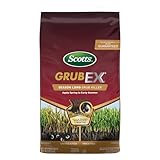
- Top Pick: Scotts GrubEx1 Season Long Grub Killer, 5,000 sq. ft. | Protects Lawns Up to 4 Months, Treats 5,000 sq. ft.
- Best Value: Scotts GrubEx1 Season Long Grub Killer, 28.7 lbs | Protects Lawns Up to 4 Months, Treats 10,000 sq. ft.
- Premium Choice: Ortho BugClear Lawn Insect Killer1, 10 lbs. | Lawn Bug Killer Granules, Kills Ants, Spiders, Ticks, Fleas, & Grubs, Treats up to 16,500 sq. ft.
The best lawn grub killer depends on timing: a preventive product based on chlorantraniliprole, such as Scotts GrubEx, suits homeowners who treat in spring or early summer before grubs hatch, while a fast-acting curative product based on trichlorfon, such as Dylox, suits lawns that already show active grubs in late summer or fall. Beneficial nematodes are the lower-chemical alternative for buyers who prefer a biological route.
- First, confirm you have grubs
- Preventive or curative: pick by calendar
- At a glance: grub control options
- Scotts GrubEx: the common preventive
- Dylox: the fast curative
- Imidacloprid-based season-long products
- Biological options
- How to choose
- Pick this if you …
- Alternatives and supporting practices
- Common mistakes
- Frequently Asked Questions
As an Amazon Associate we earn from qualifying purchases at no extra cost to you.



First, confirm you have grubs
Lawn grubs are the larvae of beetles such as Japanese beetles and masked chafers. Typical signs are irregular brown patches that feel spongy and lift like loose carpet, plus increased activity from birds, skunks or raccoons digging for food. University extension services commonly advise peeling back a square foot of turf and counting grubs. A small number is normal and often does not need treatment. Treatment thresholds differ by grass type and region, so check the guidance from your local extension office before applying anything.
Preventive or curative: pick by calendar
Preventive products go down before eggs hatch and young grubs feed. They need watering in, and they protect the lawn through the season. Curative products target grubs already feeding, and they work faster, which suits a lawn already showing damage. Using the wrong type at the wrong time is the most common reason buyers are disappointed.
At a glance: grub control options
| Product type | Examples | Active ingredient class | Best timing | Limits |
|---|---|---|---|---|
| Preventive granules | Scotts GrubEx | Chlorantraniliprole | Spring to early summer, before hatch | Does not act quickly on large grubs |
| Curative granules | Dylox | Trichlorfon | Late summer or fall, active grubs | Must be watered in; label restrictions apply |
| Season-long soil insecticides | Bayer Advanced grub control products | Imidacloprid-based formulas | Early season and early summer | Pollinator cautions on label; check the product label for use |
| Biological control | Beneficial nematodes (Heterorhabditis bacteriophora) | Live nematodes | Late summer when soil is warm and moist | Perishable, soil moisture and temperature sensitive |
| Milky spore | Milky spore powder | Bacterium targeting Japanese beetle grubs | Warm soil, slow build-up | Targets one species, slow to establish |
Scotts GrubEx: the common preventive
The Scotts GrubEx line is built around chlorantraniliprole, an active ingredient the maker positions as a season-long preventive. The label directs use before grubs hatch and asks for watering after application. Reviewers and extension sources commonly describe this class as relatively gentle on the lawn and on other garden insects compared with older chemistries, but you should still follow the label on use near flowering plants and water sources.
Best for: homeowners with a repeat grub problem who can mark a spring application on the calendar.
Dylox: the fast curative
Dylox is based on trichlorfon and is sold as a rescue treatment for active infestations. Extension guidance generally says it is applied when grubs are visible and feeding, and then watered in so that it reaches the root zone. Because it is a stronger product, read the label for protective gear, keep children and pets off the lawn until the label allows, and respect any restrictions in your state.
Best for: lawns where damage is already visible in late summer or fall and you need grubs controlled quickly.
Imidacloprid-based season-long products
Products such as Bayer Advanced season-long grub control use imidacloprid. They are applied earlier in the season and kept active by watering. These products carry cautions about pollinators, and some regions restrict neonicotinoids on turf, so read the label and check local rules. If you have clover or flowering weeds in the lawn that bees visit, mow them before application or choose another approach.
Biological options
Beneficial nematodes are microscopic worms that infect grubs. They are sold live, so they must be applied soon after delivery, in the evening or on a cloudy day, to moist soil. Results depend on soil temperature and moisture, and they usually need an application every year. Milky spore is a bacterial option aimed at Japanese beetle grubs only, builds up slowly, and works best as a long-term programme rather than a quick fix.
How to choose
- Date: before hatching, use a preventive. During feeding, use a curative.
- Grub count: a low count may not warrant any chemical. Healthy, watered turf tolerates some grubs.
- Species: milky spore targets Japanese beetles, so it will not help with other grubs.
- Kids, pets and pollinators: read re-entry and pollinator statements on the label.
- Coverage: check the bag’s stated coverage and match it to the lawn area, using a spreader set as the label directs.
- Watering: nearly every granular product needs irrigation after application, so plan around the weather forecast.
Pick this if you …
| Situation | Pick | Reason |
|---|---|---|
| You want to stop grubs before they start | Chlorantraniliprole granules such as GrubEx | Preventive, applied before hatch |
| Dead patches are spreading now | Trichlorfon such as Dylox | Curative, targets feeding grubs |
| You prefer a biological route | Beneficial nematodes | Live organisms, no synthetic insecticide |
| Japanese beetles are the only issue | Milky spore | Species-specific, long-term |
| A large lawn with a history of grubs | Season-long preventive | One timed application can cover the season |
Alternatives and supporting practices
- Lawn care: mow at a taller setting and water deeply so turf roots recover from some grub feeding.
- Reseeding: after treatment, overseed damaged patches in early fall.
- Beetle traps: traps for adult beetles are generally not advised by extension services because they may attract more beetles to your yard.
- Professional service: a licensed applicator can use products not sold to consumers.
Common mistakes
- Applying a preventive in fall when grubs are already large.
- Skipping the watering step, so the product never reaches the soil.
- Treating without counting grubs first.
- Applying before rain heavy enough to wash granules off hard surfaces.
- Ignoring the label’s guidance on bees, pets and waterways.
Frequently Asked Questions
When is the best time to apply grub killer?
Apply preventive products in spring to early summer, before eggs hatch. Apply curative products in late summer or fall when grubs are small and actively feeding. Regional timing varies, so use local extension guidance.
Can I use grub killer on a lawn with pets?
Follow the label’s re-entry instructions. Many labels advise keeping children and pets off the lawn until the product is watered in and dry. If you are unsure about a particular product, ask your vet or the product maker.
How do I know the grubs are the problem?
Lift a square foot of turf in a damaged area. If the turf peels back easily with no roots and you find several C-shaped white grubs, they are likely the cause. Other lawn problems, such as drought or disease, can look similar.
Do I need to water after applying grub killer?
Almost always. Granular products usually need to be watered in to carry the active ingredient into the root zone, and the label states how much. Follow the instructions for your exact product.
Are nematodes as effective as chemical grub killers?
They can work when conditions suit them, but results depend on soil moisture, temperature and application timing. They are a reasonable choice for buyers who want a biological option and can apply them carefully.
Will grub killer harm bees?
Some active ingredients carry pollinator cautions, notably neonicotinoids such as imidacloprid. Mow flowering weeds before applying and read the label. If pollinators are a concern, ask about alternatives at your local extension office.







Write Your Review
No reviews yet. Be the first to share your experience!