
- Top Pick: WORKPRO 6” Wire Cutters Heavy Duty CRV Steel, Diagonal Pliers for Cutting Wires Craft, Comfort Grip Handle
- Best Value: GRENPRO 8 Inch Heavy Duty Mini Bolt Wire & Cable Cutter, Anti-Slip Pliers | Tri-color PP+TPR grip, hardened cutting blade, wire snips, cable, craft, household, industrial cutting
- Premium Choice: DISEN Wire Cutters Heavy Duty Cutting Up to 3/16", Cable Cutters for Fence | Metal Cutters for Thick Wire, Chicken Coop, Safety Lock, Spring Loaded, Non-slip Matte Handle, Cr-V Steel, Yellow-Black 1
For electricians, fence builders and workshop tinkerers, high-leverage diagonal cutters from Knipex, Klein Tools and Channellock cover most heavy wire work, while compact bolt cutters such as the Knipex CoBolt suit hardened wire, chain links and small bolts. The right pick depends on the metal you cut and how often you do it, so this guide starts with material and capacity before it names models.
As an Amazon Associate we earn from qualifying purchases at no extra cost to you.


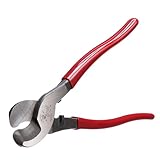
Quick comparison of heavy-duty cutter types
| Type | Example models | Best for | Limits |
|---|---|---|---|
| High-leverage diagonal cutters | Knipex high leverage diagonal cutters, Klein Tools high-leverage cutters, Channellock diagonal cutters | Copper and steel wire, nails, cable ties, general electrical work | Hardened piano wire and spring steel can nick the cutting edge unless the maker lists induction-hardened edges |
| Compact bolt cutters | Knipex CoBolt series | Hard wire, small bolts, rivets, padlock shackles on your own gear | Larger and heavier than diagonals; not for fine electronics work |
| Cable cutters (ratcheting or shear) | Klein Tools and Milwaukee cable cutters | Thick copper and aluminium cable | Crush steel wire instead of cutting it cleanly |
| Lineman-style side cutters | Klein Tools and Channellock lineman pliers | Rough field work, grip plus cut in one tool | Less leverage than a dedicated high-leverage head |
| Full-size bolt cutters | Many tool makers | Chain, rebar, heavy fencing | Bulky storage, overkill for wire under a few millimetres |
How to choose heavy-duty cutters
Match the tool to the wire
Soft copper and mild steel are easy for any quality diagonal cutter. The trouble starts with hard wire such as piano wire, tensioned fence wire and spring steel. Makers like Knipex state which wire hardness their edges are made for, so read the capacity chart on the product page rather than assuming a long-handled cutter will cope. If a tool lists capacity for soft wire only, hard wire will chip the edge.
Leverage and handle length
High-leverage designs move the pivot closer to the cutting edge, which multiplies hand force. Longer handles add reach and torque but make precise cuts harder in a tight box. Reviewers who compare cutters generally find that a 7 to 8 inch size is the best all-round length for workshop and electrical use, while shorter 5 to 6 inch cutters suit electronics and PC building.
Edge hardness and replaceability
Induction-hardened edges stay sharp longer. Some bolt cutters have replaceable jaws, which extends tool life for people who cut hard material often. Ask whether the cutting head can be resharpened or replaced, and read the maker’s warranty terms.
Handle comfort and insulation
Plastic-dipped handles are comfortable, but they are not automatically rated for electrical work. Only tools the maker marks as insulated to a stated standard, such as VDE-tested 1000 V models in the Knipex and Wiha ranges, should be used near live circuits, and even then power should be switched off first. If you are unsure about electrical work, consult a licensed electrician.
Picks by buyer type
Knipex high-leverage diagonal cutters
Knipex is the name reviewers most often mention for premium side cutters. The maker positions its high-leverage diagonal cutters for hard and soft wire, with hardened cutting edges and a compound lever action. They sit in the premium tier, and many tradespeople buy them once and keep them for years.
Klein Tools high-leverage diagonal cutters
Klein Tools offers high-leverage diagonal cutters aimed at electricians, with induction-hardened knives per the maker and a wide range of handle styles. They are generally mid-range to premium and are widely stocked in trade shops.
Channellock diagonal cutters
Channellock, an American hand tool maker, produces diagonal cutters at a mid-range level, with the blue-handled style familiar in workshops. They are a sensible choice if you want solid performance without a premium outlay.
Knipex CoBolt compact bolt cutters
The CoBolt line is built for those who want a small cutter that handles hard wire and bolts that a standard diagonal cannot. The maker lists capacity by material hardness on the product page. They are premium, but they replace a bolt cutter and a pair of heavy diagonals for many jobs.
Budget and big-box brands
Budget cutters from house brands cut soft wire fine. Reviewers often note that cheaper edges roll or chip when used on hard wire, so reserve them for light work and keep a better pair for hard material.
Pick X if…
| If you… | Pick | Why |
|---|---|---|
| Cut hard wire or tensioned fence wire regularly | Knipex high-leverage or CoBolt | Makers list hardened edges and capacity for hard wire |
| Work as an electrician day to day | Klein Tools high-leverage diagonals | Designed around trade use, insulated variants exist |
| Want a solid general-purpose pair on a mid-range budget | Channellock diagonal cutters | Good build and widely available |
| Cut thick cable | Dedicated cable cutters | Diagonals are not designed for large cable cross-sections |
| Build PCs or cut cable ties | Small flush cutters | Neat cuts and no need for heavy leverage |
Alternatives worth considering
- Milwaukee high-leverage cutters: the brand offers cutters alongside its power tool range, handy if you already own its tools and want a matching kit.
- Wiha insulated cutters: a good choice for electrical work where an insulation rating matters.
- Cordless or hydraulic cable cutters: for repetitive cutting of thick cable, a battery tool saves hand strain, but it is a different category of purchase.
Common mistakes
- Cutting hardened wire with a tool rated only for soft wire, which chips the edge.
- Twisting or rocking the cutter sideways while cutting, which can crack jaws.
- Using cutters on live circuits without checking an insulation rating, and without switching off power.
- Choosing a long cutter for tight spaces, where a shorter head would give a cleaner cut.
- Skipping eye protection. Cut wire ends can fly off at speed.
Care and use
Keep the pivot lightly oiled, store the cutters dry, and avoid using them as hammers or pry bars. Cut perpendicular to the wire, and use the tool near the pivot for tougher material, where leverage is highest. Replace or resharpen once the cut starts to crush rather than shear.
Frequently Asked Questions
What is the difference between diagonal cutters and bolt cutters?
Diagonal cutters are hand-sized pliers designed for wire, nails and ties. Bolt cutters have long handles and a compound hinge for far thicker or harder metal. Compact bolt cutters like the Knipex CoBolt sit between the two.
Can heavy-duty cutters cut piano wire?
Only if the maker lists hard wire capacity. Many high-leverage models state a hardness limit on the product page, and exceeding it can damage the edge. Check the capacity chart before buying for spring steel or piano wire.
Are insulated handles safe for live wires?
Only handles that the maker rates and marks to a recognised standard are intended for electrical work, and even then you should isolate power first. Standard plastic grips are for comfort, not protection. If in doubt, consult a licensed electrician.
What size cutter is best for general use?
Most reviewers point to the 7 to 8 inch range as a good balance of leverage and control. Smaller sizes suit electronics, and larger ones suit rough field work.
Are expensive cutters worth it?
For frequent use on hard material, premium cutters tend to hold their edge longer and often include replacement or warranty options. For occasional light jobs, a mid-range pair is usually enough.
How do I know when cutters need replacing?
When the jaws no longer meet cleanly, when cuts crush or leave burrs, or when you see chips along the edge, the tool is nearing the end of its life. Some premium models can be serviced by the maker.





Write Your Review
No reviews yet. Be the first to share your experience!