
- Top Pick: LHI Military Tactical Backpack for Men and Women 45L Army 3 Days Assault Pack Bag Large Rucksack with Molle System Black
- Best Value: kookoomia 50L Military Tactical Backpack Large Day Backpack for Men Molle Army 3 Days Assault Pack Bug Out Bag Water Resistant and Heavy Duty Hiking Treeking Rucksack – Black
- Premium Choice: Maelstrom 40L Hiking Backpack, Lightweight Camping Daypack with Rain Cover | Water-Resistant Rip-Stop Nylon, Wet/Dry Separation, Multi-Pockets, Survival Whistle. Ideal For Men, Women, Travel, Trekking
For a 45 litre backpack, the Osprey Exos 48 suits ultralight-minded hikers, the Osprey Talon 44 suits those who want a more supportive suspension, the Gregory Stout 45 suits comfort-first weekenders, and the Osprey Porter 46 suits travelers who want duffel-style loading. Match the pack to your base weight, torso length and trip length before looking at colour.
As an Amazon Associate we earn from qualifying purchases at no extra cost to you.


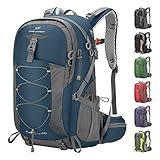

Why 45 litres is a popular size
Forty-five litres is a flexible middle. It holds the gear for a two to four night trip if your kit is compact, works as a carry-on-adjacent travel bag for one-bag trips, and avoids the bulk of 60 litre packs. The price of the extra space is temptation: bags fill up. A smaller pack keeps weight honest. Note that makers state volume differently, some including pockets and some counting only the main bag, so compare the stated volume and then look at the real layout.
At a glance
| Pack | Best for | Maker-stated highlights | Limits |
|---|---|---|---|
| Osprey Exos 48 | Lightweight backpacking | Tensioned mesh back panel, trampoline airflow design, lighter materials | Less padding; suits loads kept modest |
| Osprey Talon 44 | Day-to-weekend hiking, scrambling | Adjustable torso length, ventilated back panel, hip belt pockets | Slightly heavier than ultralight packs |
| Gregory Stout 45 | Weekend trips, comfort | Cushioned suspension, adjustable fit, rain cover on many models | Heavier, less airy against the back |
| Osprey Porter 46 | Travel, hostel stays | Panel-loading main compartment, stowable harness, laptop sleeve | Not built for heavy trail loads |
| Deuter Aircontact or Futura families (similar volumes) | Back ventilation fans | Deuter lists contoured suspension systems | Models and volumes vary by season |
How to choose
Torso length, not height
Measure from the C7 bone at the base of the neck down to the hip-bone line. Most makers publish torso charts with small, medium and large sizing. A pack that is too long or short sends weight to the shoulders and causes fatigue, regardless of how good the padding is.
Suspension and frame
Lighter packs use thin frames and rely on a modest load. If you carry more than the maker’s suggested weight range, the pack can sag and hip belts can bunch. Look for the manufacturer’s stated comfortable load limit and stay inside it.
Access and organisation
Top-loading designs are lighter and weather-resistant. Front-zip or panel-loading designs make it easier to reach items without unpacking, which suits travel and gear-heavy photographers. Hip-belt pockets, side water pockets and a sleeve for a hydration reservoir are useful on trail packs.
Materials and weather
Nylon with coated finishes handles drizzle but not sustained rain. A pack liner or a rain cover from the maker adds protection. Ultralight fabrics save weight but can be less abrasion resistant.
Pick X if …
| If you… | Pick | Reason |
|---|---|---|
| Carry a small, tuned kit and want low weight | Osprey Exos 48 | Ventilated frame, light fabrics |
| Want adjustable fit and room to grow | Osprey Talon 44 | Adjustable torso design |
| Prefer a cushioned carry for weekends | Gregory Stout 45 | Supportive suspension |
| Travel by plane, hostel or train | Osprey Porter 46 | Clamshell opening, stowable straps |
| Hike in hot climates | Deuter ventilated models or Exos | Mesh back systems |
Budget tiers
Budget packs in the 40 to 50 litre range tend to use simpler padding, fewer adjustments and heavier fabrics. They work for short trips and campus use. Mid-range packs add adjustable torsos, better hip belts and lighter materials. Premium packs from brands like Hyperlite Mountain Gear or Granite Gear use waterproof or reinforced materials and focus on low weight, with trade-offs in padding and organisation.
Fit steps before you buy
- Measure torso length and hip circumference.
- Load a pack with realistic weight, around the amount you plan to carry.
- Tighten the hip belt first, then shoulder straps, then load lifters.
- Walk stairs and bend over. The pack should move with you.
- Check that the maker’s stated comfortable load limit exceeds your expected load.
Common mistakes
- Buying by volume instead of fit.
- Overloading a lightweight frame.
- Choosing a pack with too many pockets, adding weight.
- Ignoring rain protection for multi-day trips.
- Skipping a hip belt fit test; a poor belt makes any pack uncomfortable.
Alternatives
- 35 to 40 litre packs for credible minimalists or day-hikers with winter layers.
- 55 to 60 litre packs if you carry bulky winter gear or a larger tent.
- Travel duffel packs for those who never hike, since they prioritise access over load carriage.
Packing a 45 litre pack well
Place the sleeping bag and soft items at the bottom, heavy items such as food and the stove close to the spine at mid-height, and frequently used layers at the top or in outer pockets. Keeping the heaviest gear between the shoulder blades and the hips lets the hip belt carry the load. Compress the pack with its side straps so the contents do not shift, and keep rain gear and a first-aid kit within reach. For flights, empty the hip belt pockets of tools and fuel, and follow the airline’s rules on what may travel in the cabin.
Who should size up or down
Hikers who carry a bulky winter sleeping bag, a large camera kit or gear for a group may find 45 litres tight and should look at 55 to 60 litre packs. Hikers who already own a compact tent and quilt, and who do mostly summer overnighters, often find 38 to 40 litres enough. Remember that a larger pack carries comfortably only up to its stated load range, so a bigger pack is not automatically better for heavy loads.
Gamers on the move
Gamers who carry a laptop, a controller and a small handheld console to events can use a 45 litre travel pack such as the Porter 46 for the whole kit, while a trail pack like the Exos suits those who also camp. Keep electronics in the padded sleeve or inside a protective case, put the power bricks and cables in a zipped pouch so they do not snag, and avoid placing a laptop against the hip belt area where weight pushes inward. Check the maker’s laptop sleeve size against your device before buying.
Frequently Asked Questions
How many days can I go with a 45 litre pack?
Most hikers manage two to four nights with compact gear in mild weather. Winter kit, bulky sleeping bags or bear canisters can push beyond the capacity.
Can I use a 45 litre pack as carry-on luggage?
Often, yes, but airline limits differ. Compare the pack’s dimensions with the airline’s published limit, and compress the load.
What weight should a 45 litre pack carry?
The maker publishes a recommended load range for each model. Staying within it keeps the suspension working as designed.
Are men’s and women’s packs different?
Typically they differ in torso range, hip belt shape and shoulder strap curve. Choose by fit, not label.
Do I need a rain cover?
For multi-day trips in wet climates, yes. A liner bag inside the pack is a lighter and more reliable option.
Is a frame needed?
Packs with a light frame transfer weight to the hips better. Frameless designs work only for very light loads.







Write Your Review
No reviews yet. Be the first to share your experience!