
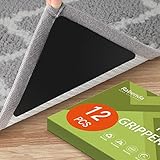
- Top Pick: X-Protector Rug Tape for Carpet – 12 PCS Premium Rug Pad Grippers | White Anti-Slip & Anti-Curling Carpet Tape for Rugs – Ideal Carpet Corner Grippers to Keep Your Rugs & Make Corners Flat
- Best Value: Rabenda Rug Tape Gripper for Hardwood Floors No Damage, 12 Pcs Carpet Tape | Double Sided Rug Stickers for Wood Floor, Non Slip Rug Pads for Area Rugs, Reusable, Keeps Corners Flat, Washable, Black
- Premium Choice: Kadrama 16-Pack Carpet-to-Carpet Rug Grippers | Cloth-Backed Heavy-Duty Anti-Slip Pads | Secure Rugs Over Carpets, Tiles, Hardwood | Prevent Sliding, Curling, Tripping (4", Patented Mesh)
For a rug sitting on top of wall-to-wall carpet, a two-sided textured gripper pad (felt-and-rubber or all-rubber with a rough face) suits most gaming rooms, while reusable hook-style fasteners suit small rugs and desk mats that keep creeping, and adhesive carpet tape suits permanent placements. The most common mistake is buying a smooth mesh pad made for hard floors, because it has nothing to bite into on a carpet pile.
As an Amazon Associate we earn from qualifying purchases at no extra cost to you.



Why Rugs Slide on Carpet in the First Place
Carpet is a soft, loose surface. A rug placed on it rides on the pile, and every time a chair rolls over the edge or a foot pushes off, the rug and the pile shift together. Gaming setups make this worse: office chairs with casters, quick weight changes, and a desk that keeps people pivoting in the same spot. A gripper has to do two jobs at once: hold the rug and hold the carpet. That is why the products below are split by how they achieve grip, not by brand.
Gripper Types at a Glance
| Type | Best for | How it grips | Limits |
|---|---|---|---|
| Felt-and-rubber pad (two layers) | Medium and large rugs on low-pile carpet | Rubber side faces the rug, felt side faces the carpet; makers describe the felt as adding cushion | Can slide on very thick, plush pile if the pad is thin |
| Textured rubber gripper, rough on both faces | Rugs on low to medium pile | Rubber texture presses into both surfaces | Thin rubber may leave marks on light carpet; read the maker’s notes |
| Rug-to-carpet gripper tape (double-sided) | Rug corners and edges, rug runners | Adhesive on carpet side, grip on rug side | Residue risk; not suited to rented or delicate carpet |
| Reusable hook-and-loop style corner grippers | Small rugs, desk mats, rugs with a flat backing | One part attaches to the rug, the other presses into the carpet pile | Corners only; large rugs may still ripple in the middle |
| Open mesh or waffle pad | Hard floors | Surface friction | Poor choice for carpet; the pile gives it nothing to grip |
Felt-and-Rubber Pads
Several rug-pad makers sell a two-layer design for carpet use, including Gorilla Grip, Mohawk Home and Rug Pad USA. The principle is the same across them: a rubber or PVC-free grip face against the rug and a felt face against the carpet. Reviewers on home-goods sites generally describe the felt layer as the part that helps on carpet because it compresses with the pile instead of sliding over it. Thickness is typically listed by the maker; thinner options keep the rug height low so chairs roll easily, while thicker options add cushion under the feet.
The trade-off is chair rolling. A thick pad under a thin rug can create a soft edge that casters catch on. If you roll a gaming chair across it, a thin pad is usually easier to live with.
Textured Rubber Grippers
Natural or synthetic rubber sheets with a ribbed or rough surface are the budget-friendly answer. They work best when the carpet is a short, dense pile and the rug has a flat, firm backing. On loop-pile or plush carpet, reviewers report that rubber alone tends to shift because the pile bends underneath it. If a product page says it is intended for hard floors only, take that at face value.
Rubber also has a care angle. Some rubber and vinyl pads can interact with certain floor finishes, which is mostly a hard-floor concern, but it is the reason makers add notes about staining. On carpet, the practical rule is to read the maker’s compatibility note and avoid trapping moisture under a pad in a damp room.
Adhesive Tape and Reusable Fasteners
Double-sided carpet tape designed for rug-to-carpet use bonds strongly and is the most permanent option. It is a good fit for a rug in a fixed spot under a desk, and a poor fit for a rental, because adhesive can pull up carpet fibers on removal. If you go this route, test on a hidden patch first.
Hook-and-loop style grippers sold for rug corners are reusable and easier to remove. Reviewers commonly mention that they work well for small rugs and mats, and less well for big rugs where the center can bunch. Another option that appears in home-improvement guides is heavy-duty reclosable fasteners, which keep a rug flat but require a flat, stable backing on the rug.
How to Choose
- Measure the rug and cut the pad smaller. Makers generally advise a pad about one inch shorter than the rug on each side so the edges do not curl or show.
- Check the carpet pile. Low, dense pile accepts almost any two-sided gripper. Thick plush pile favors felt-backed pads or tape on the corners.
- Look at rug backing. A rug with its own rubber backing may not need an extra pad on low-pile carpet; a rug with a loose woven backing will.
- Think about the chair. Rolling chairs prefer a thin pad and a firm edge; a seated-only area can use thicker cushioning.
- Think about removal. Renters should avoid adhesive tape and choose a pad or reusable corner grippers.
Pick X If
| Pick this | If you |
|---|---|
| Felt-and-rubber pad | Have a mid-sized rug on low or medium pile and want cushioning plus grip |
| Textured rubber gripper | Want a budget fix and have short, dense carpet |
| Carpet tape | Own the carpet and want a rug that never moves |
| Corner grippers | Use a small rug or desk mat and may move it later |
| Heavier rug or a rug with built-in backing | Prefer to solve the problem at the source rather than add a layer |
Budget Tiers
At the budget tier, you will find plain rubber or tape rolls. They work in the right conditions but wear faster and are more sensitive to carpet type. Mid-range felt-and-rubber pads are the sweet spot for most households because they cover more carpet types and last longer. The premium tier tends to add thicker, denser felt or natural rubber, which matters mainly for heavy rugs and high-traffic areas.
Alternatives
- A rug with a non-slip backing. Some rugs ship with a rubberized backing designed for carpet, removing the need for a pad.
- Furniture placement. Putting the desk legs or a heavy chair mat over part of the rug anchors it.
- A hard chair mat instead of a rug. Many carpet-rated chair mats have gripping studs on the underside and are designed for rolling chairs, which a rug is not.
Common Mistakes
- Buying a hard-floor mesh pad for use on carpet.
- Choosing a pad that is larger than the rug, so the edges show and trip people.
- Using adhesive tape on carpet you do not own.
- Ignoring the chair, which leads to edge curling where casters hit.
- Skipping a pad entirely on thick plush pile and expecting the rug’s own weight to hold.
Frequently Asked Questions
Do rug grippers damage carpet?
Felt-and-rubber pads and textured rubber generally do not damage carpet when used as the maker describes. Adhesive tape is the main risk because it can lift fibers or leave residue when removed. Test any product on a hidden corner first.
Can I use a hard-floor rug pad on carpet?
Often the answer is no. Smooth or mesh pads rely on friction against a hard surface and can slide on carpet pile. Choose a pad whose maker states it is suitable for carpet.
How big should the pad be?
Makers commonly recommend a pad slightly smaller than the rug on all sides. That keeps the pad hidden and lets the rug edge lie flat.
Why does my rug still wrinkle with a gripper?
Wrinkles usually come from rolling-chair traffic or from a rug that was stored rolled up. Lay the rug flat for a day under weight, and use a thinner pad where casters roll.
Is tape better than a pad?
Tape holds more firmly but is harder to remove and can leave residue. A pad is easier to reposition and is gentler on the carpet.
Does a thicker pad grip better?
Not necessarily. Thickness adds cushion, but grip depends on the surface texture and the carpet pile. A thick pad can even make casters catch at the edge.







Write Your Review
No reviews yet. Be the first to share your experience!