
- Top Pick: Pocket Hose Ballistic 50 FT Expandable Garden Hose, No-Kink, As Seen on TV | Anti-burst sleeve reinforced with bulletproof fiber, 360° swiveling pocket pivot connector, lightweight compact design
- Best Value: Pocket Hose Ballistic 75 FT Expandable Garden Hose, No-Kink, As Seen on TV | Anti-burst sleeve reinforced with bulletproof fiber, 360° swiveling pocket pivot connector, lightweight compact design
- Premium Choice: Pocket Hose Copper Bullet 50 FT Expandable Garden Hose, 10-Pattern Nozzle | Easy thumb control, anti-burst up to 650 PSI, copper-infused, lead-free, drinking water-safe, no-kink, ultra-lightweight
The best pocket hose for most gardens is a name-brand expandable hose with a solid brass connector, a double-layer latex or heavy-duty inner tube and a woven outer jacket, in 50 feet for a typical yard; the original Pocket Hose line (including its Copperhead and Ultra models), Flexzilla’s lighter options and other branded expandables each suit slightly different jobs. Expandable hoses are light and tangle-free, but they are less rugged than rubber hoses, so match one to how hard you will use it.
As an Amazon Associate we earn from qualifying purchases at no extra cost to you.
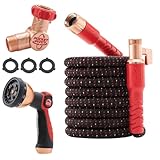


How expandable hoses work
A pocket-style hose has an inner elastic tube inside a loose fabric sleeve. When water pressure fills it, the inner tube stretches and the hose lengthens, commonly to around two or three times its resting length. Turn the water off and the hose contracts to a compact coil. This is why they are favoured for balconies, small yards, sheds and car washing, and less so for heavy commercial use.
At a glance: what to compare
| Feature | Why it matters | What to look for |
|---|---|---|
| Stated length (resting vs expanded) | A 50-foot label usually refers to the expanded length | Read both numbers on the maker’s page |
| Fittings | Plastic strips threads and leaks | Solid brass or heavy-duty metal ends with a rubber washer |
| Inner tube | Controls durability and pressure tolerance | Multi-layer latex or similarly rated material |
| Outer jacket | Abrasion and sun resistance | Tightly woven nylon or polyester |
| Pressure rating | Prevents bursting | Maker’s stated working pressure range |
| Nozzle and shut-off valve | Needed for filling the hose | Valve near the end to retract the hose without kinks |
The main contenders
The Pocket Hose name is tied to a group of products. The original and Copperhead versions use a brass-fitted design aimed at general garden work, and the Ultra or Silver-style lines emphasise tougher construction, according to the maker. Flexzilla, known for its rubber-and-polymer hybrid garden hose, is not an expandable hose, but it is the usual alternative for people who find expandables flimsy; it stays flexible in cold weather and does not rely on stretching. Other brands sell expandable hoses with similar claims, so compare fittings and layer construction rather than names alone.
Always read the maker’s description to confirm the exact model, as lines are revised from year to year.
How to choose
Length and reach
Measure from the tap to the farthest corner of the garden and add a margin for corners. A hose that is too long is heavier at the nozzle and more likely to kink in storage. For patios and balconies a 25-foot model is easier to handle; for typical yards 50 feet works; for large lawns look at 75 or 100 feet or consider a conventional reel hose.
Water pressure
Expandables need adequate flow to open, and very high pressure can strain the inner tube. If your tap runs unusually strong, a pressure regulator is sensible. If your home water pressure is low, the hose may not fully expand, giving a shorter reach.
Fittings and leaks
Most failures start at the fitting. Solid brass connectors with a threaded collar and replaceable washers last longer than plastic. Hand-tighten and never over-torque. Use thread tape on plastic spigots only if the maker allows it.
Sun, frost and storage
Leave an expandable in direct sun with water inside and the inner tube can degrade. After use, drain, let it retract and store it in the shade. Disconnect from the tap before freezing weather, because trapped water can crack the inner tube.
Surface and abrasion
Dragging an expandable over gravel, concrete or sharp edges wears the jacket. If you need to haul a hose around a rough yard, a rubber or hybrid hose is the stronger option.
Budget tiers
Budget: Unbranded expandables with plastic fittings tend to leak or burst sooner. They are fine for light use but expect shorter life. Mid-range: Branded models with brass fittings and double-layer tubes are the sweet spot for most households. Premium: Heavy-duty expandable lines and hybrid rubber hoses with strong warranties for demanding use.
Pick this if
| Your situation | Choose | Why |
|---|---|---|
| Small yard or balcony | 25 to 50 foot expandable with brass ends | Light and compact |
| Frequent watering of beds | Branded expandable with valve | Tangle-free and easy to coil |
| Washing cars or bikes | Expandable with adjustable spray nozzle | Handy on paved surfaces |
| Rough ground or heavy use | Rubber or hybrid hose such as Flexzilla | Better abrasion resistance |
| High water pressure | Hose with stated high pressure rating, plus a regulator | Reduces burst risk |
Care tips that extend life
- Fully open the tap slowly and let the hose expand evenly.
- Drain after use and store retracted, out of direct sun.
- Keep the nozzle in a position that prevents the hose from kinking on the ground.
- Do not leave the hose pressurised when you are not using it.
- Inspect fittings and replace worn washers promptly.
Common mistakes
- Choosing by expanded length without checking the unpressurised size.
- Buying plastic-fitted models for a permanent outdoor tap.
- Dragging the hose across abrasive surfaces.
- Leaving it connected through winter.
- Using it for hot water or drinking supply; read the maker’s notes before drinking from any garden hose, since many are not rated for potable use.
Alternatives
- Flexzilla and similar hybrid hoses: Heavier, more durable and kink-resistant.
- Standard rubber hoses: Best for tough use, long life and thick-walled strength.
- Soaker or drip lines: Better than any hose for steady bed irrigation.
- Hose reel carts: Make a conventional hose easier to deploy.
Frequently Asked Questions
Do expandable hoses last as long as rubber hoses?
Generally not. Reviewers often report shorter lifespans for expandables, especially with heavy use or sun exposure. Good care helps, but rubber hybrids remain tougher.
Why does my pocket hose leak at the connector?
The washer may be worn, the fitting loose or the thread damaged. Replace the washer, hand-tighten and consider a brass fitting if plastic has cracked.
Can I leave it outside in winter?
Disconnect, drain and store it indoors. Trapped water can freeze and damage the inner tube.
Is it safe to drink from?
Do not assume so. Many garden hoses are not intended for drinking water. Follow the maker’s guidance, and use a hose labelled drinking-water safe if you need one.
Does it work with low water pressure?
It may not fully expand. If your pressure is low, consider a shorter model or a standard hose.
What nozzle is best?
A lightweight adjustable nozzle with a shut-off valve is practical. Avoid heavy metal nozzles that strain the fabric and end connector.





Write Your Review
No reviews yet. Be the first to share your experience!