
- Top Pick: Amazon Basics 1/2 Inch Extra Thick Exercise Yoga Mat with Carrying Strap for Home Workouts and Fitness, 74" x 24", Black
- Best Value: CAP 1/2" Thick Yoga Mat, Exercise & Workout Mat with Strap, Black | Latex-free NBR foam cushions knees and joints for Pilates, stretching, core training, floor exercises and home fitness.
- Premium Choice: Yoga Mat Non Slip, Eco Friendly Fitness Exercise Mat with Carrying Strap,Pro Yoga Mats for Women,Workout Mats for Home, Pilates and Floor Exercises (Grey Blue/Black, Thickness-6mm)
A mat in the 5 to 6 mm range with a non-slip textured surface, such as the Gaiam classic line or a BalanceFrom GoYoga, covers most beginners on a budget, while anyone practising hot or vigorous styles should step up to a Manduka PROlite or a natural-rubber Jade Harmony and treat the extra spend as a long-term purchase.
As an Amazon Associate we earn from qualifying purchases at no extra cost to you.


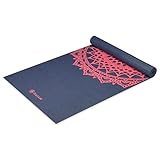
What “affordable” really buys
Budget mats are typically PVC, TPE or NBR foam. PVC is durable and grippy, TPE is lighter and often marketed as more eco-friendly, and NBR is thick and cushioned but can feel unstable in standing poses. Mid-range and premium mats lean on natural rubber, polyurethane toppings or dense closed-cell PVC for grip and longevity. Makers describe thicknesses in millimetres or fractions of an inch, and that number shapes the whole feel of the mat.
At a glance
| Mat | Tier | Best for | Maker-stated points | Trade-offs |
|---|---|---|---|---|
| Gaiam classic mats | Budget | Beginners and casual stretching | Available in several thicknesses, commonly around 4 to 6 mm, with textured surface | Thinner versions wear sooner; grip varies by style |
| BalanceFrom GoYoga | Budget | Floor work, Pilates and joints that like cushion | Thick foam, roughly half an inch in common versions; often sold with a strap | Soft surface makes balance poses harder |
| Manduka PROlite | Mid-range | Regular practice | Maker lists about 4.7 mm thickness and a closed-cell surface that resists moisture | Heavier than starter mats; initial slickness until worn in |
| Liforme | Premium | Alignment-focused practitioners | Maker lists about 4.2 mm thickness with printed alignment markers | Heavier and pricier |
| Jade Harmony | Mid-range to premium | People wanting natural rubber | Natural rubber construction with a roughly 3/16 inch standard thickness, per the maker | Not suitable for latex allergies; heavier |
These are maker descriptions; exact dimensions differ between sizes and editions, so read the listing’s size line before ordering.
How to pick
Thickness
Around 3 to 4 mm is firm and stable, around 5 to 6 mm offers more comfort for knees and wrists, and anything near 10 mm or more is for gentle floor work. Reviewers often suggest the middle range for general practice.
Surface and grip
A textured surface helps when dry, while a closed-cell or rubber surface helps when hands get sweaty. If your palms slide in downward dog, grip matters more than cushion.
Length and width
Standard mats are about 68 inches long. Taller practitioners should look at 72 inches or longer, and the Manduka line is commonly offered in a longer size according to the maker.
Weight and portability
If you carry the mat to class, a lighter TPE or foam mat is easier. If it stays at home, weight is a minor concern and density can be a benefit.
Materials and sensitivities
Natural rubber contains latex, which can trigger reactions in some people. Anyone with allergies should read the maker’s material notes and speak with a clinician if unsure.
Pick X if…
| If you… | Pick | Why |
|---|---|---|
| Are brand new and spend little | Gaiam classic | Low commitment with decent grip |
| Need softness for knees or Pilates | BalanceFrom GoYoga | Thicker cushioning |
| Practise several times per week | Manduka PROlite | Dense and made to last, per the maker |
| Want alignment guidance | Liforme | Printed markers on the surface |
| Prefer natural rubber | Jade Harmony | Rubber construction and strong traction |
Cost tiers explained
Budget mats keep the starting cost low and suit trying a new routine. Mid-range mats cost more but usually hold their shape longer. Premium mats are for committed users who want the best grip and alignment aids. Because mats compress over time, a very cheap mat that needs replacing every year may cost more than one durable mat.
Care tips
- Wipe with a mild cleaner and water, and let it dry flat or hang.
- Avoid leaving it in a hot car or direct sun, which can warp materials.
- Follow the maker’s cleaning guidance, because some mats do not tolerate harsh sprays.
- Roll with the top surface outward to help it lie flat.
Alternatives
- A thin travel mat for trips, which folds small.
- A yoga towel over any mat for hot sessions.
- A thick exercise mat for strength work on a hard floor.
Common mistakes
- Buying the thickest mat and then struggling with balance.
- Skipping the new-mat break-in, then blaming slipperiness on the design.
- Ignoring length for tall users.
- Using oils or heavy lotion before practice.
Matching a mat to your style of practice
Gentle and restorative classes reward comfort, so a thicker mat or a folded blanket on top works well. Vinyasa and power styles involve more standing poses and quick transitions, which call for a firm, grippy surface so hands and feet stay put. Hot classes add sweat, so a mat that holds grip when wet, or a yoga towel over the top, matters more than extra cushioning. Pilates often involves floor work on the spine, so a slightly thicker mat is common.
Think about where you practise too. On carpet, a thick mat can wobble, so a thinner, denser mat is more stable. On hardwood or tile, extra cushioning protects knees and hips. Outdoors, a mat that cleans easily and dries quickly is more useful than a soft, absorbent surface.
If you are unsure, borrow a mat at a studio or try a few in a store before committing. Fitness outlets commonly point out that the same mat can feel very different from person to person, and a short trial often saves a replacement purchase.
Frequently Asked Questions
What thickness is best for a beginner?
A mat around 4 to 6 mm balances comfort and stability for most people. If knees feel tender, go slightly thicker, but expect standing poses to feel less steady.
Are cheap mats safe?
Many are, but material safety statements differ between makers. Read the listed materials, and avoid products that give no information at all.
Why is my new mat slippery?
Some mats carry a manufacturing film or need time to wear in. Wipe it with a damp cloth as the maker suggests and expect the surface to improve with use.
How long should a mat last?
It depends on use and material. Dense PVC and rubber mats generally outlast thin foam, but heavy daily practice will wear any mat.
Is natural rubber better than PVC?
It is grippier for many people and can be more eco-oriented, but it is heavier and not suitable for latex-sensitive users. PVC is durable and easier to clean.
Can I use a yoga mat for workouts?
Light bodyweight work is fine. For high-impact exercise, a thicker dedicated exercise mat protects joints better.





Write Your Review
No reviews yet. Be the first to share your experience!