
- Top Pick: ANBOSON BBQ Gloves Disposable, Heat Resistant Grilling Gloves for Cooking | 10Mil Heavy Duty Nitrile Gloves-100Ct &4 Cotton Liners for Meat Handling Smoker for Hot Food Prep,Non-Slip Grip,Large,Black
- Best Value: Comsmart BBQ Gloves, 1472 Degree F Heat Resistant Grilling Gloves Silicone Non-Slip Oven Gloves Long Kitchen Gloves for Barbecue, Cooking, Baking, Cutting
- Premium Choice: ANBOSON BBQ Gloves,Disposable BBQ Gloves Heat Resistant Cooking, Black52, XL
For most home cooks, a silicone-coated or silicone-gripped mitt rated for several hundred degrees handles pots, trays and oven racks best, while a woven aramid glove suits people who work with grills and open flame and want finger dexterity. The right pick depends on what you touch most, how long you hold hot items, and whether you need to get wet gloves out of the equation entirely.
As an Amazon Associate we earn from qualifying purchases at no extra cost to you.

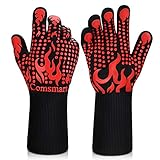

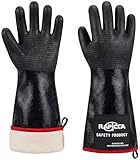
Quick Comparison by Glove Type
| Glove type | Best for | Typical heat rating claim | Main limit |
|---|---|---|---|
| Silicone mitt (Ove Glove-style or full silicone) | Pots, pans, baking sheets, wet jobs | Makers commonly list roughly 400 to 540 degrees Fahrenheit | Bulkier grip, less feel for small items |
| Aramid or para-aramid knit glove | Grilling, cast iron, hot rack adjustments | Makers commonly list around 500 to 900 degrees Fahrenheit for short contact | Can absorb water and grease; heat then conducts |
| Quilted cotton oven mitt | Everyday baking | Usually no precise rating given | Compresses with age, loses insulation when damp |
| Welding or leather-style glove | Wood-fired ovens, smokers, charcoal | Varies widely by maker | Stiff, hard to clean, stains |
| Long-cuff silicone and fabric hybrid | Deep ovens, turkey roasters, outdoor pizza ovens | Maker-stated, often in the 450 to 500 degree range | Wrist coverage adds size and bulk |
These figures are broad ranges that makers publish on product pages and packaging. Individual models differ, and a heat rating is almost always tied to a stated contact time, so read the specific listing before buying.
How Heat Ratings Actually Work
A rating of, say, 500 degrees Fahrenheit does not mean you can hold a 500 degree object indefinitely. Makers typically state a limit for momentary contact, often a few seconds to a handful of seconds, and that figure depends on the glove material and thickness. Thicker layers slow heat transfer, which is why a quilted mitt can feel safer for a long carry than a thin knit glove with a higher headline number.
Look for wording that separates dry contact from radiant heat and from steam. Steam is the usual cause of kitchen burns, and any glove that gets wet from a boiling pot or a lifted lid stops insulating well. Silicone and coated surfaces cope better here because the outer layer does not soak up water.
Materials Explained
Silicone
Silicone mitts are the common choice for wet or greasy work. The outer surface is non-porous, wipes clean and is often dishwasher safe according to the maker. Silicone grips well on slick handles, but thick versions reduce finger feel. Choose a model with a textured palm and a fabric lining, since a bare silicone interior can become uncomfortable when hands sweat.
Aramid fibres
Para-aramid yarns, the family that includes Kevlar and Nomex type fibres, resist burning and are used in firefighting and industrial gloves. In kitchen gloves they give a flexible, five-finger design that suits turning food on a grill or lifting a hot cast-iron skillet. Some designs add a silicone dot pattern for grip. They tend to handle dry heat well but are less suited to boiling liquids unless the maker states a waterproof coating.
Cotton batting
Traditional oven mitts use layers of cotton and a quilted lining. They are comfortable and inexpensive, and they work for routine baking. The drawback is that they scorch, stain and flatten over years of use. Replace them once the padding feels thin.
Leather
Leather and welding-style gloves are tough and can tolerate grill and smoker work, though they stiffen and stain, and few are made to be washed. They suit outdoor cooks more than anyone baking cookies.
Features That Matter More Than the Number
- Cuff length: Longer cuffs protect wrists and forearms from rack edges and steam. Short cuffs leave skin exposed when reaching into deep ovens.
- Fit and size: A loose glove slides on a heavy pot. Many five-finger styles come in small, medium and large or a single size with stretch. Check the maker’s sizing guide against your hand measurement.
- Grip texture: Raised silicone ridges or dots give better purchase on pan handles and wet surfaces.
- Cleaning: Machine-washable or dishwasher-safe claims save time, but follow the care label so coatings and stitching last.
- Lining: A cotton or fleece lining improves comfort and adds a thermal layer.
- Certification: Some makers cite a European standard such as EN 407 for heat resistance. Treat it as a useful sign only when the packaging states it plainly.
Pick the Glove If You Need This
| Pick this if you | Choose | Why |
|---|---|---|
| Cook with boiling pots and steam often | Full silicone or silicone-coated mitt | Outer layer sheds water and is easy to wipe |
| Grill, smoke or turn food over coals | Aramid knit with a silicone grip or a long-cuff grill glove | Better dry heat tolerance and finger control |
| Bake bread and cookies occasionally | Quilted cotton mitt pair | Comfortable, light, adequate for short contact |
| Handle heavy cast iron | Thick silicone-grip glove with a long cuff | Secure grip on weight and wrist coverage |
| Use a wood-fired pizza oven | Leather or high-heat long-cuff glove | Wide margin against radiant heat |
| Want a tool for desk and kitchen alike | Compact pair of silicone fingers or tong-style tools | Lets you avoid gloves for small tasks |
Budget, Mid-Range and Premium Tiers
Budget gloves are usually cotton or basic silicone with modest ratings and thin linings. They do fine for light baking. Mid-range options commonly add reinforced stitching, longer cuffs, textured grips and clearer rating statements from the maker. Premium gloves tend to be aramid or multi-layer designs from outdoor and professional-cooking brands, with a stated certification and tighter sizing. Paying more makes sense for outdoor grilling and heavy daily use, less so for occasional baking.
Alternatives Worth Considering
- Silicone pot holders and trivets: Flat pads are good for steadying a hot dish, and some cooks prefer them to gloves for small tasks.
- Long-handled tools: Pizza peels, oven rack pullers and grill tongs keep hands away from the heat entirely.
- Heat-resistant fingertip covers: These suit quick tasks like pulling a bun off a rack, though they give far less protection than a full glove.
Common Mistakes
- Assuming the number printed on the glove allows long contact with a hot object.
- Using a damp glove, which can pass heat or steam to the hand much faster than a dry one.
- Choosing a size that is too big, which compromises grip on heavy cookware.
- Washing leather or aramid gloves in a way the care label does not allow.
- Keeping worn-out gloves with thin or scorched padding in rotation.
Gloves reduce burn risk but do not remove it. If you do get a significant burn, cool it under running water and seek medical advice for anything larger than a small area or that blisters.
Frequently Asked Questions
Are silicone or fabric oven gloves better?
Silicone is better when moisture or grease is involved because it does not soak up liquids. Fabric and aramid gloves usually offer better flexibility and finger control for dry heat. Many cooks keep one of each type for different jobs.
Can I put heat resistant gloves in the dishwasher?
Some silicone models state they are dishwasher safe, but others do not. Check the care label for the specific glove, since high heat and detergent can degrade coatings or stitching on other materials.
How long can I hold a hot item with a glove rated to 500 degrees?
The rating usually applies to short contact only, often a few seconds. Insulation thickness matters as much as the headline number, so keep carries brief and set the item down quickly.
Are aramid gloves safe for the grill?
Aramid fibres resist flame and are widely used in heat protection, and many grill gloves are made from them. Choose a long-cuff model, keep it dry, and follow the maker’s stated limits for contact time and temperature.
When should I replace my oven gloves?
Replace them when the padding is compressed or thin, the lining is torn, or the surface is scorched or cracked. A glove that feels hot sooner than it used to has lost insulation.
Do I need a glove with a cuff?
If you reach into deep ovens or pull a roasting pan from a low rack, a long cuff protects the wrist and forearm from the hot rack and steam. For shallow tasks a short cuff is fine.





Write Your Review
No reviews yet. Be the first to share your experience!