
- Top Pick: Chefman Countertop Microwave Oven 0.7 Cu. Ft., 700 Watts with 10 Power Levels, 6 Cooking Presets with One-Touch Express Cook, Child Safety Lock, & Mute Button – Black
- Best Value: COMFEE' Countertop Microwave Oven, 0.7 Cu.Ft, 700W, Black, ECO Mode | Sound On/Off, One-Touch Buttons, Child Safety Lock, for Dorm, Apartment, Office
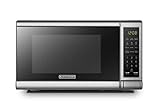
- Premium Choice: BLACK+DECKER Countertop Microwave Oven, 0.7 Cu.Ft, 700W, Stainless Steel | Digital Controls, Push-Button Door, Child Safety Lock, 10 Power Levels, Removable Turntable
For a dorm, desk corner or small kitchen, a compact microwave in the roughly 0.7 to 0.9 cubic foot class from a mainstream maker such as Toshiba, Panasonic or Midea covers reheating, popcorn and frozen meals, while a Panasonic inverter or a small Breville model suits buyers who want more even heating or a nicer finish. The right choice comes down to interior size versus plate size, wattage, controls and the space you have for ventilation.
As an Amazon Associate we earn from qualifying purchases at no extra cost to you.



At a glance
| Type | Best for | Typical stated traits | Limits |
|---|---|---|---|
| Basic compact (Midea, Toshiba and similar) | Dorms, offices, gaming dens | Makers list capacities around 0.7 cubic feet, dial or push-button controls, roughly 700 to 1000 watts depending on model | Smaller turntable; larger dishes may not rotate |
| Compact with sensor and presets | Frequent reheaters and popcorn lovers | Auto reheat and defrost programs, digital display | Presets differ by brand; manuals matter |
| Inverter compact (Panasonic class) | Even heating and gentle defrosting | Panasonic describes inverter power as steady output rather than pulsing on and off | Higher budget tier; often larger than ultra-compact units |
| Microwave oven with grill or convection | Small households wanting browning | Combination cooking modes | Needs more clearance and learning time |
| Design-led compact (Breville and similar) | Open-plan kitchens | Slim body, soft-close or quiet design features per maker | Premium tier for modest capacity |
What size is actually compact?
Makers measure interior capacity in cubic feet, and compact models cluster below one cubic foot. A capacity near 0.7 feels cramped for a standard dinner plate in some designs, so look at the turntable diameter on the spec sheet, not just the capacity number. If you routinely heat a full-size plate or a casserole dish, a 0.9 cubic foot model is a safer pick than the smallest option.
Exterior size matters just as much. Measure the shelf or desk, then add the clearance the manual asks for around the top, back and sides. Most microwaves need breathing room, and pushing one into a tight cubby can lead to overheating and shorter life.
Wattage and heating speed
Higher wattage generally means faster heating, and compact units commonly sit between about 700 and 1000 watts. Package instructions on frozen meals are written for a specific wattage, so a lower-wattage compact needs extra time. The maker’s manual usually includes a conversion guide. Avoid assuming that two microwaves with the same listed wattage heat identically; cavity shape and stirring design change results.
Controls and features that matter
- Mechanical dial: simple and durable, though less precise for short heats.
- Digital keypad: allows exact times, presets and a clock; look for a start/add-30-seconds button.
- Child lock: useful in shared houses; check the manual to learn how to engage it.
- Defrost by weight: handy for meat and bread when the manual explains the weights it supports.
- Mute option: helpful if the microwave sits near a gaming desk late at night.
Brands to shortlist
Toshiba
Toshiba sells a range of countertop microwaves, including compact models with sensor reheat and smart-sensor presets in larger sizes. Its mid-size range is popular with buyers who want a bit more cavity room while still staying countertop-friendly. As always, confirm the exact capacity and turntable size for the specific model.
Panasonic
Panasonic is widely known for inverter technology, which the maker says delivers continuous power at lower settings rather than cycling on and off. Reviewers often point to that for gentler defrosting and reheating of delicate foods. Panasonic compact inverters sit above basic models in budget, so they suit people who use the microwave for more than popcorn.
Midea
Midea offers a broad line of compact microwaves aimed at small spaces, commonly with straightforward controls and a sensible set of presets. It is a common starting point for dorm and office buyers. Compare the specific model’s capacity, wattage and warranty terms.
Breville and other design-focused brands
Breville’s compact microwave line emphasises a smaller footprint and design touches such as a soft-close door, according to the maker. If the microwave sits in a visible spot, it is an option, though it costs more than function-first alternatives.
Decision table: pick X if
| Pick this | If you |
|---|---|
| Basic Midea-class compact | Want the lowest budget tier for reheating and popcorn in a dorm or office |
| Toshiba compact with sensor reheat | Want automatic presets and a mid-range choice |
| Panasonic inverter | Care about even heating and gentle defrost, and accept a higher tier |
| Combination microwave with grill | Cook for one or two and want browning without a full oven |
| Design-led compact | The appliance is on display and aesthetics matter |
Safety and placement
Follow the manual on clearance, grounding and outlets. Compact microwaves should be plugged directly into a properly grounded wall socket, not a daisy-chained extension strip, because they draw significant current. Never run one empty, and use only containers labelled microwave-safe. Metal rarely belongs inside, except where the manual explicitly allows specific accessories. If a door seal is damaged or arcing occurs, stop using the unit and contact the maker or a qualified technician.
Common mistakes
- Choosing by capacity only and discovering a dinner plate will not turn.
- Ignoring ventilation requirements in a tight shelf or cabinet.
- Assuming package cook times match a lower-wattage compact.
- Buying built-in or over-the-range models when a countertop unit is what you wanted.
- Skipping the maker’s warranty and return terms.
Alternatives
If you rarely cook, a hot plate or a kettle plus instant meals may cover your needs without a microwave. An air fryer or toaster oven handles crisping that a plain microwave cannot. Some small households use a combination microwave and air-fry unit to replace two appliances, though those need more counter space than a basic compact.
Frequently Asked Questions
How small is a compact microwave?
Makers generally class models under about one cubic foot as compact, with many sitting near 0.7 to 0.9 cubic feet. Check the turntable diameter too, since it determines which plates fit.
Is a lower-wattage microwave worth it?
It can be, for light reheating, but it heats more slowly and may need extra time compared with the instructions on food packaging. If speed matters, choose a model nearer the top of the compact range.
What does inverter mean on a microwave?
Panasonic describes inverter technology as delivering steady power at lower settings instead of pulsing the full-power magnetron on and off. Reviewers often credit it with more even defrosting.
Can I put a compact microwave on a mini fridge?
Some makers advise against placing microwaves on top of other appliances. Read the manual for stand and clearance requirements and follow the fridge maker’s instructions for weight and heat.
How long does a compact microwave last?
Lifespan varies by build quality and use. Reading the warranty length and keeping the door seal and interior clean are the most practical ways to help a unit last.
Do compact microwaves need special outlets?
They typically use a standard grounded household outlet, but the manual gives the exact electrical requirements. Avoid sharing the circuit with other high-draw appliances and consult an electrician if unsure.





Write Your Review
No reviews yet. Be the first to share your experience!