
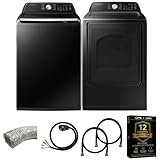
- Top Pick: Samsung Smart 4.7 Cu Ft Top Load Washer & 7.4 Cu Ft Electric Dryer, Sensor Stops Overdrying, Low Vibration Quiet Wash, WaterJet w/Power Cords, Hoses, Vent Duct, 1 Year CPS Protection Bundle (Black)
- Best Value: LG WashTower Stacked Smart Laundry Center 4.5 Cu.Ft. Front Load Washer Fully Automatic & 7.4 Cu.Ft. Gas Dryer in Black Steel w/Steam WKGX201HBA
- Premium Choice: Hamilton Beach 2.65 Cu Ft All-In-One Apartment Size Washer and Dryer Combo | Front Load Compact Washer + Dryer with 12+ Wash Programs, LED Display, Delay Start, 800 RPM Spin Speed, 120V Laundry Machine
The best closet depth washer and dryer for most small spaces is a 24-inch-wide compact front-load pair from a maker such as LG, Bosch, Miele or Electrolux, stacked or side by side, with a ventless heat pump or condensing dryer if there is no outside vent. If even that is too much, a single all-in-one washer-dryer unit saves the most space. The deciding factors are the real depth including hoses and door swing, the vent situation and the electrical supply, not the headline capacity.
As an Amazon Associate we earn from qualifying purchases at no extra cost to you.


What closet depth actually means
Closet depth is a loose label, not an industry standard. Most closets and alcoves suitable for laundry are around two feet deep, which is why compact appliances are commonly built around a 24-inch footprint. A typical full-size machine is roughly 27 inches wide and deeper than that once you count the door, so it will not fit. A compact unit lists its depth in the spec sheet, but you also need extra room behind for water hoses, a drain, a power cord and, for vented dryers, an exhaust duct. Door swing matters too, as a front-load door that opens into a wall or another fixture becomes useless.
Because model numbers change by region and year, the exact dimensions and electrical requirements must be read from each maker’s current specification sheet before buying. The categories below describe what is generally available, not a promise about a particular model.
At a glance: layout options
| Layout | Typical footprint | Best for | Main limit |
|---|---|---|---|
| 24-inch stacked pair (washer below, dryer above) | About 24 inches wide, full height of two units | Narrow closets with ceiling clearance | Height needed; stacking kit or maker’s stacked design required |
| 24-inch side-by-side pair | About 48 inches wide combined | Wide but shallow alcoves | Needs width, not height |
| Single-column washer-dryer tower | One footprint, taller | Closets with a single narrow bay | Typically a vented or heat pump dryer sized smaller than a full-size unit |
| All-in-one washer-dryer combo | One compact footprint | Smallest spaces, apartments | Slower drying, smaller drying capacity, one load at a time |
Dryer type decides where it can live
Vented dryers
These push moist air outside through a duct, so they need a clear path to an exterior wall or roof. Duct length and bends reduce performance, and the maker’s installation manual lists the maximum run. If your closet is on an interior wall, venting may be impractical.
Ventless condensing dryers
Condensing dryers collect water in a tank or send it to a drain. They avoid exterior venting but release heat into the room, so a small closed closet needs some airflow. Many are used in apartments for this reason.
Heat pump dryers
Heat pump dryers recycle heat and use less energy than traditional models, according to makers and efficiency programs. They also run at lower temperatures, which many reviewers note is gentler on clothes, though cycle times are often longer. They typically do not need a vent and can run on a standard outlet in many compact designs, but check the specific model’s power requirement.
All-in-one combos
A combo washes and dries in the same drum. This is the smallest footprint available, but drying capacity is usually smaller than wash capacity, so large loads may need splitting. Reviewers also note longer total times than a separate pair.
Compact brands to look at
These makers list 24-inch or compact laundry products. Confirm the exact model and dimensions with the maker.
- LG: offers compact front-load washers and dryers alongside its WashTower stacked designs and all-in-one combos. LG’s product pages list capacities, dimensions and venting requirements for each model.
- Bosch: sells compact 24-inch washers and dryers, often paired as a stacked set. Reviewers often cite quiet operation and tidy European-style design.
- Miele: makes premium 24-inch washers and heat pump dryers. They sit in the higher price tier but are known for build quality and long stated service life.
- Electrolux: lists compact and combination laundry products suited to smaller spaces.
- Samsung and GE: include compact or stackable units in their ranges, depending on region.
How to measure your closet properly
- Measure width, height and depth at the narrowest point, including shelves, doorframes and baseboards.
- Add space behind for hoses and cords. Makers usually list a minimum rear clearance in the installation guide.
- Check the door. A bifold or louvered door may need to be removed or replaced for ventilation and airflow.
- Check the floor. A stacked pair is heavy when full and vibrates, so the floor should be level and solid.
- Locate water supply, drain and power. A standpipe or drain needs to be within reach of the hose.
- Confirm the voltage. Some compact dryers use a standard 120 volt outlet, while others need a higher-voltage dedicated circuit. Use a qualified electrician if wiring changes are needed.
Safety and installation
Gas and electric supply work, new circuits and exhaust ducting should be handled by a licensed professional, and the maker’s manual and local codes take priority over general advice. Lint buildup in vent ducts is a fire hazard, so clean the filter after each load and have ducts cleaned periodically. Never run a dryer in a sealed closet without the airflow the manual specifies.
Capacity and expectations
Compact washers generally hold a smaller load than full-size ones, so bedding and bulky items may need to be done in smaller batches or at a laundromat. Reviewers commonly note that a 24-inch washer handles a typical week’s clothing for one or two people but struggles with large comforters. Spin speed affects drying time, so look at the maker’s stated maximum spin when comparing models.
Pick this if you are this buyer
| If you | Consider | Reason |
|---|---|---|
| Have a tall, narrow closet with vent access | Stacked 24-inch pair with a vented dryer | Uses height instead of width |
| Have no outside vent | Ventless condensing or heat pump dryer | No duct required |
| Live in a small apartment with one bay | All-in-one combo or a tower | Smallest footprint |
| Want long-term durability | Miele or Bosch compact models | Strong build reputation, higher cost tier |
| Need to keep outlay modest | Entry compact pairs from LG, Electrolux or similar | Lower tier with essential features |
Alternatives
Where nothing fits, portable washers and spin dryers suit renters, though they are slower and need a sink connection. A drying rack or heated airer can replace a dryer if you do not mind slower results. Laundromat or wash-and-fold services are another route if you rarely wash large loads. For gamers and PC builders working from small flats, note that heat pump and condensing dryers add humidity and warmth to a closet near a home office wall, so keep electronics away from the exhaust path.
Common mistakes
- Measuring only the machine and forgetting hoses and door swing.
- Buying a vented dryer for a closet that cannot vent outside.
- Assuming any stacking kit fits any washer and dryer. Use the maker’s approved kit.
- Overlooking the electrical supply requirement.
- Ignoring floor strength and vibration in upper-floor flats.
Frequently Asked Questions
How deep is a closet-depth washer and dryer?
Compact units are usually built around a 24-inch footprint, but exact depth varies by model and does not include hoses and door swing. Always read the dimensions in the maker’s specification sheet. Leave extra rear clearance as the manual specifies.
Can I stack a compact washer and dryer?
Many 24-inch pairs are designed to stack, often with a maker-approved kit. Do not stack models that the manual does not allow. Check the weight limit and ceiling height before purchase.
Do I need a vent for a compact dryer?
Vented dryers do, while condensing and heat pump dryers usually do not. Ventless models release warm, humid air into the room, so allow ventilation. Follow the maker’s installation instructions for clearances.
Is an all-in-one washer-dryer worth it?
It saves the most space and suits small households. The trade-offs are smaller drying capacity and longer total cycle times. For frequent large loads, a separate pair is more practical.
Will a compact dryer run on a normal outlet?
Some do, while others require a higher-voltage dedicated circuit. The maker’s specification sheet lists the requirement. Consult a licensed electrician before changing circuits.
How do I reduce vibration in a closet?
Level the machine using adjustable feet, place it on a firm floor and use anti-vibration pads if the maker allows them. Avoid overloading the drum. Persistent shaking is a reason to contact the manufacturer or an installer.





Write Your Review
No reviews yet. Be the first to share your experience!