
- Top Pick: Xiny Tool Pressure Washer Extension Wand, 10 Pack Power Washer Lance with 6 Atomization Nozzle Tips,1 Gutter Cleaner Attachment Curved Rod, 1/4" Quick Connect, 4000 PSI
- Best Value: Pressure Washer Extension Wand, 2 Pack 17 Inch Stainless Steel Heavy Duty Wands with 1/4 Inch Quick Connect, Fits Most Pressure and Power Washers
- Premium Choice: JANZ 24 FT Telescoping Pressure Washer Wand with Heavy-Duty Lever Lock | Gutter Cleaner Attachment, 7 Spray Nozzle Tips, 2 Hose Inlet Adapters, Pivoting Coupler and Support Harness
The best pressure washer extension wand is the one that matches your machine’s connector, stays under your washer’s pressure rating, and is long enough to keep your feet on the ground: a 4 to 6 foot fixed wand suits most second-storey siding and gutter jobs, while a telescoping model suits people who store gear in tight spaces and want adjustable reach. This guide explains how to choose, which wand styles fit which buyers, and which mistakes cause leaks or poor spray.
As an Amazon Associate we earn from qualifying purchases at no extra cost to you.

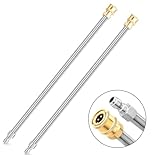


Quick Comparison of Extension Wand Styles
| Wand style | Best for | Typical stated features | Limits |
|---|---|---|---|
| Fixed-length straight extension | Siding, fences, decks at moderate height | Stainless or aluminum tube, lengths commonly listed around 4 to 6 feet, quick-connect ends | Takes storage room; no length adjustment |
| Telescoping wand | Gutters, second-storey walls, varied jobs | Two or three sections, lock collars, many makers list reach up to about 18 to 24 feet | Heavier at full reach; locks and seals need care; pressure rating varies by model |
| Rotating or bent-tip gutter wand | Cleaning gutters and soffits | Curved or angled head, often paired with a fixed extension | Narrow purpose |
| Underbody or surface-cleaner extension | Driveways, patios, vehicle undersides | Wheeled or low-profile head, extension handle | Needs enough flow from the machine |
| Brand-matched extension kit | Owners of a specific maker’s washer | Fits that maker’s trigger gun and hose threads | Often tied to one ecosystem |
Check Compatibility First
Most failed wand purchases come from the wrong connector, not a poor wand. Home pressure washers commonly use one of three setups at the trigger gun: a 1/4 inch quick-connect, a 3/8 inch quick-connect, or an M22 threaded fitting (usually 14 mm or 15 mm). The wand has to match the gun on one end and accept your nozzle system on the other. Look at the fitting on your current gun, read the manual, and compare it with the connector listed on any wand you consider. Adapters exist, but each adds a leak point and a possible pressure drop.
The second check is the rating. A wand should list a maximum pressure at least equal to your machine’s rating, and ideally with some margin. Maker pages for lawn and garden brands such as Simpson, Karcher, Greenworks, Sun Joe, Ryobi, Generac and Westinghouse describe their own wands with ratings in PSI. Use the number printed on the wand or in its manual, not a guess. Light electric washers often sit in the low thousands of PSI, while gas machines go higher, and a lightweight wand built for a small electric unit is not a safe match for a high-output gas unit.
Length and Reach: How Much Do You Need?
A longer wand is not automatically better. Each extra foot adds leverage on your wrist and arms, and the reaction force of the spray gets harder to control at the far end. For general house washing from the ground, a fixed wand in the 4 to 6 foot range often gives enough reach for the lower floor and the start of the second. For a two-storey house you may want a telescoping wand, but many makers also advise using a ladder only with proper stabilizers and never leaning out while holding a pressurized wand. Treat any reach figure as a maximum and keep both feet planted.
- Single-storey house, fence, patio: a fixed wand of roughly 4 to 6 feet is easy to handle.
- Gutters and second-storey siding: telescoping or a gutter-specific wand with an angled tip.
- Vehicles and low jobs: a standard gun may be enough; extensions help for wheel arches and undersides.
Materials, Build and Weight
Wands are commonly made from stainless steel, aluminum, or reinforced composite. Stainless tubes resist corrosion and stay stiff, though they are heavier. Aluminum is lighter and common on telescoping models, but cheaper tubes can flex or dent. Look at the collars and seals on telescoping wands: they carry the load and are the most common place for leaks. Brass or stainless fittings last longer than plastic ones, particularly if you run the machine with hot or hard water. Weight matters more than most buyers expect; a tube that feels fine in the box can tire you after an hour of vertical spraying.
Who Each Wand Type Suits
| Pick this if you… | Choose | Watch out for |
|---|---|---|
| Wash mostly one-storey homes and fences | Fixed straight extension, mid-length | Connector must match the gun |
| Clean gutters or upper walls | Telescoping wand with angled tip | Pressure rating at full extension |
| Own a small electric washer | Brand-matched light wand from the same maker | Do not use a long wand that starves flow |
| Own a gas washer | Stainless wand rated at or above the machine | Weight and reaction force |
| Want one tool for several jobs | Telescoping model with quick-connects | Seals and lock collars wear with use |
| Store gear in a small shed | Collapsible telescoping wand | Check collapsed length against your space |
Budget Tiers
Budget: basic aluminum or coated-steel extensions, usually fixed length, with quick-connect ends. These work for occasional use on small electric washers. Expect lighter fittings and less margin on pressure ratings, so read the label carefully.
Mid-range: better fittings, stainless or thicker aluminum tubes, and brand-matched kits from the major washer makers. This tier covers most homeowners and gives a sensible balance of weight, durability and fit.
Premium: stainless telescoping wands with high stated ratings, multi-position locks, and replaceable seals, aimed at frequent users and people with gas machines. Professional contractors tend to buy from this tier because replacement parts are available.
Common Mistakes to Avoid
- Ignoring the connector. A 3/8 inch wand will not fit a 1/4 inch gun without an adapter.
- Exceeding the rating. Using a wand with a lower pressure rating than your washer risks failure at the fittings.
- Starting at the full length. Spray at a distance first, then move closer, so you do not damage siding or wood.
- Leaning off a ladder. Reaction force can pull you off balance; use the wand’s reach instead of stretching.
- Forgetting the nozzle. A wand without a proper nozzle or a worn one produces uneven spray; check the nozzle chart in your manual.
- Skipping maintenance. Rinse after use, release pressure, and store telescoping sections collapsed and dry.
Safety Notes
A pressure washer stream can injure skin and damage glass, windows and wiring. Keep the spray away from outlets, light fixtures, meter boxes and overhead power lines; metal wands can conduct electricity, so avoid using a long metal wand anywhere near lines and follow your washer maker’s instructions. Wear eye protection and closed shoes. If you are unsure about working near electrical service, ask a qualified professional.
Alternatives to a Dedicated Extension Wand
- Longer hose and surface cleaner: for flat areas, a surface cleaner attachment is faster and gives a more even finish than a wand.
- Foam or soap applicator: some jobs are better handled with a downstream detergent applicator and a gentle rinse.
- Soft-wash systems or a hired pro: for roofs and tall walls, soft-washing and professional service avoid the risks of high pressure at height.
Frequently Asked Questions
Will any extension wand fit my pressure washer?
No. The connector type and thread size have to match your trigger gun, and the pressure rating has to meet or exceed your machine’s. Check the manual for the fitting type, then compare it with the wand’s stated connector.
Does a longer wand reduce pressure?
A longer path can cause some pressure loss through friction, especially on weaker machines with narrow tubes. The effect is usually modest on a quality wand, but a poorly matched or very long wand on a small electric washer may feel weak.
Are telescoping wands as durable as fixed ones?
Fixed wands have fewer moving parts and fewer places to leak. Telescoping wands are convenient but depend on lock collars and seals, so inspect them regularly and replace worn parts.
How long should an extension wand be for gutters?
That depends on the gutter height from where you stand. Many people use a telescoping wand with an angled tip, but follow the maker’s guidance and never reach beyond what feels stable.
Can I use a metal wand near power lines?
Avoid it. Water and metal can conduct electricity, so keep well away from overhead lines, meters and outlets, and call a professional for jobs near them.
What nozzle should I pair with a wand?
Wide-angle nozzles suit delicate surfaces such as siding, while narrower tips suit concrete. Your washer’s manual lists the color-coded nozzle chart for your machine; start with the widest angle and move closer only if needed.





Write Your Review
No reviews yet. Be the first to share your experience!