
- Top Pick: BEDLORE Queen Mattress Topper, Thick Soft Pillow Top Bed Topper | Viscose Bamboo, Stretchable Pockets Fit 6”-18”, Breathable Mattress Topper for Back Pain Relief and Hot Sleepers(Dark Gray)
- Best Value: Niagara Sleep Solution Queen Ultra Soft Mattress Topper — Back Pain Relief | Rayon Derived from Bamboo, 20" Deep Pocket, Breathable Pillow Top Mattress Pad, Perfect for Hot Sleepers, Dark Gray
- Premium Choice: Niagara Sleep Solution Queen Ultra Soft Mattress Topper — Back Pain Relief | Rayon Derived from Bamboo, 20" Deep Pocket, Breathable Pillow Top Mattress Pad, Perfect for Hot Sleepers, Green
The best pillow top mattress topper is the one that adds cushioning without leaving you sinking or overheating: memory foam toppers suit sleepers who want pressure relief, latex toppers suit those who want a springy and cooler feel, and fiber or down-alternative pillow top toppers suit anyone who just wants a softer surface at a modest tier. Thickness, density, mattress size and how the topper stays in place matter as much as the brand name.
As an Amazon Associate we earn from qualifying purchases at no extra cost to you.


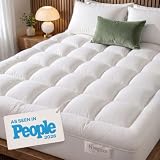
Quick Comparison
| Topper type | Best for | Typical stated features | Limits |
|---|---|---|---|
| Quilted fiber or down-alternative pillow top (Utopia Bedding, Linenspa style) | Budget softness, easy care | Quilted cover, fiberfill, elastic or anchor straps, often machine washable | Compresses over time, little contouring |
| Memory foam topper (Tempur-Topper, Linenspa gel memory foam) | Pressure relief for side sleepers | Foam layer in a range of thicknesses, some gel-infused, removable cover on some models | Can retain heat and feel slow to respond |
| Latex topper (Brooklyn Bedding Talalay) | Cooler, more responsive cushioning | Latex layer in soft, medium or firm options, breathable construction | Premium tier, heavier, avoid with latex allergy |
| Cooling hybrid topper (Tuft and Needle style) | Warm sleepers who want foam comfort | Foam layers with cooling gel or open-cell design, cover included | Mid-range to premium tier |
| Feather and down topper | Hotel-style plush feel | Chambered or baffle-box design to hold fill in place | Needs fluffing, may not suit allergy sufferers |
What Counts as a Pillow Top Topper?
A pillow top is a soft, stitched layer on the surface of a mattress. A pillow top mattress topper imitates this by adding a separate pad on top of an existing mattress. It can freshen an older bed, soften a mattress that feels too firm, or add a protective layer. It will not fix a deeply sagging or broken mattress, so if your bed has noticeable dips or coils that poke through, replacement may be a better idea.
How to Choose
Thickness
Toppers usually range from about one to four inches thick. Thinner models change the surface feel modestly, while thicker ones change it more. Pick thicker only if you also have deep sheets, since standard fitted sheets may not fit over a tall topper.
Density and support
Memory foam and latex are commonly described by density. Higher-density foam tends to hold its shape longer, while lower-density foam is softer and can break down faster. Reviewers often note that thick but low-density toppers can leave a sleeper sinking toward the mattress beneath.
Temperature
Foam can trap warmth. If you run hot, consider latex, an open-cell or ventilated foam, or a topper with a breathable cover. Gel infusions are marketed as cooling, though the actual effect differs by design and by sleeper.
Sleep position
- Side sleepers: medium to soft cushioning relieves pressure at shoulders and hips.
- Back sleepers: medium to medium-firm keeps the spine aligned.
- Stomach sleepers: usually benefit from a thinner, firmer topper to avoid hips sinking.
- Combination sleepers: latex or medium foam makes repositioning easier.
Size and fit
Match the topper to your mattress dimensions: twin, full, queen, king or California king. Look for elastic skirts or corner straps that keep it from sliding, and confirm that the total mattress height with the topper still fits your sheets.
Pick This If
| Pick this if you… | Choose |
|---|---|
| Want a soft top on a tight budget | Quilted fiber pillow top |
| Need shoulder and hip pressure relief | Memory foam topper, medium thickness |
| Sleep hot | Latex or ventilated foam topper |
| Want a hotel-style plush feel | Down or down-alternative with a baffle design |
| Have an adjustable base | A flexible foam or latex topper, since stiff toppers may not bend |
| Share a bed with a partner who moves often | Latex or higher-density foam for less motion transfer |
Care and Longevity
Check the care label. Fiber toppers are often machine washable, while foam and latex usually need spot cleaning and a removable cover. Rotate the topper every few months where the maker allows, and use a mattress protector over it. Foam toppers can have a smell when unpacked; airing them in a ventilated room is the usual advice.
Gamers and Long Sitters
People who spend long hours in a chair sometimes notice lower-back stiffness at night. A topper that is too soft can make this worse by letting the hips sink, while a firmer topper keeps the spine neutral. If you have ongoing back pain, discuss it with a clinician rather than relying on bedding alone.
Common Mistakes
- Choosing the thickest topper available without considering sheet fit.
- Trying to rescue a worn-out mattress with a topper.
- Ignoring heat retention in memory foam.
- Skipping the anchor straps and ending up with a sliding topper.
- Skipping the maker’s break-in period; some foams take a few days to settle.
Alternatives
A mattress with a built-in pillow top, a new hybrid mattress, or a firmer supportive topper may suit different problems. For simple temperature control, a cooling mattress pad is another route. If your concern is hygiene, a washable mattress protector is lighter and cheaper than a full topper.
Matching a Topper to Your Mattress
A topper behaves differently on different bases. On a firm innerspring mattress, a medium-thickness foam or latex layer adds cushioning where you need it. On an already soft foam mattress, a thick topper can make the bed feel unstable, so a thin firm layer or a protector is often enough. Couples with different preferences sometimes choose a split topper, with one half per sleeper, though a seam can be felt in the middle. Read the maker’s warranty terms as well, because some mattress warranties have conditions about added layers, and keep the original packaging details in case of a return.
Finally, think about how often you travel or move. Foam and latex toppers are heavy and bulky to carry, while fiber versions roll up and are easy to store or pack away between seasons.
Frequently Asked Questions
How thick should a pillow top mattress topper be?
Two to three inches is a common range for noticeable cushioning without a major change in bed height. Thinner suits small adjustments, while thicker may require deep-pocket sheets.
Will a topper make a firm mattress feel soft?
Yes, it can soften the surface, but it will not change the support underneath. If the mattress itself is uncomfortable or damaged, a replacement is often a better option.
Memory foam or latex?
Memory foam hugs and relieves pressure but may sleep warmer. Latex is more responsive and often cooler, though heavier and often at a higher tier.
Can I use a topper on an adjustable bed?
Yes, but pick a flexible material such as thin foam or latex, and use straps so it stays in position when the base moves.
How long does a topper last?
It depends on material and use. Fiber toppers may flatten sooner, while high-density foam and latex generally keep their shape longer according to makers’ warranties and reviewers.
Do toppers help with back pain?
They may add comfort, but they are not a treatment. If pain is persistent, see a healthcare professional.







Write Your Review
No reviews yet. Be the first to share your experience!