
- Top Pick: Premium American Flag 4×6 Ft TearProof Series for Outside, Heavy Duty Outdoor,Longest Lasting, Super Tough Fade Resistant Spun Polyester, High Wind US Outdoor Flags Embroidered Stars, Sewn Stripes, Brass Grommets
- Best Value: American Flag 3×5 Ft for Outside, Heavy Duty US Flag for High Wind Outdoor | Heavy Duty Nylon, Fade Resistant and Waterproof USA Flag with Embroidered Stars, Sewn Stripes, Brass Grommets
- Premium Choice: American Flag 10×15 FT TearProof Series, Heavy Duty Tough Spun Polyester USA Flags High Wind for Outside Outdoor with Durable Embroidered Stars Sewn Stripes 5 Brass Grommets
For a flagpole that sees sustained gusts, a two-ply spun polyester flag such as Annin Tough-Tex or Valley Forge Koralex II is the safer choice, while lightweight nylon suits sheltered porches and mild climates. Polyester is heavier and shrugs off constant snapping better; nylon flies in lighter air and looks better doing it, but its fly end wears faster when the wind never lets up. The rest of this guide explains how to match material, size and hardware to your pole and your weather.
- At a Glance: Wind-Rated Flag Options
- Why Polyester Wins When the Wind Does Not Quit
- Size Matters as Much as Fabric
- Construction Details That Separate a Long-Lasting Flag
- Hardware That Saves Your Flag
- Pick X If…
- Budget Tiers Without the Price Tags
- Alternatives If Wind Keeps Winning
- Common Mistakes
- Frequently Asked Questions
As an Amazon Associate we earn from qualifying purchases at no extra cost to you.


At a Glance: Wind-Rated Flag Options
| Flag line | Material (as the maker lists it) | Best for | Limits |
|---|---|---|---|
| Annin Tough-Tex | Heavy two-ply spun polyester | Exposed poles, coastal and plains locations, year-round display | Stiffer, flies less gracefully in light air; colors can fade in strong sun |
| Valley Forge Koralex II | Two-ply spun polyester | Commercial and municipal poles, sustained wind | Less owner feedback available than Tough-Tex; same stiff feel |
| Annin Nyl-Glo | Nylon, described by the maker as its best-waving fabric | Typical residential poles in moderate wind | Fly end frays sooner under constant strong wind |
| Valley Forge Perma-Nyl | Heavier-weight nylon | Sunny sites that need fade resistance and decent flutter | Still a nylon; not the first pick for storm-prone poles |
Why Polyester Wins When the Wind Does Not Quit
Wind damage to a flag is rarely a single dramatic tear. It is thousands of small snaps at the fly end, the edge farthest from the pole, where the fabric flogs against itself. Heavier fabric absorbs that energy with less thread fatigue. Retail and roundup sources that cover flag brands consistently point to two-ply spun polyester as the high-wind material, with Annin Tough-Tex the most frequently named and Valley Forge Koralex II the closest rival.
Spun polyester has a matte, cloth-like surface and a stiffer hand than nylon. In a gentle breeze it hangs a little more than a nylon flag would. That trade is worth making if the pole stands on an open hilltop, a lakefront, a farm field or any spot where the weather vane rarely rests.
What Nylon Still Does Well
Nylon is lighter, so it lifts in a breeze that would barely stir polyester. Makers describe it as the better-looking choice for ordinary residential use, and many owners prefer it for that reason. In sheltered suburban yards, nylon can last a long time. The point of this guide is simply that a flag chosen for beauty in light air is not the same flag you want when gusts regularly reach storm strength.
Size Matters as Much as Fabric
A flag that is too large for its pole multiplies the load on the fabric, the halyard and the pole itself. Common sizing guidance used by flag sellers pairs a three-by-five-foot flag with a shorter residential pole, a four-by-six with a mid-height pole, and larger sizes only with taller poles built for them. In high-wind areas, many owners deliberately step down one size, because a smaller flag catches less wind and frays less.
| Setting | Sensible approach |
|---|---|
| Wall-mounted house bracket | Smaller flag, polyester if the wall faces prevailing wind |
| Residential in-ground pole | Match flag size to the pole maker’s listed range; consider the next size down if exposed |
| Open field, coast or hilltop | Two-ply polyester, conservative size, inspect often |
| Sheltered urban lot | Nylon is acceptable and flies better |
Always read the pole manufacturer’s guidance on maximum flag size. Poles are rated for a certain wind load, and an oversized flag can bend a pole or strain its base before the flag itself fails.
Construction Details That Separate a Long-Lasting Flag
- Fly-end stitching. Look for multiple rows of stitching on the fly end. Better flags are described as lock-stitched, which resists unraveling.
- Header and grommets. A reinforced canvas header with brass grommets spreads load where the flag meets the pole. Weak or plastic fittings are common failure points.
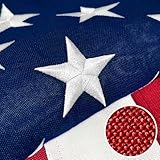
- Embroidered stars and sewn stripes. Sewn construction holds its shape better than printed designs, which is why makers market it for durable lines.
- Color fastness. Strong sun fades red and blue, even on polyester. Reviewers who like Tough-Tex for wind resistance still mention fading as the common complaint, so plan on replacement rather than permanent display.
Hardware That Saves Your Flag
The best flag will still shred if its hardware works against it. A few add-ons make a noticeable difference in a gusty spot.
- Rotating mounting rings. Anti-wrap rings let the flag swing around the pole instead of winding itself into a knot that wears holes.
- Swivel snap hooks. On a halyard pole, swivel clips keep the flag from twisting the rope and snagging.
- Smooth poles. Burrs on an aging pole can chew the header. Sand or replace rough fittings.
- Tension. Keep halyards snug so clips do not clatter against the pole all day.
Flag etiquette guidance generally says an all-weather flag may be displayed continuously if properly lit at night, while other flags should come down in severe weather. When a major storm is forecast, lowering the flag is cheaper than replacing it.
Pick X If…
| Pick | If you… |
|---|---|
| Annin Tough-Tex | Have an exposed pole and want the option with the most owner feedback for high-wind use |
| Valley Forge Koralex II | Want a comparable heavy polyester made by a long-established supplier to government and commercial buyers |
| Annin Nyl-Glo | Live in moderate wind and care most about a flag that ripples nicely |
| Valley Forge Perma-Nyl | Get strong sun and moderate wind and want fade resistance in a nylon |
Budget Tiers Without the Price Tags
Within each material there are budget, mid-range and premium flags. Budget polyester flags often use thinner thread counts and simpler stitching; they work, but the fly end may last fewer months in rough weather. Mid-range flags from established American makers add heavier stitching and better hardware. Premium options, including commercial-grade or custom-sized flags, make sense for flagpoles where replacement is inconvenient, such as tall poles that need a lift or a service call.
Alternatives If Wind Keeps Winning
- A smaller flag on the same pole. Dropping a size is the cheapest wind fix available.
- A flag sized for a wall bracket. Lower mounting height often means less exposure to gust loads.
- A seasonal rotation. Use a lighter nylon flag in calm months and a heavy polyester during storm season.
Common Mistakes
- Choosing a flag by looks alone and ignoring the pole rating.
- Flying nylon continuously in a spot where the wind rarely drops.
- Letting a frayed fly end go for months; once threads unravel, the damage accelerates quickly.
- Skipping anti-wrap hardware on a fixed bracket.
- Expecting any flag to last forever; weather flags are consumables.
Frequently Asked Questions
What is the best material for an American flag in strong wind?
Two-ply spun polyester is the material most sources name for high-wind locations. It is heavier and withstands constant snapping better than nylon. Annin Tough-Tex and Valley Forge Koralex II are the two lines most often cited.
Will a polyester flag still fray?
Yes, eventually. Heavy polyester slows fly-end wear but does not stop it. Owners who display flags year-round in windy places typically plan to replace them periodically.
Does a smaller flag really last longer?
Generally yes. A smaller flag catches less wind and puts less strain on the fabric, the clips and the pole. Always stay within the pole maker’s listed flag size.
Can I leave my flag up during a storm?
Flag etiquette guidance says to avoid displaying a flag in severe weather unless it is an all-weather flag. For high winds, lowering the flag protects both the flag and the pole.
Is nylon bad for windy areas?
Not bad, just less durable under constant strong wind. Reviewers and sellers note that nylon fly ends wear faster, while its light weight makes it fly beautifully in gentler air.
How do I stop my flag from wrapping around the pole?
Mount it with rotating anti-wrap rings or swivel snap hooks. These let the flag swing freely so it does not twist into the pole and wear against it.





Write Your Review
No reviews yet. Be the first to share your experience!