
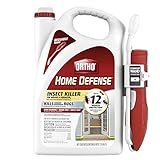
- Top Pick: Ortho Home Defense Insect Killer for Indoor & Perimeter2, Wand, 1.33 gal. | Ready-To-Use Bug Killer with Comfort Wand, Kills Ants, Roaches and Spiders, Use in Kitchens, Bathrooms and Home Perimeter
- Best Value: Amdro Quick Kill Ant & Spider Killer, 3 lb | Kills Up to 100 Insects, Covers 3,000 SQ, Lasts 3 Months, Spider and Ant Killer For Lawns
- Premium Choice: TERRO Ant Killer Plus Multi-Purpose Insect Control, 3 lb Shaker Bag | Kills Ants, Fire Ants, Fleas, Outdoor Roach Killer, Fire Ant Killer, Cockroach Killer, Ant Poison for Pest Control
For most homeowners, Ortho Home Defense is the easiest outdoor perimeter spray for ants and spiders, while Talstar One suits larger properties and repeat treatments for people willing to mix a concentrate. Both are built around bifenthrin, a perimeter-barrier insecticide, and both work best as an outer ring around the foundation rather than as a cure for a colony nesting inside. This guide explains how to pick between them and a few alternatives, and how to use them safely.
- Barrier Sprays vs. Baits: Pick the Right Job
- At a Glance
- Ortho Home Defense: The Convenience Pick
- Talstar One and Talstar P: The Professional-Style Concentrate
- Baits and Granules: Alternatives
- How to Choose: Pick X If…
- Safety and Label Notes
- Application Tips From Pest Guides
- Common Mistakes
- Frequently Asked Questions
As an Amazon Associate we earn from qualifying purchases at no extra cost to you.


Barrier Sprays vs. Baits: Pick the Right Job
A perimeter spray leaves a residue on surfaces such as foundations, door thresholds and window frames. Insects that cross it are affected, which cuts the number getting inside. A bait works differently: workers carry it back to the nest. Reviewers who rank ant products generally describe sprays as a stopgap for keeping trails out and baits as the way to reach a colony. Spiders do not eat bait, so spiders are the target mainly for residual sprays and dusts in sheltered spots.
Many pest-control guides therefore suggest a two-part plan: a spray along the exterior perimeter plus bait stations near visible ant trails, with sealing of gaps and removal of debris as the foundation.
At a Glance
| Product | Format | Key stated details | Best for | Limits |
|---|---|---|---|---|
| Ortho Home Defense (indoor and perimeter formulas) | Ready-to-spray and concentrate options | Active ingredients reported as bifenthrin and zeta-cypermethrin; the label claims long residual protection on non-porous surfaces | Homeowners who want a ready-to-use bottle with a trigger or powered wand | Reviewers report real-world residual outdoors can be shorter than the label figure; not a colony killer |
| Talstar One / Talstar P | Liquid concentrate for dilution | Reviewers list professional-grade bifenthrin; one source cites 7.9 percent concentrate that makes many gallons of finished spray | Large perimeters, repeat treatments, cost-minded buyers | Requires mixing and a sprayer; handle with care per the label |
| Ant bait stations or gels (various makers) | Bait | Slow-acting bait carried back to the nest | Active trails and indoor ant problems | Slower; competing food sources reduce uptake |
| Granular perimeter products | Granules watered in | Spread around the foundation and mulch beds | Mulch and lawn edges where sprays are hard to apply | Needs watering in; follow label rules around plants and pets |
Ortho Home Defense: The Convenience Pick
Review sites rank it first for ease of use. The ready-to-spray versions skip the mixing step, and some kits include a battery-powered wand that makes walking the foundation faster. One homeowner review mentioned covering a whole house perimeter in roughly half an hour. The label advertises long-lasting protection on non-porous surfaces, but other sources list shorter figures for particular formulas, so treat the longest number as a best case and plan to reapply after heavy rain or when ants return. As one reviewer puts it, the product is a stopgap rather than a colony killer.
Talstar One and Talstar P: The Professional-Style Concentrate
Outdoor-spray roundups often name Talstar One as the best pick for homeowners who want strength and low cost per treated area. A small bottle of concentrate dilutes into many gallons, which suits big yards or neighbors splitting a purchase. The trade-off is handling: it must be measured, mixed and applied with a pump sprayer, and the label carries warnings about swallowing, inhaling and skin contact. Wear the protective gear the label lists, and keep the product away from children and pets.
Baits and Granules: Alternatives
- Bait stations and gels: Best when you can see a steady line of ants. Place them along the trail and do not spray the trail itself, since that can scatter workers away from the bait.
- Granular outdoor products: Useful for mulch, lawn edges and flower beds. They usually need watering in, so read the label.
- Dust formulations for voids: Professionals use them in wall voids and under eaves. Product labels restrict where they may be applied, so follow them closely.
- Calling a licensed pest professional: The better step for carpenter ants, large indoor infestations, or any nest in the structure.
How to Choose: Pick X If…
| Pick this | If… |
|---|---|
| Ortho Home Defense ready-to-spray | You have a typical house, want no mixing, and will reapply as needed |
| Talstar One or Talstar P | You have a large property, treat often, and are comfortable measuring and wearing protective gear |
| Bait stations or gel | You see active ant trails and want to reach the nest |
| Granules | Your problem sits in mulch beds or lawn edges |
| A licensed professional | You suspect carpenter ants, a nest in the walls, or repeated failure of store products |
Safety and Label Notes
- Read the whole label before opening the product. The label is the legal instruction for use.
- Keep children and pets away from treated areas until the label says they are safe to re-enter.
- Avoid spraying where runoff can reach storm drains, ponds or garden edibles. Bifenthrin-type products are known to be harmful to aquatic life, so keep them away from water.
- Do not spray flowering plants that bees visit.
- Store products in the original container, out of reach of children and pets.
- If someone swallows or inhales a product or has a skin or eye reaction, follow the first-aid section of the label and contact poison control or a doctor.
Application Tips From Pest Guides
Treat a band along the base of the foundation and around doors, windows, vents, pipe entries and utility lines. Spiders often sit in eaves, under deck rails and around outdoor lights, so those spots deserve attention too. Pest guides suggest applying on a dry day with no rain forecast, since rain can wash residue away. Trim vegetation and firewood back from the house, because plants touching the siding give insects a bridge.
Common Mistakes
- Spraying only where ants are visible and ignoring the colony.
- Expecting a single application to last a full year outdoors.
- Mixing concentrate stronger than the label states.
- Skipping sealing and cleanup, such as caulking gaps and removing leaf litter.
- Using an outdoor-only product indoors, or the reverse.
Frequently Asked Questions
What is the best outdoor spray for both ants and spiders?
Reviewers most often name Ortho Home Defense for convenience and Talstar One for strength and cost per treated area. Both rely on bifenthrin and act as barrier treatments around the home.
Will a perimeter spray kill the whole ant colony?
Generally not. A spray stops insects at the barrier, while a bait that workers carry back to the nest is the usual tool for reaching the colony. Many guides suggest using both.
How often should I reapply?
Follow the label. Reviewers report that outdoor residual can be shorter than advertised, especially after rain or in strong sun, so reapplication when pests return is common.
Is it safe around pets and children?
Only when used exactly as the label directs, which typically means keeping them away until the spray has dried. If you have concerns about a pet’s health after exposure, contact a veterinarian, and for a child, contact a doctor or poison control.
Are there lower-toxicity options?
Sealing entry points, removing food and moisture sources, and using bait stations reduce the amount of spray needed. Some plant-oil sprays exist, but reviewers generally describe them as short-lived compared with bifenthrin products.
When should I call a professional?
Call one if you see large ants emerging from walls, sawdust-like frass near wood, or if store products fail after repeated tries. Those can signal carpenter ants or a structural nest that needs an inspection.





Write Your Review
No reviews yet. Be the first to share your experience!