
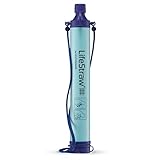
- Top Pick: LifeStraw Personal Water Filter for Hiking, Travel and Emergency, Blue, 1PK | Water Filter for Hiking, Camping, Travel, and Emergency Preparedness, Removes Bacteria and Parasites
- Best Value: Trailgo Pro Portable Water Filter for Camping – Water Purifier Survival | Hand-pump emergency filtration for hiking, backpacking & off-grid base camps; 3-stage ultrafiltration, 1.5L/min, 3000L
- Premium Choice: Katadyn Hiker Pro Transparent Hand Pump Water Filter | 1L Per Minute, 11.2 oz Lightweight, Portable Filtration for Camping, Backpacking, Hiking & Survival
For most campers, a squeeze or gravity hollow-fiber filter such as the Sawyer Squeeze, Katadyn BeFree or Platypus GravityWorks is the best balance of weight and speed, while the Grayl GeoPress suits anyone who wants a virus-capable purifier in a single bottle. The right pick depends on where you camp, how many people you supply, and whether viruses are a realistic concern in that region.
As an Amazon Associate we earn from qualifying purchases at no extra cost to you.


Filter versus purifier: the first decision
These words are not interchangeable. Makers describe a filter as removing bacteria and protozoa such as Giardia and Cryptosporidium. A purifier also deals with viruses, which are much smaller. In most backcountry areas of North America, viruses are not the main concern in wild water, so a filter is generally considered adequate. In regions with poor sanitation, or where water is likely contaminated by people, a purifier or a chemical or UV step is usually advised. If you are unsure, look at guidance from the local health authority or land agency before you go.
At a glance
| Product | Type | Stated capability | Best for | Limits |
|---|---|---|---|---|
| Sawyer Squeeze | Hollow-fiber filter | 0.1 micron pores; bacteria and protozoa; very high rated lifetime | Ultralight backpacking, long trips | Does not remove viruses; must not freeze |
| Katadyn BeFree | Hollow-fiber filter with soft flask | 0.1 micron; bacteria and protozoa; fast flow | Trail running, day hikes, solo use | Flask is small; lower rated filter life than some rivals |
| Platypus GravityWorks | Gravity filter system | 0.2 micron; bacteria and protozoa; 4 litre dirty bag | Groups, base camps | Heavier setup; needs a hanging point |
| Grayl GeoPress | Press purifier bottle | Maker lists bacteria, protozoa and virus removal | Travel, mixed backcountry and urban use | Single bottle capacity; cartridge replaced after rated use |
| MSR Guardian | Pump purifier | Maker lists virus, bacteria and protozoa removal | International trips, expeditions | Heavy and costly; larger cartridge |
| SteriPEN-style UV units | UV light | Maker states microbe inactivation by UV | Clear water with a backup plan | Needs batteries; cloudy water reduces effect |
Ratings, volumes and cartridge lives come from the makers’ product pages and can differ between versions, so confirm the figures on the exact model you buy.
How hollow-fiber filters behave
The Sawyer Squeeze and Katadyn BeFree use hollow-fiber membranes. Water is pushed or pulled through tiny pores that physically block microbes. They are light, quick and need no batteries. Their weak spots are freezing and clogging. If water freezes inside the membrane, microscopic cracks may form and the filter should be retired. Muddy sources clog the fibers faster, so many hikers let silt settle or pre-filter through a cloth before filling the bag. Sawyer supplies a backflush syringe for cleaning, and Katadyn describes a shake-and-rinse method for the BeFree.
Gravity systems for groups
For a family or a scout troop, squeezing a bag for each person gets tedious. A gravity system such as the Platypus GravityWorks lets you fill a dirty bag, hang it from a branch and collect clean water in a second bag while you set up camp. It is bulkier than a squeeze filter, but it saves time and effort when four or more people share one source. Reviewers who cover backpacking gear commonly highlight that flow rate declines as the filter loads with sediment.
When a purifier makes sense
The Grayl GeoPress and MSR Guardian are aimed at travelers and anyone drinking from sources that could carry viruses. The GeoPress is a press-down bottle that pushes water through a cartridge, with a stated capacity of around 24 oz per press. The Guardian is a pump designed to handle virus removal and is built for rough use. Both cost more than a hollow-fiber filter and weigh more, and you replace the cartridge after the rated volume.
Chemical and UV backups
- Chlorine dioxide tablets or drops: light, long shelf life and effective against viruses per the maker’s directions, but need a waiting period, often several minutes for bacteria and longer for Cryptosporidium.
- UV pens: fast on clear water and need batteries; the maker’s instructions require clear, low-turbidity water.
- Boiling: works with no extra gear beyond a stove and pot; follow guidance from health agencies on duration, which changes with altitude.
Many experienced campers carry a primary filter and a small chemical backup in case the filter freezes or breaks.
Choosing by trip type
| Pick this if you… | Choose |
|---|---|
| Backpack solo and count ounces | Sawyer Squeeze or Katadyn BeFree |
| Run or hike fast and drink from a bottle | Katadyn BeFree |
| Camp with a family or group at a base site | Platypus GravityWorks |
| Travel abroad or drink from uncertain water | Grayl GeoPress or MSR Guardian |
| Hike in winter conditions | Chemical or UV method, kept from freezing |
Compatibility and setup notes
- Sawyer filters thread onto common 28 mm soda-style bottle necks, which gives flexible container choices. Confirm thread fit on any bottle you plan to use.
- Soft flasks that come with filters can wear out; carry spare containers.
- Store hollow-fiber filters damp-sealed between trips only if the maker says so; otherwise follow its drying and storage guidance.
- Keep the clean and dirty containers clearly marked to avoid cross-contamination.
Common mistakes
- Assuming every filter removes viruses.
- Letting a filter freeze in a pack overnight in cold weather.
- Skipping backflushing until flow drops to a trickle.
- Collecting water from still pools near campsites when flowing water was available upstream.
Flow rate and daily water needs
Plan on a few liters per person per day for drinking and cooking, more in heat or at altitude. Makers list flow rates for their filters under clean conditions, and real flow drops as silt builds up. A group of four collecting water twice a day can spend a surprising amount of time squeezing, which is why gravity systems appeal to families. Carry at least one extra dirty-water container so you can collect in bulk at a good source and treat it at camp, and keep a scrap of cloth to strain out leaves and sand before filtering.
Frequently Asked Questions
Do I need a purifier or is a filter enough?
In many wild areas of North America a filter that removes bacteria and protozoa is considered adequate. If you travel abroad or drink water that could be contaminated by human waste, a purifier or a chemical or UV step covers viruses as well.
How do I know when to replace the filter?
Follow the maker’s rated volume or cycle count and watch for sharply reduced flow after cleaning. Replace any hollow-fiber filter that may have frozen.
Is boiling still the safest option?
Boiling is widely recommended by health agencies because it deals with viruses, bacteria and protozoa. It costs fuel and time, which is why many hikers prefer a filter with a chemical backup.
Can I filter cloudy or muddy water?
You can, but clogging happens faster and UV treatment becomes less reliable. Let sediment settle or pre-strain through a cloth first.
Do filters remove chemicals or salt?
Standard camping filters are not designed to remove dissolved chemicals, heavy metals or salt. Avoid water near mines, farms or industrial runoff.
What should I carry as a backup?
A small supply of chlorine dioxide tablets is the usual choice because it weighs very little. Follow the contact times on the packaging.







Write Your Review
No reviews yet. Be the first to share your experience!