
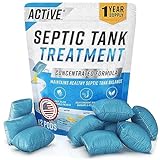
- Top Pick: Septic Tank Treatment Pods – 1 Year Supply (12 Count) – Made in USA | Easy Flush Self-Dissolving Bacteria Septic Treatment Packets – Helps Reduce Risk of Expensive Sewage Backups
- Best Value: Septic Tank System Treatment Pods – 12 Dissolving Packets | Enzyme-Producing Live Bacteria Solution | 1 Year Supply Professional Eco-Friendly Maintenance | Prevent Clogs, Odor & Backups | Made in USA
- Premium Choice: ccls Septic Tank and Cesspool Treatment Additive/Organic Enzyme Producing Bacteria/Non-toxic/Non-Hazardous/Non-Corrosive (1-Gallon)
For most households with a healthy, regularly pumped tank, a monthly dose of a mainstream bacteria and enzyme product such as Rid-X is the simple choice, while a larger or more aggressive formula such as Green Gobbler Septic Saver or Bio-Clean suits heavy-use homes and tanks recovering from a disruption. No additive replaces scheduled pumping, and several septic professionals quoted by review sites say additives do little for a system that is already working.
- Do septic bacteria additives actually help?
- Quick comparison of widely sold septic treatments
- How to choose: the specs that matter
- Pick X if you are in this situation
- Alternatives to buying more additives
- Common mistakes to avoid
- How to dose and when to expect results
- A note on sources
- Frequently Asked Questions
As an Amazon Associate we earn from qualifying purchases at no extra cost to you.


Do septic bacteria additives actually help?
A working tank already hosts the bacteria it needs, delivered by household waste itself. Reviewers at septic-focused sites generally describe additives as optional support rather than a requirement. One reviewer says additives are mainly useful for recovery after a disruption, such as heavy antibacterial cleaner use, a course of antibiotics in the household, or a long vacancy, and that buyers should not expect miracles. Some outlets also point out that certain health departments and regulators do not endorse additives as a substitute for maintenance.
Treat this guide as a way to pick a product if you have decided to use one, not as a reason to skip pumping. Your local health department or a licensed septic contractor is the right authority on what your specific system and local rules allow, particularly if you have an aerobic treatment unit, a mound system or a newly installed drain field.
Quick comparison of widely sold septic treatments
| Product | Format | Best for | What the maker or reviewers say | Limits |
|---|---|---|---|---|
| Rid-X Monthly Septic Treatment | Dissolvable packets or powder | Routine monthly upkeep in typical homes | Maker describes a bacteria and enzyme blend; one review cites roughly 9.8 billion CFU per dose and four enzyme types | Not designed to fix a failing system; reviewers split on whether it is needed at all |
| Green Gobbler Septic Saver | Packets or liquid | Large households, heavy water use | Reviewers note a blend of aerobic and anaerobic bacteria and a higher bacteria count | One pro calls it better for fixing problems than for routine upkeep |
| Bio-Clean | Powder | Tanks recovering after chemical or antibiotic exposure | Picked as best overall by one septic professional’s roundup | Dosing is by tank size, so read the label for your capacity |
| Roebic K-57 style treatments | Powder or liquid | Owners wanting a conventional enzyme and bacteria blend | Appears in several septic brand comparisons | Same caveat: additives support, they do not replace pumping |
Product names, formats and dosing change by pack, so rely on the label of the box you buy rather than any roundup, including this one.
How to choose: the specs that matter
Bacteria count and strain mix
Makers print CFU figures (colony forming units) and list strain families. A higher number looks impressive but is not a quality ranking on its own, because viability after storage and fit to your tank matter too. Aerobic units need a formula labelled for aerobic systems; a conventional anaerobic tank is a different environment.
Enzymes
Many treatments add enzymes aimed at fats, starches, proteins and paper. These help break down specific waste types, which is why they are often marketed for homes with heavy grease or toilet paper loads.
Dose schedule and tank size
Monthly packets are the easiest habit. Powders sold in larger tubs are often dosed by tank capacity, so a 1,000-gallon tank and a 1,500-gallon tank do not take the same amount. Follow the maker’s chart exactly; adding extra does not speed anything up.
Chemical safety
Choose products that state they are safe for septic systems, plastic and metal pipes, and that avoid harsh solvents or acids. Never mix an additive with drain openers or bleach-heavy cleaners, since these defeat the purpose.
Pick X if you are in this situation
| Your situation | Reasonable pick | Why |
|---|---|---|
| Small or medium household, tank pumped on schedule | Rid-X monthly packets | Simple, widely stocked, easy routine |
| Big family, lots of laundry and showers | Green Gobbler Septic Saver | Higher bacteria count and mixed strains per reviewers |
| Recent antibiotics, heavy cleaning or a long vacancy | Bio-Clean or a similar recovery powder | Positioned by reviewers for restoring balance |
| Aerobic treatment unit | A product labelled for aerobic systems, after asking the installer | Different biology; wrong products can upset the unit |
| Tank is backing up or smells strongly | Call a septic contractor first | Additives cannot fix a full tank or a damaged drain field |
Alternatives to buying more additives
- Regular pumping. Typical advice from septic professionals is every three to five years depending on tank size and household size; your local rules or contractor set the real interval.
- Effluent filter cleaning. If your tank has an outlet filter, cleaning it on schedule protects the drain field.
- Water-use habits. Spreading laundry across the week and fixing leaking toilets reduces hydraulic load more than any additive.
- Septic-safe household products. Using moderate amounts of cleaner and avoiding wipes and grease keeps the existing bacteria alive.
Common mistakes to avoid
- Treating an additive as a substitute for pumping.
- Flushing wipes labelled flushable, feminine products, or kitchen grease.
- Pouring bleach, drain opener or large amounts of disinfectant right after dosing.
- Assuming the strongest formula is automatically best.
- Ignoring warning signs such as slow drains, gurgling, sewage smell or soggy ground over the drain field, which need a professional.
How to dose and when to expect results
Packets are usually flushed down a toilet, and powders may be poured in according to the label. The best time is generally a period of low water use, such as evening, so the bacteria stay in the tank rather than being rushed through. Makers typically describe a gradual effect over weeks, and most reviewers caution that you may see no visible change in a healthy system. If you notice persistent odor or slow flushing, an additive is unlikely to be the answer.
A note on sources
Review sites in this category vary in quality, and a few sell their own treatments. Claims about relative performance here are attributed to roundup authors and makers, not independent lab work. Local health departments and licensed septic professionals remain the most reliable authority on what is right for your tank.
Frequently Asked Questions
Do I need to add bacteria to a septic tank?
Most healthy tanks produce their own bacteria from household waste. Some septic professionals see additives as optional support, particularly after antibiotics or heavy cleaner use. Regular pumping is far more important.
Is Rid-X or Green Gobbler better?
Reviewers often favour Rid-X for routine monthly upkeep because it is simple and widely available. Green Gobbler is often mentioned for large households and for situations needing a stronger blend. Neither is a repair for a failing system.
How often should I use a septic treatment?
Many monthly products are designed for once-a-month dosing, but powders sold by tank size follow their own schedule. The label for your product and tank capacity is the rule to follow.
Can septic additives damage my system?
Reviewers describe mainstream bacteria products as generally not harmful when used as directed, but some health agencies do not endorse them. If you have an aerobic unit or a recent installation, ask your installer or local health department before adding anything.
Will bacteria fix a clogged drain field?
No. A saturated or damaged drain field usually needs inspection and repair from a licensed contractor. Additives cannot reverse physical failure.
What is the best way to keep a septic tank healthy?
Pump on the schedule your contractor sets, avoid flushing wipes and grease, spread out water use and keep harsh chemicals out of the drains. These habits matter more than any product.





Write Your Review
No reviews yet. Be the first to share your experience!