- Top Pick: GIGABYTE GeForce RTX 4070 Ti Super Eagle OC 16G Graphics Card, 3X WINDFORCE Fans, 16GB 256-bit GDDR6X, GV-N407TSEAGLE OC-16GD Video Card
- Best Value: MSI Gaming RTX 4070 Ti Super 16G Ventus 2X OC Graphics Card (NVIDIA RTX 4070 Ti Super, 256-Bit, Boost Clock: 2655 MHz, 16GB GDRR6X 21 Gbps, HDMI/DP, Ada Lovelace Architecture) (Renewed), Black
- Premium Choice: GIGABYTE GeForce RTX 4070 Ti Super Gaming OC 16G Graphics Card, 3X WINDFORCE Fans, 16GB 256-bit GDDR6X, GV-N407TSGAMING OC-16GD Video Card
Top Rtx 3080 Rtx 4070 Super Picks for 2026
Here are our current top rtx 3080 rtx 4070 super picks, compared on real Amazon owner reviews, price, and features. Live prices update below.


Dropped $10.00
RTX 3080 vs RTX 4070 Ti Super is a classic old-flagship-versus-new-upper-midrange clash, and in 2026 it is a common decision for buyers weighing a cheap used Ampere card against a more modern Ada one. The two sit a generation apart, which shows up clearly in VRAM, efficiency, and feature support. This breakdown lays out the spec data, the real-world performance, and a straight verdict on which card deserves your money today.
As an Amazon Associate we earn from qualifying purchases at no extra cost to you. Product prices and availability are accurate as of the date shown and are subject to change.


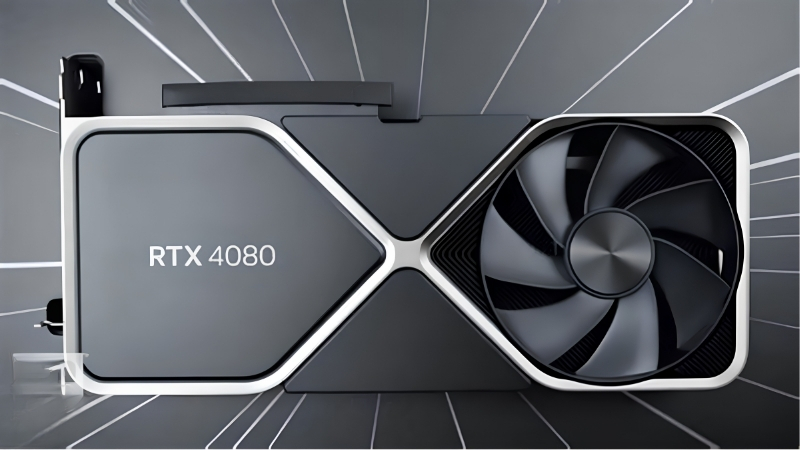
The Quick Verdict: 3080 vs 4070 Ti Super at a Glance
The fast answer: the RTX 4070 Ti Super is the stronger, more efficient, and more future-proof card, winning on performance, VRAM, and access to DLSS 3 Frame Generation. The RTX 3080 remains a capable 1440p performer and can be a smart used buy at a low price, but its 10GB of VRAM and older feature set are real limitations. For new purchases and any 4K ambitions, the 4070 Ti Super is the clear pick.
Who Wins on Raw Performance
The RTX 4070 Ti Super wins decisively despite a similar core count. It carries 8,448 CUDA cores against the 3080’s 8,704, yet its newer Ada architecture and far higher clocks push it roughly 35–45% ahead in most modern titles. Architecture, not shader count, drives this gap — Ada simply extracts much more performance per core and per watt than Ampere.
The lead holds across resolutions and widens in ray-traced titles, where the 4070 Ti Super’s newer RT cores pull further ahead. If raw speed is your priority, the 4070 Ti Super is the winner — and it is worth checking its current price before stock tightens further.
Put plainly, the 3080 was a 2020 flagship, and the 4070 Ti Super is a 2024 upper-midrange card that has simply moved the goalposts. Buying the older card today means accepting a 2020-era feature set and efficiency profile, which is fine at a bargain used price but a poor trade at anything close to the newer card’s cost.
That generational jump also means the newer card runs cooler and quieter while delivering more frames, a double win that the raw numbers alone understate.
It is worth being precise about why the architecture matters so much. Ampere and Ada were built on different process technologies, and Ada’s efficiency lets the 4070 Ti Super hit far higher clocks within a lower power budget. The result is that two cards with nearly identical core counts behave like they belong to different tiers — a reminder that CUDA count alone is a poor predictor of real-world speed across generations.
Who Wins on Value
At new prices the 4070 Ti Super is the obvious value choice, offering a large performance and feature upgrade over a card the 3080 once was. The 3080’s value case now lives almost entirely on the second-hand market, where it can be a genuine bargain for 1440p gamers if priced low enough.
So the value winner is situational. Buying new, the 4070 Ti Super wins outright. The 3080 only becomes the value pick when found used at a steep discount, and even then mainly for 1440p players who do not need the newer card’s VRAM or DLSS 3 features.
There is also a longevity angle baked into value. The 4070 Ti Super’s 16GB buffer and DLSS 3 support mean it is far less likely to feel obsolete in two or three years, which protects its resale value better than the 10GB 3080. If you upgrade on a regular cycle, that residual value claws back part of the newer card’s price premium when you eventually sell it on.
Comparison Table: Core Specs Side by Side
The table highlights the generational differences — efficiency, VRAM, and feature support — that separate these two cards on paper.
| Spec | RTX 3080 | RTX 4070 Ti Super |
|---|---|---|
| Architecture | Ampere (GA102) | Ada (AD103) |
| CUDA cores | 8,704 | 8,448 |
| Boost clock | ~1,710 MHz | ~2,610 MHz |
| VRAM | 10GB GDDR6X | 16GB GDDR6X |
| Memory bus | 320-bit | 256-bit |
| Bandwidth | ~760 GB/s | ~672 GB/s |
| DLSS | DLSS 2 (no Frame Gen) | DLSS 3 + Frame Gen |
| Board power (TGP) | 320W | 285W |
| Launch MSRP | $699 | $799 |
Deep Dive Face-Off: 3080 vs 4070 Ti Super
The spec sheet sets up the contest, but the real difference appears when you map each card onto your monitor, your case, and your power budget. This section compares them feature by feature so you can judge which trade-offs actually matter for your build rather than chasing headline numbers.
Design, Cooling, and Power Draw
Efficiency favours the newer card cleanly. The 4070 Ti Super draws 285W against the 3080’s 320W, yet delivers far more performance — a textbook generational efficiency win. That lower draw also makes it comfortable on a quality 700W PSU, while the 3080 leans on a 750W recommendation despite being slower.
Physically, both are large dual- and triple-fan designs, so case clearance matters for either. The 3080’s higher heat output relative to its performance means it works its cooler harder, which can translate to more fan noise in a warm chassis.
If you are reusing an Ampere-era build, either card fits, but the 4070 Ti Super gives you more thermal and power headroom for the same or better frames.
1440p and 4K Gaming Performance
At 1440p both cards are capable, and the 3080 remains a perfectly good high-refresh performer in most titles. The 4070 Ti Super extends the lead substantially, but at this resolution the 3080 still delivers a smooth experience in the majority of games.
At 4K the 10GB versus 16GB VRAM gap becomes the headline. Texture-heavy and ray-traced titles can brush against the 3080’s 10GB buffer at native 4K, forcing texture compromises or stutters, while the 4070 Ti Super’s 16GB holds composure. This is the single biggest practical reason the newer card is the more confident 4K choice.
So your resolution shapes the stakes: at 1440p the 3080 stays competitive, while at 4K the 4070 Ti Super’s larger buffer and stronger architecture become the deciding factors.
Ray Tracing, DLSS, and AI Features
The decisive feature gap is DLSS 3 Frame Generation, exclusive to the 4070 Ti Super’s Ada architecture and unavailable on the 3080. In supported titles, Frame Generation can substantially lift frame rates, stretching the real-world gap well beyond the raw hardware difference.
This is Nvidia’s forward-looking, architecture-locked technology at work. As more games adopt DLSS 3 and its successors, the 4070 Ti Super’s advantage grows, while the 3080 is confined to older DLSS 2 upscaling without frame generation. For buyers planning several years ahead, that compounding gap is a serious consideration rather than a minor footnote.
For creators and local-AI work, the 4070 Ti Super’s larger 16GB buffer and newer tensor hardware scale rendering and model workloads better than the 10GB 3080, adding another reason to favour the newer card in a creator-leaning build.
The practical upshot is that feature parity is not on the table here: choosing the 3080 means giving up Frame Generation entirely, not merely accepting fewer frames. For buyers who value Nvidia’s evolving software stack, that exclusion weighs heavily, since each driver and game update tends to widen the gap in the newer card’s favour rather than narrow it.
Pros, Cons, Pricing, and the Better Buy
With the face-off settled, the decision narrows to honest trade-offs and 2026 timing. Below are the strengths and weaknesses of each card in the 3080 vs 4070 Ti Super match-up, the market forces shaping their prices, and a clear final recommendation.
Pros and Cons of Each Card
The RTX 3080’s pros: still-solid 1440p performance, a wide 320-bit bus, and excellent value if bought used at a low price. Its cons: just 10GB of VRAM, no DLSS 3 Frame Generation, higher power draw, and a less efficient previous-generation architecture.
The RTX 4070 Ti Super’s pros: a clear performance and efficiency lead, 16GB of VRAM, exclusive DLSS 3 Frame Generation, and lower power draw. Its cons: as a current-tier card it costs more new than a used 3080, and 2026 shortages have firmed its street price above its $799 launch.
Weighing the pros and cons of the 3080 vs 4070 Ti Super choice gives a clean rule: buy the 4070 Ti Super new for performance, VRAM, and future features; consider the 3080 only as a discounted used 1440p option.
How 2026 Price Hikes and the H200 News Change the Math
This comparison happens in a rising market. Across early 2026, GPU prices have climbed because GDDR7, GDDR6 and high-bandwidth memory are in severe shortage — VRAM now drives more than 80% of the bill of materials on some high-end cards, and trackers have logged current-gen increases of roughly 15–23%. The 4070 Ti Super is approaching end-of-life as the 50-series matures, so its remaining stock is thinning and prices have firmed rather than fallen.
Nvidia’s data-center priorities deepen the squeeze. In January 2026 the U.S. approved exports of Nvidia’s H200 AI chip to China, with Chinese firms reportedly ordering more than two million units at around $27,000 each. Capacity steered toward those high-margin AI orders is capacity not building consumer GeForce cards, which keeps cards in this tier tight and pricey across the board.
That dynamic quietly reshapes the used market too. As new prices climb, buyers who would have bought new instead chase second-hand cards, lifting prices on exactly the older 3080 stock that made it attractive in the first place. The window for a true bargain narrows in both directions at once.
The practical takeaway is twofold. The 4070 Ti Super is unlikely to get cheaper soon, and rising new prices push more demand onto used cards like the 3080 — so even the second-hand bargain may not stay cheap. When either card appears at a sensible price for your needs, acting sooner beats waiting on a market trending upward.
The Alternative + Final Verdict: Who Should Buy Which
If the 4070 Ti Super is overpriced where you shop, the natural alternatives are a current-generation RTX 5070 or RTX 5070 Ti, which bring DLSS 4 and fresh GDDR7 memory — compare their prices before overpaying for end-of-life stock. AMD’s RX 9070 XT is another strong cross-shop for raster-focused 1440p buyers. For tight budgets, a cheaply priced used 3080 remains a legitimate 1440p alternative.
Final verdict: buy the RTX 4070 Ti Super if you want strong 1440p and capable 4K performance, DLSS 3 Frame Generation, 16GB of VRAM, and better efficiency — it is the more complete and future-proof card. Choose the RTX 3080 only if you game at 1440p, prioritise budget above all, and can secure it used at a genuinely low price.
Either way, check live stock and pricing through the links on this page before deciding — in a tightening market, the best deal is usually the one available right now.
Conclusion
The RTX 3080 vs RTX 4070 Ti Super decision rewards looking past the similar core counts to architecture, VRAM, and features. The 4070 Ti Super is the faster, cooler, more future-proof card with 16GB of VRAM and exclusive DLSS 3 Frame Generation; the 3080 is a still-capable 1440p performer whose 10GB buffer and older feature set show their age. With 2026 memory shortages and Nvidia’s H200-driven supply priorities keeping consumer GPUs scarce and expensive, prices are more likely to rise than fall — so once you have settled the RTX 3080 vs RTX 4070 Ti Super question for your build and budget, securing a fair deal sooner beats waiting. Use the links on this page to check today’s price and buy with confidence.
Frequently Asked Questions
What is the best rtx 3080 rtx 4070 ti super in 2026?
The best rtx 3080 rtx 4070 ti super depends on your budget and how you plan to use it. The options compared above are our top-rated picks based on real customer ratings, build quality, and overall value — start with the highest-rated model that fits your budget.
How much should I expect to spend on a rtx 3080 rtx 4070 ti super?
Prices vary by brand and features. Budget options cover the essentials, while mid-range and premium models add durability, performance, and extra features. Compare the prices in the list above to find the best value for your needs.
What should I look for when buying a rtx 3080 rtx 4070 ti super?
Focus on what matters most for your use case — build quality, compatibility, performance, warranty, and verified customer reviews. Every pick above is selected to balance these factors.
Are budget rtx 3080 rtx 4070 ti super options worth it?
Yes. For most people a well-reviewed budget or mid-range rtx 3080 rtx 4070 ti super delivers excellent value. You only need to spend more if you specifically require premium materials or top-tier performance.
How did we choose these rtx 3080 rtx 4070 ti super picks?
We compare current Amazon ratings, review counts, key features, and price to surface the options with the best real-world value. The list is refreshed as ratings and availability change.