
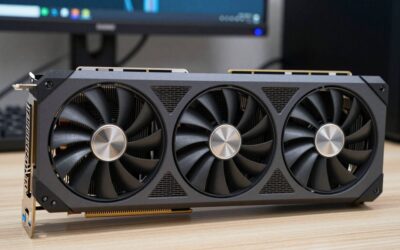
- Top Pick: msi Gaming GeForce RTX 3060 Ventus 2X 12G OC V1 Graphics Card – 15 Gbps GDRR6 Boost Clock: 1807 MHz 192-Bit HDMI/DP PCIe 4 Torx Twin Fan Ampere
- Best Value: ASUS Prime GeForce RTX 5060 8GB GDDR7 Gaming Graphics Card
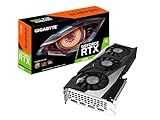
- Premium Choice: GIGABYTE GeForce RTX 3060 WINDFORCE OC 12G (rev. 2.0) Graphics Card, 2X WINDFORCE Fans, 12GB 192-bit GDDR6, GV-N3060WF2OC-12GD Rev2.0 Video Card
The RTX 30 family is the most confusing used market in graphics cards. Nine desktop models, several with multiple memory variants, all sold into a period when many of them were run hard for crypto mining. Anyone searching for the best 30 series GPU in 2026 is staring at a spread that runs from a $249 launch MSRP up to $1,999, and the right pick depends far more on VRAM than on the model number.
So this guide skips the usual “fastest to slowest” ranking. Instead it sorts the family by the amount of video memory you are likely to need, shows the launch MSRP and board power for each card, and flags the buying traps that are specific to Ampere. If you have only skimmed the spec sheets so far, start with the table below.
As an Amazon Associate we earn from qualifying purchases at no extra cost to you.



The whole family on one page
| Card | VRAM | Board power | Launch MSRP |
|---|---|---|---|
| RTX 3050 | 8GB | 130W | $249 |
| RTX 3060 | 12GB | 170W | $329 |
| RTX 3060 Ti | 8GB | 200W | $399 |
| RTX 3070 | 8GB | 220W | $499 |
| RTX 3070 Ti | 8GB | 290W | $599 |
| RTX 3080 | 10GB | 320W | $699 |
| RTX 3080 Ti | 12GB | 350W | $1,199 |
| RTX 3090 | 24GB | 350W | $1,499 |
| RTX 3090 Ti | 24GB | 450W | $1,999 |
Everything in the MSRP column is the price at launch, not a current price. Used and leftover new stock trade at wildly different levels, so confirm today’s price on the listing and treat the table as a way to understand where each card sat originally.
Start with how much VRAM your games want
A lot of buyers fixate on shader count, then discover too late that their card is out of memory at the texture settings they like. The 30 series is unusual in how irregular its memory sizes are: the 3060 has 12GB while the faster 3070 and 3070 Ti top out at 8GB. Rather than ask “which is fastest,” ask “which tier of memory fits my resolution?”
8GB tier: 3050, 3060 Ti, 3070, 3070 Ti
This tier is fine for 1080p and for 1440p when you drop textures a notch in newer games. Among the four, the 3060 Ti is the value anchor: it shares a lot of its character with the 3070 for a lower launch price and a power budget of 200W. The 3070 Ti draws much more board power for a modest step up, which makes it the least efficient purchase in the family.
10 to 12GB tier: 3060, 3080, 3080 Ti
The 3060 12GB is the quiet star here. It is not fast, but its memory pool means it handles texture-heavy games that choke faster 8GB cards. The 3080 10GB delivers far more raw speed but the 10GB buffer is a real limit at 4K. The 3080 Ti carries 12GB and a 350W board, and it is the card to look at for high-refresh 1440p and some 4K.
24GB tier: 3090 and 3090 Ti
These two are specialist cards. If you do local AI work, 3D rendering or large-scene editing, 24GB is a genuine advantage that no mainstream 30 series can match. For pure gaming, they are overkill, and the 3090 Ti’s 450W draw brings real power and heat demands.
Picks by buyer
There is no single best 30 series graphics card, only a best one for your resolution, case and power supply. The four picks below cover the common situations.
Best balance for most people: RTX 3060 Ti
The 3060 Ti hits a sweet spot between cost and capability for 1080p and 1440p. At 200W it runs on a modest PSU and fits most cases.
- Efficient for its performance class
- DLSS support helps at 1440p
- Skip it if: you need more than 8GB of VRAM for high-resolution textures
Best for memory-hungry games on a budget: RTX 3060 12GB
The 12GB buffer is the point. If you play titles with large texture packs or mod heavily, this card is more flexible than faster 8GB neighbors.
- 12GB of VRAM at the lowest power in its tier
- Easy installation with a 170W budget
- Skip it if: you want maximum 1440p speed
Best for high refresh: RTX 3080 Ti
The 3080 Ti is the right choice if you want 1440p at high refresh rates or occasional 4K. Plan for a quality 750W to 850W supply and strong case airflow.
- 12GB of GDDR6X
- Strong enough for demanding 1440p
- Skip it if: your PSU is under 750W or your case runs hot
Best for creators: RTX 3090
For anyone doing AI or video work, the 3090’s 24GB is hard to match. Gamers should look elsewhere.
- 24GB of VRAM at the same 350W as the 3080 Ti
- Lets you work on larger models and scenes
- Skip it if: you only game, since the extra memory goes unused
Ampere-specific buying traps
Memory temperature on GDDR6X cards
3080, 3080 Ti, 3090 and 3090 Ti use GDDR6X memory, which runs hot, especially on boards that put memory chips on the back of the PCB. Check that the thermal pads have not degraded. Elevated memory temperatures are the most common complaint with used cards from the mining era.
Duplicate names
Some names exist in more than one configuration across board makers and later revisions. Always read the full listing for memory size and bus details on the card’s spec page.
Transient power spikes
High-end Ampere cards can spike well above their rated board power for fractions of a second. A good quality PSU with headroom prevents random shutdowns. Cheap supplies often show their limits here.
What about the newer cards?
RTX 40 and 50 cards add frame generation, with multi frame generation exclusive to RTX 50. For comparison, the RTX 5060 launched at $299 with 8GB and 145W, and the RTX 5070 at $549 with 12GB and 250W. Used 30 series cards make sense when the price gap is large. If you can find a newer card for close to the same money, take it.
Verdict
For most gamers, the best RTX 30 series card is the 3060 Ti for 8GB value or the 3060 12GB for memory-limited titles. Step up to the 3080 Ti for high-refresh play, and reserve the 3090 for creators who can use the memory.
FAQ
What is the best 3000 series GPU for 1440p?
The 3080 Ti is the strongest all-round pick, with the 3060 Ti as a budget alternative if you tune textures.
Are used mining cards safe to buy?
They can be, but fan wear and memory pad condition matter. Prefer sellers with return windows.
Does the 30 series support DLSS 4?
DLSS upscaling works, but DLSS 4 multi frame generation is exclusive to RTX 50.
How big a power supply do I need?
Match the board power in the table with margin: roughly 550W for the lower cards, 750W or more for the 3080 tier.
Ready to decide? Our #1 pick for 2026 is the RTX 3050.
Live price & availability on Amazon.

Write Your Review
No reviews yet. Be the first to share your experience!