
Don’t buy a graphics card as a gift unless you can verify three things: that the card physically fits their case, that their power supply has both the wattage and the correct connector, and that their monitor can actually use the extra frames. If you can’t look inside their PC first, buy a gift card instead.
- Buying a graphics card as a gift: the compatibility checklist
- 1. Case clearance: length, and the slot-height problem
- 2. Power supply: wattage and connectors
- 3. PCIe slot generation and whether the board holds it back
- 4. CPU pairing: don’t gift a bottleneck
- 5. The monitor they actually own
- 6. Power draw, heat, and the room it lives in
- 7. Drivers and OS
- How to check their specs without ruining the surprise
- Their situation → what to actually buy
- What commonly goes wrong
- Frequently Asked Questions
That sounds harsh for a gift guide, but a GPU is the one component that can be perfect on paper and still be unusable on arrival — and it is an expensive thing to get wrong. The good news: the checklist is short, and most of it can be confirmed in ten minutes without the recipient ever knowing.


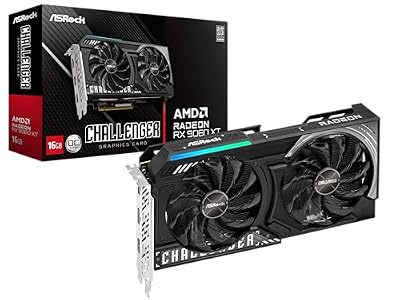

Quick answer: Our top pick in 2026 is the Case length clearance — our #1 rated choice. See the full ranked comparison, alternatives and buying advice below.
Buying a graphics card as a gift: the compatibility checklist
Work through these in order. The first three are hard stops; the rest decide whether the gift is useful rather than merely installable.
| Check | Where to find the answer | It’s a deal-breaker if… |
|---|---|---|
| Case length clearance | Case model number, then the manufacturer’s “max GPU length” spec | The card is longer than the listed clearance, or a front radiator eats into it |
| Slot height (thickness) | Card spec sheet: 2, 2.5, 3, or 4 slots | The card blocks a slot they use, or presses against the side panel in a small case |
| PSU wattage | Label on the power supply, or the prebuilt’s spec page | Headroom is thin once you add CPU, drives and fans |
| PSU connectors | Count the loose PCIe cables: 8-pin (6+2) vs 12V-2×6 / 12VHPWR | The card needs a connector their PSU doesn’t have and only an adapter bridges it |
| PCIe slot generation | Motherboard or prebuilt model number | An x8-only card in an old PCIe 3.0 board, especially an 8GB model |
| CPU | Settings > System > About, or dxdiag | An old quad-core paired with a high-end card at 1080p |
| Monitor | Ask, or look at the model badge on the bezel | 1080p 60Hz — they will literally not see the extra performance |
| OS and drivers | Windows version; whether they run Linux | Switching GPU brands without a clean driver removal |
1. Case clearance: length, and the slot-height problem
Flagship cards routinely run past 300mm long and 2.5 to 4 slots thick. Length is the obvious trap: every case lists a maximum GPU length, and that number usually assumes no front-mounted radiator and no fan hub in the way. If their case has a 240mm or 360mm AIO bolted to the front, subtract roughly 25–55mm from the quoted figure.
Slot height is the trap people forget. A 3-slot card covers the expansion slots below it — fine if those are empty, fatal if they run a capture card or a Wi-Fi card. In compact cases thickness also runs into the side panel: a 4-slot cooler simply will not let a tempered-glass panel close. For a small build, treat width as the first spec you check, not the last, and read our notes on building in a small form factor case before committing.
2. Power supply: wattage and connectors
Two separate questions hide inside “will their PSU run it?”
Wattage. Treat the card’s recommended system wattage as a floor, not a target: modern GPUs pull brief transient spikes above their rated draw, and older supplies lose capacity to capacitor aging. A quality 750W unit will run most mid-range cards comfortably; genuinely high-end cards want 850W and up. A no-name 750W unit is not the same product as a reputable 750W unit, and this is exactly where the cheap one fails loudly. If you’re unsure, our guide to matching a power supply to a graphics card walks through the math.
Connectors. This is the modern gotcha. Newer cards use the 12V-2×6 connector (the revised version of 12VHPWR) found on ATX 3.x power supplies, which deliver it as a single native cable. Older supplies only have 8-pin (6+2) PCIe cables, so the card ships with an adapter that combines three or four 8-pins into one 12V-2×6 plug. Adapters work, but they add a failure point: the connector must be fully seated — you should hear and feel the click — and the fan-out of stiff cables often can’t be routed without a tight bend right at the plug, the condition associated with overheated connectors. If their PSU has a native 12V-2×6 cable, great. If not, factor a new power supply into the budget or pick a card that still uses 8-pins. Note too that some OEM prebuilts use proprietary PSU form factors, so “just swap the power supply” isn’t always trivial.
3. PCIe slot generation and whether the board holds it back
A PCIe 5.0 or 4.0 card drops into a PCIe 3.0 slot and works — the standard is backwards compatible. The loss is usually small for cards that use the full x16 lane width. The real problem is the many mid-range and budget cards wired for only x8 lanes. On a PCIe 4.0 or 5.0 board that’s fine; on an older PCIe 3.0 board the penalty becomes very visible in games that spill past the card’s VRAM. An 8GB card plus an old motherboard is the combination to avoid. We break the numbers down in our comparison of PCIe generations and GPU performance.
4. CPU pairing: don’t gift a bottleneck
A graphics card can only draw frames the processor has prepared. Pair a current flagship GPU with a six-year-old quad-core and, at 1080p, much of the card’s capability is wasted — the CPU caps the frame rate long before the GPU works hard. The mismatch shrinks at 1440p and 4K, which shift work back onto the GPU. If their processor is the weak link, a mid-range card plus the leftover budget spent elsewhere beats a halo card every time. See how the pairing plays out in our CPU and GPU bottleneck guide.
5. The monitor they actually own
This is the check that most often changes the gift entirely. If they game on a 1080p 60Hz panel, a high-end card delivers frames the display physically cannot show. The upgrade they would actually feel is a 1440p high-refresh monitor, often for less money. Our 1440p gaming monitor picks are a better landing spot for a lot of these budgets.
6. Power draw, heat, and the room it lives in
A high-end gaming PC under load behaves like a small space heater — a real consideration for a bedroom-sized office or a warm climate. A standard US 15-amp circuit has plenty of capacity for the PC itself; the trouble starts when a space heater or kettle shares that circuit and the breaker trips mid-game. Also worth a thought: is their surge protector already full?
7. Drivers and OS
Switching brands — NVIDIA to AMD or the reverse — calls for a clean removal of the old driver rather than installing over the top, otherwise you inherit stutter and crashes that look like hardware faults. Newer cards also expect a current Windows build and up-to-date motherboard firmware, particularly for Resizable BAR, and Linux users have their own driver preferences worth respecting. If the recipient isn’t comfortable with any of this, budget an hour to help them through the physical install and driver setup.
How to check their specs without ruining the surprise
- dxdiag. Five minutes on their PC is enough: press Win+R, type
dxdiag, hit “Save All Information”. The text file lists CPU, RAM, current GPU and display resolution;msinfo32adds the motherboard model. - The receipt or order history. For a prebuilt, the model number alone tells you the case, PSU and motherboard.
- A photo of the inside. Ask them to send a picture of their case “because you’re curious about the build” — a normal thing enthusiasts ask each other. One photo shows the GPU size, the free slots, and often the PSU label.
- A mutual friend. If someone else already knows the build, use them — the least suspicious route by a distance.
- Buy with a gift receipt. Use a retailer with a long holiday return window. It turns a compatibility mistake into a mild inconvenience.
Their situation → what to actually buy
| Their situation | What to buy | Why |
|---|---|---|
| You can’t check their PC at all | Gift card to the retailer they use | The only option with a zero percent chance of not fitting |
| 1080p 60Hz monitor, decent PC | A 1440p high-refresh monitor | The bottleneck is the display, not the GPU |
| Older, underpowered or no-name PSU | A quality ATX 3.x power supply | Unblocks a future GPU upgrade and removes the adapter risk |
| Small form factor case | A 2-slot, short-length card — or skip the GPU | Thickness and length are hard physical limits |
| Games stutter, loads are slow, 8–16GB RAM | A RAM kit or an NVMe SSD | Cheaper, easier to fit, and often the thing they actually feel |
| Old quad-core CPU, 1080p | Mid-range GPU, not a flagship | The CPU caps the frame rate anyway |
| Modern platform, big PSU, high-refresh display | Go ahead and buy the card | Every prerequisite is already met |
What commonly goes wrong
“It fits, but the panel won’t close.” Almost always slot height, or a power cable bending out the side. An angled 12V-2×6 cable fixes the second; nothing fixes the first.
No display after install. Check the monitor cable is in the card, not the motherboard’s port — the most common first-boot mistake. Then reseat the card and confirm every power connector is fully clicked in.
Random crashes under load. Usually the power supply, not the card: old or underrated units fall over on transient spikes even though idle desktop use looks fine.
Performance lower than the reviews. Leftover drivers from the previous brand, Resizable BAR disabled in firmware, or a CPU limit. Rule those out before assuming anything is defective, and compare against a realistic target from our resolution-by-resolution GPU picks.
Frequently Asked Questions
Is a graphics card a bad gift?
It’s a high-risk gift rather than a bad one. The risk is entirely about compatibility: length, slot height, power connectors, and whether the rest of their system can use it. If you have verified those, it’s a fantastic present. If you’re guessing at any of them, the expected outcome is a return trip to the store, and a gift card to the same retailer delivers the same thing without the drama.
How do I find out what power supply someone has without asking?
Three routes. If it’s a prebuilt, the model number on the front or the original order email identifies the exact PSU. If it’s a custom build, the wattage is printed on a label on the power supply itself, which is usually visible in a photo of the inside of the case. Failing both, ask them to send a picture of their build — enthusiasts almost never find that request suspicious.
Can I use the adapter that comes with the card instead of buying a new PSU?
Yes, the bundled adapters work when used correctly, and they’re supplied precisely because many people still run 8-pin-only supplies. The conditions are that the connector is pushed fully home until it clicks, and that the cable isn’t bent sharply right at the plug. Both are harder in a cramped case. A power supply with a native 12V-2×6 cable removes the variable entirely, which is why it’s a good gift on its own.
Will a new graphics card work in an older PCIe 3.0 motherboard?
It will work — PCIe is backwards compatible in both directions. Performance loss is minor for cards that use all sixteen lanes, but it becomes significant for budget and mid-range cards wired for only eight lanes, especially models with 8GB of VRAM in games that exceed it. If they have an old board and you’re shopping at that price point, check the card’s lane width before buying.
What should I buy instead if a GPU won’t fit?
In rough order of how much they’ll notice it: a 1440p high-refresh monitor if they’re still on 1080p 60Hz, an NVMe SSD if they’re loading games from a hard drive, a RAM upgrade if they’re at 8GB or 16GB, or a quality ATX 3.x power supply if that’s the thing blocking a future card. All four are cheaper, all four physically fit almost any system, and all four make a graphics card easier to add later.
Ready to decide? Our #1 pick for 2026 is the Case length clearance.
Live price & availability on Amazon.
Top picks from this guide
 ASUSASUS Prime Radeon RX 9070 XT 16GB GDDR6 OC Edition…$830 \xc2\xb7 99/100ASUSASUS TUF Gaming GeForce RTX™ 5080 16GB GDDR7 OC Edition…$1,695 \xc2\xb7 99/100GIGABYTEGIGABYTE Radeon RX 9070 XT Gaming OC 16G Graphics Card,…$799 \xc2\xb7 96/100ASUSASUS Dual GeForce RTX 3050 6GB GDDR6 OC Edition Gaming…$257 \xc2\xb7 95/100


Write Your Review
No reviews yet. Be the first to share your experience!