
- Top Pick: GIGABYTE GeForce RTX 5070 Ti Gaming OC 16G Graphics Card, 16GB 256-bit GDDR7, PCIe 5.0, WINDFORCE Cooling System, GV-N507TGAMING OC-16GD Video Card
- Best Value: ASUS Prime GeForce RTX 5070 Ti 16GB GDDR7 Gaming Graphics Card
- Premium Choice: BAKLUCK msi Gaming RTX 5070 TI 16G Shadow 3X OC Graphics Card (16GB GDDR7, 256-bit, Extreme Performance: 2497 MHz, DisplayPort x3 2.1a, HDMI 2.1b, NVIDIA Blackwell Architecture)
Top Rtx 3080 5070 Old Flagship Picks for 2026
Here are our current top rtx 3080 5070 old flagship picks, compared on real Amazon owner reviews, price, and features. Live prices update below.
- Top Rtx 3080 5070 Old Flagship Picks for 2026
- RTX 3080 Ti vs 5070: Quick Verdict and Core Specifications
- Deep Dive Face-Off: Performance, Efficiency, and Features
- The 2026 Market: Why This Price Gap Keeps Narrowing
- Final Verdict: Who Should Buy Which Card?
- Conclusion
- Related Guides
- Frequently Asked Questions
- Related Articles


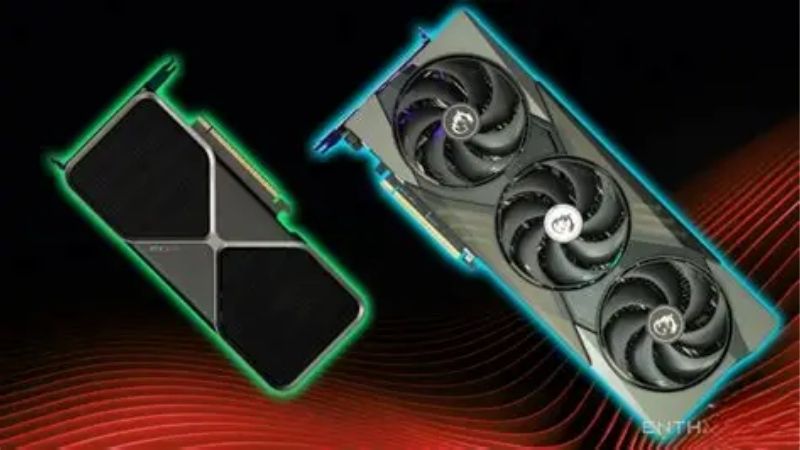
RTX 3080 Ti vs 5070 is the eternal PC-building question wearing 2026 clothes: does a used former flagship beat a brand-new mid-range card? The 3080 Ti launched in June 2021 at $1,199 with nearly the full GA102 die and a monstrous 912 GB/s of bandwidth; the RTX 5070 arrived in 2025 at $549 with less than two-thirds the cores and a fraction of the power budget. On paper the old card looks unkillable. In benchmarks, four years of architecture work tells a different story — and the price gap between a used Ampere flagship and a boxed Blackwell card has narrowed enough to make this genuinely worth deciding with data. Here is that data.
As an Amazon Associate we earn from qualifying purchases at no extra cost to you.


RTX 3080 Ti vs 5070: Quick Verdict and Core Specifications
This matchup is a study in how misleading raw specifications across generations can be: the older card wins almost every headline number and still loses most benchmarks. Start with the answer, then the table that looks like it should contradict it.
The Quick Verdict for Busy Buyers
The RTX 5070 wins. It is typically 10 to 20 percent faster than the 3080 Ti in modern raster workloads, pulls 100W less from the wall, supports DLSS 4 Multi Frame Generation, and carries a warranty at $549. Four years of clock speed, cache, and architectural gains beat a bigger 2021 die.
The 3080 Ti’s case survives only at aggressive used pricing: around $380 to $420 for a clean, tested unit, it remains a legitimate high-bandwidth 1440p card. Above $450 its argument collapses entirely. Check the 5070’s live Amazon price first — at or near MSRP, the new card is the answer for most readers of this comparison.
Specification Comparison Table
Read this table twice: once for the numbers, once for the dates. The columns explain why enthusiasts keep asking this question — and the benchmarks explain why the question has an answer.
| Specification | RTX 3080 Ti | RTX 5070 |
|---|---|---|
| Architecture | Ampere (2021) | Blackwell (2025) |
| CUDA Cores | 10,240 | 6,144 |
| Boost Clock | 1.67 GHz | 2.51 GHz |
| VRAM | 12GB GDDR6X | 12GB GDDR7 |
| Memory Bandwidth | 912 GB/s | 672 GB/s |
| Board Power | 350W | 250W |
| DLSS Support | DLSS 2 (Super Resolution) | DLSS 4 (Multi Frame Generation) |
| Launch Price | $1,199 | $549 |
A card with 67 percent more cores and 36 percent more bandwidth losing the benchmark suite is the clearest demonstration in this entire category of why architecture generation outweighs die size.
Pros and Cons of Each Card
An honest RTX 3080 Ti vs 5070 breakdown gives the old flagship its due, because at the right used price it still has one.
RTX 3080 Ti pros: enormous raw bandwidth that helps in a handful of memory-bound edge cases; matches the 5070’s 12GB capacity; sturdy flagship-grade coolers and boards; falling used prices keep the value debate alive. Cons: 350W draw with harsh transient spikes; GDDR6X runs hot, and five-year-old thermal pads often need replacing; no frame generation of any kind; heavy mining-era exposure; no warranty.
RTX 5070 pros: faster in nearly everything while drawing 100W less; DLSS 4 Multi Frame Generation and the full Blackwell software stack; compact, quiet two-slot designs; new-card warranty and clean history. Cons: 672 GB/s of bandwidth is its thinnest spec; 12GB will age before the rest of the card; MSRP stock fluctuates with market pressure.
Deep Dive Face-Off: Performance, Efficiency, and Features
The 10-to-20-percent headline hides the texture of this matchup — where the gap doubles, where it vanishes, and what each card costs to live with. Four sections cover what ownership actually feels like.
1440p and 4K Gaming Performance
At 1440p high settings, the 3080 Ti delivers 90 to 115 fps in demanding AAA titles — still respectable. The 5070 posts 100 to 150 fps in the same suite, with the gap widest in newer engines that reward Blackwell’s higher clocks and larger caches over Ampere’s wide-but-slow design. Across a mixed twelve-game suite, the geometric mean lands close to 15 percent in the 5070’s favor — modest per title, decisive in aggregate.
At 4K both cards need upscaling for comfort, and here the 3080 Ti’s bandwidth narrows the raster difference to single digits in some titles. But frame-time consistency still favors the 5070, and the moment DLSS enters the picture, the newer transformer model and Multi Frame Generation hand the Blackwell card presented frame rates the Ampere flagship cannot reach by any means.
Ray tracing is the rout: second-generation RT cores against fourth-generation is a 40-plus percent gap in hybrid titles, and path-traced showcases are simply outside the 3080 Ti’s reach at playable settings.
Power, Heat, and the Cost of Running Each Card
The 100W gap is this comparison’s most underrated line. The 3080 Ti’s 350W demands a quality 750W power supply with strong transient handling — Ampere’s spikes famously tripped lesser units — while the 5070’s 250W runs happily on a good 650W supply, often the one already in your case. For upgraders, that difference is frequently a $90 hidden cost on the old card’s side of the ledger.
Heat follows wattage. Used 3080 Tis are notorious for GDDR6X memory junction temperatures above 100C once thermal pads dry out — budget a pad replacement on any secondhand unit and check temperatures in week one. The 5070’s cooler designs barely work by comparison, which translates directly into noise: one of these cards disappears under load and the other does not. Owners upgrading between them consistently name the silence before the frame rates when describing the change.
Across four hours of daily gaming, the wattage gap also compounds into a small but genuine annual electricity saving for the newer card.
DLSS 4, Software, and the Feature Gap
Both cards receive Nvidia’s improved transformer-based Super Resolution model through drivers — a real free upgrade for Ampere owners. The divergence is everything beyond it: Frame Generation in any form has never reached the 30 series, while the 5070 ships with Multi Frame Generation, Reflex 2, and newer media engines including superior AV1 encoding.
For the AI-curious, the cards’ equal 12GB buffers hide unequal throughput: Blackwell’s fifth-generation Tensor Cores with FP4 support process local image generation and small language models at a multiple of Ampere’s pace. Nvidia’s optimization effort follows its current architecture, and that current points one direction for the rest of the decade.
Value per Frame: The Cost Math
Run today’s numbers. A used 3080 Ti at $420 averaging 100 fps in a 1440p suite costs $4.20 per frame. The 5070 at $549 averaging 120 fps costs $4.58 per frame — the old flagship is about 8 percent cheaper per frame on day one, the narrowest used-card advantage in this entire category.
Ownership horizon erases it. The 5070 carries a warranty, lower running costs, and a feature set with years of runway; the 3080 Ti is a five-year-old card with elevated failure odds, a pending thermal-pad bill, and no frame generation as engines increasingly assume it. Amortized per comfortable year, the new card wins clearly.
The crossover sits near $380: below it, a clean 3080 Ti with returns is a defensible bargain; above $450, the discussion ends in the 5070’s favor automatically.
The 2026 Market: Why This Price Gap Keeps Narrowing
This comparison’s deciding variable — the spread between used Ampere and new Blackwell pricing — is being actively compressed by two industry forces. Understanding them tells you which direction the decision drifts from here.
The H200 China Approval Pressures Both Sides
The United States has cleared Nvidia to sell the H200 — one of its most powerful AI accelerators — to China, releasing data-center demand that competes with GeForce production for memory output, packaging, and wafer priority. The consumer result repeats a documented pattern: new-card MSRP availability tightens first, with volume parts like the 5070 most exposed.
The used market inherits the pressure within a quarter: buyers squeezed out of new stock bid up secondhand cards, and used 3080 Ti listings have already stopped their multi-year slide. Both sides of this matchup are being repriced upward by the same force.
Rising Component Prices Compress the Decision
Meanwhile, laptop and PC component prices are climbing industry-wide, led by memory costs that flow straight into graphics card bills of materials. When new prices firm, used prices follow — they are priced against each other continuously — and the comfortable $150-plus gap that once made used flagships obvious bargains has been shrinking for consecutive quarters.
The practical read for this comparison: the 3080 Ti’s window of genuine value is narrowing, not widening, and waiting tends to push buyers toward the new card by default.
Buy Now or Wait?
If you need a card this year, decide inside today’s numbers: a 5070 at $549 to $579, or a 3080 Ti under $400 with a return window, are both fair purchases that the trend lines threaten rather than promise to improve.
Set Amazon alerts on both, and let whichever target triggers first make the call — readiness has beaten patience in this market for two straight years.
Final Verdict: Who Should Buy Which Card?
The matchup ends with a clear default and a narrow exception, plus one alternative that resolves the most common hesitation about both cards.
Who Should Buy the RTX 3080 Ti
Buy a used 3080 Ti only below $400, only with recourse, and only if you are comfortable maintaining used hardware — stress testing on arrival, monitoring memory temperatures, and replacing pads if needed. In that narrow lane it delivers flagship-grade build quality at a quarter of its launch price.
Skip it entirely if your power supply is marginal or your tolerance for tinkering is low; this card’s discount is partly payment for labor.
Who Should Buy the RTX 5070
Everyone else should buy the 5070: faster, cooler, quieter, warrantied, and equipped with the frame-generation tier that increasingly defines how demanding games are played. It is the recommendation for the large majority of readers.
It is also the easiest card in this comparison to actually purchase — Amazon listings at or near $549 appear regularly, and that price is the decision’s anchor.
The Alternative: RTX 5070 Ti
If the 3080 Ti tempted you because mid-range feels thin, the real answer is the RTX 5070 Ti at $749: 16GB of GDDR7, roughly 25 percent more performance than the 5070, and the bandwidth headroom the old flagship’s fans miss.
It is the modern card that actually replaces what the 3080 Ti represented — compare its Amazon price before settling for either side of this matchup.
See More:
- Nvidia Reflex low latency
- RTX 4070 vs 5060 Ti
- Zephyr RTX 4070
- RTX 3080 Ti price
- Nvidia RTX 2060 Super
Conclusion
The RTX 3080 Ti vs 5070 question is the old-flagship debate settled by four years of architecture: the 5070 wins with 10 to 20 percent more performance at 100W less power, DLSS 4 Multi Frame Generation, and a warranty at $549, while the 3080 Ti’s superior bandwidth and flagship build only pay off below $400 used with a return window and some maintenance willingness. With the H200 export approval and rising component prices squeezing the price gap that justifies the old card, the decision drifts toward the new one a little more each quarter. Settle your side of the RTX 3080 Ti vs 5070 debate, check both prices on Amazon today, and buy while your number is still on the board.
Frequently Asked Questions
What is the best rtx 3080 ti 5070 in 2026?
The best rtx 3080 ti 5070 depends on your budget and how you plan to use it. The options compared above are our top-rated picks based on real customer ratings, build quality, and overall value — start with the highest-rated model that fits your budget.
How much should I expect to spend on a rtx 3080 ti 5070?
Prices vary by brand and features. Budget options cover the essentials, while mid-range and premium models add durability, performance, and extra features. Compare the prices in the list above to find the best value for your needs.
What should I look for when buying a rtx 3080 ti 5070?
Focus on what matters most for your use case — build quality, compatibility, performance, warranty, and verified customer reviews. Every pick above is selected to balance these factors.
Are budget rtx 3080 ti 5070 options worth it?
Yes. For most people a well-reviewed budget or mid-range rtx 3080 ti 5070 delivers excellent value. You only need to spend more if you specifically require premium materials or top-tier performance.
How did we choose these rtx 3080 ti 5070 picks?
We compare current Amazon ratings, review counts, key features, and price to surface the options with the best real-world value. The list is refreshed as ratings and availability change.
Ready to decide? Our #1 pick for 2026 is the Architecture.
Live price & availability on Amazon.


Write Your Review
No reviews yet. Be the first to share your experience!