
Top Nvidia 4080 Price Fair Deal Picks for 2026
Here are our current top nvidia 4080 price fair deal picks, compared on real Amazon owner reviews, price, and features. Live prices update below.


As an Amazon Associate we earn from qualifying purchases at no extra cost to you.


The nvidia 4080 price question has become one of the strangest in GPU buying: a card that launched at a controversial $1,199 in late 2022, was refreshed and replaced by the $999 4080 Super, then discontinued entirely — yet still trades actively in 2026 at $550–$700 because its 16GB of VRAM and proven performance refuse to age out of relevance. That price band hides enormous variance: warranty remainders, cooler tiers, mining histories, and the constant gravitational pull of new Blackwell cards selling at overlapping money. This review maps the fair-value territory precisely — what each price band actually buys, which variants command premiums, where the new-card crossover line sits, and why the market forces of 2026 keep this discontinued flagship’s floor so stubbornly firm.
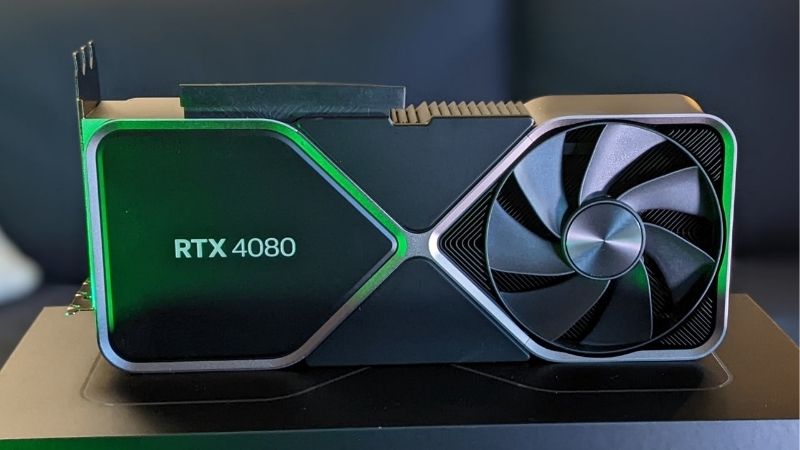
The 4080 Price Map in 2026: Band by Band
Discontinued cards trade like commodities, and the 4080’s market has matured into readable bands. The hardware underneath justifies the activity: 9,728 Ada CUDA cores, 16GB of GDDR6X at 716.8GB/s, and performance that still lands within a few percent of the new $749 RTX 5070 Ti. Knowing where each dollar band sits relative to that benchmark is the entire skill of this purchase.
The Bands, Decoded
Under $500: the suspicion zone — at this writing, clean 4080s do not voluntarily price here, so assume mining exhaustion, repairs, missing accessories, or the scam taxonomy until proven otherwise. $550–$620: the fair-value core, where verified clean units from rated sellers transact and where this review’s buy recommendation lives.
$620–$700: the premium band, defensible only for top-tier coolers (ASUS Strix, MSI Suprim class) with warranty remainder and provenance — original box, receipt, transferable coverage. Above $700: the inversion zone, where the used card asks new-5070-Ti money and the answer is simply no; the crossover line is the band’s hard ceiling, and it moves with the new card’s live price.
What Performance the Money Buys
The value proposition at $580 quantifies cleanly: 130–160 fps at 1440p ultra across AAA aggregates, 60–80 fps native at 4K, full DLSS 3 Frame Generation support, and a 16GB buffer that clears every current allocation with margin — performance the new market prices at $749. The discount is real; the question is always what it pays for.
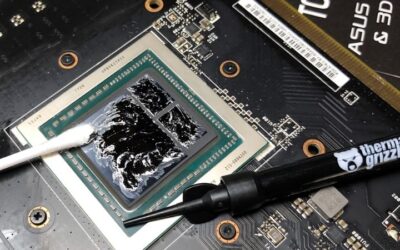
The honest deductions: no DLSS 4 Multi Frame Generation ever, a 320W appetite wanting a 750W PSU and the 16-pin connector, maintenance-mode drivers as Nvidia’s optimization queue moved on, and the used market’s standard diligence tax — seller vetting, stress testing inside return windows, and a likely $15 thermal refresh.
Total cost of ownership adds two quieter lines to every listing: the 320W appetite costs a daily gamer roughly $25–$40 per year more than a 250W modern alternative at typical rates, and the near-mandatory thermal refresh on three-plus-year-old units adds $15 and an hour at arrival. Neither changes the verdict at fair-band prices; both belong in the spreadsheet before a premium-band purchase.
The Variants That Move the Price
Within the bands, three factors price individual listings: cooler tier first — premium triple-fan flagships hold $40–$80 over mainstream duals because their thermal headroom implies easier lives; warranty remainder second — transferable coverage from registration-friendly brands adds $30–$60 of justified premium; and provenance third — original packaging, receipts, and gaming-only histories close at band tops while vague listings drag bottoms.
The Founders Edition carries its own niche: collectible-adjacent demand keeps it $20–$50 above equivalent partner duals despite identical silicon — aesthetics priced as a variant, which buyers can pay or arbitrage as taste dictates.
Why the Price Refuses to Fall: The Market Mechanics
A four-year-old discontinued GPU should be in value freefall; the 4080 is not, and the mechanics explain both the firmness and the timing pressure on buyers. Two current market stories — the United States approving Nvidia’s H200 AI chip exports to China, and the sustained rise in laptop and component prices — sit at the center of the explanation.
The H200 Effect on a Discontinued Card
The H200 approval channels enormous demand into Nvidia’s advanced silicon and memory supply, tightening new-GPU allocation and drifting street prices 5–15% above MSRP within a quarter or two — the recurring post-surge pattern. The 4080 feels it secondhand twice over: budget-squeezed buyers flow backward into used listings, and its 16GB buffer keeps it on the shopping lists of local-AI hobbyists priced out of higher-VRAM cards.
The result shows in tracking data: 4080 sold prices that fell steadily through early 2025 flattened into the $550–$700 band and have held it — the decline every buyer was waiting out simply stopped.
Component Inflation and the Anchored Floor
Used prices anchor to new alternatives, and with memory contract costs rising for consecutive quarters — laptop retail prices already following — the new cards above the 4080 keep getting more expensive rather than less. Every dollar of drift on the 5070 Ti and 5080 raises the umbrella under which the discontinued card trades, and clearance-priced remaining new stock reinforces the same floor from above.
Quantitatively: the sub-$500 clean 4080 that seemed inevitable a year ago has become a rare-event sighting, and the band’s bottom has crept upward two quarters running.
Sold-listing discipline applies with full force: asking prices on discontinued flagships skew optimistic by $50–$100 over what transactions actually close at, and a week of watching completed sales calibrates the eye faster than any guide. The bands above describe closes, not asks — read the market in the same currency.
The Timing Read: Fair Beats Patient
The structural conclusion for buyers: there is no visible catalyst for this price to fall while AI demand absorbs supply and inflation firms the floor — so the strategy is band discipline, not patience. Set the target at $580 for a clean mainstream unit or $640 for premium-with-warranty, watch sold listings for a week to calibrate, and execute on contact; fair-band listings clear in days.
And run the crossover check before every purchase: the moment a listing approaches the RTX 5070 Ti’s live new price, the used card’s case evaporates — check that number on Amazon first, every time.
Should You Pay It? The Buyer’s Verdict
A fair price is only half the decision — the other half is whether the 4080’s specific 2026 package fits your build better than the alternatives at overlapping money. This section renders the pros-and-cons ledger, profiles the buyers the card still serves, and names the alternatives that beat it outside those profiles.
Pros and Cons at Today’s Prices
Pros: 5070 Ti-class performance at $550–$620 — a genuine $130–$200 discount on equivalent frames; 16GB of VRAM clearing every current title and most local-AI entry work; flagship-grade coolers throughout the supply; proven Ada reliability across two-plus years of field service; DLSS 3 Frame Generation and the transformer upscaler still supported.
Cons: locked out of DLSS 4 Multi Frame Generation permanently; 320W draw and the 16-pin connector demand PSU attention; maintenance-mode driver trajectory; nearly every unit sold without meaningful warranty; the diligence tax is mandatory, not optional; and resale in three years will reflect a then-seven-year-old discontinued card.
One workload note sharpens the local-AI case: 16GB loads the quantized mid-size models that 12GB cards wall out, and the 4080 has quietly become the budget tier of that hobby — a demand stream that explains part of the floor’s firmness and competes with gamers for every clean listing.
Who Should Pay the Fair Band
The card’s 2026 constituency: value-focused 1440p and entry-4K gamers who want 16GB without new-card pricing, raster-and-DLSS-3 libraries where MFG holds no premium, local-AI experimenters needing VRAM per dollar, and experienced used-market buyers who price their own diligence honestly. For them, $580 buys a legitimately excellent machine’s centerpiece.
The profiles it fails: warranty-priority buyers, high-refresh single-player gamers whose panels reward frame multiplication, streamers wanting newer encoders, and anyone whose PSU situation makes 320W a project — each of whom has a better answer one paragraph away.
Resale timing closes the buyer’s math: a 4080 bought at $580 today likely exits a three-year hold near $300–$350 on current depreciation curves — a $230–$280 cost of ownership that compares favorably against any new card’s first-owner depreciation, and the quiet final argument for the fair band.
The Alternatives That Beat It Outside the Band
The crossover card rules the comparison: the RTX 5070 Ti at $749 new delivers the same performance with MFG, warranty, lower power, and a current trajectory — every dollar a 4080 listing asks above $650 is a dollar toward simply buying it. Below the 4080’s band, the $549 RTX 5070 offers 12GB and the full DLSS 4 stack for buyers whose VRAM anxiety is negotiable.
And inside the used market itself, the 4080 Super at similar pricing is the same decision with marginally more shaders — treat the two as one listing pool and buy whichever clean unit prices better on the day.
See More:
Conclusion
The nvidia 4080 price story in 2026 resolves into one disciplined number: $550–$620 buys a clean, verified unit delivering new-$749 performance with 16GB of VRAM — a genuine value purchase for raster-focused 1440p and entry-4K builders who accept the used market’s diligence tax and the missing DLSS 4 ceiling. Above $650 the case evaporates into the new 5070 Ti’s gravity, below $500 the listings select for problems, and the H200-firmed, inflation-anchored floor means waiting for better is the one strategy the market has structurally retired. Tap through to check today’s RTX 4080 listings and the 5070 Ti’s crossover price on Amazon, place them on the band map, and pay fair or walk — the two moves this market actually rewards.
Frequently Asked Questions
What is the best nvidia 4080 price in 2026?
The best nvidia 4080 price depends on your budget and how you plan to use it. The options compared above are our top-rated picks based on real customer ratings, build quality, and overall value — start with the highest-rated model that fits your budget.
How much should I expect to spend on a nvidia 4080 price?
Prices vary by brand and features. Budget options cover the essentials, while mid-range and premium models add durability, performance, and extra features. Compare the prices in the list above to find the best value for your needs.
What should I look for when buying a nvidia 4080 price?
Focus on what matters most for your use case — build quality, compatibility, performance, warranty, and verified customer reviews. Every pick above is selected to balance these factors.
Are budget nvidia 4080 price options worth it?
Yes. For most people a well-reviewed budget or mid-range nvidia 4080 price delivers excellent value. You only need to spend more if you specifically require premium materials or top-tier performance.
How did we choose these nvidia 4080 price picks?
We compare current Amazon ratings, review counts, key features, and price to surface the options with the best real-world value. The list is refreshed as ratings and availability change.



Write Your Review
No reviews yet. Be the first to share your experience!