
- Top Pick: ASUS Dual GeForce RTX 4060 Ti EVO OC Edition 8GB GDDR6 (PCIe 4.0, 8GB GDDR6, DLSS 3, HDMI 2.1a, DisplayPort 1.4a, Axial-tech Fan Design, Auto-Extreme Technology), 3 Year Warranty
- Best Value: ASUS Dual GeForce RTX 3050 6GB GDDR6 OC Edition Gaming Graphics Card
- Premium Choice: ASUS Dual GeForce RTX™ 4060 V2 OC Edition (PCIe 4.0, 8GB GDDR6, DLSS 3, HDMI 2.1a, DisplayPort 1.4a, 2-Slot Design, Axial-tech Fan Design, 0dB Technology, and More) (Renewed)
Finding the right GeForce RTX 4060 in 2026 means weighing a surprisingly wide spread of prices for cards that share the same GPU silicon. A buyer today can pay $257 for a step-down RTX 3050 or $788 for an RTX 5060 Ti, while true 4060 options cluster between $340 and $550. That gap creates a real puzzle: do you save money by accepting less VRAM, pay a premium for better cooling, or gamble on a renewed unit to get closer to the new price?
What separates the strong picks from the mediocre ones in this category is rarely raw performance, since the GPU itself is identical across most options. Instead, the differentiators are thermal design quality, warranty coverage, physical compatibility with smaller cases, and whether the asking price reflects the actual silicon tier. A card that costs $200 more than another for the same 8GB GDDR6 on the same AD107 die is hard to justify unless the cooling or warranty meaningfully improves longevity.
As an Amazon Associate we earn from qualifying purchases at no extra cost to you.


Quick Picks
| Product | Best for | Price |
|---|---|---|
| ASUS Dual RTX 4060 Ti EVO OC | Higher-tier performance on a mid-budget | under $500 |
| ASUS Dual RTX 3050 6GB OC | Tightest budget without a used-card gamble | under $300 |
| ASUS Dual RTX 4060 V2 OC (Renewed) | Lowest 4060 price with some risk tolerance | under $400 |
| ASUS Dual RTX 4060 V2 OC | Best overall 4060 value with full warranty | under $350 |
| Gigabyte RTX 4060 WINDFORCE OC | Proven dual-fan cooling at a fair price | $520 |
| MSI RTX 4060 Ventus 2X Black OC | 8K output support and triple DP connectivity | under $600 |
| ASUS Prime RTX 5060 Ti 16GB GDDR7 | Future-proofing with double the VRAM | $788.5 |
| Gigabyte RTX 4060 Gaming OC | Triple-fan cooling for demanding chassis | under $500 |
How We Picked
We narrowed this list based on four criteria: price-to-silicon-tier ratio (is the card worth its GPU, not just its brand name?), thermal design adequacy (does the cooler handle sustained loads without excessive noise or throttling?), warranty or condition clarity (full three-year coverage versus renewed or unspecified terms), and physical compatibility (slot count and length for common mid-tower and small-form-factor cases). Owner feedback on reported coil whine, idle fan behavior, and real-world thermal margins informed relative quality assessments across models.
The 8 Best Geforce Rtx 4060 in 2026
ASUS Dual GeForce RTX 4060 Ti EVO OC Edition 8GB GDDR6
This card targets gamers who want 4060 Ti headroom without crossing into 4070-tier pricing. It runs on PCIe 4.0 with 8GB GDDR6, supports DLSS 3 frame generation, and carries HDMI 2.1a and DisplayPort 1.4a outputs. ASUS pairs Axial-tech fans with Auto-Extreme manufacturing, which owner reports suggest delivers consistent build quality.
- Pro: A full three-year warranty provides long-term peace of mind at this price point.
- Pro: Ti-tier silicon delivers meaningfully higher frame rates than standard 4060 cards in competing price ranges.
- Con: For under $500 it sits close to where 4070-class cards occasionally dip, making the value proposition less clear-cut.
Skip this card if your budget is firm under $450 or if you already own a capable 4060 and the Ti uplift does not justify the price gap for your resolution target.
ASUS Dual GeForce RTX 3050 6GB GDDR6 OC Edition Gaming Graphics Card
This is the entry-level option for buyers who need to get a display signal out and play esports or older AAA titles at 1080p without spending near $400. The 6GB GDDR6 frame buffer is its most limiting factor, as several recent releases already demand more at medium-to-high settings.
- Pro: For under $300 it is the cheapest new card on this list by a wide margin, viable for extreme budget builds.
- Pro: The compact design fits nearly any case with a PCIe slot, including office desktops being repurposed for light gaming.
- Con: Six gigabytes of VRAM will struggle with texture-heavy titles soon, and it lacks DLSS 3 support found on Ada Lovelace cards.
Skip this if you plan to play recent AAA releases at more than 1080p medium, or if you can stretch to the $339 4060 for a substantial longevity improvement.
ASUS Dual GeForce RTX 4060 V2 OC Edition (Renewed)
A renewed unit for under $400 appeals to buyers who want genuine 4060 performance without paying new-card prices. The V2 carries the same 8GB GDDR6, DLSS 3, HDMI 2.1a, DisplayPort 1.4a, two-slot design, Axial-tech fans, and 0dB technology as its new counterpart. The meaningful difference is condition and warranty coverage, which is typically shorter for renewed items.
- Pro: Identical specifications to the new model at a lower sticker price, offering the same thermal and acoustic behavior.
- Pro: Renewed units from major retailers are inspected and graded, reducing risk compared to uncontrolled secondary-market purchases.
- Con: Renewed warranty terms are shorter and sometimes ambiguous, and the card’s prior usage history is unknown beyond the grading process.
Skip this if you need guaranteed long warranty coverage, plan to resell in two years, or are uncomfortable with any uncertainty in component history.
ASUS Dual GeForce RTX 4060 V2 OC Edition
For under $350, this new card with a three-year warranty is the strongest standalone value for buyers who want exactly 4060-tier performance. The 2-slot Axial-tech design keeps thermals in check without dominating motherboard real estate, and 0dB Technology eliminates idle fan noise. DLSS 3 extends the practical life of the 8GB frame buffer in supported titles.
- Pro: Lowest price for a new 4060 with a full three-year warranty on this list, undercutting even the renewed unit.
- Pro: The 2-slot footprint means this card works in ITX cases and tight builds where three-fan alternatives cannot fit.
- Con: Some owner reports note audible coil whine under specific frame-rate ranges, a common but inconsistent issue on ASUS dual-fan boards.
Skip this only if you need more than 8GB of VRAM for your workflow or resolution target, in which case the 5060 Ti below is the appropriate step up.
Gigabyte GeForce RTX 4060 WINDFORCE OC 8G
Gigabyte’s dual WINDFORCE fan design has earned a reputation for quiet, steady cooling on mid-tier cards, and this model applies that approach to the AD107 GPU with 8GB 128-bit GDDR6. At $520 it is among the priciest 4060 cards here, placing it in challenging value territory against the $340 ASUS option.
- Pro: The WINDFORCE cooler is well-reviewed by owners for maintaining low temperatures and minimal noise during extended sessions.
- Pro: Gigabyte’s software ecosystem gives fine-grained control over fan curves, power limits, and RGB if desired.
- Con: A $520 price tag for the same 4060 silicon available for $340 elsewhere makes this difficult to recommend unless you have brand loyalty.
Skip this if price is your primary concern, since the GPU inside is functionally identical to cards $180 cheaper on this list.
MSI GeForce RTX 4060 Ventus 2X Black 8G OC
The MSI Ventus 2X targets buyers who prioritize display connectivity and output flexibility. It carries three DisplayPort 1.4a outputs plus one HDMI 2.1a, supports 4K and 8K HDR, and uses a dual-fan cooler. For under $600 it is the most expensive 4060-tier card on this list.
- Pro: Triple DisplayPort outputs are rare at this tier, making this the best choice for multi-monitor productivity or creative setups.
- Pro: MSI’s Ventus line generally earns positive owner feedback for build solidity and clean aesthetics without RGB.
- Con: The under-$600 price is a severe premium for 4060-class performance, nearly matching 4060 Ti and 4070 options on the open market.
Skip this unless you specifically need three DisplayPorts and 8K HDR output, as the GPU cannot meaningfully render at those resolutions regardless of port capability.
ASUS Prime GeForce RTX 5060 Ti 16GB GDDR7 Gaming Graphics Card
This card belongs on a 4060 roundup because it represents the clear upgrade path for buyers willing to spend more for twice the VRAM and next-generation architecture. The Prime series carries ASUS’s clean aesthetic, and 16GB GDDR7 eliminates the memory ceiling that constrains every other option here. For under $800 it is not a 4060 competitor on price, but it is the answer to “what happens when 8GB is not enough.”
- Pro: Sixteen gigabytes of GDDR7 removes the primary longevity concern that affects all 8GB cards in this category.
- Pro: The newer architecture delivers improved ray tracing performance per watt compared to Ada Lovelace.
- Con: At nearly $790 it is more than double the best-value 4060 on this list, inaccessible for budget-constrained buyers.
Skip this if you play at 1080p or 1440p with medium-to-high settings where 8GB remains sufficient, or if your total system budget cannot absorb this card.
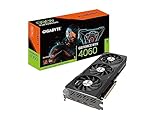
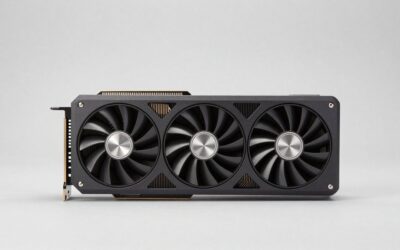
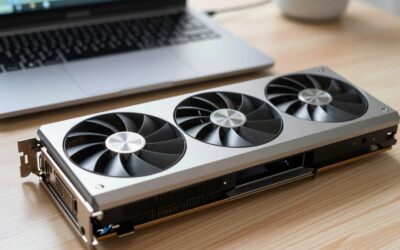
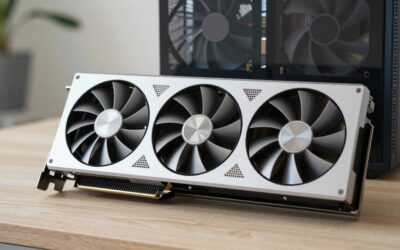
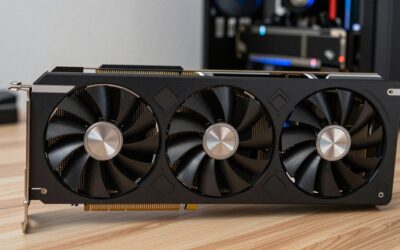
Gigabyte GeForce RTX 4060 Gaming OC 8G
Triple WINDFORCE fans on a 4060 card signal an overbuilt cooling solution

Write Your Review
No reviews yet. Be the first to share your experience!