
- Top Pick: ASUS Dual GeForce RTX 4060 Ti EVO OC Edition 8GB GDDR6 (PCIe 4.0, 8GB GDDR6, DLSS 3, HDMI 2.1a, DisplayPort 1.4a, Axial-tech Fan Design, Auto-Extreme Technology), 3 Year Warranty
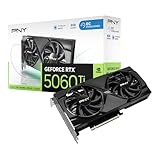
- Best Value: PNY GeForce RTX™ 4060 Ti 8GB Verto™ OC Dual Fan Graphics Card DLSS 3 (128-bit, PCIe 4.0, GDDR6, HDMI/DisplayPort, Supports 4k, 2 Slot)
- Premium Choice: ZOTAC Gaming GeForce RTX 4060 Ti 8GB Twin Edge OC White Edition DLSS 3 8GB GDDR6 128-bit 18 Gbps PCIE 4.0 Compact Graphics Card, IceStorm 2.0 Advanced Cooling, Spectra RGB Lighting, ZT-D40610Q-10M
Buying an 8GB graphics card in 2026 means navigating a market where two generations overlap at nearly identical price points. The RTX 4060 Ti 8GB still sells in volume, the RTX 5060 Ti 8GB has entered the lineup, and both occupy the sweet spot between budget builds and enthusiast-class hardware. A buyer comparing these eight cards is really asking one question: which specific model gives me the most reliable frame output, the least thermal drama, and the fewest surprises when I install it in my case?
What separates a good pick from a disappointing one in this tier comes down to cooling headroom, physical footprint, warranty terms, and whether the manufacturer cut corners on the power delivery or fan bearings. Every card here ships 8GB of VRAM and supports DLSS 3, so the real differentiators are the ones you cannot see in a spec sheet headline: how quiet the card stays under sustained load, whether it fits a compact chassis, and how long the warranty actually covers you.
As an Amazon Associate we earn from qualifying purchases at no extra cost to you.



Quick Picks
| Product | Best For | Price |
|---|---|---|
| ASUS Dual RTX 4060 Ti EVO OC | Best overall value | under $500 |
| PNY Verto OC | Tightest budget | under $400 |
| ZOTAC Twin Edge White OC | RGB and aesthetics | under $600 |
| GIGABYTE RTX 5060 Ti WINDFORCE OC | Next-gen performance | under $600 |
| ASUS Dual RTX 5060 Ti OC | PCIe 5.0 readiness | under $600 |
| ASUS Dual RTX 4060 Ti V2 OC | Small form factor builds | |
| ASUS Dual RTX 4060 Ti V2 OC | Small form factor builds | under $450 |
| PNY RTX 5060 Ti OC Dual-Fan | Budget next-gen | under $500 |
| ASUS TUF RTX 5060 Ti OC | Build quality | under $700 |
How We Picked
We narrowed these eight cards on four criteria that matter in the mid-range 8GB segment: sustained thermal performance relative to price (a card that throttles after twenty minutes loses to one that stays quiet all session), physical compatibility with compact and SFF cases, warranty length and manufacturer reputation for honoring it, and the generation-specific value equation — whether the older RTX 4060 Ti or the newer RTX 5060 Ti delivers better real-world performance per dollar at current street prices. Owner feedback on forums and retailer reviews informed our confidence in the cooling and reliability claims.
The 8 Best Rtx 4060 Ti 8Gb in 2026
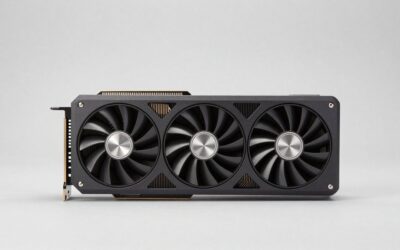
ASUS Dual GeForce RTX 4060 Ti EVO OC Edition
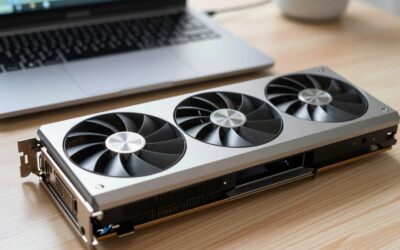
This is the safest recommendation for a mainstream builder who wants proven cooling and a generous warranty. The Axial-tech dual-fan design keeps noise low under sustained gaming loads, and Auto-Extreme Technology means the PCB soldering is machine-precise, reducing early-failure risk. Three years of warranty coverage exceeds what several competitors offer at similar prices.
- Axial-tech fans deliver quieter operation than many single-slot and budget dual-fan alternatives
- Three-year warranty is the longest in this comparison
- Price sits above the absolute floor for the RTX 4060 Ti tier
Skip it if you need to stay under $450 or if your build already uses PCIe 5.0 and you want future-proof memory bandwidth.
PNY GeForce RTX 4060 Ti 8GB Verto OC
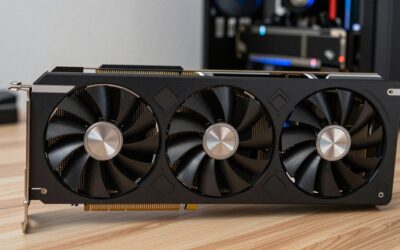
The Verto OC is for the buyer who needs a functioning 8GB card at the lowest possible price without accepting a used product. PNY’s dual-fan solution handles the 128-bit GDDR6 bus thermally, and the 2-slot footprint fits mid-tower cases without drama. For under $400, it undercuts every other option here by a meaningful margin.
- Lowest price of any card in this roundup
- Compact 2-slot design suits mid-tower and smaller cases
- Warranty terms are not specified in the product listing
Skip it if you value RGB, want the longest warranty, or are building a white-themed rig.
ZOTAC Gaming RTX 4060 Ti Twin Edge OC White Edition
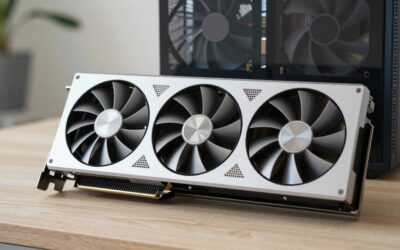
Built for the aesthetic-conscious builder, the Twin Edge White Edition pairs a clean white shroud with Spectra RGB lighting and IceStorm 2.0 cooling. The 18 Gbps GDDR6 memory runs at the top of the RTX 4060 Ti spec, and the compact PCB fits tighter cases. It is also the priciest RTX 4060 Ti card here.
- White edition with RGB lighting stands out in showcase builds
- IceStorm 2.0 cooling is competitive with ASUS Axial-tech designs
- Highest price among RTX 4060 Ti cards in this group
Skip it if your priority is price per frame or if you do not want RGB.
GIGABYTE RTX 5060 Ti WINDFORCE OC 8G
The WINDFORCE is the entry point into the newer generation at a price close to premium RTX 4060 Ti cards. Its GDDR7 memory and PCIe 5.0 interface give it a bandwidth advantage over every 4060 Ti here, which translates to higher sustained framerates at 1080p and 1440p in demanding titles.
- GDDR7 memory and PCIe 5.0 offer a generational bandwidth jump
- WINDFORCE cooling handles the 5060 Ti’s thermal envelope effectively
- Priced close to the top-tier 4060 Ti cards despite being newer architecture
Skip it if you already own a solid RTX 4060 Ti and are not upgrading a full platform.
ASUS Dual RTX 5060 Ti 8GB GDDR7 OC Edition
ASUS applies its proven Dual-fan and Auto-Extreme build process to the newer GPU. The under-$600 price places it between the GIGABYTE 5060 Ti and the premium ASUS TUF. Owners report that the Axial-tech fans on the 5060 Ti variant run quieter than the generation prior under equivalent loads.
- Combines ASUS build quality with GDDR7 memory bandwidth
- Auto-Extreme PCB manufacturing reduces defect rate
- Noticeable price premium over older-generation alternatives
Skip it if you can find the ASUS EVO 4060 Ti at a steep discount or if your PSU is marginal.
ASUS Dual RTX 4060 Ti V2 OC Edition
The V2 is explicitly designed for SFF compatibility, making it the only card in this list engineered around small-form-factor case constraints. The Axial-tech fan design is retained in a shorter PCB, and the under-$450 price is the second lowest here.
- SFF compatibility lets it fit Mini-ITX and compact builds other cards cannot
- Second-lowest price in the roundup
- Reduced cooling capacity compared to full-size dual-fan cards under extreme sustained loads
Skip it if you have a standard mid-tower and want maximum thermal headroom.
PNY RTX 5060 Ti 8GB OC Dual-Fan
PNY brings the newer architecture down to under $500, undercutting both ASUS 5060 Ti cards and matching the GIGABYTE option. The dual-fan design is straightforward and the 8GB GDDR7 configuration gives it a clear generational edge over any 4060 Ti on this list.
- Newest architecture at a price below ASUS 5060 Ti cards
- GDDR7 memory provides bandwidth headroom over the 4060 Ti tier
- Warranty details are not prominently listed in the product data
Skip it if you want a three-year warranty or are building an SFF case and need a shorter PCB.
ASUS TUF RTX 5060 Ti 8GB GDDR7 OC
The TUF line represents the build-quality ceiling for this tier. Reinforced shroud, military-grade capacitors, and a cooling solution sized above the minimum make it the most durable option. For under $700, it is also the most expensive card in this roundup by a wide margin.
- Best-in-class build quality and cooling capacity for this tier
- TUF branding carries a reputation for longevity among owner communities
- Significantly higher price than every other option here
Skip it unless you are building a high-airflow case and plan to keep the card for five or more years without replacement.
Buying Guide
Memory Generation: GDDR6 vs GDDR7
The RTX 4060 Ti uses 8GB GDDR6 over a 128-bit bus, while the RTX 5060 Ti moves to 8GB GDDR7 on the same bus width. GDDR7 provides higher effective bandwidth per pin, which reduces the memory bottleneck in bandwidth-heavy 1440p titles. If you are buying at $500 or above, the generational uplift justifies prioritizing GDDR7 cards. Below $430, the 4060 Ti remains the smarter allocation.
Physical Compatibility and Case Fit
Mid-tower builders have the most freedom, but SFF and Mini-ITX cases demand attention to card length and slot count. The ASUS V2 and PNY Verto are the two cards designed with shorter or slimmer profiles. Check your case clearance for GPU length and whether adjacent PCIe slots remain accessible. A 2-slot card may still block the third slot depending on the cooler design.
Warranty and Manufacturing Quality
ASUS offers three years on the EVO and TUF lines, which is the best coverage in this group. PNY and ZOTAC warranty terms vary by retailer and region. Auto-Extreme Technology on ASUS cards eliminates hand-soldering steps, which reduces cold-joint failure risk. If two cards are priced within $50 of each other, a longer warranty is a meaningful tiebreaker.
Our Verdict
Top pick: ASUS Dual RTX 4060 Ti EVO OC. It balances proven cooling, the strongest warranty in this list, and a price that still lands below most RTX 5060 Ti cards.
Budget pick: PNY Verto OC for under $400. It delivers the core 8GB GDDR6 and DLSS 3 experience at the lowest price here.
Condition for another winner: if you are building on a PCIe 5.0 motherboard and your budget reaches $500, the PNY RTX 5060 Ti for under $500 gives you GDDR7 bandwidth for the same money, making the generational leap worth the minimal premium over the older ASUS EVO.
FAQ
Is the RTX 4060 Ti 8GB still a good buy in 2026?
Yes, for buyers who game primarily at 1080p and can find one under $450. The 8GB VRAM ceiling is a limitation at higher resolutions in newer titles, but DLSS 3 frame generation offsets some of that gap.
Should I spend extra for the RTX 5060 Ti over the 4060 Ti?
For under $100 premium, yes. The GDDR7 memory bandwidth is a real advantage in 1440p and at ultra settings where the 128-bit bus becomes a bottleneck on the older card.
Is 8GB of VRAM enough for current games?
For 1080p and moderate 1440p settings, it remains sufficient in most titles. A growing number of open-world games exceed 8GB at ultra textures, so 16GB cards are the safer long-term bet if you can stretch the budget.
Do I need a new power supply to upgrade from a 4060 Ti to a 5060 Ti?
Typically no. Both cards draw similar power, so a quality 550W or higher PSU that ran the 4060 Ti comfortably will handle the 5060 Ti without issue.

Write Your Review
No reviews yet. Be the first to share your experience!