
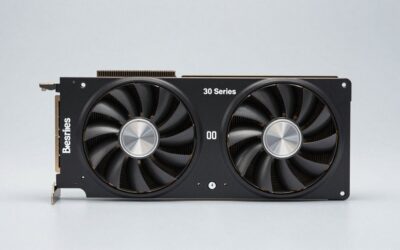
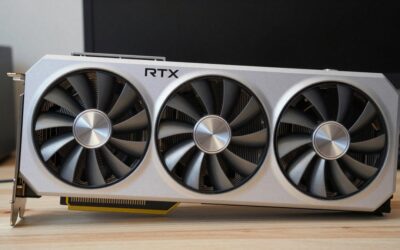
- Top Pick: ASUS Dual GeForce RTX 3050 6GB GDDR6 OC Edition Gaming Graphics Card
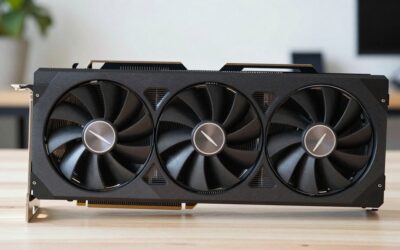
- Best Value: msi Gaming RTX 3050 Ventus 2X 6G OC Graphics Card (NVIDIA RTX 3050, 96-Bit, Boost Clock: 1492 MHz, 6GB GDDR6 14 Gbps, HDMI/DP, Ampere Architecture)
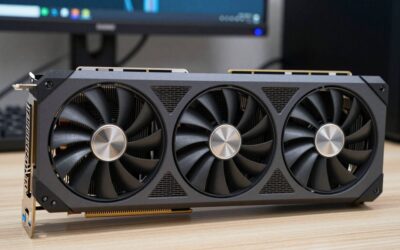
- Premium Choice: maxsun GeForce RTX 3050 6GB Graphics Cards GDDR6 Video Graphics Card GPU for Gaming PC Mini Small Form Factor SSF Slim Low Profile Design PCI Express 4.0, HDMI 2.1, DisplayPort 1.4a


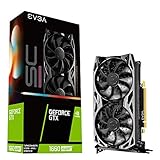
Deciding between the RTX 3050 vs 1660 Super is one of the most common dilemmas for budget PC gamers. As we navigate through 2026, the entry-level graphics card landscape has become increasingly complex, making it crucial to evaluate which GPU offers the best value for your hard-earned money. Many players find themselves torn between an older mid-range champion and a newer entry-level architectural option. This comprehensive guide will dissect their specifications, raw performance, feature sets, and market context to help you make an informed buying decision.
Architectural Showdown and Key Specifications
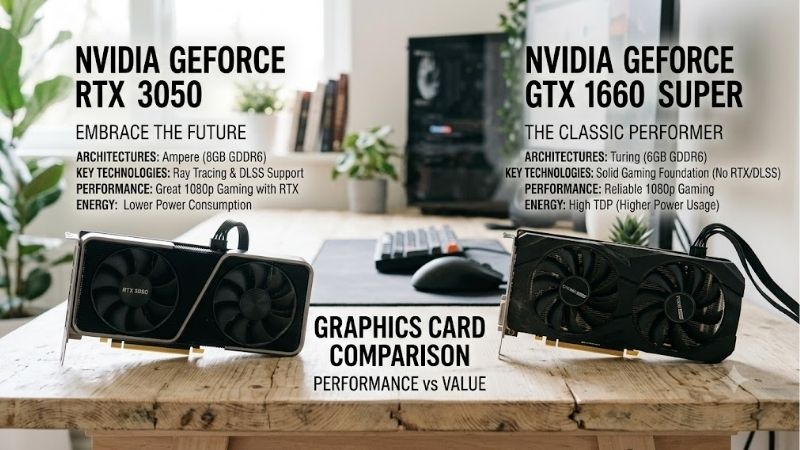
Before diving into real-world gaming framerates, it is essential to understand what powers these two graphics engines. While they target similar performance brackets, their internal designs belong to completely different architectural eras. The GTX 1660 Super is built on the older Turing architecture, whereas the RTX 3050 utilizes the Ampere architecture, bringing a host of modern features to the table. Let us take a close look at the technical specifications and structural philosophies behind both cards to see how they stack up on paper.
As an Amazon Associate we earn from qualifying purchases at no extra cost to you.




The Quick Verdict
If you are looking for a fast recommendation, here is our summary. The GTX 1660 Super remains an incredibly capable card for raw 1080p rasterization, offering stellar value if found at a discount on the secondary market. However, for long-term viability, access to DLSS (Deep Learning Super Sampling), ray tracing, and better video encoding features, the RTX 3050 is the superior purchase.
- Check the latest price of the RTX 3050 on Amazon
- Check the latest price of the GTX 1660 Super on Amazon
Core Architecture and VRAM Differences
The GTX 1660 Super utilizes the Turing TU116 GPU core, manufactured on a 12nm process. It comes equipped with 6GB of GDDR6 VRAM running across a 192-bit bus. This configuration gives it a surprisingly high memory bandwidth of 336 GB/s, which helps it maintain solid performance at 1080p. However, the 6GB frame buffer is increasingly becoming a bottleneck in modern 2026 gaming, where high-resolution textures can easily overflow past this limit, causing stutters and performance drops.
In contrast, the RTX 3050 is built on the 8nm Ampere architecture, specifically utilizing the GA106 or GA107 silicon. The standard desktop version boasts 8GB of GDDR6 VRAM, although there is a cheaper 6GB variant available. For this comparison, we focus on the 8GB version, which runs on a 128-bit bus with a bandwidth of 224 GB/s. While the memory bus is narrower than the 1660 Super, the extra 2GB of VRAM provides crucial breathing room for modern textures, rendering engines, and background assets.
Furthermore, the Ampere architecture introduces double the FP32 throughput per SM (Streaming Multiprocessor) compared to Turing. This means that despite having a narrower memory bus, the RTX 3050 handles complex shaders and modern game code much more efficiently than its predecessor.
Check the latest price on Amazon:
Ray Tracing and DLSS Support on RTX 3050
The defining architectural shift between these two cards lies in the inclusion of dedicated hardware acceleration. The GTX 1660 Super belongs to the “GTX” family, meaning it lacks physical Ray Tracing (RT) cores and Tensor cores. While you can technically enable basic ray tracing via software on GTX cards, doing so tanks the framerate to unplayable levels. It also lacks access to NVIDIA DLSS, which is a massive disadvantage in today’s performance landscape.
The RTX 3050, bearing the coveted “RTX” prefix, is equipped with 2nd-generation RT cores and 3rd-generation Tensor cores. While the card is not powerful enough to run heavy ray tracing at native resolutions, the real magic lies in its Tensor cores, which enable NVIDIA DLSS 2. This AI-powered upscaling technology reconstructs lower-resolution images to look almost identical to native 1080p, providing a massive boost in frame rates.
In 2026, upscaling is no longer a luxury; it is a necessity for entry-level hardware to run demanding AAA titles. The presence of DLSS on the RTX 3050 effectively extends its gaming lifespan by years, allowing it to play games that would completely choke the GTX 1660 Super.
Technical Specifications Comparison Table
To help you visualize the core differences, we have compiled a direct head-to-head spec comparison table below. Note how the memory configurations and architectural features differ, showcasing the evolutionary leap from Turing to Ampere.
| Feature / Spec | NVIDIA GeForce GTX 1660 Super | NVIDIA GeForce RTX 3050 (8GB) |
|---|---|---|
| Architecture | Turing (12nm) | Ampere (8nm) |
| CUDA Cores | 1408 | 2560 |
| Base / Boost Clock | 1530 / 1785 MHz | 1552 / 1777 MHz |
| VRAM Capacity | 6GB GDDR6 | 8GB GDDR6 |
| Memory Bus Width | 192-bit | 128-bit |
| Memory Bandwidth | 336 GB/s | 224 GB/s |
| Ray Tracing Cores | None | 20 (2nd Gen) |
| Tensor Cores | None | 80 (3rd Gen) |
| TDP (Power Draw) | 125W | 130W |
While raw numbers like CUDA cores suggest the RTX 3050 should crush the 1660 Super, architectural differences mean that CUDA cores cannot be compared one-to-one across generations. The Turing cores on the 1660 Super still punch well above their weight in older DX11 and DX12 titles that do not utilize modern Ray Tracing or tensor-driven features.
Gaming Performance and Real-World Benchmark Analysis
With the specifications established, it is time to look at real-world numbers. Benchmarks give us a clear picture of how these architectural differences translate to actual gameplay. In this section, we will analyze average framerates at the target resolution of 1080p, evaluate thermal efficiency, and weigh the pros and cons of both cards.
1080p Gaming Benchmarks and Framerates
In traditional rasterized games (titles that do not use ray tracing or AI upscaling), the performance between these two cards is surprisingly close. In older but still incredibly popular eSports titles like Counter-Strike 2, Valorant, and League of Legends, both cards easily deliver over 144 FPS at 1080p competitive settings. Here, the GTX 1660 Super often matches or even slightly edges out the RTX 3050 due to its wider memory bus and lower driver overhead in older APIs.
However, when we pivot to modern AAA titles released in recent years, the story shifts. In games like Cyberpunk 2077, Red Dead Redemption 2, and Hogwarts Legacy, the RTX 3050 begins to pull ahead. At 1080p High settings, the RTX 3050’s 8GB VRAM prevents the stuttering issues that plague the 6GB GTX 1660 Super. When things get heavy, the 1660 Super struggles to maintain a stable 60 FPS, while the RTX 3050 sits comfortably in the mid-60s.
The performance gap becomes a chasm once you enable DLSS. In supported titles, turning DLSS to “Quality” mode on the RTX 3050 can boost frame rates by 30% to 50% without a noticeable loss in visual fidelity. The GTX 1660 Super has to rely on spatial upscalers like AMD FSR, which, while useful, often look noticeably blurrier and less stable than NVIDIA’s AI-based solution.
Thermal Efficiency and Power Consumption
Power efficiency and thermals are critical factors for budget gamers who might be upgrading an older pre-built PC with a limited power supply unit (PSU). The GTX 1660 Super has a rated TDP of 125 Watts, while the RTX 3050 8GB comes in slightly higher at 130 Watts. Both cards are highly efficient and can easily run on a decent 450W or 500W power supply, making them excellent drop-in upgrades for older systems.
In terms of temperatures, both cards run exceptionally cool under normal gaming loads, usually hovering between 65°C and 72°C depending on the specific partner model (such as ASUS, MSI, or EVGA). The Ampere architecture on the RTX 3050 features improved power management, meaning it can idle at lower wattages and adjust its clock speeds more dynamically based on the rendering load.
Noise levels are also minimal for both cards. Because they draw relatively low power, even basic dual-fan designs can keep them cool without needing to spin the fans at deafening speeds. This makes both GPUs perfect for compact, quiet, or budget-friendly gaming rigs.
Pros and Cons of RTX 3050 vs 1660 Super
To help make your buying decision easier, let us summarize the direct strengths and weaknesses in this RTX 3050 vs 1660 Super comparison.
NVIDIA GeForce RTX 3050 Pros:
- Equipped with 8GB of VRAM, offering better future-proofing for AAA titles.
- Supports DLSS 2 for dramatic framerate boosts in modern games.
- Dedicated RT cores for entry-level ray tracing and hardware-accelerated features.
- Features a newer NVENC encoder, ideal for entry-level streaming and content creation.
NVIDIA GeForce RTX 3050 Cons:
- Generally costs more than the GTX 1660 Super on both new and used markets.
- Narrower 128-bit memory bus can limit performance at higher resolutions.
NVIDIA GeForce GTX 1660 Super Pros:
- Outstanding value on the secondary market.
- Wider 192-bit memory bus provides excellent raw rasterization bandwidth.
- Low power consumption and highly compatible with older, budget power supplies.
NVIDIA GeForce GTX 1660 Super Cons:
- Limited to 6GB of VRAM, which struggles with modern AAA games at high settings.
- Lacks hardware-accelerated Ray Tracing and DLSS.
- Built on older Turing architecture, which is losing driver optimization priority.
Weighing these points shows that while the GTX 1660 Super is a fantastic budget saver, the RTX 3050 is clearly built to handle the future of PC gaming.
Market Dynamics, Global Trends, and Value Assessment
The GPU market does not exist in a vacuum. To understand which card represents the best purchase in 2026, we must look beyond performance benchmarks and analyze broader economic factors, global supply chain adjustments, and alternative hardware options. The hardware landscape is shifting rapidly, and making an informed purchase requires understanding how global industrial decisions affect your local retail prices.
Global GPU Market Shifts and Supply Chain Pressures
The consumer GPU market is heavily influenced by the massive boom in Artificial Intelligence. Recently, the United States government revised trade regulations, allowing NVIDIA to sell its highly advanced H200 AI chips—one of the most powerful AI accelerators on the planet—to the Chinese market under specific export compliance guidelines. While this might seem unrelated to low-end gaming cards like the RTX 3050, its ripple effects on the supply chain are profound.
NVIDIA’s production priority has shifted heavily toward high-margin enterprise AI silicon. Manufacturing facilities (fabs) like TSMC have limited allocation space, and every wafer dedicated to producing enterprise-level chips means fewer wafers allocated to consumer GPUs. Consequently, budget graphics cards like the RTX 3050 face tight supply lines as NVIDIA focuses its resources on the highly profitable AI sector.
This supply strain means that budget gamers cannot expect dramatic price cuts on entry-level graphics cards. With consumer GPU stock remaining tight, older secondary market options like the GTX 1660 Super become even more attractive to budget-conscious gamers who refuse to pay inflated retail prices for newer entry-level models.
Price Inflation and the Alternative Options
Compounding these supply chain shifts is a broader economic trend: the prices of laptops, pre-built PCs, and core components continue to climb. Due to rising raw material costs, increased labor expenses, and fluctuating global logistics, assembling a PC or buying a gaming laptop is significantly more expensive today than it was a few years ago. For budget builders, this persistent inflation creates a strong incentive to “buy early” rather than waiting for a hypothetical price drop that may never come.
If you are hesitant to commit to either the RTX 3050 or the GTX 1660 Super, there are compelling alternative options on the market. One major competitor is the AMD Radeon RX 6600. It typically sits in a similar price bracket to the RTX 3050 but offers superior raw rasterization performance and a full 8GB of VRAM, making it a fantastic alternative for pure gaming performance.
Another option is saving up for an RTX 4060. While more expensive, the RTX 4060 offers DLSS 3 Frame Generation, drastically better efficiency, and much higher performance, making it a highly logical step up if your budget can stretch. However, if your budget is strictly capped, securing a card now is a smart way to shield yourself from ongoing hardware price hikes.
- Check the latest price of the AMD Radeon RX 6600 on Amazon
- Check the latest price of the RTX 4060 on Amazon
Final Verdict and Recommendations for Gamers
Ultimately, choosing between these two graphics cards comes down to your budget and your expectations for future games. The GTX 1660 Super remains a legendary piece of hardware. If you can find a clean, used 1660 Super at a bargain price, and you primarily play competitive multiplayer games, it is an unbeatable way to get into PC gaming.
On the other hand, the RTX 3050 is the correct choice for anyone looking to play modern single-player games. The inclusion of 8GB of VRAM and DLSS 2 makes a massive difference in modern titles, offering a playable experience where the 1660 Super would stutter. It is a more robust, feature-rich investment that will keep your system gaming for years to come.
Whichever path you choose, make sure to buy from reputable sellers with solid return policies, as secondary market cards can vary greatly in condition. Ensure your power supply has the necessary PCIe power connectors, and enjoy your journey into PC gaming!
Conclusion
To wrap things up, the battle of RTX 3050 vs 1660 Super highlights a crucial turning point in graphics technology. We have transitioned from an era of raw hardware horsepower to an era defined by software-assisted performance. The GTX 1660 Super is a testament to the longevity of pure engineering, while the RTX 3050 represents the modern, feature-driven future of budget gaming. In a volatile market where hardware prices show no signs of dropping, securing the right card today is the best way to guarantee endless hours of gaming enjoyment. Weigh your options, check your local prices, and make the upgrade that best fits your gaming needs.
Frequently Asked Questions
Which is faster in normal games?
They are remarkably close in rasterisation, with the 8GB RTX 3050 typically a few percent ahead of the GTX 1660 Super. The meaningful separation comes from features rather than raw speed, since the RTX 3050 adds DLSS, hardware ray tracing, AV1 decoding and a newer video encoder.
Is 8GB versus 6GB of VRAM important?
Yes, increasingly so. Six gigabytes is now the point where modern titles force texture downgrades at 1080p ultra, while eight gigabytes stays workable with sensible settings. If you play recent releases rather than esports titles, that extra capacity is one of the clearest reasons to choose the RTX 3050.
Does DLSS make the RTX 3050 the obvious pick?
In supported games it adds roughly 30 to 50 percent more frames at quality mode, which turns marginal performance into playable performance. The GTX 1660 Super can only use FSR, which looks softer at 1080p. If your regular games support DLSS, the RTX 3050 is clearly the better choice.
What are the power requirements?
The GTX 1660 Super draws about 125W and the 8GB RTX 3050 around 130W, both from one 8-pin connector, so a 500W supply covers either. The 6GB RTX 3050 variant runs near 70W with no power connector at all, which makes it uniquely suited to slim office prebuilts.
Which is the better used purchase?
The RTX 3050, mainly for driver longevity and DLSS. Turing on the 1660 Super still receives current drivers, but Ampere will remain supported longer. Only pick the GTX 1660 Super if it is significantly cheaper and you play older titles where upscaling support is irrelevant.
Ready to decide? Our #1 pick for 2026 is the Feature / Spec.
Live price & availability on Amazon.

Write Your Review
No reviews yet. Be the first to share your experience!