
- Top Pick: NVIDIA GPU Performance Engineering: A Comprehensive Guide to PTX, SASS, CUDA Optimization, Kernel Analysis, Memory Hierarchies, Warp Execution, and High-Throughput Parallel Computing
- Best Value: Advanced GPU Assembly Programming Third Edition: A Technical Reference for NVIDIA and AMD Architectures (GPU Expert Engineering: Mastering Design, Programming, and Optimization)
- Premium Choice: Nvidia Triton Inference Server: The Complete Guide for Developers and Engineers
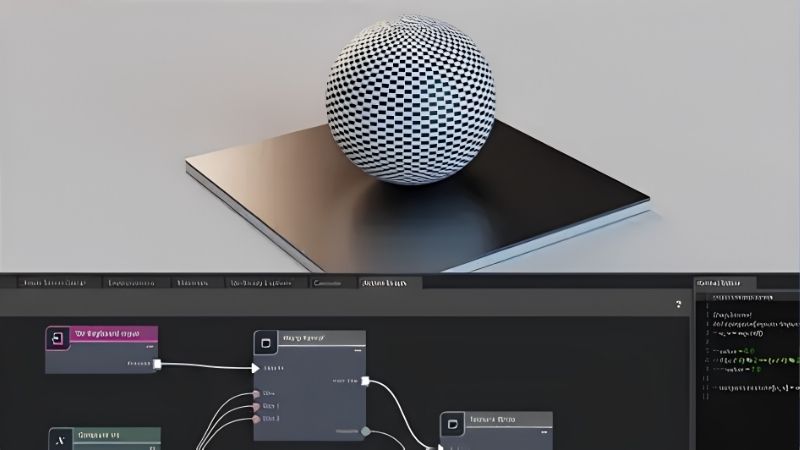
Nvidia Warp is a tool that quietly bridges two worlds many developers thought were incompatible: the simplicity of Python and the raw speed of GPU programming. It is an open-source Python framework that lets you write high-performance simulation, robotics, and graphics code that runs on the GPU, without dropping down into complex low-level languages. This guide explains what NVIDIA Warp is, how it works its performance magic, who should use it, and how to get started with it.
What Is Nvidia Warp?
To appreciate Warp, it helps to understand the problem it solves, because writing fast GPU code has traditionally been difficult and specialized. Warp offers a way to get near-native GPU performance while writing ordinary Python, and grasping that core promise makes the rest of its features easy to understand and genuinely exciting for developers.
A Python Framework for GPU Code
NVIDIA Warp is an open-source Python framework for writing high-performance simulation and graphics code that runs on GPUs. It lets Python developers create GPU-accelerated programs without learning a separate low-level language.
Traditionally, squeezing top performance out of a GPU meant writing in specialized languages, which many scientists and developers found daunting. Warp removes that barrier by staying in Python.
The result is a tool that offers performance on par with hand-written native GPU code, while keeping the convenience and productivity of Python, a combination that is genuinely rare and valuable.
For scientists and engineers who are experts in their field but not in low-level programming, this is transformative. It lets them harness the full power of modern GPUs using a language they already know, rather than spending months learning specialized tools just to make their code fast enough to be useful.
Simulation, Robotics, and Graphics
Warp is purpose-built for computational physics, simulation, robotics, and related fields where heavy calculation meets the need for speed. These are areas that benefit enormously from GPU acceleration.
It is used to build simulations, drive machine-learning pipelines, and power robotics and spatial-computing workflows. Its design targets exactly the kinds of problems that involve many parallel calculations.
For researchers and engineers in these domains, Warp opens up GPU performance that was previously hard to access, letting them run far more ambitious simulations from familiar Python code.
These fields share a common trait: they involve huge numbers of similar calculations that can be done in parallel, which is exactly what GPUs excel at. Warp lets developers tap that parallel power directly, turning simulations that once took hours into ones that run in a fraction of the time.
How It Differs From Regular Python
Ordinary Python is famously easy but slow for heavy numerical work, which is why performance-critical code often gets rewritten in faster languages. Warp changes this dynamic within Python itself.
Unlike standard Python, Warp compiles your code to run directly on the GPU, giving you a low-level, hardware-close model with fine-grained control over threads. It exposes the power of the GPU through a Python interface.
This means you write code that looks like Python but executes with the speed of specialized GPU code, blending accessibility and performance in a way plain Python cannot match.
This is what makes Warp special compared with ordinary numerical Python libraries. Rather than just calling pre-built fast operations, you can write your own custom GPU logic in Python and have it run at full speed, giving you both flexibility and performance that would normally require a much harder language.
In effect, Warp lets you express the logic of a problem naturally in Python while still getting the hardware efficiency of code written specifically for the GPU. That balance is what allows researchers to prototype and refine ideas rapidly without paying the usual price in performance.
How Nvidia Warp Works
Warp’s ability to combine Python’s ease with GPU speed comes down to a few clever mechanisms under the hood. You do not need to understand every detail to use it, but knowing the key ideas, how it compiles code, its support for differentiation, and its built-in data structures, reveals why it is so capable.
JIT Compilation to GPU Kernels
At the core of Warp is just-in-time compilation, which converts your Python functions into optimized GPU kernel code at runtime. This is how it achieves native-level speed from Python source.
This kernel-based approach maps closely to how the GPU hardware actually works, giving fine-grained control over threads and efficient use of the chip. It also supports conditional logic and other features tensor-based tools handle awkwardly.
The upshot is that Warp generates genuinely high-performance GPU code from code you wrote in Python, without you having to manage the low-level compilation yourself.
Because the compilation happens automatically at runtime, the workflow stays smooth and interactive. You can edit your Python code, run it, and immediately get GPU-accelerated results, keeping the fast iteration cycle that makes Python so productive while gaining the speed of compiled GPU code.
Differentiable Simulation
A standout feature is that Warp is auto-differentiable, meaning it can automatically compute gradients through your simulations. This is enormously useful for machine learning and optimization.
It can generate reverse-mode kernels that propagate gradients back into machine-learning frameworks like PyTorch and JAX, enabling network training, design optimization, and parameter estimation. Simulation and learning become connected.
This differentiability lets researchers build simulations that plug directly into machine-learning pipelines, a powerful capability for fields like robotics and physics-based AI.
Differentiability is what connects simulation to modern machine learning. By being able to compute how a simulation’s outcome changes with its inputs, Warp lets researchers train neural networks that incorporate physics, optimize designs automatically, and build the kind of learning systems that are increasingly central to robotics and scientific AI.
Built-in Data Structures
Warp provides high-performance data structures essential for simulation and graphics, saving developers from building them from scratch. These are optimized for GPU work.
They include triangle meshes, sparse volumes, and spatial acceleration structures like hash grids and bounding volume hierarchies, all central to physics and graphics workloads. Having these ready-made speeds development considerably.
These built-in tools mean developers can focus on their actual simulation logic rather than reinventing the low-level building blocks, which is a big part of Warp’s productivity advantage.
These structures are the unglamorous but essential plumbing of simulation and graphics work. Providing them ready-made, and optimized for the GPU, means developers spend their time on the interesting parts of their problem instead of reimplementing well-understood building blocks that are easy to get subtly wrong.
Who Should Use Warp and Getting Started
Warp is a specialized tool, so it fits some developers far better than others, and knowing where it excels helps you judge whether it belongs in your toolkit. This section covers the ideal use cases, the honest trade-offs, and how to begin experimenting with the framework yourself.
Ideal Use Cases
Warp is ideal for anyone building GPU-accelerated simulations, robotics systems, or physics-based machine learning in Python. Its sweet spot is heavy, parallel numerical work that needs to be fast.
It integrates smoothly with major machine-learning frameworks and with NVIDIA’s simulation and design platforms, fitting naturally into modern AI and simulation workflows. This interoperability broadens its usefulness.
If your work involves computational physics or differentiable simulation and you want to stay in Python, Warp is likely to be an excellent fit for your projects.
It is worth being honest that Warp is not a general-purpose tool for every programming task. Its strengths are concentrated in numerically intensive, parallel work, and for ordinary application logic or simple scripts, standard Python remains the better choice. Matching the tool to the problem is key to getting value from it.
Pros and Cons
Pros: near-native GPU performance from Python, auto-differentiation for machine learning, useful built-in data structures, open-source availability, and smooth integration with popular frameworks and simulation platforms.
Cons: it targets NVIDIA GPUs, it is a specialized tool aimed at simulation and technical computing rather than general use, and it assumes some comfort with the concepts of GPU programming.
On balance, for its intended audience of simulation and technical developers, Warp offers a rare and valuable blend of speed and productivity that few other tools can match.
The decision often comes down to whether your bottleneck is computational performance. If heavy simulation or physics-based calculation is slowing you down and you want to stay in Python, Warp is well worth trying; if performance is not your constraint, its specialized nature may be more than you need.
See More:
Getting Started
Getting started is easy: Warp is available as an open-source package you can install through Python’s standard tools, and pre-built packages include everything you need. The documentation and examples help you learn quickly.
Because it is free and open source under a permissive license, you can experiment with it, study the code, and even contribute to its development. An active community supports new users.
A sensible first step is to work through the official examples, which demonstrate common patterns for simulation and graphics. These give you a working starting point to adapt rather than a blank page, and they make the framework’s concepts concrete far more quickly than reading documentation alone.
To run Warp you will need a compatible NVIDIA GPU, and for development a modern RTX or workstation card works well. If you are building a machine for this kind of work, you can compare current NVIDIA GPUs through the links on this page.
Nvidia Warp is a remarkable framework that brings GPU performance to Python, letting developers write fast, differentiable simulation and graphics code without leaving the language they know.
Whether you work in robotics, physics simulation, or machine learning, Nvidia Warp offers a rare blend of speed and simplicity, and with a capable NVIDIA GPU it turns Python into a genuine high-performance computing tool.
Frequently Asked Questions
What is Nvidia Warp and what problem does it solve?
Warp is a Python framework for writing GPU-accelerated simulation, geometry and graphics code. You write kernels as decorated Python functions and Warp just-in-time compiles them to native CUDA or CPU code, so you get performance close to hand-written CUDA without leaving the Python ecosystem your data and tooling already live in.
How do I install it and what hardware do I need?
Warp installs through pip as warp-lang and ships prebuilt binaries for common platforms. A CUDA-capable Nvidia GPU with a reasonably current driver is required for GPU execution, though Warp also has a CPU backend for development and testing. It does not require you to install the full CUDA toolkit for basic use.
How does Warp compare to writing CUDA in C++?
Warp trades a small amount of peak control for a very large gain in iteration speed. You lose direct access to some low-level CUDA features and template metaprogramming, but you gain Python interop, immediate recompilation, and far simpler integration with NumPy, PyTorch and JAX arrays through standard interchange protocols.
Is Warp differentiable, and can I use it for machine learning?
Yes, Warp supports automatic differentiation of kernels, which makes it well suited to differentiable simulation, physics-informed learning and optimisation problems. It interoperates with PyTorch tensors without copying in many cases, so you can place a differentiable physics step directly inside a training loop rather than bridging through the CPU.
What is the relationship between Warp and Omniverse?
Warp originated from Nvidia’s simulation research and is widely used inside Omniverse and Isaac workflows for custom physics, procedural geometry and robotics simulation. You do not need Omniverse to use Warp; it works as a standalone Python library, but the two are designed to complement each other in 3D and robotics pipelines.
As an Amazon Associate we earn from qualifying purchases at no extra cost to you.








Write Your Review
No reviews yet. Be the first to share your experience!